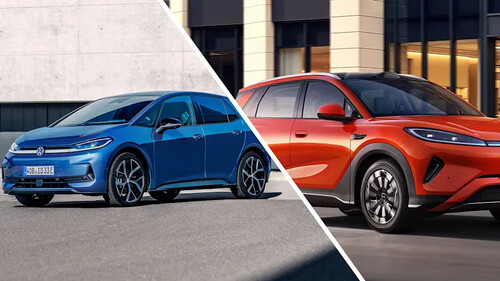
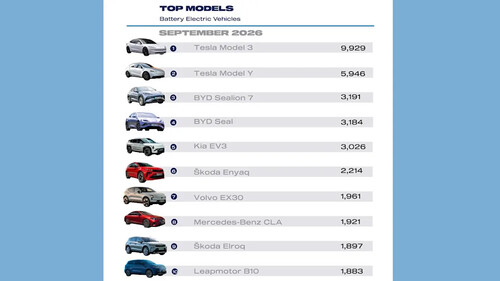
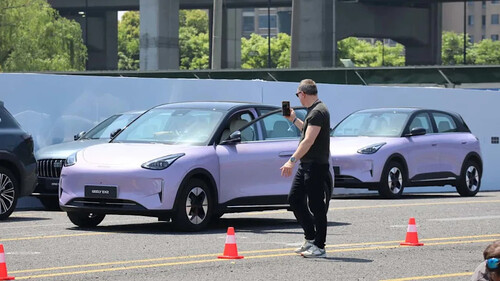
France has made the first national push for increased electrification tied to the Strait of Hormuz-related energy crisis. Reuters reported that Paris will raise annual state support for electrification from €5.5 billion to €10 billion through 2030, while Le Monde summarized the package as including a ban on gas heating systems in new buildings from late 2026 or 2027, a long phaseout of gas heating across 2 million social housing units by 2050, a target of 1 million French-made heat pumps per year by 2030, subsidies for 50,000 electric vehicles for high-mileage drivers, and support of up to €100,000 per electric truck or van for businesses. That is not a speech about resilience. It is a funded attempt to replace imported molecules with domestic electrons. What makes France interesting is not just that it announced more support. It is that the structure of the package points to a mature understanding of where fossil dependence actually lives. In most developed economies, oil is concentrated in transport and gas is concentrated in heating and some industrial uses. France is targeting both. If a country moves 50,000 drivers from combustion to electric, and if many of them are high-mileage users such as health and trade professionals, the fuel displacement per vehicle is materially larger than for low-mileage urban households. If it moves building heat from gas to heat pumps, the efficiency gain is larger still because heat pumps commonly deliver 2.5 to 4 units of heat for every unit of electricity consumed. France is treating electrification as energy security policy because on a delivered-energy basis electricity is the more efficient carrier. But the real analytical question is not whether other governments are copying France in public. It is whether policy and market signals elsewhere show the same shift under the surface. That requires being disciplined about what counts as an electrification signal. Fuel tax cuts are not electrification. Emergency oil stock releases are not electrification. Conservation measures can reduce exposure, but they do not change the system unless they are paired with electric substitutes. The signals that matter are EV searches, leases, registrations, and fleet orders, heat pump quotes and installations, rooftop solar and home battery demand, storage approvals, interconnection queues, renewable-plus-storage projects, public charging tenders, and clean-tech import or market-share gains that reveal who is supplying the pivot. Europe beyond France is already showing market movement, but in uneven ways. Reuters reported that battery electric vehicle registrations in Germany rose 66.2% in March to 70,663 units, while Tesla registrations rose 315.1% and BYD registrations rose 327.1%. In the UK, Reuters said March new car registrations rose 6.6% to 380,627 units, battery EVs reached a record 22.6% share, and BYD registrations surged nearly 134%. Those numbers do not prove that governments have adopted a French strategy. They do show that once liquid-fuel prices jump, the relative economics of electric drivetrains improve quickly enough to show up in registrations within weeks, not years. The softer and earlier indicators in Europe are even more revealing because they move before registrations do. The Guardian reported that Germany’s Mobile.de saw EV inquiries rise 50% in March, while France’s La Centrale reported a 160% increase in EV searches from March to April. In Britain, consumer demand for household electrification moved beyond cars. The Guardian reported that Octopus Energy saw EV leases rise 85%, heat pump orders rise 103%, and solar sales rise 78% in March compared with February, while British Gas saw solar inquiries rise 250%. Those are not yet installations, and installations are the harder metric, but they are the kind of revealed preference signals that usually appear before policymakers admit a structural shift is underway. European policy outside France is more mixed. Germany’s immediate response was a €1.6 billion package centered on a temporary €0.17 per liter cut in petrol and diesel taxes, which is a fossil affordability measure, not an electrification measure. At the EU level, Reuters reported that Ursula von der Leyen said the Commission would present new energy price measures on April 22 and release a new electrification strategy before the summer, explicitly tying structural reduction in fossil dependence to the Iran war shock. That is important because it suggests the European center of gravity is shifting in the same direction as France, but more slowly and with more institutional friction. The continent has behavioral momentum. It still has a policy coordination problem. The supply-chain layer in Europe points in the same direction. Eurostat says China was the source of 55% of extra-EU electric-car imports in its cited dataset, and a March 2026 European Commission impact assessment said the EU relies almost entirely on imports from China for solar PV modules. Reuters also reported that the EU is considering Made in Europe rules for public purchases of green technologies precisely because it is trying to reduce dependence on Chinese imports while still expanding deployment. In other words, Europe is trying to solve two equations at once. It wants more electrification because fossil exposure is expensive and risky. It also wants less Chinese dependence because supply-chain exposure is risky. Those goals are aligned in the long term, but in the short term the fastest route to more electrification often still runs through Chinese hardware. Asia-Pacific may be where the most interesting market signals are appearing because the region is so exposed to Hormuz flows. Reuters reported that more than 80% of the crude that normally moved through the strait was headed to Asia, which helps explain why EV interest jumped so quickly. Australia saw EV loan applications double in March. New Zealand registered more than 1,000 EVs in the week ending March 22, nearly double the prior week. South Korean EV registrations more than doubled year over year in March. Reuters also reported rising interest in Japan, Malaysia, and Thailand, with Chinese brands benefiting as buyers looked for lower operating costs. The policy layer in much of Asia-Pacific is still weaker than the market layer, but the market response is clear. When fuel insecurity bites hardest, electrification becomes less an environmental preference than a hedge. Australia is a useful contrast because it shows how market and policy can diverge. Reuters reported that the Albanese government is shoring up fuel supply through diplomacy with Brunei, Malaysia, and Singapore, reflecting Australia’s dependence on imported refined fuels despite being a major energy exporter. At the same time, market indicators show record EV sales and rising loan applications. That means Australian households and businesses are sending an electrification signal even while the federal government’s near-term policy reflex remains fuel security through supply management. This is exactly the kind of divergence worth watching. Markets can start reallocating capital toward electrification long before governments stop thinking in barrels and tankers. South Asia presents the harder case, and it is important precisely because it keeps the analysis honest. Reuters reported that India cut excise duties on petrol and diesel, imposed windfall taxes on aviation fuel and diesel exports, diverted gas supplies from non-priority sectors to key users, and told refiners to raise LPG output. Pakistan shortened the government work week and reduced office attendance. These are adaptations to fossil stress, but they are not electrification strategies. They show what happens when fiscal space, infrastructure depth, and import dependence constrain structural substitution. In places where households are more sensitive to fuel and food inflation and states have less room to subsidize capital turnover, the leading indicators are still about preserving access to fuels rather than replacing them. That said, India and Pakistan have a formal policy of massive increases renewables, with India having installed 150 GW of solar in 2025 alone, and Pakistan hitting 32 GW of solar, mostly behind the meter. They were already electrifying much faster than the west, so this is more a matter of increasing resolve. Africa reveals a similar constraint, but with a starker exposure to price shocks. Reuters reported that Madagascar declared a state of emergency over the energy situation after widespread fuel shortages, while in Nigeria petrol prices rose more than 50% and diesel more than 70% since the conflict began. Those numbers are devastating because they move directly into food prices, transport costs, and backup generation economics. In contexts like these, there may still be a long-run case for solar, batteries, and electric mobility, but the short-run leading indicators are more likely to be rationing, emergency borrowing, and demand destruction than clean-tech adoption. That is not a failure of the electrification thesis. It is evidence that capital availability and state capacity determine whether a fossil shock becomes a transition accelerant or just another macroeconomic wound. Latin America sits in between. Brazil is not showing a clean crisis-driven electrification pivot in the same way as France or parts of Europe and Asia-Pacific, but its experience still matters. Reuters reported that Brasília used a temporary 12% oil export tax as part of a package intended to shield domestic consumers from higher fuel prices. At the same time, Reuters separately reported that Brazil’s renewable sector is dealing with curtailment and regulatory bottlenecks, with some companies seeing revenue losses of up to 25% because grid and market frameworks are not keeping pace. That points to an important lesson. A country can have a relatively low-carbon power mix and still fail to convert that into an electrification advantage if grids, storage rules, and market design lag. Clean generation helps, but it does not automatically translate into transport and heating substitution. Turkey is one of the more interesting enabling-system cases because the signal is not mainly in car sales or appliance orders. It is in storage approvals. Reporting based on Ember analysis said Turkey has approved more than 33 GW of battery storage since 2022, ahead of any EU member state, after giving grid priority to renewable projects paired with equivalent storage. That predates the Iran war, but it matters now because it means Turkey has been building optionality. Countries that have already expanded grid flexibility, storage, and renewable integration are better placed to turn fossil-price shocks into faster electrification. Countries that have not done the plumbing will see the same price signal and still struggle to respond. The Chinese factor runs through almost every region in this story. Reuters reported that China’s battery exports hit new highs in 2025, with Europe taking 42% of those exports, while the Middle East and Latin America were among the fastest-growing markets. AP reported that the Iran war is reinforcing demand for Chinese batteries, solar panels, and EVs because China is the lowest-cost, highest-scale supplier across much of the clean-tech stack. This is why import data can be a useful confirming indicator but not the only one. A country can be quietly electrifying through dealer lots, utility procurement, and distributed-energy channels long before the customs data is compiled and interpreted. But once the trade data does arrive, it often reveals the same truth. The world may talk about energy sovereignty, but when the fossil system fails a stress test, many countries buy whatever electric substitute is available fastest and cheapest. There is also a grid and storage dimension that is easy to miss if the analysis stays focused only on cars and appliances. Reuters reported that battery storage deployment in the EU rose 45% in 2025 to 27.1 GWh, driven largely by utility-scale projects. Ember warned that at least 120 GW of planned renewable projects in Europe are at risk because of grid bottlenecks. This matters because a credible electrification shift has to show up not only in end-use demand but in the capacity of the power system to absorb it. A jump in EV demand without charger rollout, a jump in heat pump sales without distribution upgrades, or a wave of renewable approvals without interconnection capacity is not a transition. It is a queue. One of the strongest leading indicators of a durable shift is therefore not a consumer metric at all. It is whether grids, storage, and public infrastructure are being built fast enough to meet rising electric demand. The main analytical mistake to avoid is overreading weak signals. Search spikes are weaker than registrations. Lease applications are weaker than vehicles on the road. Inquiries about heat pumps or solar are weaker than signed contracts and completed installations. Import spikes can reflect inventory timing, tariff arbitrage, or a one-off procurement cycle. But it is also a mistake to dismiss these signals because they are early. In energy transitions, revealed preference usually appears first as interest, then as orders, then as deployments, and only later as official doctrine. France matters because it compressed those stages into one visible package. Elsewhere, the sequence is more staggered, but the pattern is still legible if one watches the right metrics. If there is a global conclusion to draw at this stage, it is not that every country is becoming France. It is that the Iran war has exposed the same arithmetic everywhere. Imported fossil fuels are volatile, geopolitically fragile, and expensive at the point of use. Electricity generated domestically from a wider set of resources, stored in batteries, and consumed through more efficient end uses is more stable. Some countries are now saying that openly, as France has. Some are showing it through registrations, lease books, sales pipelines, and storage approvals. Others lack the capital and infrastructure to move fast and are falling back on subsidies, rationing, or demand destruction. But the signal is still there. Electrification is no longer only a climate pathway. Under repeated fossil shocks, it is becoming the practical language of resilience.