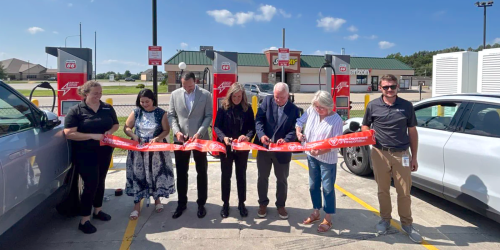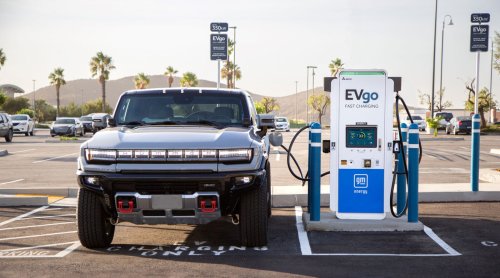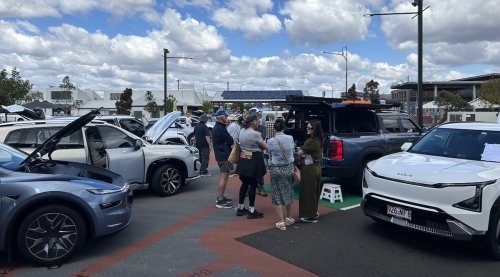
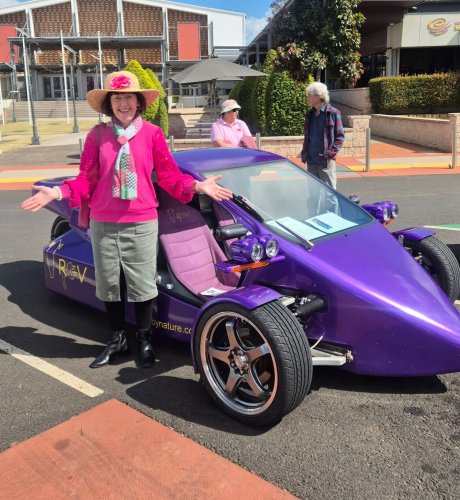
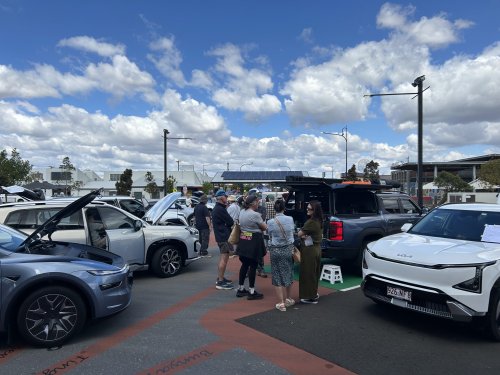
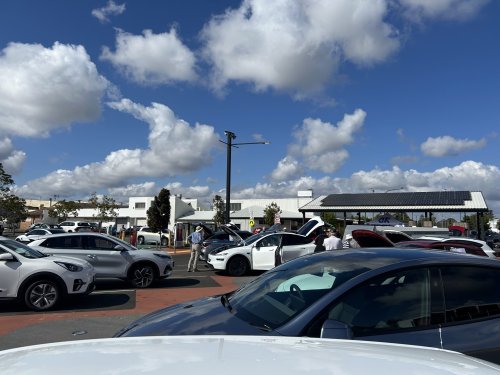
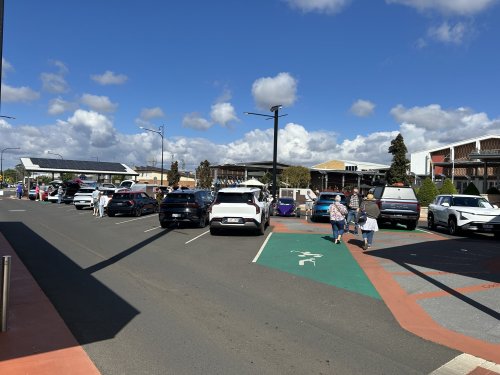
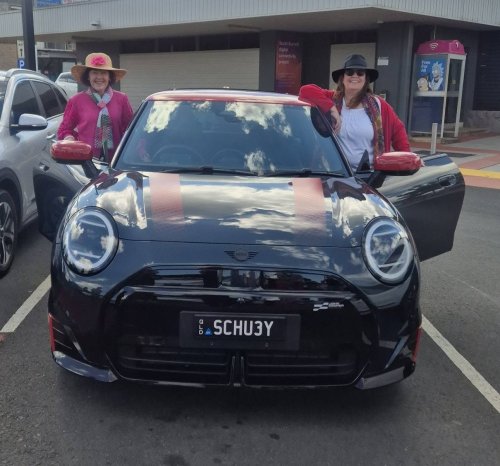
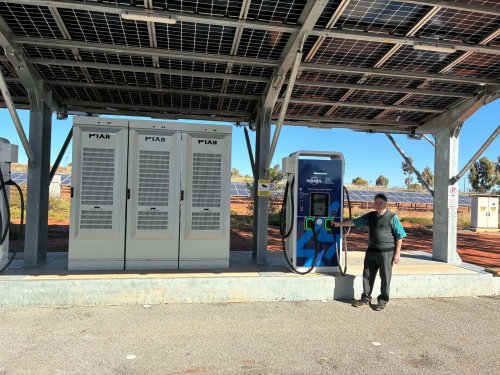
















Tourist regions need high speed charging to drive local economies. Although there is plenty of access to high-speed charging on the coastal highways and cities of Australia, there is still a need for more charging for tourists once you head inland. This was highlighted by a recent event in Kingaroy, Queensland. Kingaroy is situated at the junction of two highways, D’Aguilar and Bunya Highway. Both are popular tourist drives running through mountains, national parks, and rural townships — and only 218 km northwest of Brisbane. Kingaroy has a population of about 10,000 people. After driving for a little over two hours, it is a great spot to stop, recharge the car, empty the bladder, and get a coffee. There is one little problem: Tourists with EVs will find it difficult to access high-speed charging. Until recently, there were a couple of level two chargers available, but the high-speed charger was out of order and has been for some time. In winter, many Australians go north from chilly Victoria to soak up the Queensland sun. Kingaroy, with its greenery and boutique wineries, is an attractive spot to stop. It is also the peanut capital of Australia. The importance of EV charging is recognised by Mayor Kathy Duff. Attended an event organised by Australian Electric Vehicle Association Queensland (AEVA), she said, “EV chargers are a benefit to our region as they encourage more travellers and tourism to the South Burnett.” Mayor Duff with the homemade T Rev. Photo courtesy mayor’s office When AEVA first started planning the event, the charger had been out of service for several months and the local South Burnett Sustainable Future Network was frustrated that it remained unrepaired. Fortunately, it was repaired before the event and appears to have been operating reliably since. Kingaroy EV meet & greet. Photo courtesy AEVA Qld. I asked AEVA members for comment, as I was unable to attend. Allan told me: “I think I only saw about four vehicles charging during the day. Not many attendees appeared to need a recharge, which perhaps says something about either the availability of destination charging or the practical range of modern EVs. We also had a Tesla towing a caravan in attendance, which generated some interest and was a good example of how EVs are increasingly being used for touring and towing applications. More than 20 electric vehicles attended the Kingaroy event. AEVA members travelled from Mackay, Gympie, the Sunshine Coast, Toowoomba, and Brisbane to participate, along with several local EV owners involved with the South Burnett Sustainable Future Network (SBSFN). “There was a steady level of public interest throughout the day, with people stopping to chat with EV owners, ask questions, and learn more about electric vehicles and charging. Mayor Kathy Duff was supportive of discussions around EV adoption and future charging infrastructure in the region. Overall, it was a worthwhile event and a good opportunity to raise awareness of EVs in South Burnett.” Crowds cane during the day. Photo courtesy AEVA Qld. “Another point that might be worth mentioning was a conversation with the mayor. She felt that, based on her travel requirements of around 1,200 km per week, often away from home, a hybrid vehicle currently made the most sense for her. It highlighted how important additional fast charging infrastructure is for regional drivers. More charging options across the South Burnett could make EV ownership a much more practical proposition for people with similar travel patterns.” Don tells me about the different vehicles that were present: “Tesla and Atto 3 were the predominant vehicles. However, [there were] a couple of exceptions — a Mini Cooper EV, an Aion V, a few Hyundais/Kias in various models. I didn’t get the chance to speak with all owners. However, those with whom I did speak were all happy with their vehicles (to be expected really). Although we used the charger twice, we didn’t think to take a photo. The morning just went so quick.” Kingaroy is a conservative town and I was curious if any FUD was thrown. Robert tells me: “Nothing really it was as you would expect from a conservative area. Although, I was surprised that we had as much interest and as little abuse as we did.” However, there was one notable exception. “There was one [4×4 driver] that had dead gutted pigs hanging off the back of the Ute, sun curing them, and smoking them with carcinogenic diesel soot, yelling abuse out the window as he drove past.” Shame he didn’t have time to get a photo! Kingaroy EV meet & greet. Photo courtesy Aeva, Qld. Turning to my google research assistant, I am told that there about 80 plug-in electric vehicles garaged within the Kingaroy postcode. “While Queensland as a whole has seen a massive surge in EV adoption, regional areas like the South Burnett have experienced a much slower uptake compared to inner-city Brisbane or the Gold Coast. Regional postcodes across Australia typically average an EV penetration rate of less than 1% of total car registrations.” Mayor Duff and Cupra Born. Photo courtesy AEVA, Qld. While the inner cities battle to find solutions for apartment and kerbside charging, country towns weigh up the decisions around fast charging for the tourists coming through. Who pays for the chargers? Will local businesses gain more from tourists driving electric vehicles than it might cost them to provide charging? I should make it clear — EV drivers should pay for their charging. It appears to be upfront costs that are the big issue. Perhaps a model with shared costs by business, council, state, and federal governments would work best. But, if we can have high-speed charging at Ayers Rock (Uluru) in the red heart of Australia, surely other tourist destinations can also be equipped. RACQ makes the point that EV uptake is increasing more rapidly in Queensland’s regions, than in the cities. “Topping the list was the Western Downs region with a 97.8% increase in EV ownership between June 2025 and June 2026, followed by Gladstone with 95.6% and the Somerset region with an 87.2% increase. This compared to Brisbane experiencing a 43.4% lift in EV registrations, the Gold Coast with 47.1% and 60.3% on the Sunshine Coast.” Executive Manager of Public Policy Dr Michael Kane said “We are seeing decent growth in EVs in western Queensland too.” He highlighted the need for more public chargers to future-proof road tourism in the regions. To many of these towns, tourists are a critical revenue stream. Maintenance issues continue to be a barrier to a thriving EV tourism industry. After all, if a high-speed charger can be installed at Uluru (Ayers Rock) in the heart of Australia, other tourist destinations can also be serviced. High speed charging at Uluru. Photo courtesy Majella Waterworth. As EV uptake increases throughout rural and regional Australia, thorough planning and strenuous efforts must be maintained to reap the tourist dividend. Not only in the cities, but also in the countryside, the future is bright and electric.