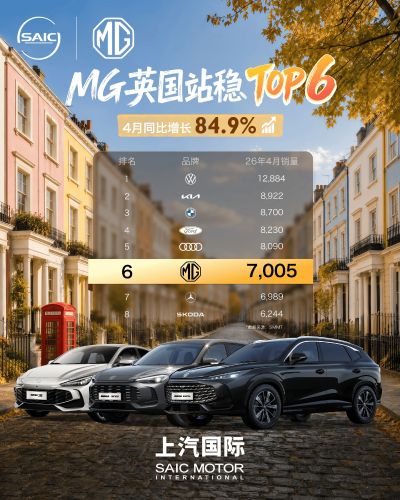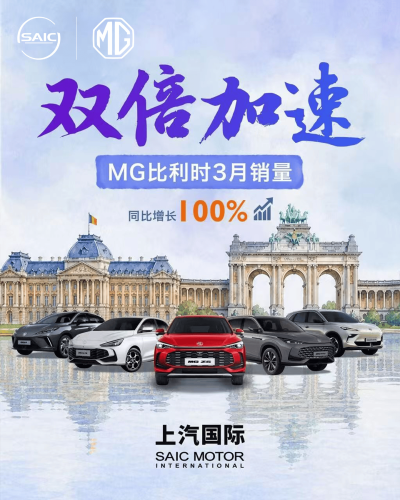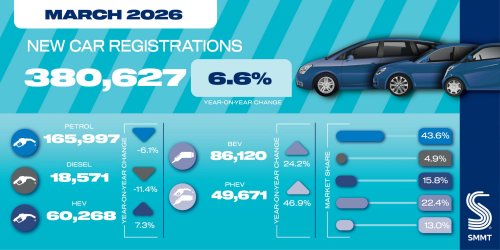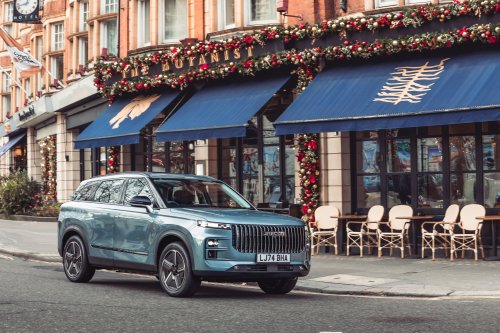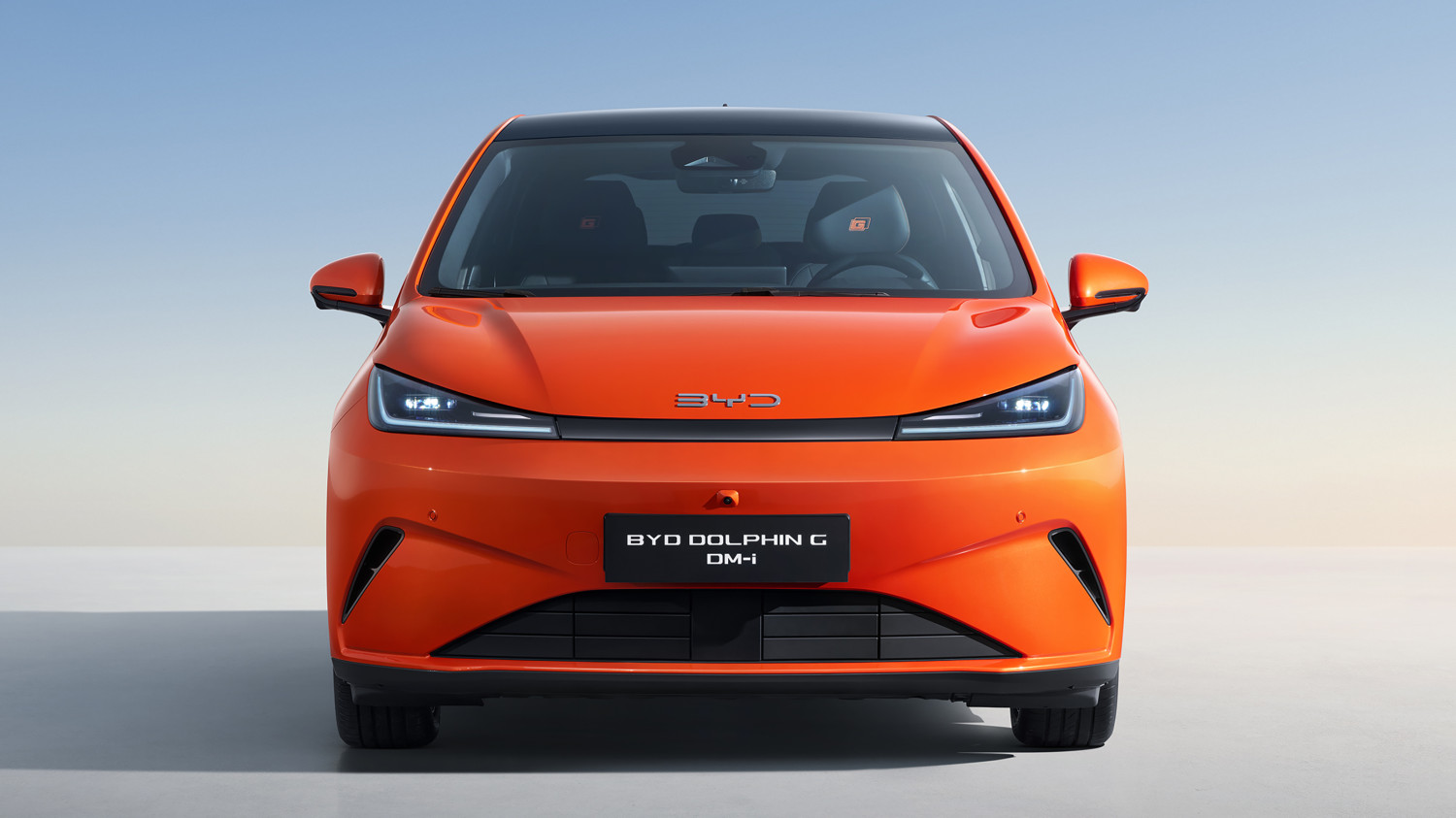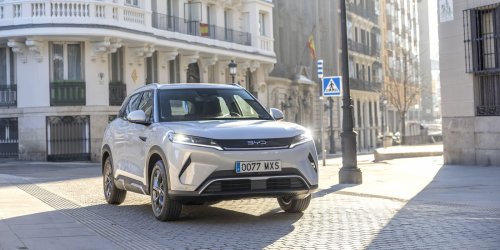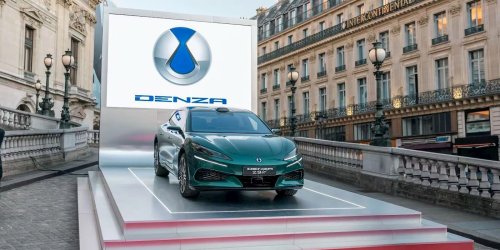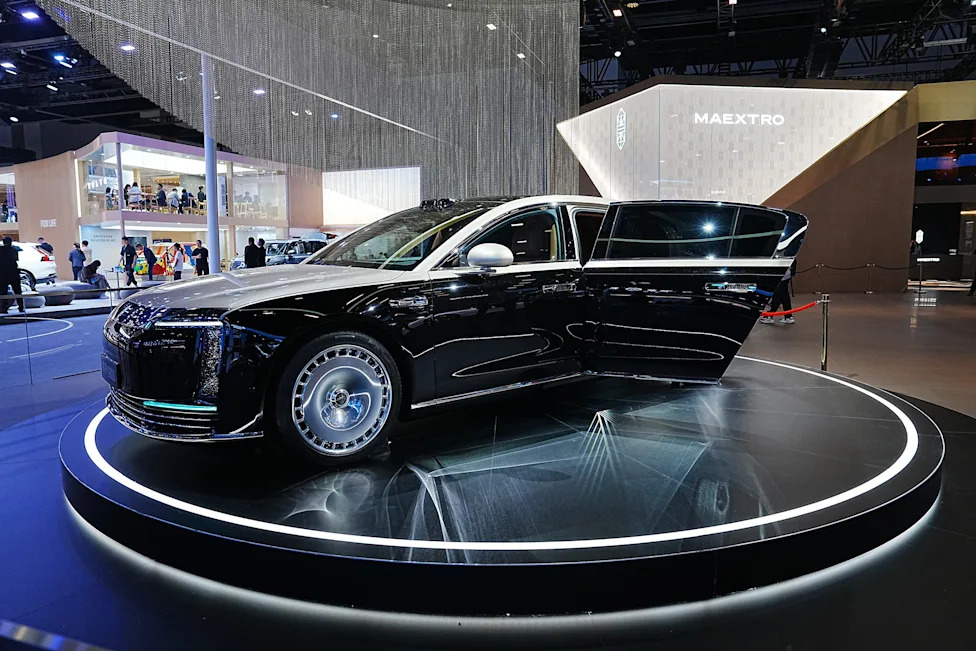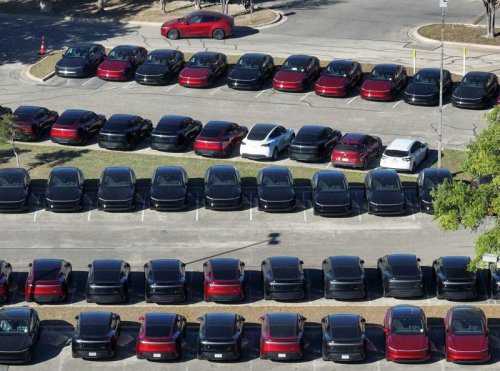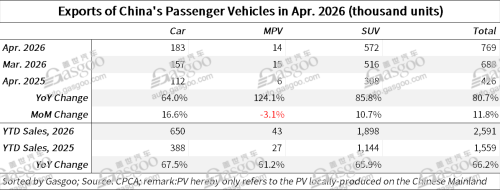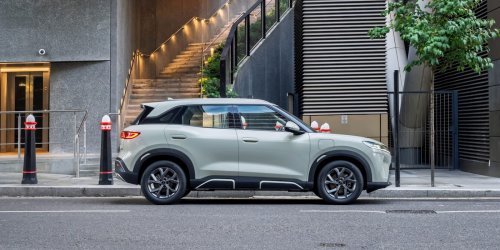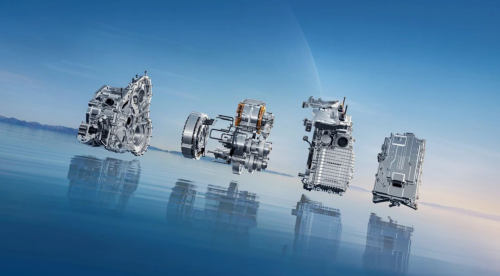
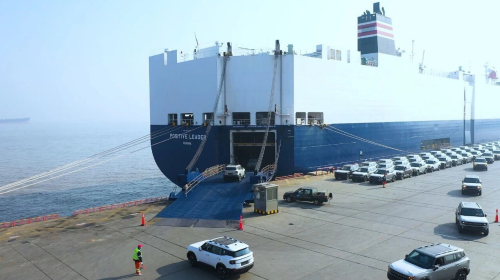
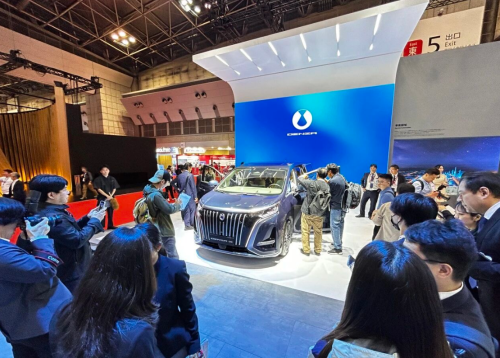


















Gasgoo Munich- By June 2026, according to authoritative sources, the European Commission is preparing to slap anti-subsidy tariffs on Chinese-made plug-in hybrid vehicles. Preparations are reportedly complete, and the measures are ready to roll out once they secure approval from a majority of EU member states.Yet even as Europe's barriers climb higher, Chinese automakers are defying gravity: their sales and market share in the region continue to rise.Data from Gasgoo Automotive Institute paints a striking picture: in the first quarter of 2026, Chinese vehicle exports to Europe hit 438,400 units — an 84.7% surge from a year earlier. Battery-electric vehicles led the charge with 198,300 units, up 94.6%, while plug-in hybrids jumped 152.4% to 106,000 units. By April 2026, Chinese brands had captured 9.8% of the European market, an all-time high, with their share of the pure-electric segment breaching 15% for the first time.This apparent paradox holds the key to understanding the current power struggle between Chinese and European automakers.EU Builds Trade High WallsIn October 2024, the EU officially levied five-year anti-subsidy tariffs on imported Chinese electric vehicles. On top of the standard 10% import duty, the bloc slapped additional anti-subsidy rates on different manufacturers: 17.0% for BYD, 18.8% for Geely, and 35.3% for SAIC Motor. Other cooperating firms, including NIO and XPENG, received 20.7%. For some models, the combined tax burden now hits as high as 45.3%.Talks didn't stop there. In April 2025, high-level discussions between China and the EU agreed to launch immediate negotiations on price commitments, exploring a minimum import price mechanism as an alternative to tariffs.By January 12, 2026, the two sides had reached a framework consensus on price commitments, with the EU simultaneously issuing guidance on submitting applications. Eligible Chinese battery-electric vehicle exporters could use this mechanism to bypass anti-subsidy duties. The industry hailed the agreement as a critical breakthrough in resolving the trade dispute.Yet as of June 2026, negotiations on price commitments remain ongoing, with full implementation still pending.Image Source: Chery AutomobileInitially, the EU's anti-subsidy strategy targeted only pure-electric vehicles, leaving plug-in hybrids untouched. In response, Chinese automakers swiftly pivoted, accelerating shipments of plug-in hybrid models to the region.Industry data validates that strategic shift. According to Gasgoo, plug-in hybrid exports to Europe surged 152.4% year-on-year in the first quarter of 2026 to 106,000 units, significantly outpacing the 94.6% growth in pure-electric shipments, which reached 198,300 units.By April 2026, plug-in hybrids accounted for nearly 29% of Chinese vehicle sales in Europe, compared to a 15.2% share for pure electrics. The data is clear: after the EU imposed tariffs on battery-electric vehicles, Chinese automakers shifted their export weight toward plug-in hybrids.The European Commission's plan to extend anti-subsidy tariffs to plug-in hybrids is a direct move to plug that loophole. Sources close to the matter note that since plug-in hybrids enjoy policy support in China similar to pure electrics, their rapid export growth is viewed as a potential threat to the local auto industry.Beyond tariffs, the EU is erecting higher-dimensional institutional barriers.On March 4, 2026, the European Commission unveiled the Industrial Accelerator Act (IAA). The proposal marks a shift in industrial governance logic from traditional "defensive trade remedies" to a "conditional market access" model. Analysts at Gasgoo note that since the anti-subsidy duties on Chinese pure-electric vehicles began in late 2024, the profitability and survival space for completely built-up (CBU) exports have been squeezed to a historical breaking point.Under the IAA, the EU plans strict scrutiny for investments exceeding 100 million euros from countries where manufacturing accounts for more than 40% of global capacity in key industries. The proposal sets six compliance requirements; companies must meet at least four to gain approval. These include capping foreign stake at 49%, investing via joint ventures, licensing IP and transferring proprietary technology to EU entities, spending at least 1% of annual revenue on local R&D, maintaining a local workforce ratio of no less than 50%, and sourcing at least 30% of parts locally. Notably, the 50% local staffing requirement is a mandatory threshold, exempt from the "pick four" rule.For public procurement, the bill mandates that participating electric vehicles must be assembled within the EU, with local content for non-battery components reaching at least 70%.While the bill doesn't name specific countries, Chinese companies exceed the 40% threshold in all four designated "emerging strategic industries": batteries, electric vehicles, photovoltaics, and key raw materials. China holds over 70% of global new-energy vehicle capacity and roughly 80% of battery production. Legal and industry analysts agree the bill's impact will fall primarily on Chinese investors.The IAA still requires approval from the European Parliament and the Council of the EU. On May 28, EU industry ministers held their first policy debate, but the European Council meeting on June 18 and 19 concluded without a final vote, leaving discussions ongoing.From product tariffs to investment access, from local content requirements to technology transfers — the EU is constructing a comprehensive, multi-layered defense system.High Walls, Yet Chinese Cars Keep ComingYet even as tariff and institutional barriers rise, Chinese brands continue to gain ground in Europe.Data from Gasgoo shows Chinese vehicle exports to Europe reached 438,400 units in the first quarter of 2026, an 84.7% jump. For the full year of 2025, exports hit 1.21 million units — more than a third higher than the 898,400 units recorded in 2024.Market share data traces an equally clear trajectory: Chinese brands' share in the EU soared from 0.5% in 2021 to nearly 10% by spring 2026. In April 2026 alone, that figure climbed to 9.8%, shattering the previous record of 9.5% set in December 2025.Some forecasts predict the full-year figure will officially top 10% in 2026. In Europe's pure-electric market, Chinese brands held a 15.2% share in April — a record high — while in the plug-in hybrid segment, they captured nearly 29%.At the individual automaker level, the momentum is widespread.Image Source: Chery AutomobileGasgoo data puts Chery at the top of the export charts, with first-quarter shipments approaching 110,000 units — a 228.4% surge. SAIC Motor followed with 96,300 units, up 36.2%, while BYD shipped 67,900 units. Leapmotor, leveraging its deep partnership with Stellantis, saw its exports soar 400% to 25,100 units, a remarkable pace of growth.In 2024, Leapmotor exported only a few thousand vehicles to Europe; by 2025, that figure had jumped to nearly 40,000 — a tenfold increase. Entering 2026, the company's first-quarter exports alone already exceeded 60% of its entire 2025 volume.Crucially, this growth isn't driven solely by rock-bottom pricing. BYD has launched its high-end sub-brand Denza in Europe, and Chery's brand portfolio has cracked the top ten for private sales in Spain. As foreign media bluntly put it: a Mercedes-Benz EQA starts at just over 50,000 euros, while Chinese brands at that price point offer significantly better configuration and range. "Consumers aren't stupid."In the first quarter of 2026, pure electrics and plug-in hybrids accounted for 45.2% and 24.2% of the 438,400 total exports, respectively, growing by 94.6% and 152.4%. The growth momentum for plug-in hybrids and extended-range electrics clearly outpaces pure electrics — exploiting the market window left by the EU's previous tariff exemption for plug-in hybrids.Analysts at Gasgoo advise Chinese automakers to wield long-range plug-in hybrids — priced competitively against internal combustion engines — as a blade to bypass high tariffs, while using pure electrics to build brand presence in low-tariff, high-penetration markets. That aligns with the view of NIO Vice President Hui Zhang, who argues that Chinese firms should expand their European offerings with plug-in hybrids and hybrids, noting bluntly: "For many Chinese automakers, this doesn't require new model development — they just need to bring their existing models here."Chinese brands seized this window of opportunity, rapidly pushing plug-in hybrids into Europe and grabbing market share in record time. From holding less than 1% of the market in 2021 to approaching 10% today, their presence in Europe is unrecognizable compared to the past.Image Source: BYD AutoMore importantly, this growth isn't a fleeting volume spike driven by cheap models. With BYD introducing its premium Denza brand and Chery entering the top ten for private sales in Spain, Chinese brands are shifting from merely "selling cars" to "building brands."Analysts suggest that Chinese automakers' foray into Europe has officially left the "wild west" era behind, entering a phase of systematic output defined by "selecting tracks for refined operations, aligning product engineering, and deepening capacity deployment." From the fringe to the mainstream, from testing the waters to deep cultivation — Chinese brands are completing a transformation from "intruders" to "participants.""Shopping Spree" Localization: How the Paradox HoldsThe higher the tariffs, the stronger the incentive to localize production. That is the underlying logic explaining the paradox of "higher walls, yet more cars."Consider the tariff math. Take a domestic OEM facing a 17.4% anti-subsidy rate. Add the 10% base duty, and the combined tax hits roughly 27.4%. On a vehicle priced around 32,000 euros, that's roughly 8,700 euros in tariff costs per unit. Shift to local production, and that cost vanishes — potentially improving per-vehicle profit margins by 15% to 20%.With the proposed IAA potentially taking effect by mid-2027, the window for Chinese automakers is narrowing — less than a year remains. Any self-built factory plan requiring two or three years to launch production would miss the deadline. That leaves only one viable option: acquiring or leasing existing European factories, retrofitting them, and starting production at breakneck speed.Consequently, a "shopping spree" for European factories is accelerating. Chery has partnered with Spain's Ebro-Ev Motors, taking a 40% stake to restart Nissan's former Barcelona plant. Production is expected by late 2026 or early 2027, with an initial capacity of 30,000 units. Chery also signed a memorandum of understanding with Nissan to explore contract manufacturing at its Sunderland plant in the UK.Image Source: SAIC MGSAIC Motor's MG brand, meanwhile, is building its own plant in Galicia, Spain. The first phase involves an investment of about 200 million euros, with a planned capacity of 120,000 units and a 2028 launch. Leapmotor is taking a lighter asset approach, utilizing Stellantis's Zaragoza plant to produce the B10 model starting October 2026. Geely, Dongfeng, and XPENG are also advancing their European landing plans through production line acquisitions or contract manufacturing in Spain, France, and Austria.A May report estimates that, based on announced and reported agreements, Chinese automakers could eventually produce over 2 million vehicles annually in Europe. The shift from relying on exports to building local manufacturing capacity is accelerating.This shopping spree is possible not only because Chinese automakers are desperate to localize, but also because European factories are awash in idle capacity waiting to be revived.Data shows the average capacity utilization of European assembly plants hovers around 55%, far below the 80% break-even line. Stellantis's European plants are running at just 46%. According to Jefferies, as of December 2024, Stellantis had about 1.6 million units of unused capacity compared to 2019 levels, while Volkswagen Group had 2.4 million units more than Stellantis. Just in the past year, Audi's Brussels plant, Nissan's Barcelona factory, and Ford's Saarlouis plant in Germany have all announced closures or production halts.Chronic overcapacity means fixed costs like equipment depreciation and maintenance don't vanish with lower production — idle plants bleed money daily. For European automakers, partnering with Chinese firms is a realistic way to revive assets and save jobs. As industry observers note, this isn't a one-sided invasion; it's a two-way street.Image Source: CATLFurthermore, with lagging battery technology and higher raw material costs, European EV manufacturing costs are at least 30% higher than China's — a gap difficult to bridge in the short term. By entering Europe with technology and capital, Chinese automakers are effectively using "Chinese efficiency" to activate "European capacity."From another angle, the EU's push for localization isn't purely defensive. Through equity caps and local content requirements, the bloc aims to maintain control over the industry even as it welcomes Chinese investment.It is a delicate game: Chinese automakers use local production to bypass tariff walls, while the EU uses rules to lock in local employment and technology retention. Both sides get what they need, yet both remain wary.ConclusionBeyond the anti-subsidy duties on Chinese pure electrics, tariffs on plug-in hybrids are now poised to launch — yet Chinese brands continue to climb the sales and market share charts. The two trends seem contradictory, but they are mutually explanatory: the higher the tariffs, the more they force Chinese automakers to accelerate their localization plans.Once local production is in full swing, market share growth will no longer rely solely on aggressive pricing to drive volume, but will be backed by genuine manufacturing capacity. This shift from "exporting" to "manufacturing" is reshaping the fundamental logic of Chinese automakers' global expansion.As Wu Mei, General Manager of Joyson Electronics Europe, observes, landing physical capacity is just the beginning. The real challenge for Chinese automakers lies in building "predictable" trust in Europe — from aligning on engineering language and speeding up decision-making to reliably delivering on promises. Walls can be bypassed, but there are no shortcuts to building trust.