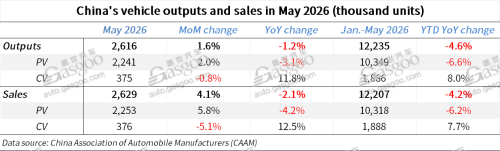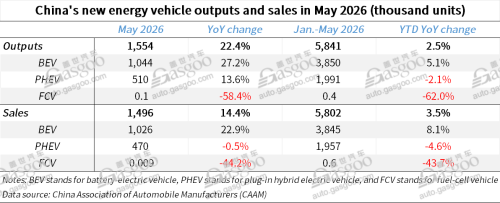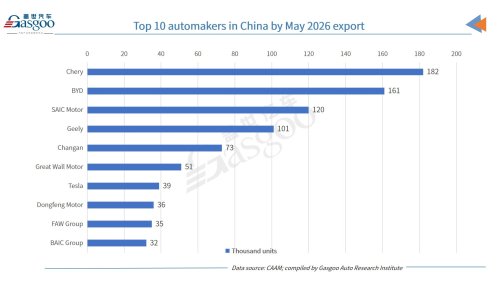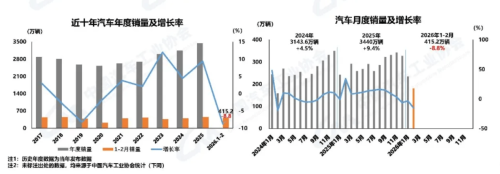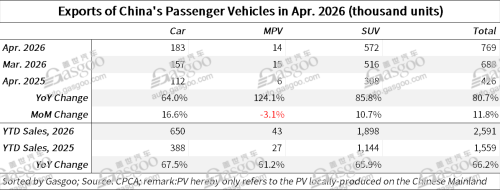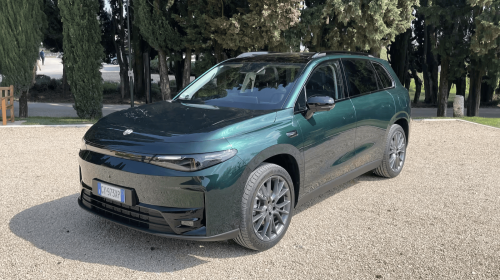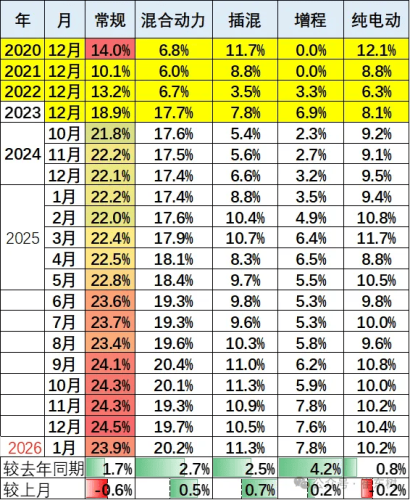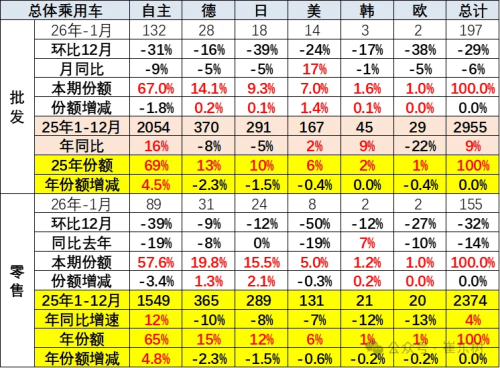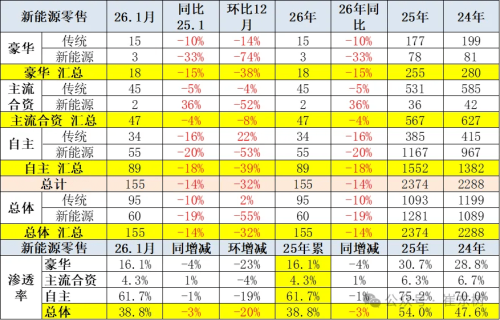



















Image: Li AutoAfter a period of stagnation with minimal growth, China’s electric vehicle industry has regained momentum. This resurgence is evident in the April figures released by the China Association of Automobile Manufacturers (CAAM). The 1,344,000 battery-electric vehicles and plug-in hybrids sold last month represent a 9.7% increase compared to the same month last year and a 7.4% rise compared to March 2026. This also marks the first time this year that China has recorded higher monthly sales of battery-electric vehicles and plug-in hybrids than in the previous year.The trend is clear: rising exports are offsetting weaknesses in the domestic market. More on this shortly. First, it is important to note that the CAAM statistics reflect wholesale sales—that is, sales of all vehicles manufactured in China, both for the domestic market and for export. New Energy Vehicles include battery-electric vehicles, plug-in hybrids—including range-extender vehicles—and fuel cell electric vehicles. However, the latter play a minor role in China, where the market is dominated by BEVs and PHEVs.In April, NEVs accounted for 53.2% of the market, a significant jump from the previous month’s 43.2%. Throughout the year so far, market penetration had remained at the level of Q1 2025. April now stands out clearly, building on the strong performance of Q4 2025, when China first surpassed the 50% NEV share milestone. However, the gap between domestic and export demand continues to widen.According to CAAM statistics, domestic NEV sales in April fell to 914,000 units—a year-on-year decline of 10.8% and only a slight stabilisation (+3.7%) compared to March. This marks the fourth consecutive month in which sales have lagged significantly behind the corresponding months of 2025. The lack of growth in the domestic market may be attributed to the expiry of several New Energy Vehicle incentives at the turn of the year 2025/2026. Typically, demand recovers within a few months in such situations, but this has yet to materialise in China.In contrast, expansion in overseas markets continues at a rapid pace. As the Chinese e-mobility portal CN EV Post notes, ‘this robust external demand provides sustained momentum for the overall stability of China’s auto industry.’ In April, 430,000 NEVs built in China were exported—a new record (+110% year-on-year) and 16% higher than March’s result. It was only in November 2025 that NEV exports first surpassed the 300,000 mark. Within a few months, they have now comfortably exceeded 400,000 units.To further highlight the significance, consider this comparison: in April 2026, exports accounted for nearly one-third of China’s NEV wholesale sales, while domestic sales made up around two-thirds. In April 2025, exports stood at 200,000 units compared to 1,025,000 domestic sales, meaning exports represented just under 20% of the total a year ago. Despite high tariffs in some key markets, exports and their economic importance for the country are growing at an extraordinary pace.Looking at the Chinese automotive market as a whole, total wholesale sales in April amounted to 2.526 million units—a slight year-on-year decline of 2.5% and a 12.9% drop compared to March. However, exports across all drive types continued to gain importance: 901,000 units exported from China in April represent a 74.4% improvement over April 2025.The CAAM statistics further distinguish between BEVs and PHEVs. BEV wholesale sales in April reached 905,000 units (+10.2% year-on-year and +8.9% month-on-month), while PHEVs recorded 439,000 units sold (+8.8% year-on-year and +4.3% month-on-month). Broadly speaking, NEV sales in China are split in a 2:1 ratio between BEVs and PHEVs. Focusing on exports, both technologies saw significant gains: battery-electric vehicles reached a new record of 260,000 exports (+85.4% year-on-year), while PHEVs surged to 170,000 units (+180% year-on-year).cnevpost.com