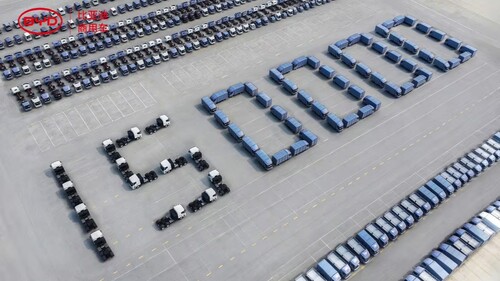
Adam Côté · 5 months ago@adamcote70Germany Unveils €3 Billion EV Subsidy, Chinese Brands Eligible Liked by+54 othersBYDLeapmotorPost commentRelated PostsWhat to expect from Chinese car brands at the Paris Auto Show 2026Morgan Rogers · 23 days agoGeely Battleship 700 launches: A BYD FCB Ti 7 challenger with 10,000+ orders in 12 minutesWilliam King · 15 days agoChinese NEV sales rankings in September 2026: BYD, Leapmotor, Changan NevoKaitlyn Martin · 24 days agoBYD launches 13 USD “Flash Charger” cat bed, promises faster naps, sells out immediatelyWilliam Côté · 15 days agoChina Floods The 2027 World Car Of The Year Field With 27 Contenders 70 · Adam Lavoie · 25 days agoVolkswagen Put an EV Into a Giant Popcorn Machine in Wild and Bizarre Stress TestAdam Lee · 15 days agoHalf Of The World Car Of The Year Contenders Are Chinese 80 · Samuel Wright · 27 days agoBYD builds 150,000th commercial NEV – an 800 hp Q3 electric semi truckAlexander King · 15 days agoChina's New-Energy Vehicle Startups at Midgame: How Long Will the Window of Opportunity Last? 48 · Connor Scott · 1 months agoBYD Ti 7 Hits Market in UzbekistanAva Anderson · 15 days agoThe Unstoppable Rise of Leapmotor — August’s China EV Sales Report (45% BEV Share) 53 · Jacob Bouchard · 1 months agoCATL surpasses LG Energy Solution to claim top spot in global battery patentsMorgan Labelle · 15 days agoNew Model Competition, Can't Slow Down? 59 · Victoria Carter · 1 months agoChina and EU reportedly reach understanding on hybrid vehicle trade, averting potential tariffsGabriel White · 15 days agoChina Passenger Car Retail Falls 23% in Aug, SUVs Lead Growth 91 · Caleb Clark · 1 months agoBYD unveils design for its first self-developed humanoid robotOliver Macdonald · 15 days agoIs the "One Toyota" Era Coming in China? 84 · Jackson Leblanc · 1 months agoChina’s busiest holiday reveals Nio’s swapping efficiency triples BYD’s Flash ChargingNicole Carter · 15 days agoChina's passenger vehicle exporters overview (Jan.-Jul. 2026): Geely surges 410.7% in Central & South America丨Gasgoo Automotive Research Institute 60 · Nathan Labelle · 1 months agoChery’s Plug-In Diesel Stockman Pickup Has 469 HPAva Lewis · 16 days ago



 +54 others