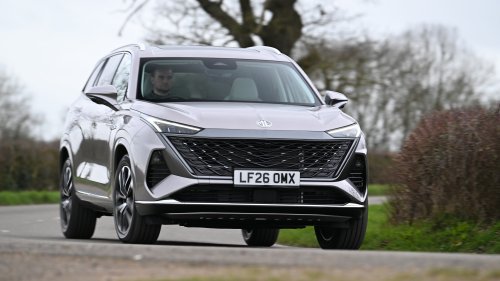
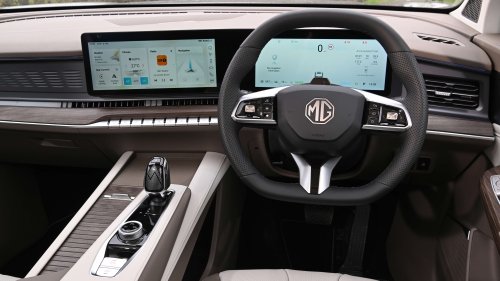
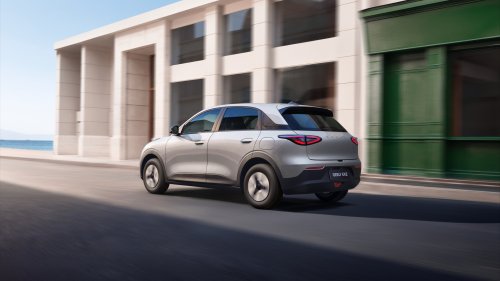
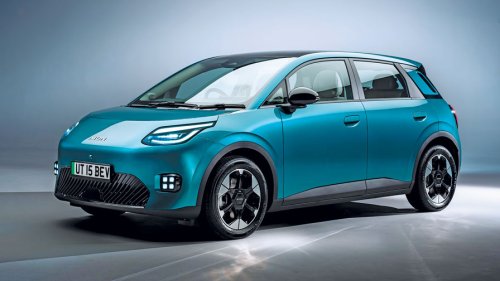
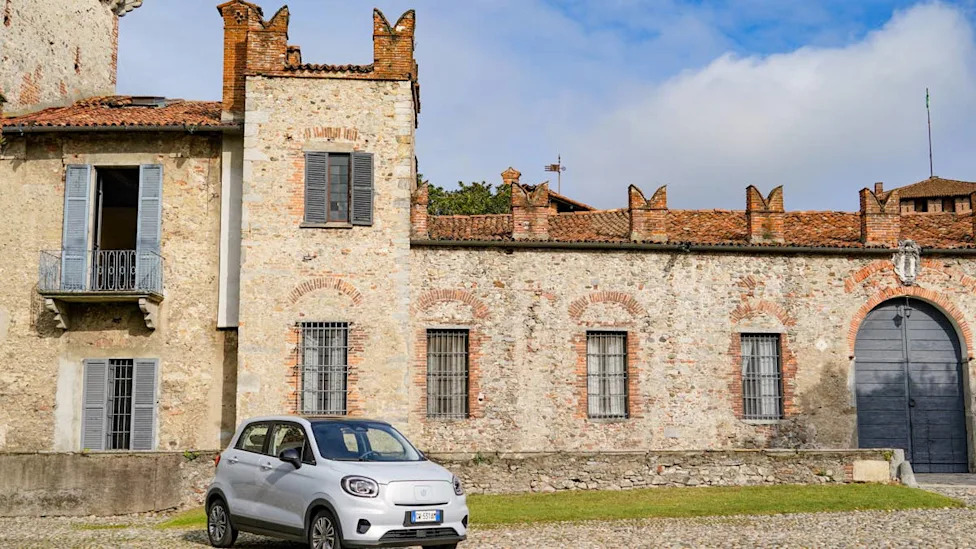
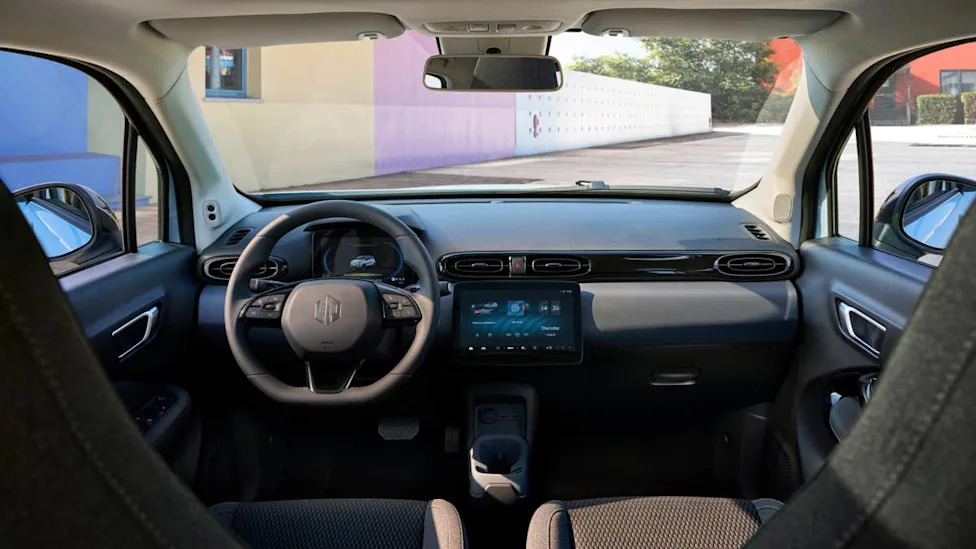
Autoblog and Yahoo may earn commission from links in this article.Chinese automaker Leapmotor is expanding its presence in Europe's largest auto market thanks to its partnership with Stellantis, with a highly competitive electric vehicle lease program. Starting at just 49 Euros, or $58, the Leapmotor T03 City Car leverages Germany's new EV subsidies to hit the market cheaper than some phones. Despite the low price tag, the vehicle comes equipped with standard perks including a rear-view camera, six airbags, and a panoramic sunroof.By combining Chinese components, localized German EV subsidies, and the existing Stellantis manufacturing and distribution infrastructure, Leapmotor has managed to drop the monthly payment to exactly half the cost of its direct European competitors. For context, Stellantis’s own Fiat 500e demands roughly 99 Euros or $115 a month. Demand for compact cars is strong in urban Europe.StellantisLeapmotor T03 City CarBlending urban utility with a surprisingly premium feature set, and "sufficient" performance and range, the T03 is an undeniable value proposition. Underpinned by a 37.3 kWh battery, it offers a WLTP range of approximately 174 miles, making it more than capable for daily commuting. Connected with an appropriate charger, it can charge from 30 percent to 80 percent in 36 minutes.AdvertisementAdvertisementIts compact footprint, being 142.52 inches long and 65.04 inches wide, and tight turning radius are especially helpful in dense city centers, and considering its range and power output, the city centers are where most of its target demographic would be.StellantisThe Leapmotor T03 is powered by a front-mounted Permanent Magnet Synchronous Motor (PMSM) producing 95 hp and 116 lb-ft of torque. This setup allows for a 0–62 mph sprint in 12.7 seconds. Quite sufficient for a $58 per month proposition.Stellantis and Leapmotor PartnershipThe partnership enabling this pricing is the Stellantis-led joint venture. Leapmotor International (LPMI), established after Stellantis paid $1.75 billion for a 20 percent stake in Leapmotor back in 2023, was originally framed as a way for the legacy automaker to access cost-effective Chinese EV architecture. Instead, it has morphed into a launchpad. By granting Leapmotor immediate access to Stellantis' European dealership network of over 850 points of sale. Stellantis erased the astronomical logistical barrier to entry that typically paralyzes foreign startups.Stellantis and Leapmotor also confirmed they are radically expanding their industrial footprint in Europe to bypass the EU's impending "Made-in-Europe" regulatory requirements. The roadmap dictates that Leapmotor’s upcoming B10 SUV will be assembled directly alongside Opel products at Stellantis’ Figueruelas plant in Zaragoza, Spain. Even more significantly, Stellantis is in active discussions to permanently transfer ownership of its Villaverde plant in Madrid to LPMI's Spanish subsidiary. Other manufacturers are considering similar moves due to unused production capacity, and the potential for capturing market share.StellantisConsequences for Legacy BrandsTariffs and protectionist rhetoric are functionally useless if legacy automakers willingly hand over their factory floors and supply chains to the very competitors threatening their margins. The impact is already violently altering the German market. According to fresh data from the German Federal Motor Transport Authority (KBA), Leapmotor’s deliveries in the country surged 358 percent in the first four months of 2026, pushing past 4,500 units. The aggressive leasing strategy directly attacks Europe's heavy reliance on B2B fleet transactions and subscription models, a vulnerability legacy brands thought they had secured. Ford is now considering a similar agreement for America. Is collusion rather than competition the way forward?This story was originally published by Autoblog on May 15, 2026, where it first appeared in the News section. Add Autoblog as a Preferred Source by clicking here.




















 +18 others