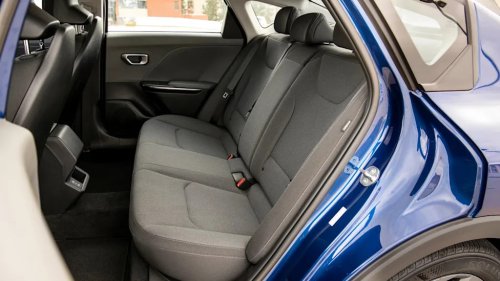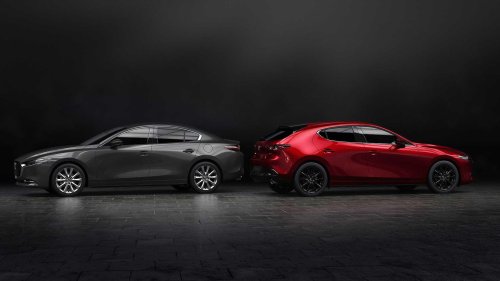
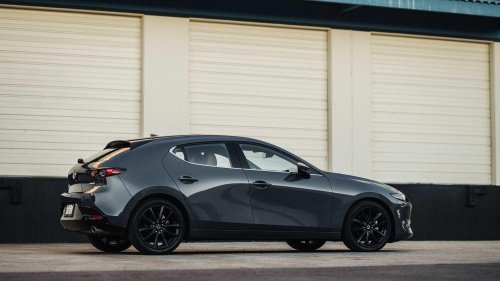
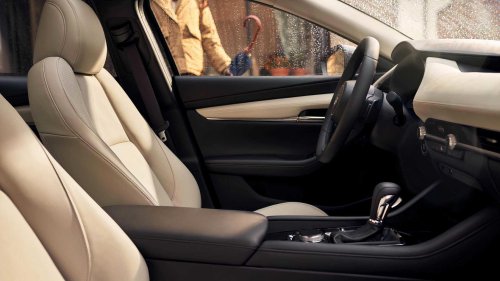
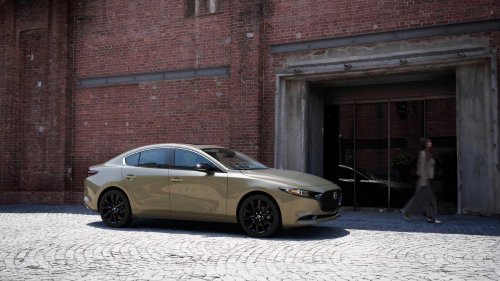
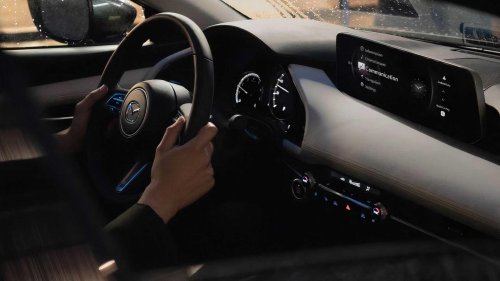
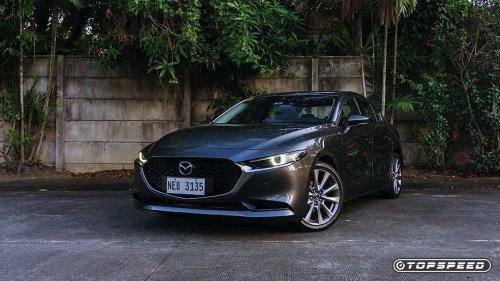
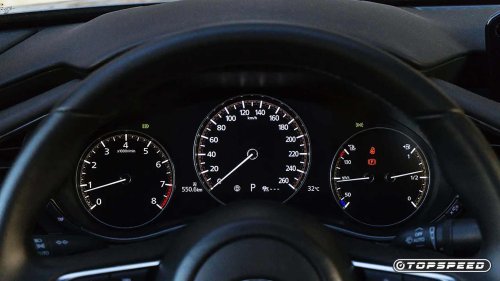
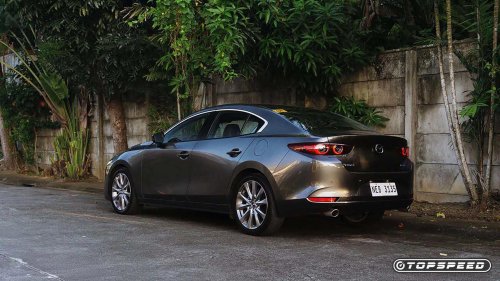
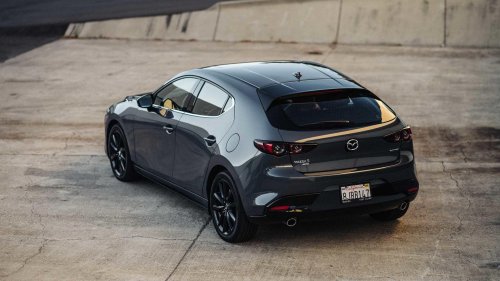
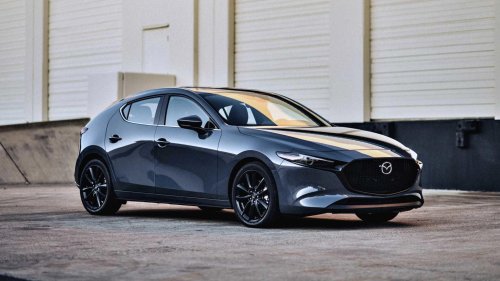
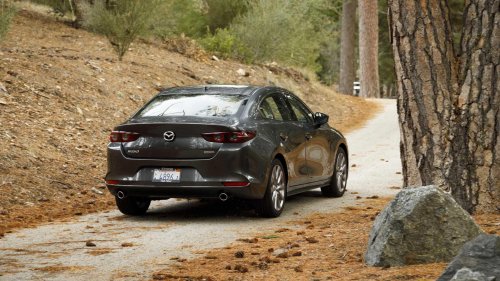
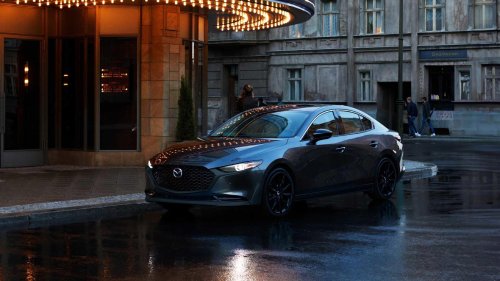
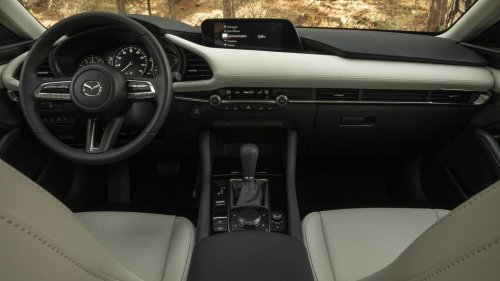
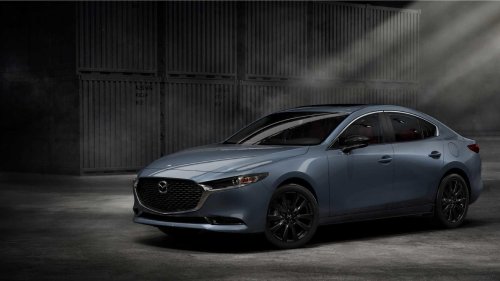



















Automakers over the years have pushed the boundaries of what it means to have a premium experience in their vehicles. Sometimes, it reaches a point where a mainstream brand exceeds the premium feel of true premium brands. It isn't even helped by the fact that, over the past decade, German luxury car brands introduced entry-level models with a lower price point, thus creating this situation where mainstream and premium have started to meet somewhere in the middle.Case in point, the Japanese sedan and hatchback for today's topic. The brand that created this passenger car, after all, has premium aspirations. This vehicle was one of this brand's first creations when it suddenly decided that it was going premium. The attention to detail was immense, and the resulting vehicle was one that received multiple awards over the years. Also, amidst the ever-increasing prices of vehicles, this one's relatively affordable. The Mazda 3's Premium Aspirations Mazda Over the past decade, Mazda has been on a mission to become a brand that sits in this no-man's-land, where it falls between mainstream and premium. Their first vehicle to fulfill this mission? The Mazda 3. The current generation model debuted in 2019, and as the highly praised previous generation model was still in high demand, it was no surprise that the world's eyes were focused on the Mazda booth during the 2018 Los Angeles Auto Show. Engineered To Detail Mazda I was fortunate enough to speak with one of the engineers of the current Mazda 3 during its Philippine press drive in 2019. The attention to detail begins with the evolved Kodo design—the first production Mazda to do so. See the side profile? It has an absence of lines, which requires final assembly to have minimal tolerances. That's because the slightest deviation from the panel gaps will disrupt the interplay of light and shadow. Even the LED turn signals, which in recent model years now have this fading effect when they turn off. Yes, it is merely just a design touch, but it adds a sense of calm to an otherwise cold feeling when seeing LED turn signals that abruptly turn on and off.Mazda Speaking of lights, even the white LED interior lights have been designed with minimal tolerances for their desired color temperature. Why? Well, you know how those illuminated mirrors inside dressing rooms help you look better than you actually are? That same principle applies to the interior, where white LEDs with a slight warmth make the interior feel more welcoming and pleasant to the eyes. Despite the white lights coming from different sources, each one has been tuned together to feel cohesive. Yes, even the white dials of the digital and analog gauges. Down To Sound And Refinement Mazda Because of Mazda's premium aspirations, the vehicle didn't just look premium—it drove in a premium manner, too. This began with the vehicle structure itself, because though reducing noise levels is all well and good, Mazda's engineers discovered that drastic sound changes from, let's say, switching over from concrete to asphalt roads, are considered unpleasant. They aimed to "linearize" this by introducing epoxy damping nodes and bonds to the vehicle frame, and the vehicle frame itself has fewer holes, so there are fewer entry points for noise. Along with thick floor mats, thicker windows, lower wipers that sit under the hood, and sound absorption tubes, among other measures, this is the most refined Mazda 3 to date.CarBuzz Even the sound system has been rethought in the current Mazda 3, because guess what? Even speakers contribute to vibrations. To reduce the vibrations even further, the bass speakers of the Bose sound system have been relocated from the door panels to the vehicle cowl itself. This is why, even at a high volume, you won't feel any rattles. Finally, the switch to a torsion beam rear suspension wasn't for cost-cutting, but for refinement. With a simpler construction, there are fewer fine-tuning points for refinement versus the previous model's complex multi-link rear. Besides, if it were a cost-cutting measure, they wouldn't save much since it is a new, patented design where the beam expands wider from the center. The stamped sections on each end minimize the rear wheel toe-in that these suspension systems often experience. How It Drives In The Real World Isaac Atienza You know what's amazing about all of what we learned from Mazda back in 2019? It is that, even in 2026, the Mazda 3's driving experience is still special in its own way. Sure, many competitors now offer a hybrid, but for all-out emotion, the Mazda 3's still top of the class. Just-Right Sportiness For The Road Isaac Atienza The current Mazda 3's premium aspirations mean that, versus the model it replaced, the sportiness factor was slightly toned down. Yet even then, the Mazda 3 in 2026 is still the most emotional car to drive. It begins with the steering, in which Mazda's insistence on heavier steering means it feels hydraulic-like and rich in feel. Versus the previous model, it has less on-center sharpness, but that's with the intention that Mazda aims to lessen the driver's need for minor steering corrections when cornering. Indeed, this is exactly just that—a point-and-shoot sporty car, whose surprising suspension smoothness is matched with excellent body control. 2026 Mazda 3 Performance Specs Granted, even Mazda concedes that the previous model's multi-link rear suspension is superior on track, but that's just it. On a public road, where you're driving at the speed limit, you won't reach the limitations of a torsion beam rear axle. Furthermore, with the choice of a 2.5-liter four-cylinder engine in both turbo and naturally aspirated guises, these engines may not be their punchiest, but the turbo in particular offers diesel-like torque delivery. The six-speed auto or manual is a willing ally, even rev-matching when downshifting through the paddles. Note, however, that the manual is limited to a single Mazda 3 hatchback variant, specifically the 2.5 S Premium. Still, it's the variant I like the most, design-wise. Along With Plush Refinement Isaac Atienza Finally, the brand's Lexus-like attention to detail has resulted in a Mazda 3 that feels premium to drive, due to significantly less road and wind noise, along with stable driving dynamics that nearly match a German luxury car. Of course, a BMW, for instance, is still more rigid and stable (I've reviewed a 1 Series hatch already, and that still feels more substantial), but among mainstream cars, the Mazda 3 is one of the quietest among Japanese brands. What can somewhat make its voice heard is the 2.5-liter non-turbo four-cylinder, since the engine isn't that rich in torque, which means you'll have to rev it a bit more. Then again, it is not what you'd consider obtrusive.Mazda Ride quality is also smooth, though in typical Mazda fashion, there's a slight damping firmness to retain that signature sporty driving feel. Granted, there's a slightly better nuance with a Honda Civic's multi-link rear suspension and overall ride balance, but the Mazda 3 isn't too far off. Among gas-powered cars, the Mazda 3 is one of the most refined, since the non-hybrid Civic's desperate need for more sound insulation is too hard to ignore. Elegance In Sportiness Mazda The current-generation Mazda 3 may be a six-year-old car at this point, but credit where credit is due, as its Evolved Kodo design still looks beautiful and unlike anything else on the road. An Interplay Of Light And Shadow Mazda Notice how I'm using so many of the Evolved Kodo Design's marketing taglines? That's because it really isn't a gimmick, especially with the Mazda 3's sole reliance on gentle curves and shapes, which means that its side profile has a signature C-shaped reflection that is unlike anything you know in the car design realm. It's a clever take on the character line, though, as part of Evolved Kodo, there's a beautiful line that runs from the LED headlights and then fades neatly towards the side profile. The rear hatch's sheer metal girth may not be to everyone's taste, but to me, it's such an iconic piece of design in 2026. The sedan looks dapper, too, though a bit more conventional than the hatchback.Mazda The base 2.5 S variants have 16-inch wheels, while every other variant comes with 18-inch wheels in either silver or black, depending on the trim level. Though LED headlights and taillights are standard, only the top-of-the-line Turbo models get the fancier circular LED daytime running lights. Soft And Crisp Touchpoints Mazda Perhaps that near-luxury feel of the Mazda 3 is truly felt when you sit inside the vehicle. The design is clustered into three distinct sections—the driver's gauges, the head-up display, and the Mazda Connect infotainment in either 8.8- or 10.25-inch, depending on the variant. The interior layout is intuitive, and I am a huge fan of the rotary knob controller for the infotainment. The physical controls have been carefully designed for a tactile premium feel, while almost every major section of the cabin is wrapped in leather, leatherette, or soft-touch materials.Mazda Audiophiles will love the Bose sound system, especially since the bass speakers' location on the vehicle cowl means it doesn't rattle the interior. In fact, even the standard eight-speaker Mazda Harmonics sound system is already very good. Drawbacks? There's a large expanse of gloss black on the center console that easily scratches, while the rear seat space isn't as generous as its rivals. Cargo space isn't as large, either, but at least you get a compact passenger car that can make the BMW 2 Series GranCoupe nervous.Sources: Mazda