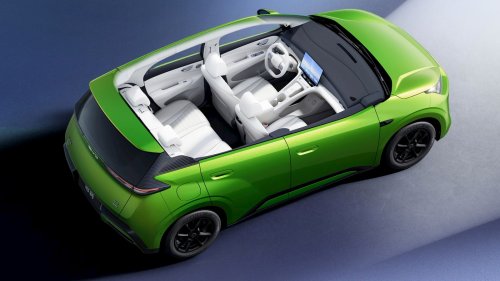
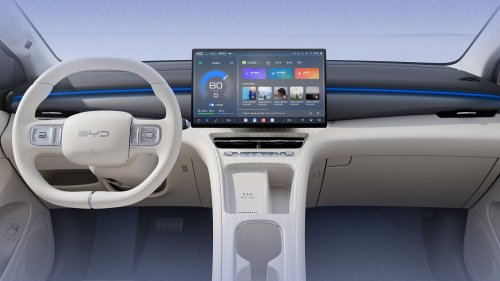
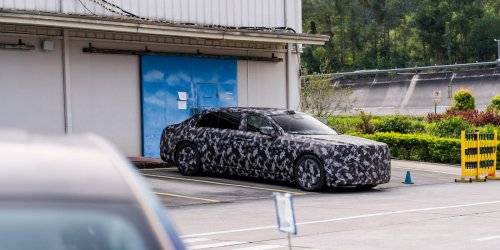
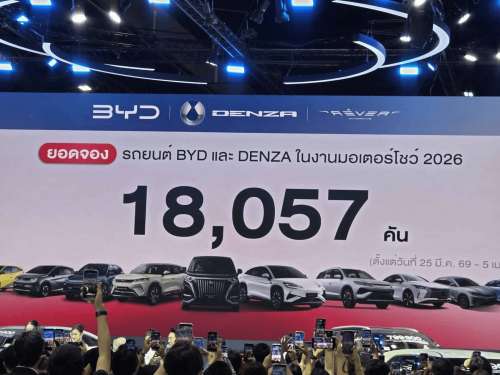
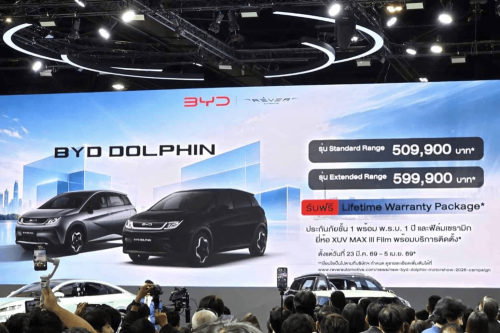
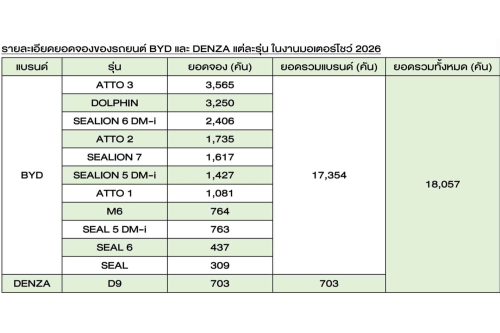
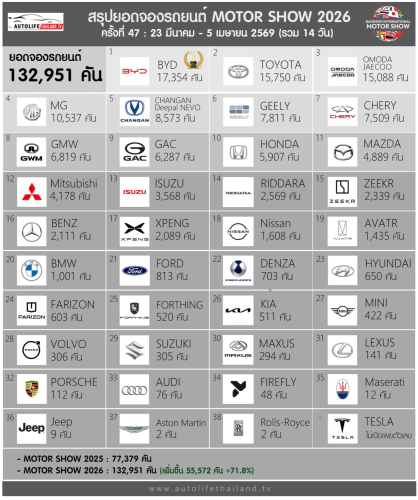
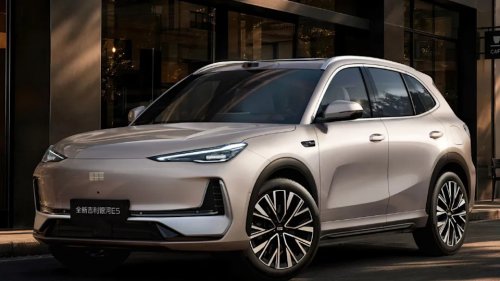
At the 47th Bangkok International Motor Show (BIMS 2026), BYD secured 18,057 orders, ranking first in total bookings. This represents a 74% increase from 10,353 units in 2025, setting a new record for Chinese brands at the Thai auto show. BYD secured 18,057 orders at BIMS 2026 In terms of brand breakdown, BYD contributed 17,354 units, while Denza accounted for 703 units, with orders concentrated on several core models. The ATTO 3 emerged as the most popular model with 3,565 orders, followed by the Dolphin with 3,250 units. Together, the two accounted for 37.7% of total orders. These small and compact battery electric vehicles align well with Thailand’s price-sensitive market and focus on cost of ownership. BYD Dolphin price Aggressive retail strategies played a key role in driving order volume. Both models were offered with lifetime battery warranty policies and highly competitive discounts. The long-range version of the ATTO 3 featured an additional discount of THB 30,000 ($920), while the Dolphin standard-range and long-range variants were priced at THB 509,900–599,900 ($15,620–$18,370). Beyond the core models, other BYD vehicles also delivered stable performance. The Sealion 6 DM-i, ATTO 2, and Sealion 7 recorded 2,406, 1,735, and 1,617 orders respectively, while the Denza D9 secured 703 orders. BYD order data across different models Other Chinese brands also saw strong momentum at the show, sweeping eight spots in the top 9 automakers. Chery Group recorded over 22,000 orders in total, including 15,088 units from OMODA & JAECOO and 7,509 units from Chery sub-brands. SAIC’s MG brand received 10,537 orders. Changan’s Deepal and Qiyuan brands combined for 8,573 orders. Geely recorded 7,811 orders, with the EX2 contributing 6,105 units and the EX5 adding 1,706 units. Order data of automakers at BIMS 2026 Great Wall Motor, GAC (including Aion and Hyptec), and XPeng recorded 6,819, 6,287, and 2,089 orders respectively. The surge of Chinese brands is partly driven by Thailand’s ongoing EV policy incentives, as well as the gradual rollout of localized production, improving both pricing and supply conditions and enabling faster market expansion. In contrast, traditional Japanese brands showed a more conservative pace. Toyota ranked second with 15,750 orders, while Honda and Nissan recorded 5,907 and 1,608 units respectively, indicating a widening gap with Chinese competitors.


















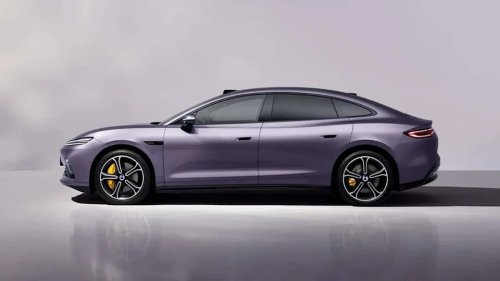
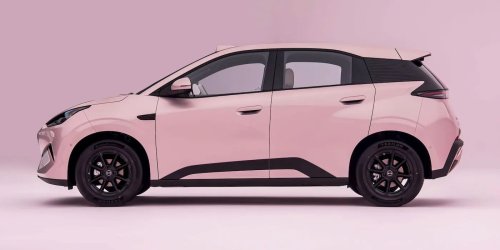
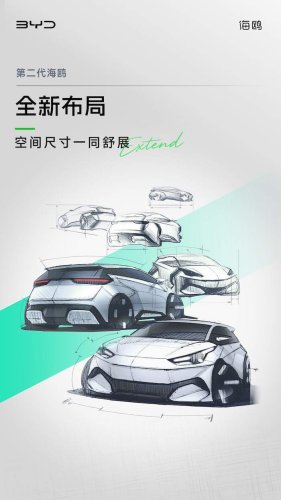
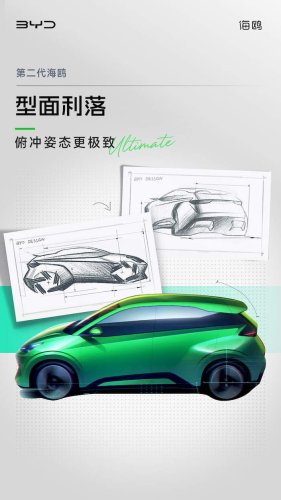



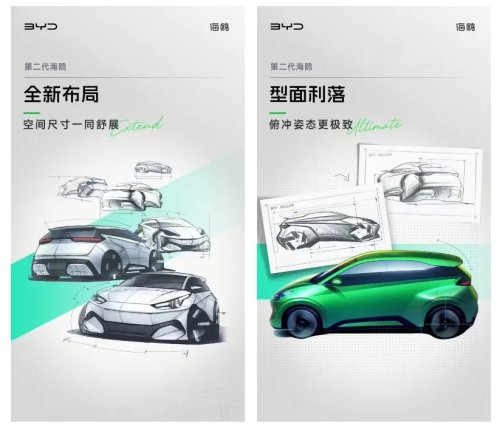
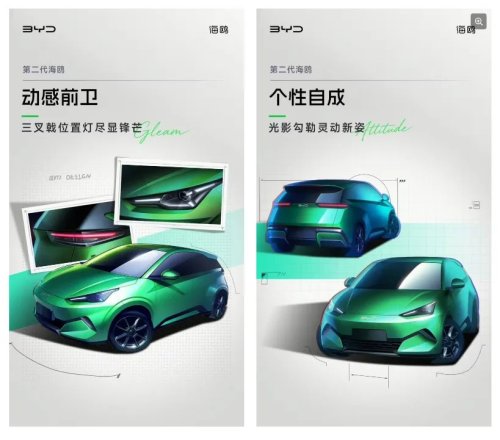
![BYD, BYD Seagull, BYD offers a closer look at the new Seagull EV [Images]](https://cdn.topcarnews.net/thumb/id/aHR0cHM6Ly9pMC53cC5jb20vZWxlY3Ry-ZWsuY28vd3AtY29udGVudC91cGxvYWRz-L3NpdGVzLzMvMjAyNi8wOS9CWUQtbmV3-LVNlYWd1bGwtRVYtdXBkYXRlLmpwZWc_-dz0xNTAwJmFtcDtxdWFsaXR5PTgyJmFt-cDtzdHJpcD1hbGwmYW1wO3NzbD0x/9c0b758dc4a218f611566b2a03c52e8a.jpeg?t=20261006&post_id=64651)
![BYD, BYD Seagull, BYD offers a closer look at the new Seagull EV [Images]](https://cdn.topcarnews.net/thumb/id/aHR0cHM6Ly9lbGVjdHJlay5jby93cC1j-b250ZW50L3VwbG9hZHMvc2l0ZXMvMy8y-MDI2LzA5L0JZRC1uZXctU2VhZ3VsbC1F-Vi0xLmpwZWc_c3RyaXA9aW5mbyZhbXA7-dz03MDA/9f44752c6c4b6208b3a29d7e2ceaf455.jpeg?t=20261006&post_id=64651)
![BYD, BYD Seagull, BYD offers a closer look at the new Seagull EV [Images]](https://cdn.topcarnews.net/thumb/id/aHR0cHM6Ly9lbGVjdHJlay5jby93cC1j-b250ZW50L3VwbG9hZHMvc2l0ZXMvMy8y-MDI2LzA5L0JZRC1uZXctU2VhZ3VsbC1F-Vi0zLmpwZWc_c3RyaXA9aW5mbyZhbXA7-dz03MDA/53e754be2aacba076b7b389ef9413f41.jpeg?t=20261006&post_id=64651)
![BYD, BYD Seagull, BYD offers a closer look at the new Seagull EV [Images]](https://cdn.topcarnews.net/thumb/id/aHR0cHM6Ly9lbGVjdHJlay5jby93cC1j-b250ZW50L3VwbG9hZHMvc2l0ZXMvMy8y-MDI2LzA5L0JZRC1uZXctU2VhZ3VsbC1F-Vi5qcGVnP3N0cmlwPWluZm8mYW1wO3c9-NzAw/3b0cb7f441d090c464769d93120d8543.jpeg?t=20261006&post_id=64651)
![BYD, BYD Seagull, BYD offers a closer look at the new Seagull EV [Images]](https://cdn.topcarnews.net/thumb/id/aHR0cHM6Ly9lbGVjdHJlay5jby93cC1j-b250ZW50L3VwbG9hZHMvc2l0ZXMvMy8y-MDI2LzA5L0JZRC1uZXctU2VhZ3VsbC1F-Vi0yLmpwZWc_c3RyaXA9aW5mbyZhbXA7-dz03MDA/ea2b4ebf38c4e9bf732d179d639b1562.jpeg?t=20261006&post_id=64651)
![BYD, BYD Seagull, BYD offers a closer look at the new Seagull EV [Images]](https://cdn.topcarnews.net/thumb/id/aHR0cHM6Ly9lbGVjdHJlay5jby93cC1j-b250ZW50L3VwbG9hZHMvc2l0ZXMvMy8y-MDI2LzA3L0JZRC1TZWFndWxsLUVWLXVw-ZGF0ZS0zLmpwZWc_c3RyaXA9aW5mbyZh-bXA7dz0xNDAw/02a0f7b5011767092a1ea11a79495fc7.jpeg?t=20261006&post_id=64651)