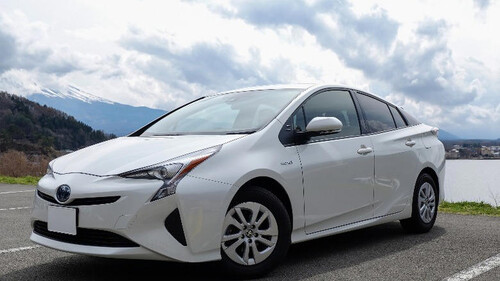
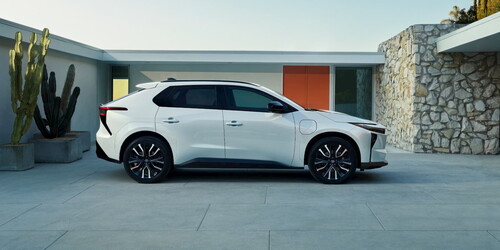
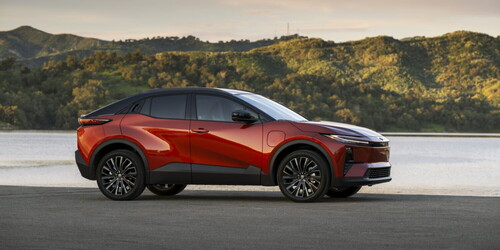
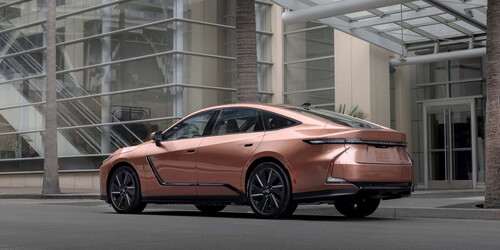
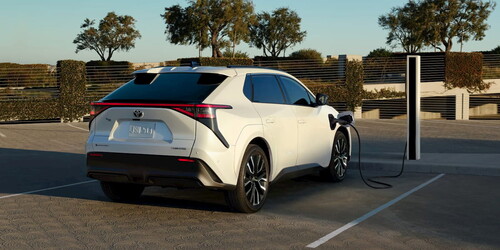
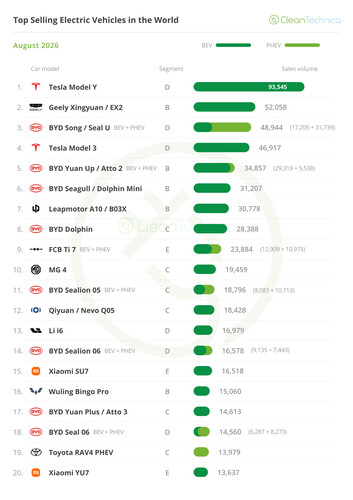
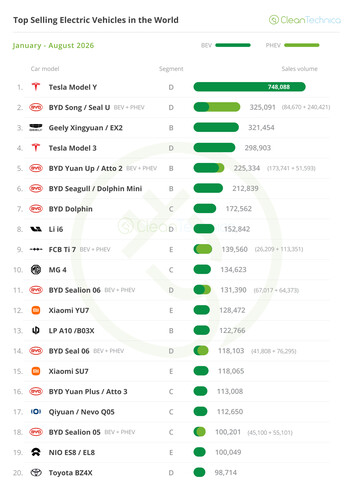
Brandon Everett, Sales Manager at Prius World of Austin, photographs a used Prius hybrid vehicle for sale on Wednesday. Used EV sales have been rising as cost-conscious buyers look for cheaper alternatives to new electric vehicles (Jay Janner/Austin American-Statesman) Interest in electric vehicles is spiking along with gas prices, but that may not be translating into new car sales. Online auto retailer and research website Edmunds reports growing consumer interest, noting that EVs made up 9.6% of research activity on its website in January and February. In March, it climbed to 11.6%. The uptick in research - ranging from reading expert reviews to submitting dealer leads - comes as sales of new EVs have slumped in recent months. Electric vehicle sales fell by 27% year over year in the first quarter, according to Kelley Blue Book data. But that doesn't necessarily mean buyers are shying away from EVs. In the first few months of the year, used EV sales have soared, suggesting cost conscious-consumers have still been eyeing electric vehicles. People get gas at a convenience store in downtown Austin on Wednesday. Rising fuel prices have helped drive renewed interest in electric vehicles. (Jay Janner/Austin American-Statesman) That interest has grown as fuel costs rise amid the U.S.-Israeli war with Iran. As of Wednesday, the average for a gallon of regular gasoline in Austin was $3.83, compared to $4.11 nationally, according to AAA. On Feb. 20, that average cost for a gallon of gas in Austin was $2.55, an increase of $1.31. As Edmunds noted, the recent boost in EV research activity is a modest one. Still, Joseph Yoon, a consumer insights analyst at Edmunds, noted that it is similar to the interest that was seen in August and September. In the fall, the federal tax credit for an electric vehicle was nearing its expiration and demand grew from those wishing to take advantage before it went away. But Yoon said that he is advising drivers with a paid-off car to hang onto it. He referenced the dramatic gas price increases in 2008, saying "people freaked out" and traded in their Suburbans and Tahoes for a Prius, a used Civic or the Geo Metro. Now, it appears some consumers are again weighing a switch to a more fuel-efficient vehicle, or even an EV to eliminate high fuel costs entirely. Brandon Everett, right, Sales Manager at Prius World of Austin, talks to customer River O'Callagh on Wednesday. (Jay Janner/Austin American-Statesman) "I think the American consumer's instinct when faced with these types of scenarios is to go full capitalism and spend more money," Yoon said. "Our advice is hey, if you need an excuse to buy a new car, just do that. But don't pretend like you're going to save money because you're not, especially with the premium that you're more likely to pay for [EVs]." 'Dirt cheap' used EVs The impulse to switch to an EV comes as the average new car buyer paid $49,353 in February, 3.4% more than a year ago. New EVs tend to cost more upfront, but with the opportunity for consumers to save over time. Meanwhile, the used EV market is likely to soon see an influx of two- to three-year-old vehicles from leases signed when federal credits were generous. Yoon says they are effectively new, and are "dirt cheap" compared to the price when they were brand new. The average price of used EVs is also within $1,300 of the average gas vehicle, Cox Automotive data shows. Already, buyers have been gravitating to used EVs, as Cox Automotive reports used EV sales are up 12% year over year and increased 17% from the fourth quarter of 2025. But while an EV may be a growing consideration for some, interest so far is not as high as it was in 2022 following the Russian invasion of Ukraine, when EV market share saw an uptick after increased fuel prices. New Tesla Model Y electric cars, some with Robotaxi markings, are parked on a lot in southeast Austin on Jan. 2, 2026. While sales of new electric vehicles have lagged, sales of used EVs are growing. (Jay Janner/Austin American-Statesman) "It does signal to us anyway, that despite the tax credit not being there, despite a lot of the lease deals going away for a lot of these vehicles, the interest suddenly has returned because they look at the number on the pump screen and go, 'Oh, this sucks,'" Yoon said. In a recent survey conducted from March 16-22 by the Pew Research Center, about a third of Americans said they would very or somewhat seriously consider purchasing an electric vehicle as their next vehicle. Pew noted that it is a similar share as last year but down from 42% in 2022. Slightly more than half of survey takers said they are not too or not at all likely to seriously consider purchasing an EV, and 15% said they do not expect to purchase a vehicle. Interest is growing Even with steady interest, new EV sales have been mixed but may be beginning to pick up. Tesla Inc.'s deliveries increased 6% in the three months through March, but fell short of Wall Street expectations. Meanwhile, competitor Rivian beat first-quarter delivery estimates after a 2025 that saw a 15% drop in automotive revenue. But some models are winning over consumers. Demand nearly doubled for Toyota Motor Corp.'s bZ while Tesla's Model Y had a more than 20% increase in first-quarter sales. The 2026 Toyota bZ Woodland has an estimated driving range of 281 miles, or 260 when equipped with all-terrain tires. (NATHAN LEACH-PROFFER/Courtesy of Toyota Newsroom) Apart from the price premium, a recently released Deloitte survey found that consumers also have other worries surrounding EVs including limited driving range and time required to charge. Others are concerned about a lack of public EV infrastructure and cold weather performance. Meanwhile, hybrids have been a way for many consumers to transition away from gas-powered vehicles before going through with the purchase of a full battery electric vehicle. 44% of those surveyed by Pew said they would seriously consider buying one. And current owners are overwhelmingly thinking of sticking with a hybrid in the future. 76% said they would seriously consider a hybrid for their next vehicle purchase, Pew noted. Yoon remains hopeful that the recent research into EVs and hybrids - even from people that are not buying right now - could expose consumers to features and options that will be available to them when they're ready. "They're still expensive, but they're cheaper than they used to be even two or three years ago," Yoon said. "So I think it's a good exercise, at least taking a look at what's out there in terms of alternatives to gas." River O'Callagh looks at used Toyota Prius hybrid vehicles at Prius World of Austin on Wednesday. (Jay Janner/Austin American-Statesman) SubscribeSign up for the Daily Briefing from the Austin American-Statesman. Start your day with the must-read headlines from Austin's most trusted news source.