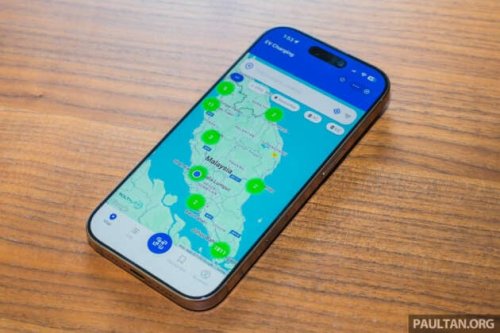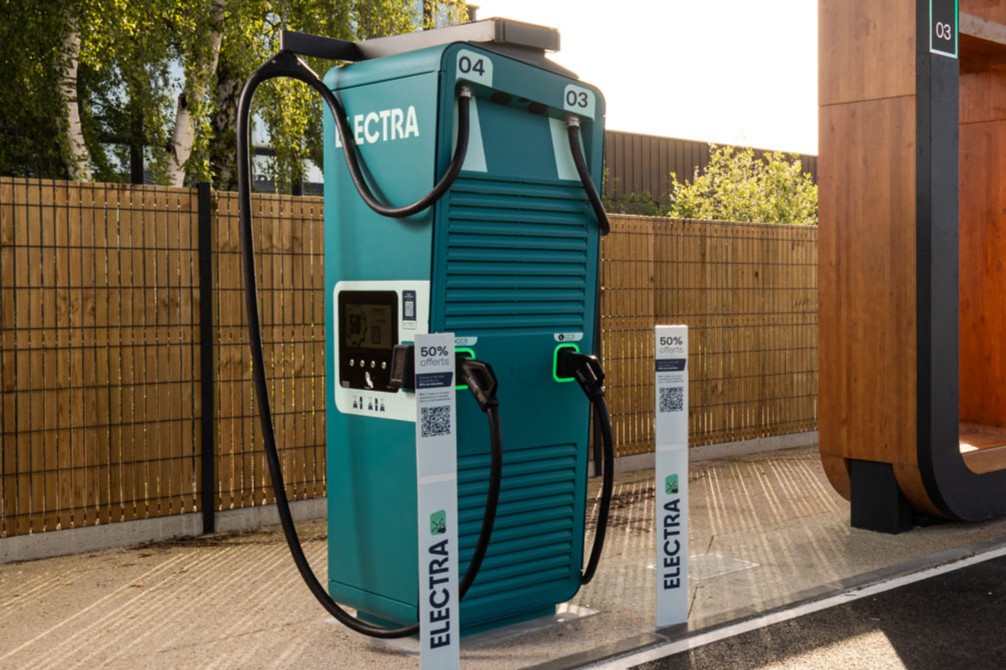



















Image: ElectraUntil recently, the Electra app primarily provided access to the company’s own fast-charging hubs. In December 2025, Electra expanded the service to include charging points operated by its ChargeLeague partners Ionity, Fastned and Atlante. At the time, customers subscribed to the Electra+ tariff could charge at all three networks for €0.64/kWh.Without a subscription, Electra charged €0.71/kWh at Fastned stations and €0.75/kWh at Ionity locations. Atlante did not yet operate its own charging hubs in Germany at that point.Electra updated its tariff structure in Germany in May. Since then, the Electra+ Smart subscription has been available for €4.99 per month and offers charging at Electra’s own fast-charging stations from €0.34/kWh. The lower-priced Electra+ Essential tariff costs €1.99 per month and starts at €0.44/kWh. However, discounted charging rates at ChargeLeague partner networks remain exclusive to Electra+ Smart subscribers. Prices at Ionity, Fastned and Atlante have remained unchanged.Electra has also left its standard charging rates unchanged. Users without a subscription continue to pay €0.54/kWh when charging via the Electra app at the company’s own fast-charging stations. Ad-hoc charging via credit card still costs €0.69/kWh.Electra turns its app into a Europe-wide charging platformElectra is now expanding its role from a charging network operator to an eMobility Service Provider (eMSP), according to the company. Users can now access not only Electra’s own charging points and those of its ChargeLeague partners but also around 800,000 public charging points across Europe through the Electra app.The company has not disclosed a detailed pricing structure for the newly integrated third-party networks. Electra states only that the applicable charging price will be displayed in the app before a session begins and that no hidden or additional fees apply. A spot check of the Electra app, however, shows considerable differences between operators, with rates often exceeding those at Electra’s own charging hubs. In Germany, for example, Mer is listed at €0.71/kWh, while Shell and EnBW each charge €0.79/kWh. EWE Go is shown at €0.84/kWh, and Aral at €0.96/kWh.Depending on the charging point, users can start a charging session either via the Electra app or with an Electra charging card. As part of its transition to an eMobility Service Provider (eMSP), Electra is now introducing its own RFID charging card. The card is available for a one-time fee of €4.99 for users without a subscription, while Electra subscribers receive it free of charge.Until now, Electra has primarily relied on app-based authentication across its own charging network.At the same time, Electra is rolling out Autocharge functionality across its own fast-charging network. After completing a one-time activation in the app, users can start a charging session simply by plugging in their vehicle, with authentication and charging initiation taking place automatically.However, Autocharge is not compatible with all electric vehicles. As Electra explains: “For Autocharge to work, your vehicle must have a fixed and unique identifier (VID). Some manufacturers assign random VIDs, making these vehicles incompatible; this is beyond Electra’s control.” When users add a vehicle to the app, Electra indicates whether the model supports Autocharge.Alongside the expanded roaming offering, Electra has upgraded the navigation capabilities of its app. The new functionality is centred on an algorithm that not only displays available charging points but also evaluates them based on multiple criteria. According to the company, the app analyses charging power, real-time availability, technical reliability, location and price to recommend the most suitable charging option. “Users no longer simply receive the nearest charging station but a specific recommendation for the most suitable charging point,” Electra states.The feature is designed to support drivers on longer journeys, during peak charging periods and in urban areas with a large number of charging options. According to Electra, the app can suggest alternative charging points if a selected charger is occupied or if a better option is available nearby. Users can also prioritise criteria such as price, distance or charging power. In addition, the route planner incorporates charging stops directly into journey planning for everyday driving, holiday travel and business trips.Hanover becomes Electra’s flagship charging hub in GermanyAlongside the launch of its eMobility Service Provider (eMSP) offering, Electra continues to expand its charging infrastructure in Germany. On 1 July, the company will officially open its largest urban fast-charging hub in Germany to date. Located at Herschelstraße 9 in Hanover, the site features 14 charging points across seven charging stations, each capable of delivering up to 400 kW. The charging hub is covered and positioned at a busy junction in the city centre.The Hanover site forms part of Electra’s broader expansion strategy in Germany. In recent months, the company has also opened new charging hubs in Leipzig, Peine, Detmold and Krefeld, among other locations.According to Electra, the company currently operates almost 700 charging hubs with around 4,000 charging points across ten countries. By 2030, Electra aims to expand its network to 15,000 fast-charging points.Source: Information via email (in German)