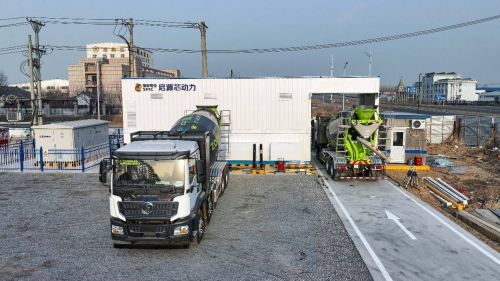
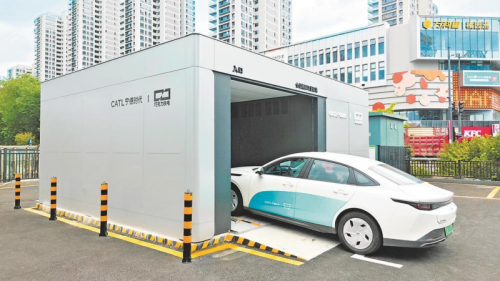
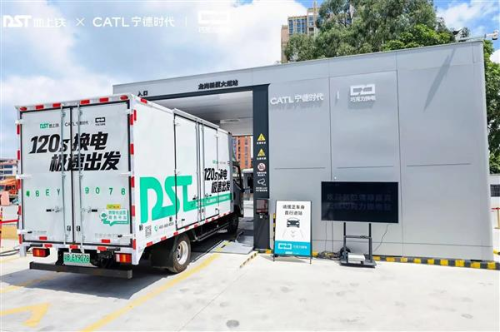
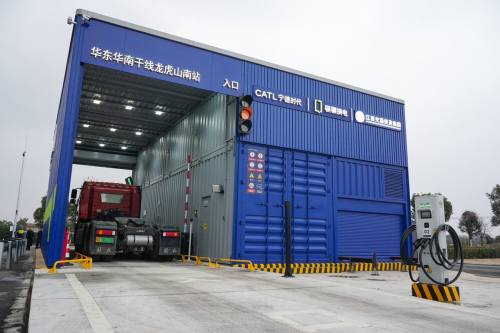
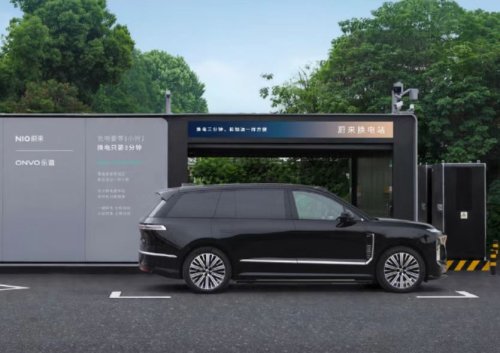
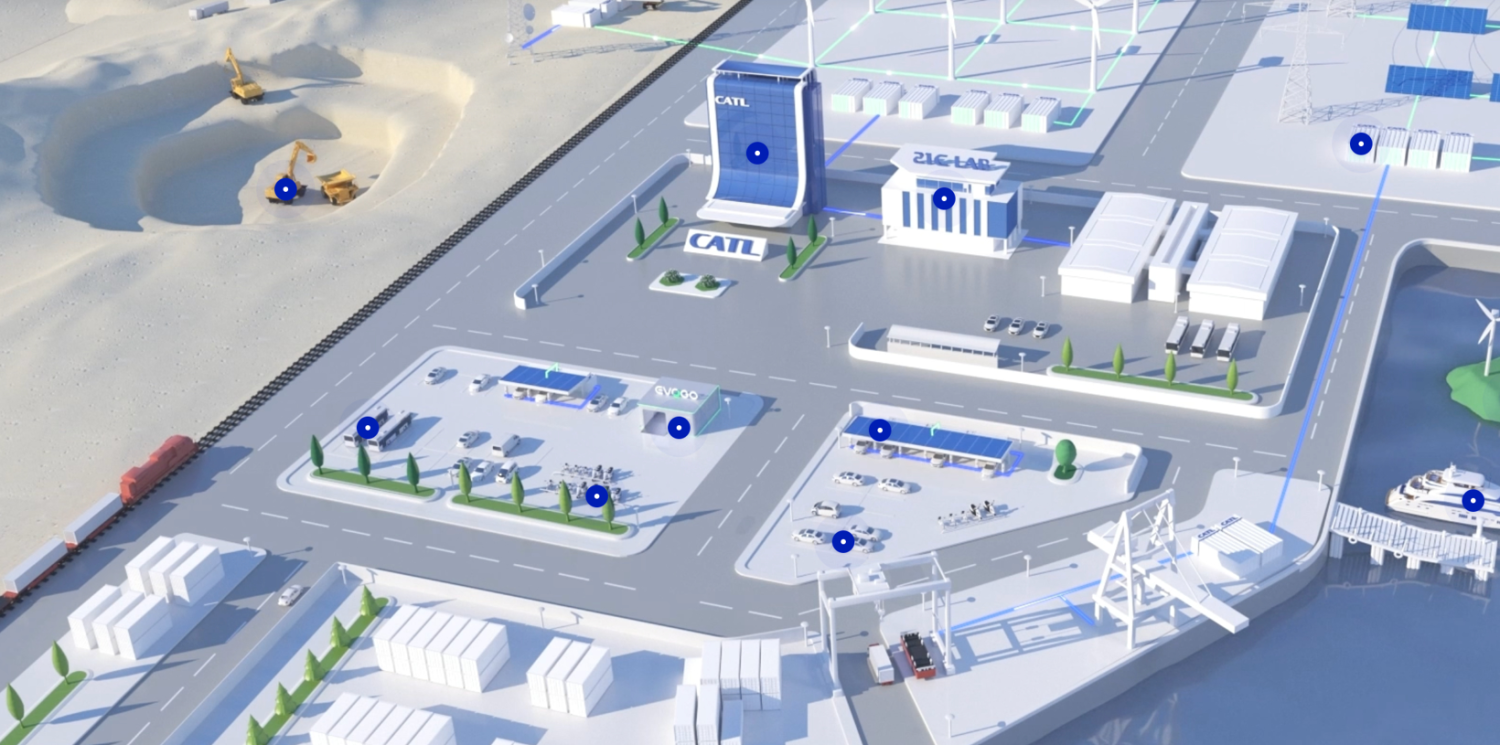
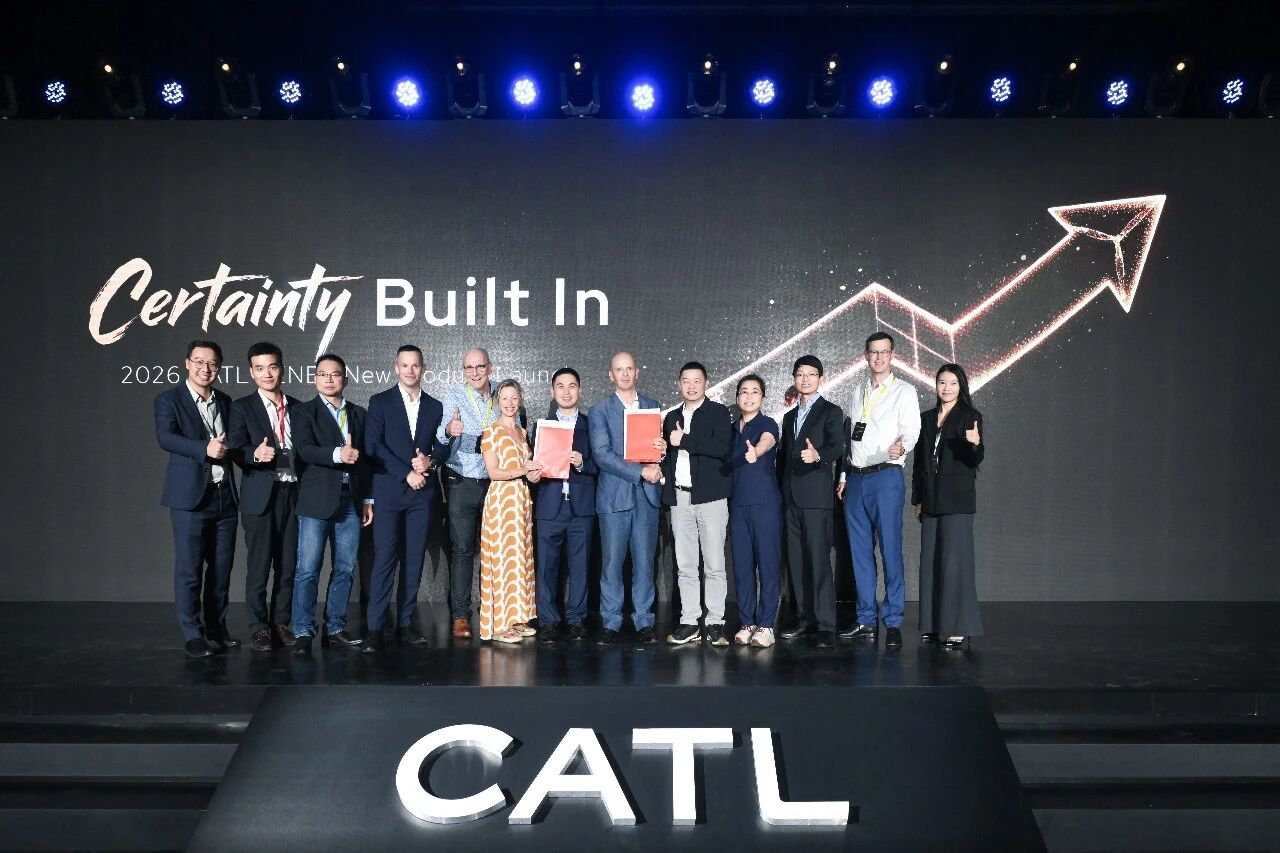
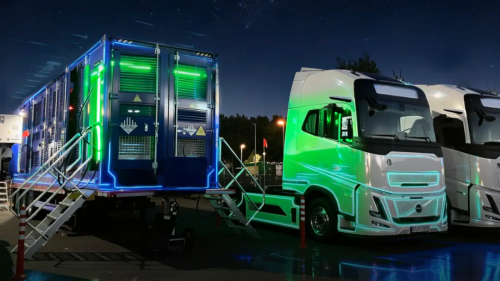
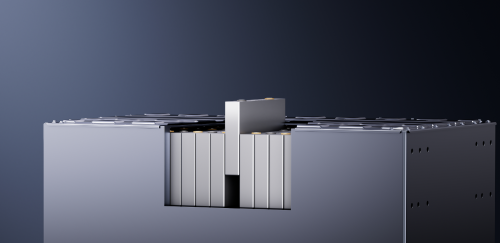
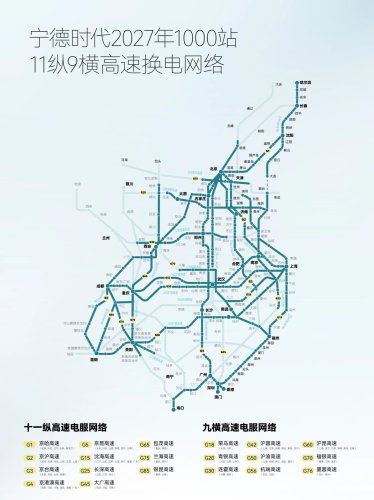
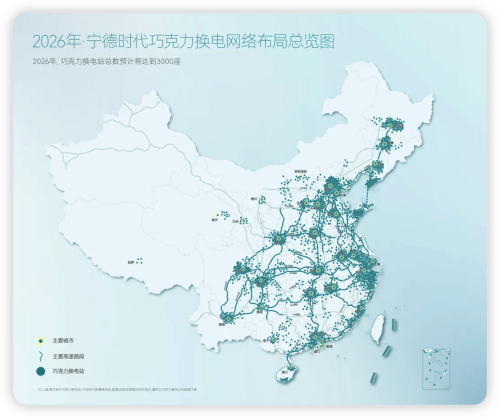
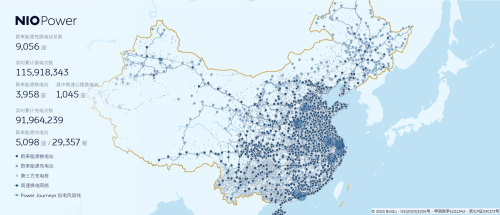
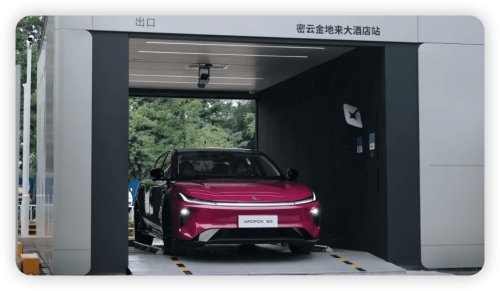
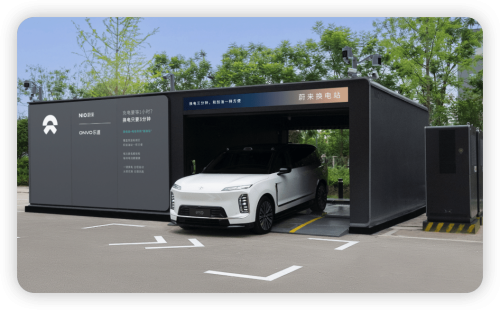
On July 1, as automakers released their half-year sales updates, CATL’s battery swapping business, branded as Choco-SEB, also published its semi-annual operating report. The figures point to a rapid expansion trajectory. As of June 30, 2026, CATL has built a cumulative 2,000 battery swap stations across China, spanning 31 provinces and 180 cities. Coverage in small- and medium-sized cities has exceeded 80%, indicating that the Choco-SEB network has already achieved a meaningful level of nationwide penetration. CATL’s Chco-SEB network in China Additional data shows that construction pace accelerated in the second quarter of this year, with an average of more than 200 new stations added per month. Highways remain a key focus area, with stations under construction along routes including Guangshen Coastal Expressway, Dengbao, Songdao, Xufu, and Haile. National arterial highways such as Beijing-Harbin, Beijing-Kunming, Beijing-Lhasa, Daguang, and Lanzhou-Haikou are also scheduled for deployment. CATL also confirmed its entry into Hong Kong, where the first two swap stations are under construction. The company expects around 36 stations to be built in the city in 2023. In parallel, CATL said it will roll out China’s first standardized light-duty truck battery swapping ecosystem in the Guangdong-Hong Kong-Macau Greater Bay Area, enabling a 120-second swap cycle. A total of 52 dedicated light-truck swap stations have already been completed in the region, with the number expected to rise to 140 by year-end. The company has set a year-end target of 3,000 stations across 190 cities, rapidly closing the gap in absolute scale with the most established player in the sector, NIO. However, in any discussion of battery swapping, NIO remains the unavoidable benchmark. CATL’s rapid expansion vs NIO’s installed base As of July 1, 2026, NIO reported a total of 3,958 battery swap stations, according to its official channels, covering 550 cities—giving it a broader geographic footprint than CATL at this stage. In terms of highway coverage, NIO also maintains an advantage, with 1,045 highway swap stations in operation, forming what it describes as a “9 vertical, 11 horizontal, 16 major urban cluster” network. NIO’s battery charging and swapping network in China NIO has set a 2026 target of building 1,000 additional swap stations. Based on its end-2025 installed base, this would bring the total to roughly 4,600 stations by the end of 2026, with a significant share expected to be fifth-generation swap stations. A comparison of the two networks highlights several structural differences. First, NIO remains the most established and widely deployed player in the battery swapping ecosystem. In terms of station density, coverage, and integrated service experience—including automation and user workflow efficiency—NIO is likely to continue offering a more mature end-to-end user experience. However, CATL’s expansion speed is striking. The comparison between “2,000 stations in 19 months” and “3,900 stations in eight years” underscores the contrast in growth trajectory. CATL’s Choco-SEB station Second, CATL enters the sector as an upstream battery supplier, positioning its Choco-SEB model as a more open ecosystem. According to the company, it has already partnered with 11 automakers and 18 brands, with 25 vehicle models supporting its swapping system. By contrast, while NIO has expressed openness to third-party participation in its ecosystem, its network remains primarily centered on its own brands for now. Firefly’s access to swapping services also depends on the rollout of fifth-generation stations. Vehicle compatibility and price coverage remain comparatively more constrained. “Android” versus “iOS” dynamic Looking ahead, CATL’s Choco-SEB network is increasingly emerging as a significant force in the battery swapping landscape and, in some respects, a complementary system to NIO’s model. The relationship is often likened to an “Android versus iOS” dynamic—CATL offering broader choice and lower entry barriers, with entry-level vehicle prices starting from CNY 59,800 ($8,800), and battery subscription fees as low as CNY 369 ($55) per month. NIO, meanwhile, differentiates itself through deeper integration of vehicle, software, and service ecosystems, with user experience as its core value proposition. For example, NIO vehicles support “Navigate on Swap,” allowing the car to autonomously drive to a nearby swap station using its assisted driving system. Upon arrival, the vehicle automatically switches to parking mode and completes docking, swapping, and system checks in a fully automated sequence. NIO’s ecosystem also carries additional financial and battery lifecycle management value, capabilities that CATL’s current Choco-SEB system has yet to match. NIO’s battery swap station In addition, NIO offers a wider range of battery pack configurations, including packs above 75 kWh, making it one of the few viable options for users prioritizing long single-charge range via swapping. Overall, with NIO having already established the foundational perception of battery swapping in China, CATL’s rapid scaling is expected to significantly accelerate broader adoption of the model. For automakers still evaluating participation, whether they ultimately join NIO’s ecosystem or CATL’s Choco-SEB network, it is increasingly clear that battery swapping is moving from a niche infrastructure solution toward mainstream adoption—driven by both players in parallel.



















 +29 others