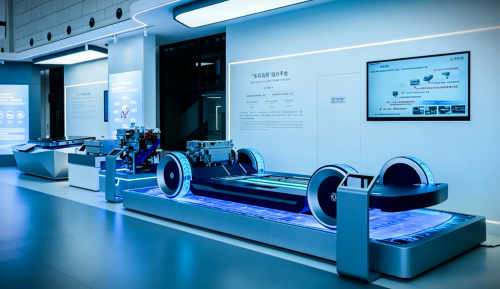
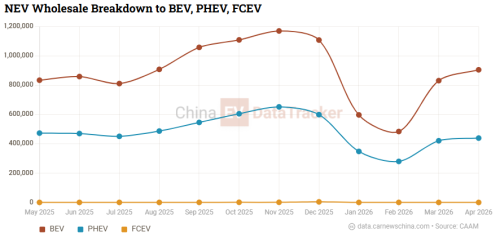
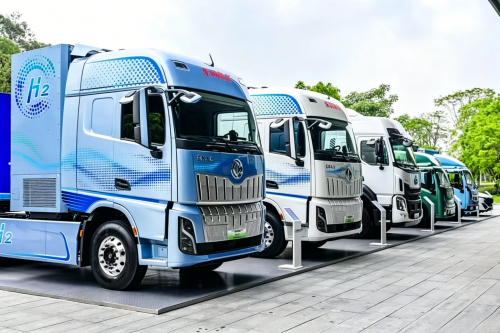
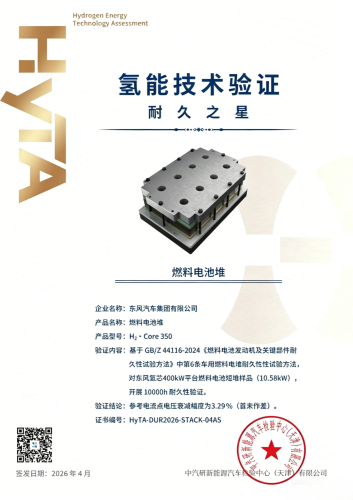
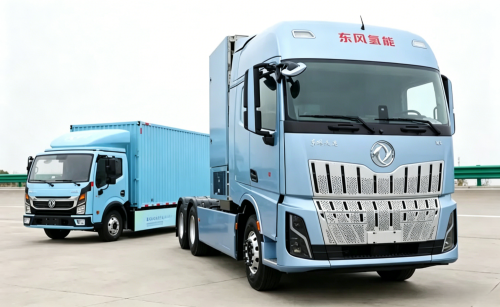
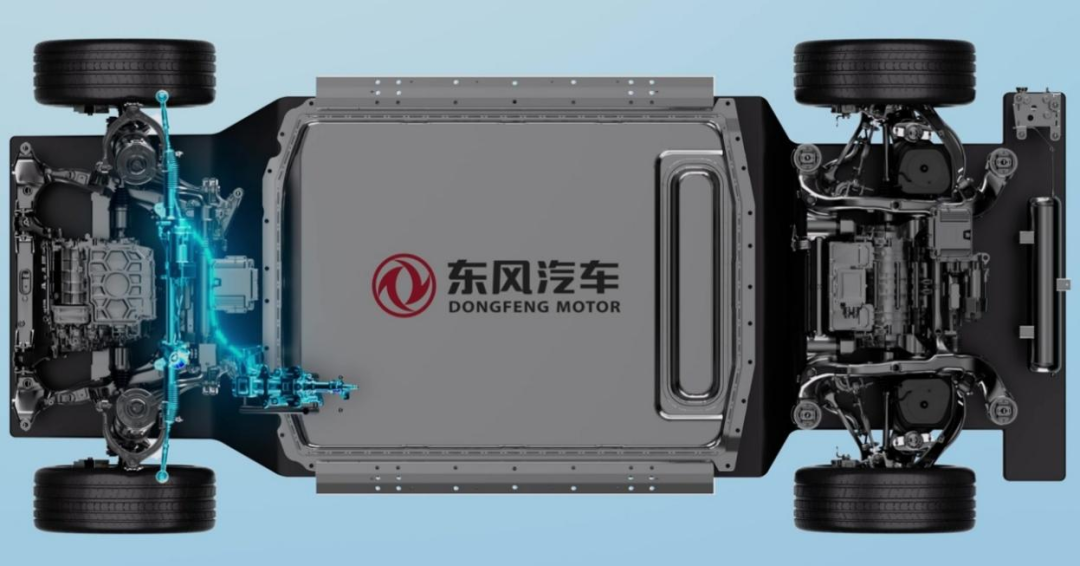
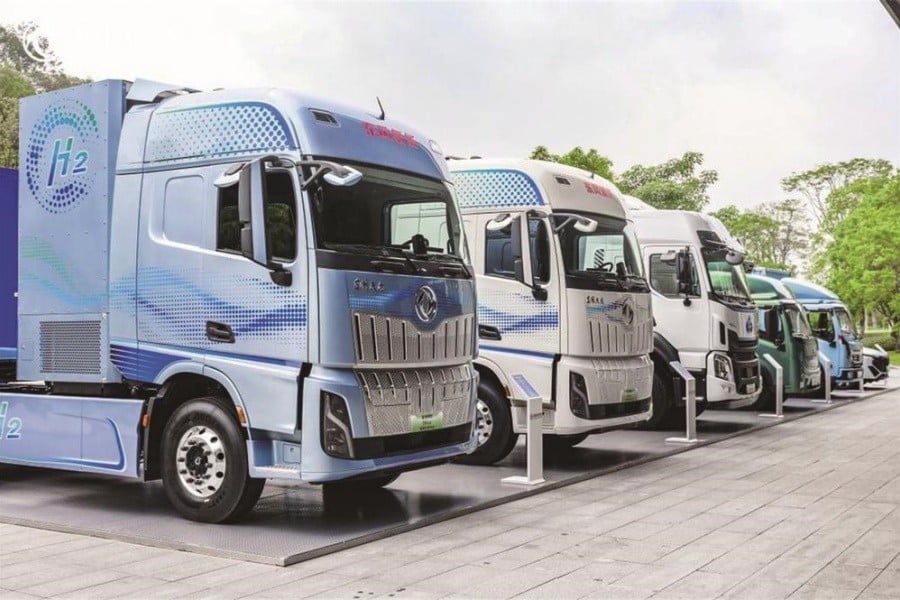
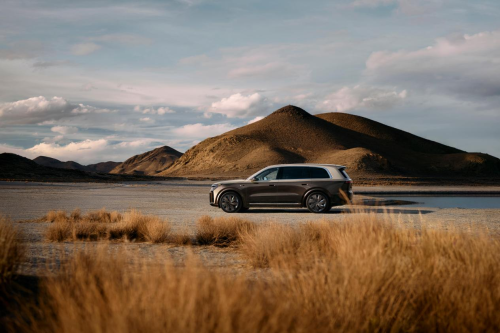
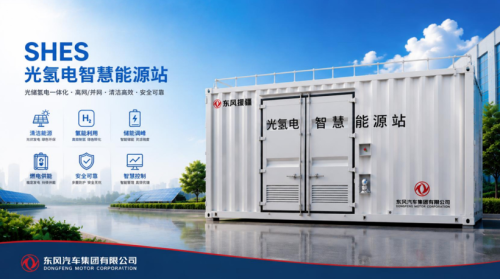
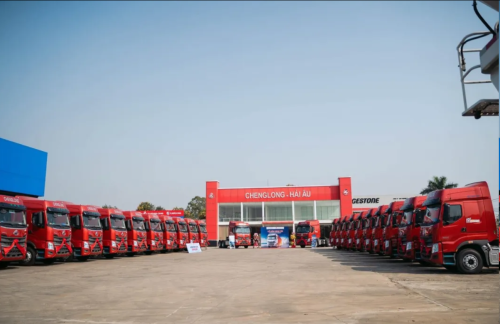
The Dongfeng T1 hydrogen-powered commercial vehicle platform. Credit: Y-Auto Understand China EV’s Market Real-time notifications when critical EV data is released All important data in one place 2,000,000+ data points Become a member China’s hydrogen vehicle sector continues to move beyond pilot projects, with Dongfeng reporting that its 400 kW fuel-cell stack has become the country’s first product in its class to complete a 10,000-hour durability validation under the latest national standard, according to Y-Auto. Hydrogen trucks remain a key commercialisation target Hydrogen fuel-cell vehicles remain concentrated in commercial transportation, particularly heavy-duty trucks, where long range, high utilisation rates, and rapid refuelling are operational priorities. According to figures cited by Dongfeng, publicly disclosed hydrogen fuel-cell vehicle delivery orders exceeded 1,800 units during the first four months of 2026, while China’s fuel-cell vehicle fleet surpassed 20,000 units. The company’s T1 commercial vehicle platform can achieve driving ranges of up to 1,700 km through a modular hydrogen storage configuration designed for long-haul freight operations. Hydrogen remains a small segment of China’s new-energy vehicle market. China EV DataTracker data show FCEV sales of 40 units in April 2026, compared with 905,000 battery-electric vehicles and 439,000 plug-in hybrids during the same month. However, a 2025 national hydrogen fuel-cell vehicle industry report highlighted continued localisation of key components, with domestic suppliers accounting for roughly 70% of core fuel-cell parts. BEV, PHEV, and FCEV sales in China. Credit: China EV DataTracker Designed for long-life heavy-duty operation The 400 kW stack represents Dongfeng’s highest-output fuel-cell product to date. Higher-output stacks allow commercial vehicles to operate closer to their most efficient power range rather than continuously running near maximum load. This reduces thermal stress, lowers degradation rates, and improves durability in demanding freight applications. The stack achieves a volumetric power density of 6.6 kW/L and can start at temperatures as low as -40°C. Third-party testing recorded an average single-cell voltage degradation rate of 3.29% during the 10,000-hour validation process. Dongfeng says the stack was designed for more than 30,000 operating hours, targeting long-distance logistics fleets where vehicle utilisation is significantly higher than in passenger-car applications. Building an integrated hydrogen supply chain The automaker began fuel-cell development activities in 2002 and says it has deployed more than 9,200 hydrogen-powered vehicles across 45 Chinese cities. Its hydrogen business spans catalyst development, membrane electrode assembly production, stack manufacturing, system integration, vehicle engineering, and demonstration operations. Membrane electrode assemblies serve as the electrochemical core of fuel-cell systems. The structure controls the reaction between hydrogen and oxygen while managing proton transport, water balance, and power generation efficiency. Domestic production of MEAs is considered one of the most important steps in reducing fuel-cell costs and improving long-term reliability. Dongfeng currently has an annual production capacity of 5,000 fuel-cell stacks and systems, along with 1.6 million MEA units. Competition expands across China’s hydrogen sector Chinese automakers continue to advance hydrogen technologies alongside battery-electric and plug-in hybrid programs. In April, Deepal announced the commercialisation of its self-developed hydrogen fuel-cell system, reporting performance metrics approximately 10% higher than several industry benchmark targets. The project demonstrated that multiple Chinese manufacturers are continuing to develop fuel cells despite the sector’s relatively small current sales volume. Dongfeng has announced more than 20 fuel-cell vehicle models covering heavy trucks, light trucks, buses, sanitation vehicles, passenger vehicles, and logistics applications. Its technology portfolio currently includes fuel-cell systems ranging from 60 kW to 300 kW and stack platforms ranging from 70 kW to 400 kW. The latest 10,000-hour durability milestone adds another operational benchmark as China’s hydrogen vehicle industry gradually shifts from demonstration fleets toward larger-scale commercial deployment. Hydrogen-powered commercial vehicles operating in commercial fleet service.