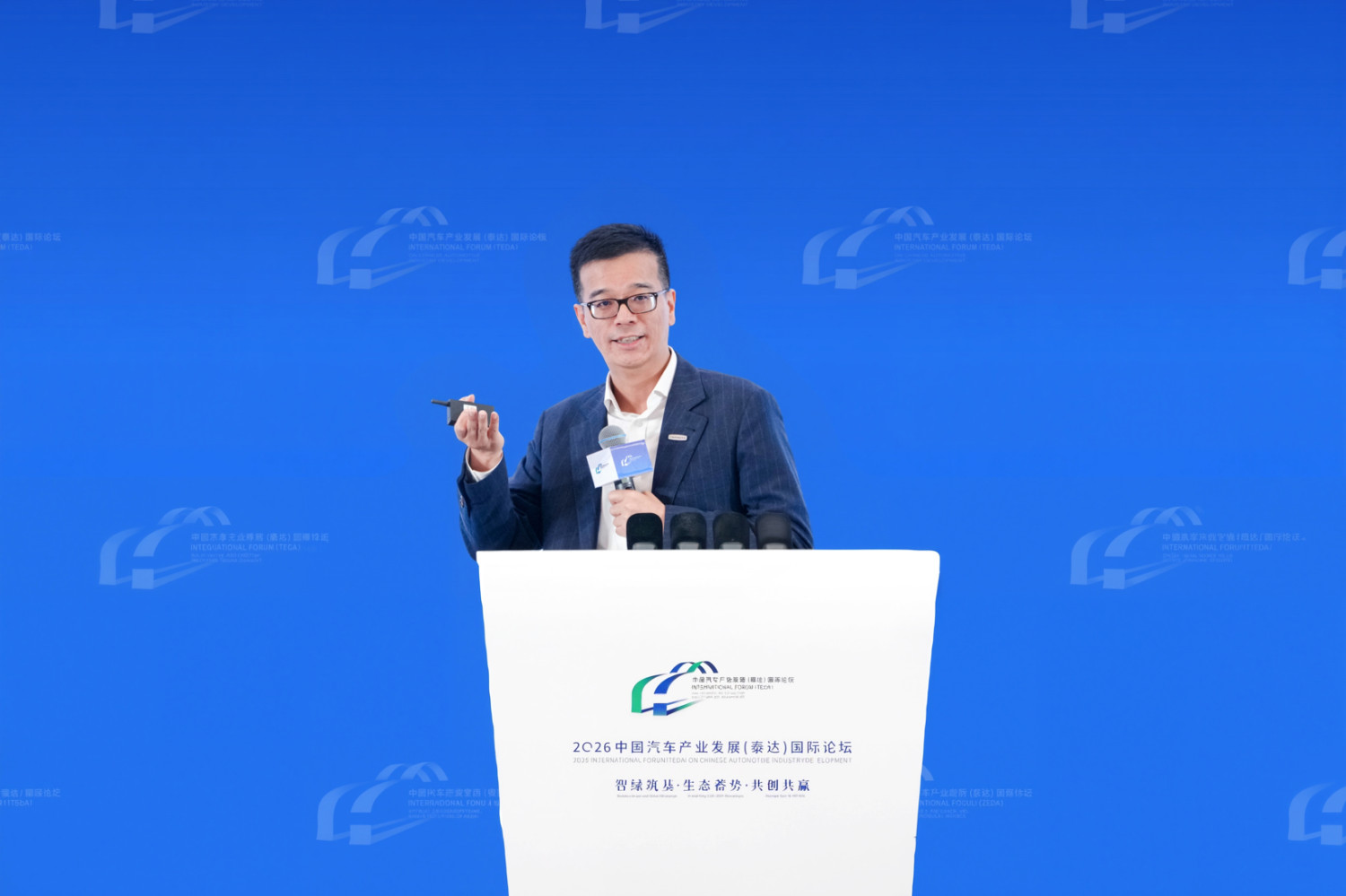
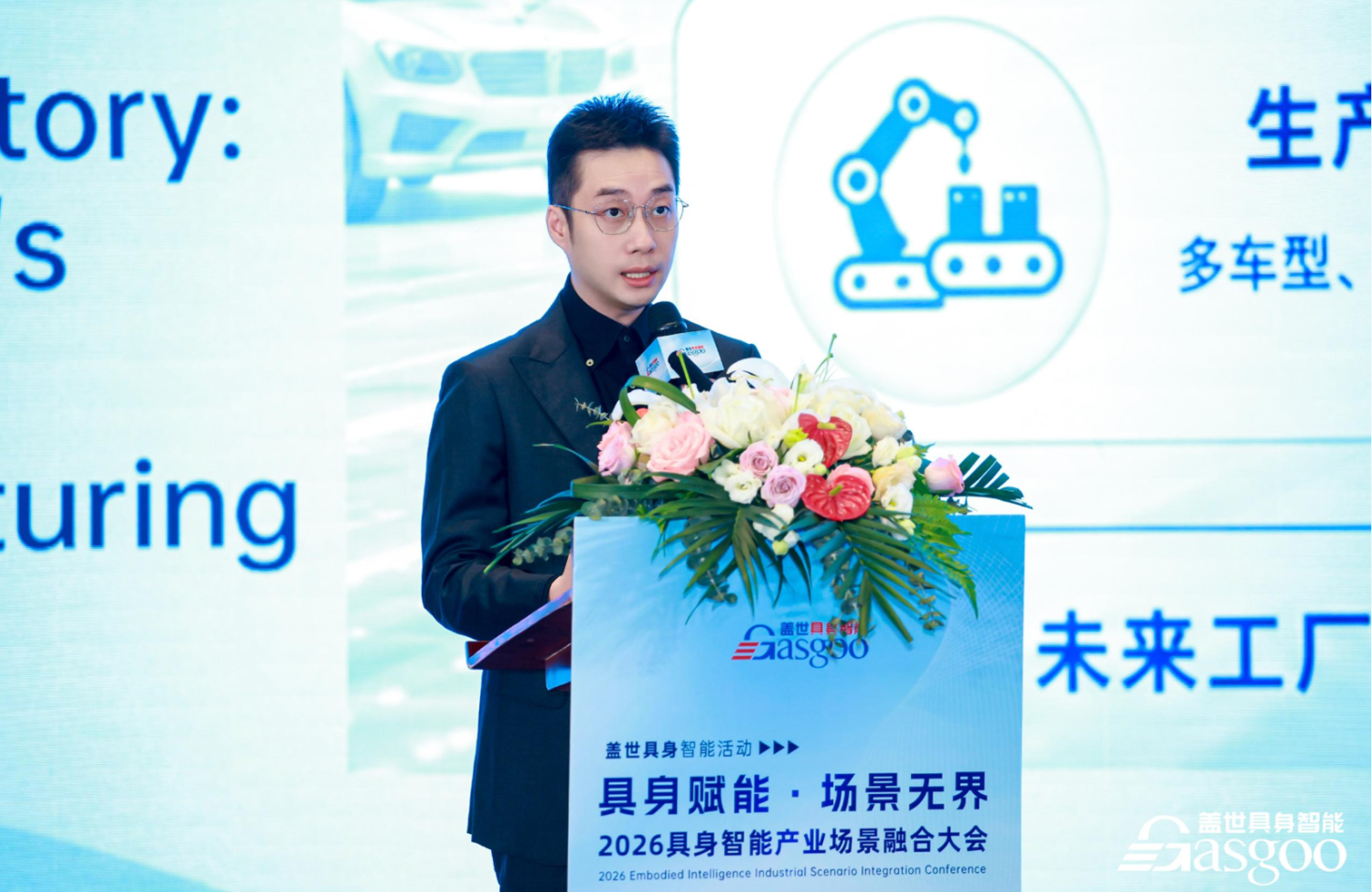
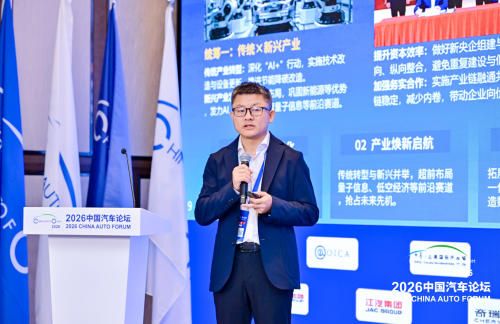
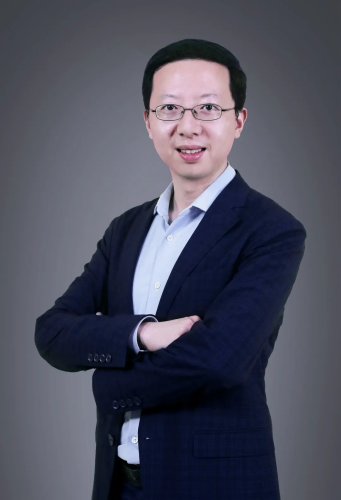
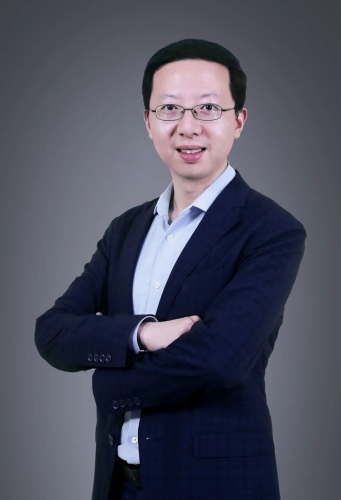
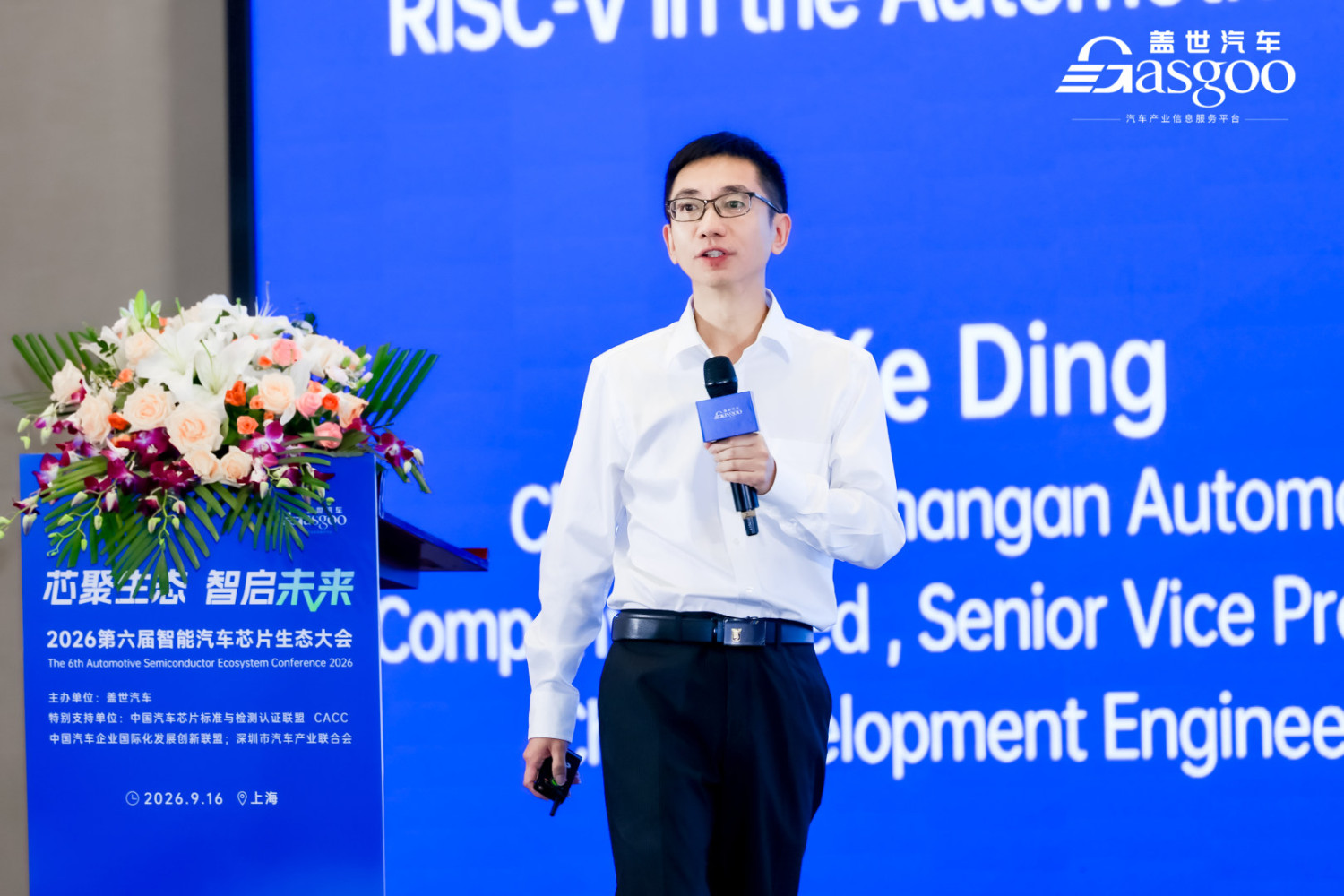
Gasgoo Munich-At The 6th Automotive Semiconductor Ecosystem Conference 2026 on September 16, Ding Ke — Senior Deputy Chief Engineer of Chip Development at Changan Automobile — provided a three-part analysis covering smart vehicle trends, chip demand, and the company’s RISC-V strategy.Ding Ke | Senior Deputy Chief Engineer of Chip Development, Changan AutomobileDing Ke noted that Chinese automakers have successfully overtaken foreign rivals by changing tracks. In the first half of 2026, Chinese brands captured 75% of the market, with NEV penetration reaching 60%. On the intelligence front, L2 driver-assist penetration exceeded 70%, while the installation rate of advanced L2+ systems climbed to 29% — signaling that smart driving is moving toward mass adoption.Smart vehicles are poised to become the next major ICT ecosystem, following PCs and smartphones, Ding Ke argued. "The future vehicle should be an evolvable intelligent agent — a carrier of technological innovation that drives a new wave of change." As vehicles transition from mobility tools to intelligent mobile robots, they will anchor the next tech revolution.On the chip front, Ding Ke said the industry is moving toward high computing power, high bandwidth, and high integration. The future roadmap centers on a "central brain" offering over 1,000 TOPS of AI compute paired with high bandwidth. As large language models move into vehicles, 7B-parameter models are already being deployed, and 30B models are under consideration using Mixture of Experts (MOE) architectures. The end-to-end technology stack is evolving from Transformer+BEV to Vision Language Models (VLM), Vision-Language-Action (VLA), and even world models — placing higher demands on computing power and scheduling efficiency.Ding Ke emphasized that cockpit-driving fusion chips represent the future. Changan is evolving toward a "one box" architecture, merging cockpit and driving functions to streamline systems, cut latency, and reduce redundancy costs. This creates a "brain plus cerebellum" setup, with core objectives focused on safety and low latency. He revealed that L3-to-L4 autonomous driving involves over 1,400 active processes, meaning traditional computing architectures would incur massive costs just to handle redundancy and failure management.On RISC-V implementation, Ding Ke noted that Changan conducted a detailed evaluation of RISC-V CPU cores back in 2022. The results showed that in the MCU sector, RISC-V computing power had already surpassed ARM, with comparable real-time performance. Using a five-stage pipeline RISC-V architecture, interrupt response can reach the entry function within 120 clock cycles, delivering excellent power efficiency. Additionally, Changan is exploring AI Domain-Specific Architecture (DSA) based on RISC-V custom instruction set extensions. By leveraging BF16 and INT8 mixed-precision acceleration, the company aims to significantly cut costs while improving accuracy."How do we drive down CPU prices? How do we drive down GPU prices? That is our ultimate goal," Ding Ke said. Changan hopes to collaborate openly with industry partners to extend chip management down to the IP core level, maximizing cost-performance ratios. The company aims to help build out the RISC-V ecosystem and participate in setting industry standards.



















 +47 others