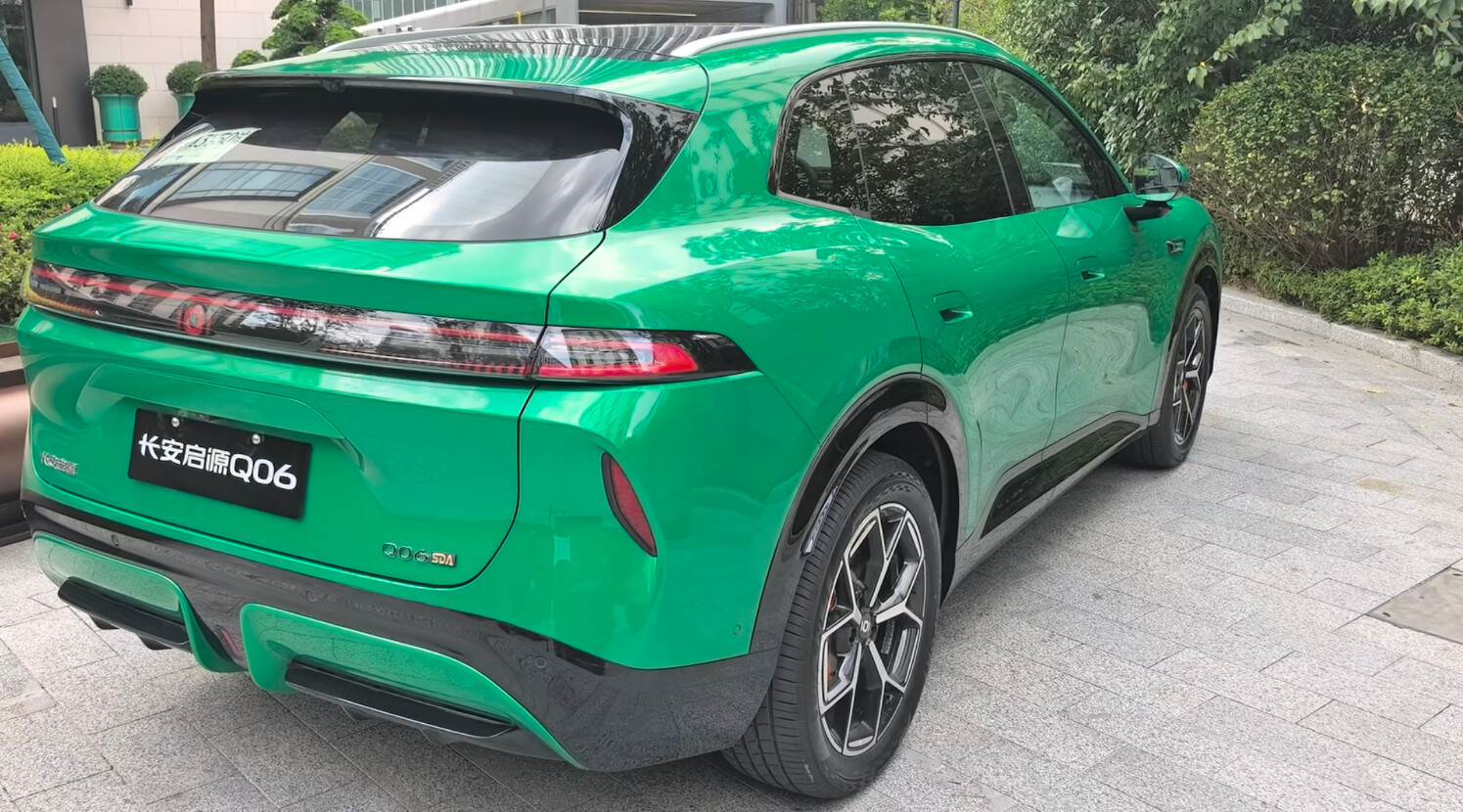
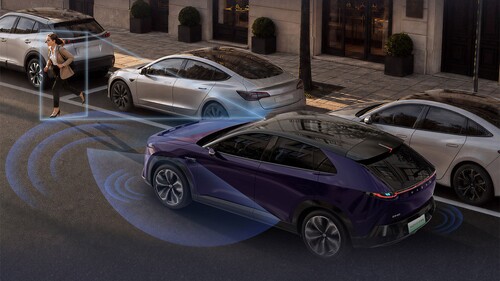
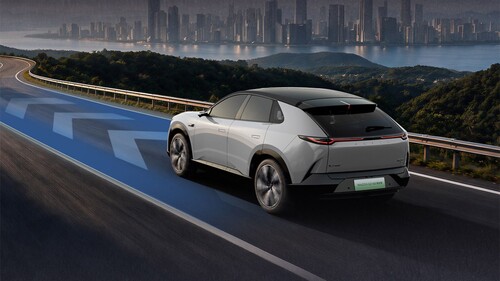
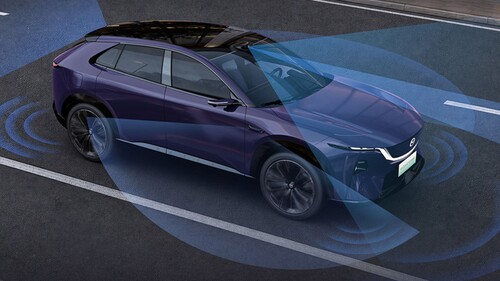
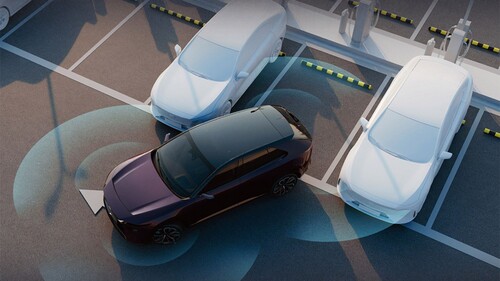
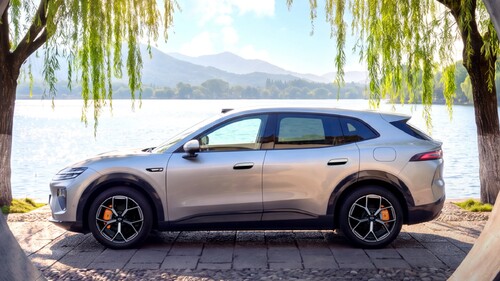
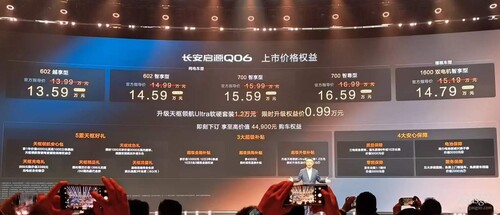
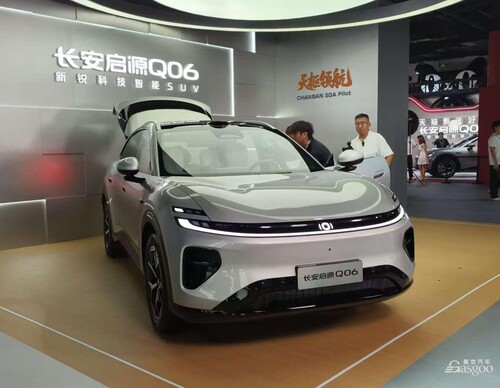
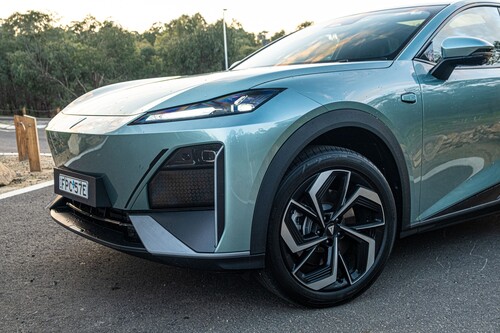
Gasgoo Munich- Competition in China's intelligent driving assistance sector has hit a critical watershed. As the pace of mass production accelerates, the landscape of the top tier is being reshaped by a state-owned player.From the proliferation of highway navigation in 2023, to the race for city driving in 2024, and the full rollout of end-to-end large models in 2025, the pace of technological iteration is far outstrippingindustry expectations.Yet, a core question remains unresolved: shifting from rule-based to data-driven, and from modular architectures to one-stage end-to-end systems — which path will truly bridge the gap between functional and genuinely useful driving assistance?The industry offers no consensus. Some players are building technical strongholds with multi-sensor fusion and full-stack in-house development, while others are pursuing pure-vision routes to challenge global benchmarks.Paths may differ, but the ultimate drivers of mass adoption for high-level driving assistance are production scale and real-world user experience. At this critical juncture, a state-owned player has taken center stage. CHANGAN SDA Pilot — the first one-stage end-to-end intelligent driving system independently developed by a central state-owned enterprise — is injecting state-owned strength into the top tier, delivering stable performance in real-world road conditions.In mid-September, on the actual streets of Shanghai, Gasgoo put the Changan NEVO Q06 equipped with CHANGAN SDA Pilot Ultra to the test.The route covered a complex mix of scenarios: city roads, elevated expressways, narrow lanes in old districts, intersections with mixed traffic, and underground garages.The results? Let the facts speak for themselves.Image Source: GasgooDecoding the One-Stage End-to-End ArchitectureTo grasp the technical DNA of CHANGAN SDA Pilot, one must first understand the evolutionary logic behind end-to-end architectures.Traditional driving assistance systems rely on layered, modular architectures: a perception module identifies the environment, a prediction module gauges the intent of other road users, a planning module determines the path, and a control module executes the maneuvers.This “assembly line” structure suffers from a fundamental flaw: information degrades as it passes between modules, and their individual optimization goals may not align, leading to decision-making that often feels hesitant or robotic.This explains why many systems, look impressive on paper but falter in practice: following distance oscillates, lane changes are tentative, and cornering feels erratic — the driving experience remains distinctly “robotic.”CHANGAN SDA Pilot has chosen a one-stage end-to-end approach. Unlike two-stage solutions that separate “perception and decision,” this architecture maps sensor inputs directly to vehicle control commands, eliminating the intermediate steps of information transfer.Image Source: GasgooThink of it this way: traditional architecture is like a relay race where every baton pass risks delay and error. One-stage end-to-end is more like a triathlete — a continuous performance from start to finish without handover hesitation.In other words, it behaves like an experienced driver who reacts the moment they see the road conditions.The immediate benefit is faster response times. During city driving tests, when the car ahead braked suddenly, CHANGAN SDA Pilot's braking intervention was virtually instantaneous. The process was linear and fluid — a far cry from the disjointed “sense-think-act” rhythm of modular systems.The hardware foundation supporting this architecture is equally noteworthy. CHANGAN SDA Pilot Ultra features a 256-line LiDAR and a 560 TOPS computing chip, working alongside 3 millimeter-wave radars, 11 high-definition cameras, and 12 ultrasonic sensors to form a 27-sensor perception matrix.Of course, hardware is merely a prerequisite; software architecture determines the ceiling of performance. CHANGAN SDA Pilot's one-stage end-to-end model is trained on over 20 million segments of real human driving data, learning “how to drive” from vast real-world scenarios rather than relying on rules hard-coded by engineers.A technical detail often overlooked: CHANGAN SDA Pilot's end-to-end architecture is not a simple “black box” mapping. It integrates the multimodal understanding capabilities of the CHANGAN SDA Pilot large model. Changan's Chief Intelligent Driving Technology Officer, Ji Tao, describes it as a “complete model with a sensory hub, a thinking brain, and a motor cerebellum” — capable of recognizing long-tail scenarios that traditional algorithms miss and driving with the anticipation of a seasoned veteran.During the test drive, while passing a construction barrier on the right, the system began drifting slightly to the left well in advance, creating a buffer zone for potential workers and equipment.This kind of predictive maneuver is difficult to achieve with fixed rule sets.Real-World Verification of Human-like Driving LogicSmoothness was the most immediate impression throughout the drive.True smoothness isn't just about gentle acceleration curves; it is about possessing human-like decision-making logic. Rule-based systems feel stiff because they interact with an abstract world of rules, whereas real roads have infinite variables. CHANGAN SDA Pilot's approach allows the system to learn intuitive decision-making directly from real driving data.During the Shanghai city drive, several details stood out.First, following distance control.In mixed traffic, the system maintained a dynamic gap from the car ahead,expanding when the lead vehicle slowed and contracting smoothly when it accelerated, without the oscillating “breathing” effect common in other systems.Second, the decisiveness of lane changes. In highway merge zones, once the system identified a gap, the lane change was executed in a single fluid motion — no tentative probing or last-second corrections.Third, cornering rhythm.The system decelerated moderately before entering a curve, held steady through the turn, and accelerated linearly upon exit — mirroring the habits of a mature human driver.Underpinning this performance is the one-stage model's absorption of “good driver habits.” Before reaching users, CHANGAN SDA Pilot has accumulated over 1.567 billion kilometers of driving validation — equivalent to circling the earth 39,000 times — with daily simulation training exceeding 3.3 million kilometers. This means complex scenarios users face daily,such as narrow passing, unprotected left turns, construction zones, and driving in rain with backlighting,have all been “seen” and “practiced” repeatedly in both real-world tests and lab simulations.Image Source: GasgooDuring the drive,while navigating an unmarked narrow street in an old district, CHANGAN SDA Pilot maintained a reasonable speed, identifying and smoothly avoiding parked cars and suddenly appearing e-bikes. There was no harsh braking or freezing up.Passenger comfort is also a priority.I spent time in the rear seat during a congested city segment; the acceleration and braking control was notably linear, without the jarring “head-tossing” sensation.For passengers prone to motion sickness, this is a significant advantage.High Performance in Complex Scenarios, Low Barrier for Smart InteractionBehind that comfortable ride lies a system capable of maintaining stability in far more complex scenarios. Smooth acceleration in traffic is just the starting point; the true test of a driving assistance system is whether it can remain composed in high-difficulty situations like merge negotiations, narrow passages, and ramp entries and exits.Shanghai's road conditions provided an ideal proving ground. From multi-lane highway merges to narrow old-town streets and underground parking, CHANGAN SDA Pilot demonstrated solid technical capability across a range of challenging scenarios.In urban settings, the system displayed a pattern of “early prediction, stable avoidance, and precise planning.” At an unprotected left turn, it not only gauged the distance and speed of oncoming traffic but also anticipated the intent of non-motorized vehicles crossing from the right, executing a smooth turn while maintaining appropriate speed.In merge zones, the system's strategy for cars cutting in was simple: yield smoothly when necessary, hold firm when it isn't. It avoided being pushed around without resorting to sudden braking that compromises comfort.This negotiation ability stems from extensive reinforcement learning, where the system learned optimal decision-making through repeated trial and error in simulated environments.On the highway, CHANGAN SDA Pilot's ramp performance left a strong impression. The system began planning lane changes well before the ramp approach,moving gradually to the right in a natural flow — no last-minute diving for the exit. On the Shanghai highway section, overtaking slower vehicles was equally decisive; once the left lane was clear, the system executed the pass swiftly without dawdling.Parking is another scenario that reveals technical depth. With intelligent parking assistance covering over 400 scenarios,including standard spots, unmarked spaces, and dead-end slots,the system handled even a tight underground spot efficiently.The steering adjustments were fluid, without the back-and-forth corrections typical of lesser systems.In parking-challenged areas like old Shanghai, this capability is highly practical.Image Source: GasgooInnovation in interaction,sets CHANGAN SDA Pilot apart from most competitors. Its interactive navigation feature allows users to control driving behavior via natural voice commands. Saying “Pass the car ahead” or “Take the middle lane at the next intersection” is all it takes for the system to understand and execute.This closed loop from command to action transforms driving assistance from a mere toggle switch into a human-car dialogue, significantly lowering the barrier to use.Powered by the CHANGAN SDA Pilot AI large model, the intelligent voice assistant “Xiao An” is a highlight of cabin interaction.The system acts like a driving companion; navigation, entertainment, and vehicle control can all be handled with a single sentence.It supports multiple sub-tasks in one command and can execute new instructions inserted mid-conversation before resuming the original task.I tested a complex command during the drive:“Navigate to the nearest charging station, find a highly-rated coffee shop on the way, and set the AC to 22 degrees.” The system parsed and executed all three sub-tasks flawlessly.More importantly, “Xiao An” can automatically remember driver habits,such as frequent destinations, preferred temperatures, and music tastes — learning more about you over time.This shift from passive response to proactive understanding marks the evolution of in-car voice interaction from a tool to a true partner.In Summary:The competition in intelligent driving assistance appears to be a battle of algorithms, but at its core, it is a battle of systemic capability. Peeling back the technology of CHANGAN SDA Pilot reveals a more fundamental question: who actually controls the core technology?Changan's investment in intelligence and depth of in-house R&D are key to understanding the confidence behind CHANGAN SDA Pilot. Its intelligent team has grown to over 7,500 people, with total R&D spending exceeding 60 billion yuan — including 22.5 billion yuan specifically in smart products. Over the past three years, it has filed more than 14,800 patent applications, with 71% being invention patents. Its R&D system capability has ranked first in the industry for 14 consecutive years across seven evaluations by the National Enterprise Technology Center. In terms of validation, Changan has built the country's only national key laboratory dedicated to intelligent vehicle safety technology, as well as the internationally leading CHANGAN SDA Pilot Intelligent Test Center.Image Source: Changan AutomobileThis accumulation of systemic capability has ultimately translatedinto tangible product advantages for users to perceive.After the drive, one realization stood out: the significance of CHANGAN SDA Pilot lies not only in its excellence as a driving system, but in its proof that Chinese automakers now possess the capability to move from following to running neck-and-neck — and even taking the lead in certain dimensions — in core intelligent technologies.From architecture design to algorithm iteration, and from data loops to user interaction, Changan has chosen a difficult path with high long-term value. Succeeding on this path benefits not just Changan's users, but also the voice of the Chinese automotive industry in the global race for intelligence.