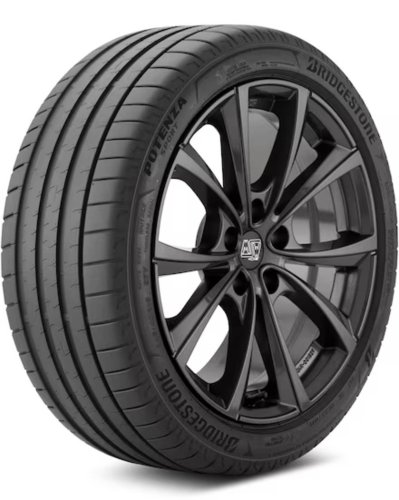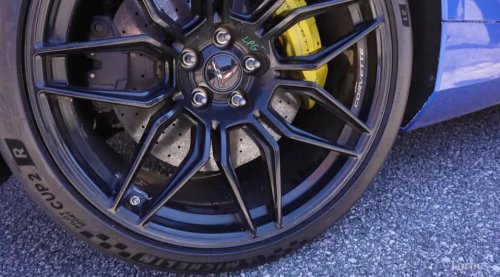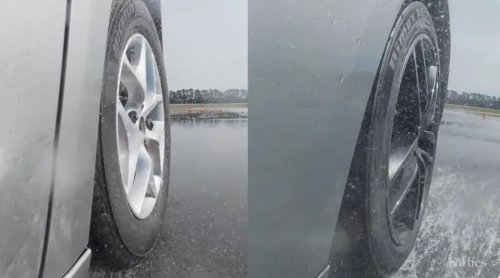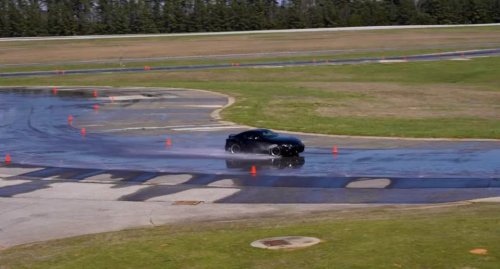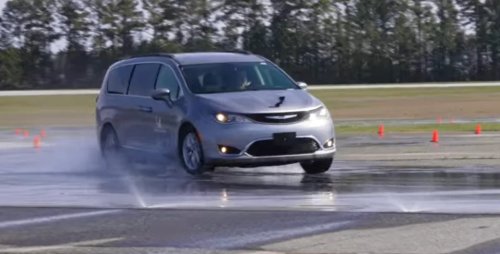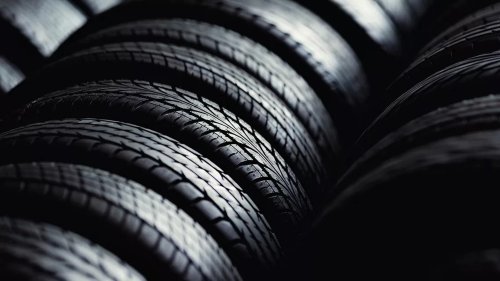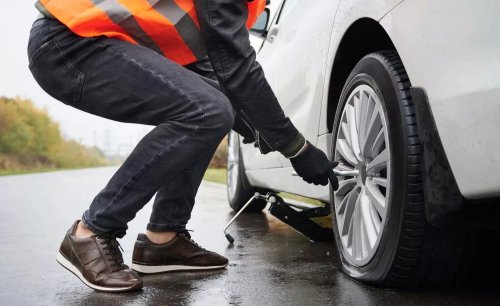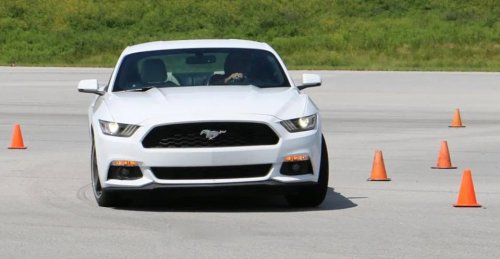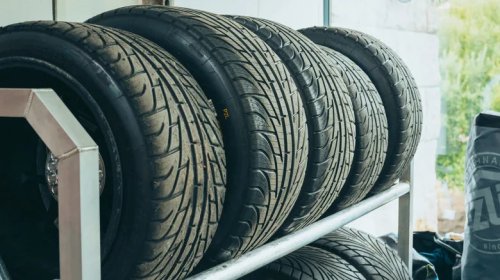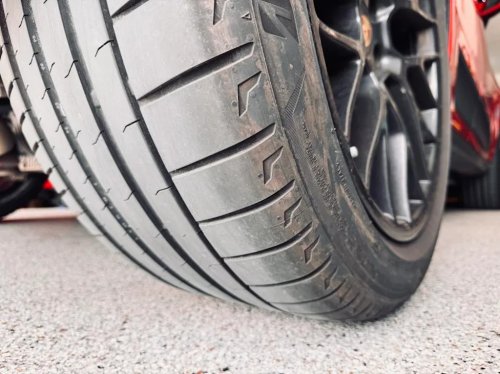
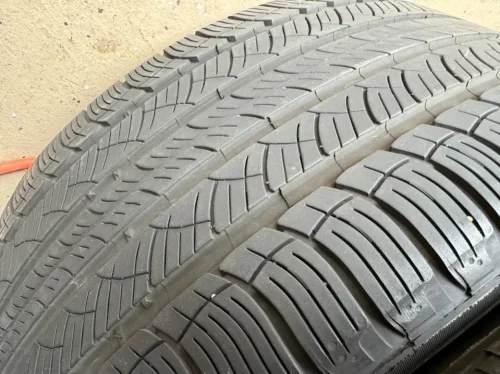
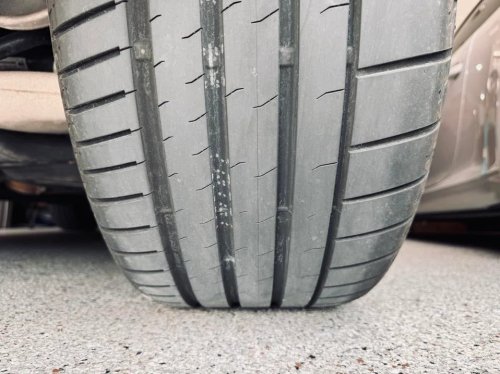
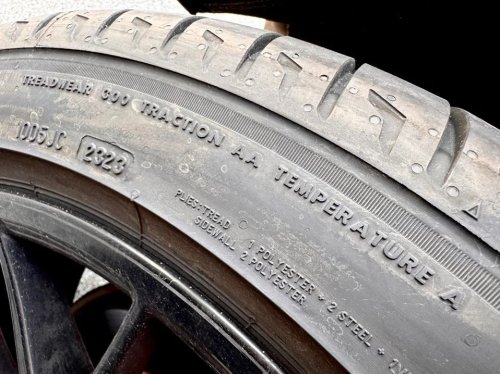
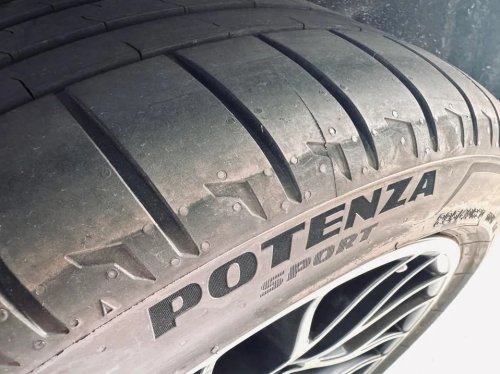



















The Bridgestone Potenza Sport is a "Summer Ultra-High Performance" tire offered as both an OE and aftermarket fitment©2026 Michael Harley/Schnell Auto, Inc.I've personally paid the price for mediocre tires. Years ago, while my wife and I were driving home from vacation, the car ahead of us unexpectedly stopped short. I stood on the brake pedal, ABS chattering, but there was so little grip from the all-season tires that we slid straight through the intersection and into their rear bumper, ending with a destructive thud. Both cars were damaged, but there were no injuries—and I'd learned my lesson.Tires are a lot like shoes. Meaning they are engineered for very specific uses, whether that is off-road, winter driving, racing, or highway miles. While many are specialized, "All-season" tires are a compromise design—engineered for use in all four seasons on a variety of surfaces from smooth pavement to gravel roads. But unfortunately, that compromised design means they are only mediocre when it comes to grip—and sliding on smooth pavement had landed me at the body shop.The OE "Touring All-Season" tire, with countless individual tread blocks and wide grooves that allow the tire to squirm during abrupt maneuvers.As I waited for the front bumper on our Porsche Macan to be repaired, I decided to purchase a proper set of tires for my needs. I wanted better dry and wet performance, more grip in the corners, and definitely better braking capability. Once the repairs were done, I called Tire Rack and ordered a proper set of high‑performance tires.AdvertisementAdvertisementWhen discussing vehicle tires, manufacturers often describe original equipment (OE) tires—the tires your vehicle was originally delivered on—as a "compromise product" selected to balance fuel economy, noise levels, ride comfort, price, and availability. While tire wear and grip are certainly a consideration, they are often not priorities. (There are exceptions: Vehicles like the Porsche 911 GT3, 911 Turbo, and Lamborghini Revuelto are factory-fitted with tires purpose-engineered with performance as its primary objective.)That's a shame, as tires are arguably the single component that most directly affects how a vehicle feels, responds, and keeps drivers out of trouble. They are the only part of the vehicle that actually touches the road, so everything the car does—accelerating, braking, turning, absorbing bumps—happens through that small contact patch.Think of tire grip as a safety margin. Every time you drive around a corner, loop a highway cloverleaf, swerve to avoid an ill-fated squirrel, or brake hard for the naive teen on an electric scooter, you're expending that margin. Standard all-season tires have typical safety margins, meaning everyday driving doesn't exceed their limits. High‑performance tires—with softer compounds, stiffer sidewalls, and more aggressive tread patterns—have expanded safety margins by generating more road friction. In layman's terms, they improve safety by meaningfully expanding your vehicle's performance envelope.The Bridgestone Potenza Sport features large, uninterrupted circumferential ribs and strong shoulder blocks to resist squirming under load.Convinced that my crash was directly attributed to the OE tire choice, four tires categorized as "Touring All-Season," I began my research.AdvertisementAdvertisementPorsche had done the sensible thing and sourced its OE tires from a respected brand, but it had specified a tire for a non-enthusiast driver. In other words, the "Touring All-Season" tires were clearly chosen to match the entry-level, four‑cylinder Macan's target buyer: someone who prioritizes quiet running, long life, comfort, and fuel economy over outright grip.The sidewalls told the story—a treadwear rating of 440 and an M+S marking. A treadwear rating that high signals a harder, long‑wearing compound. The M+S marking, which stands for "Mud + Snow," means the tread pattern has at least 25 percent void—wide grooves that help clear mud and packed snow (What it doesn't signal is true winter performance: M+S defines nothing about how the rubber behaves in cold temperatures or on ice. For that, you need the Three‑Peak Mountain Snowflake—or "3PMSF"—symbol, which is the one tied to actual snow‑traction testing.)The sidewall of a tire is loaded with helpful information such as Uniform Tire Quality Grading (UTQG) system. This gives a number for treadwear (300), traction (AA) and temperature (A). All-Season tires will have higher treadwear, but lower traction and temperature ratings.When I hit the brakes, the "Touring All-Season" tires' hard rubber compound struggled to grip the asphalt. Countless individual tread blocks, divided by wide grooves, wriggled around instead of digging in. With the contact patch sliding and squirming, the brakes had less to work with—and the car took just enough extra distance to end in an impact.I chose to make my car safer. So, today, the Porsche Macan rides on Bridgestone Potenza Sport tires that carry a "Summer Ultra-High Performance" designation. The Potenza Sport is a max‑performance summer tire engineered for grip in dry and wet conditions, steering precision, and short braking distances. (Note: It is designed for warm to moderate climates, meaning it is not M+S rated, and it should never be used in freezing temperatures, snow, or ice.)AdvertisementAdvertisementLike other "Summer Ultra-High Performance" tires, the Potenza Sport features innovative technologies in its tread pattern, compound, and construction—many of which are proprietary to Bridgestone. For increased cornering traction and improved lateral stability, it has large, uninterrupted circumferential ribs and strong shoulder blocks to resist squirming under load. The rubber compound on the tread face has been formulated to provide high traction on both dry and wet roads—the 300 treadwear rating means it offers significantly more grip than any all-season tire.Bolting on Bridgestone Potenza Sports transformed the Macan's personality—it went from soft and tentative to sharp, agile, and genuinely athletic. Subjectively, the vehicle drove much better. And scientific evaluations support those impressions.Independent testing by Motor Trend revealed that Max‑Performance summer tires improve cornering grip by 10 to 20 percent, which is a significant buffer when cornering or swerving to avoid an accident. As an added benefit, performance tires don't howl or squeal in protest when pushed hard, unlike all-season tires.Braking distances are also significantly reduced. In independent testing performed by Tire Rack and Edmunds, high-performance summer tires have stopped cars 30 to 40 feet sooner from 60 mph than standard touring all‑season rubber in the dry, and in some wet‑pavement comparisons the gap has been closer to 50–60 feet—that translates to several car lengths of extra room. (Keep in mind that even one extra foot of stopping distance can be the line between a terrifying but harmless panic stop and actual impact.)High-performance tires will have higher speed ratings. This generally reflects a more robust construction and better high-speed handling, which contribute to safety.Wet weather performance surprises many owners. Most consumers believe that tires that excel on dry racing circuits won't perform in the rain; all-season tires must be better. But that's not the case. Silica‑rich compounds and carefully tuned tread designs, as found engineered into modern high‑performance summer tires such as the Potenza Sport, allow the tire to effectively move the water away from the contact patch—maintaining grip and slowing the onset of dangerous hydroplaning.AdvertisementAdvertisementWhile high-performance summer tires will considerably improve your vehicle's performance and safety margin, there are tradeoffs. First, there are the previously mentioned winter driving restrictions (I live in Idaho, so I will drive on high-performance Bridgestone Potenza tires in the warmer months, then switch to dedicated Blizzak winter tires when temperatures drop below 45°). Second, softer tire compounds wear faster. And stiffer sidewalls and larger tread blocks may transmit more surface vibration and noise into the passenger cabin. Lastly, premium materials and advanced engineering drive up the prices—high-performance summer tires will cost more than all-season tires.The benefits are obvious: every aspect of how a car drives—acceleration, braking, cornering, and even the work of safety tech like ABS, stability control, and automatic emergency braking—ultimately depends on four small contact patches of rubber. When you move from standard all‑season tires to high‑performance rubber, you increase that grip, giving every one of those systems a stronger foundation and a wider safety margin.High-performance tires won't fix tailgating, distraction, or texting at 80 mph—they aren't a replacement for paying attention. But they do shorten stopping distances, improve grip in dry and wet weather, and expand your margin for error. Most important, they give you more room to recover when things go wrong.This article was originally published on Forbes.com