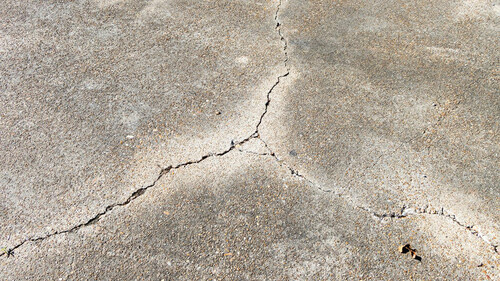
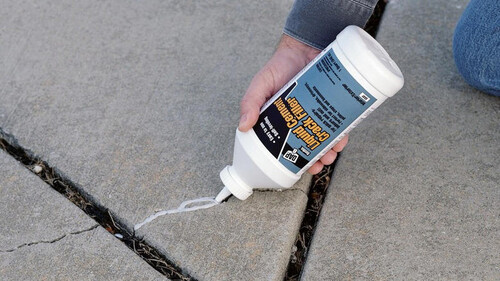
Ray Slone/Getty Images There are numerous benefits to using concrete for a driveway. It's immensely durable, requires very little maintenance, and it's one of the more affordable options out there. Plus, while mixing and pouring concrete is a fairly physically demanding job, it's not technically challenging, which means it can be approached as a DIY task for those that prefer to get their hands dirty. Whether you're laying a new driveway, or if you're repairing or replacing an existing concrete driveway, there are a number of rules that you should always follow to ensure the desired finish is achieved. Failing to prepare the surface appropriately is the biggest mistake to avoid when pouring a concrete driveway, as this will inevitably result in a poor finish and require a whole lot of work to put things right. Other mistakes to avoid making include cracking on regardless of bad weather warnings, not choosing the correct concrete mix for the job at hand, adding too much water to the mix, and rushing the curing process. These mistakes will result in a subpar finish. So, while concrete driveways can certainly last for decades, making any of the following mistakes will result in a driveway that needs redoing or refinishing much earlier than that. Poor preparation Stuart Monk/Shutterstock As with anything really, failing to prepare is preparing to fail. Much in the same way that pouring and working with the concrete itself is hard work, so is preparing the ground. A solid and stable base is required, and that often involves an awful lot of digging, removing of organic material, levelling, and compacting. Failure to provide a suitable base can result in a concrete driveway that cracks and fails, ultimately ensuring that a redo or extensive repairs are necessary. Furthermore, DIYers will also need to think about grading and drainage when preparing the base. Adding a layer of gravel beneath the concrete will allow water to drain properly, and creating a slight gradient will help with water run-off, too. Water pooling beneath the concrete can result in cracking, especially in colder climates that allow that water to freeze and expand. The trick here is not to rush the process. Take the appropriate amount of time to clear the area, level the ground, compact the subbase, work a gradient into the driveway, all before the concrete arrives so that there is no pressure to rush the process. At that point, also be sure to use the same amount of care and consideration during the pouring and curing processes. Working in poor weather conditions knelson20/Shutterstock The effect of the weather is perhaps one of the trickier things to work around when pouring concrete. After all, the driveway may need completing by a certain date — perhaps for family members to move in, for a sale, or for any other multitude of reasons. Regardless, weather can really mess up an otherwise perfectly planned concrete driveway. If it's too hot, the concrete could cure too quickly. If it's too cold, it could cure too slowly. The former invites the risk of cracking, while the latter could result in a weakened final result. Oh, and if it rains, that could result in a weak finish, too. So, essentially, DIYers should be on the lookout for moderate temperatures and no risk of rain — easier said than done, we're sure. Fortunately, it is possible to work around the weather to some degree. Curing blankets can speed up the curing process in cold weather, while misting or fogging the surface can help control the curing process in summer, as can erecting a gazebo to provide shade. While there are workarounds, DIYers should still be on the lookout for friendlier weather conditions. A little bit of shade and some light misting will only help so far in heatwave weather — waiting a week or so for extreme cold or heat to pass will always be a more sensible decision. Using the wrong concrete mix Iryna Olkhova/Getty Images This one should be a little obvious, but, then again, those new to concrete may not be aware that different mixes do exist. The real problem posed by using an inappropriate mix is that the surface can easily crack or crumble when exposed to heavy loads, like driving a car on and off of it daily for years and years. The ratios need to be spot on. If the mix is too watery, the concrete will become weak, whereas if there isn't enough cement in there, the end result will be brittle. In order to sidestep costly repairs and do-overs, just speak to the concrete provider about your plan, and ask them to recommend the ideal mix. If in doubt, get the pros involved. If the idea of getting a concrete driveway wrong is too stressful, there are alternatives out there. One surprisingly eco-friendly alternative to concrete is recycled asphalt, but, ultimately, there should be no real reason for concern if you have a proper plan in place and if the concrete provider can assist in choosing the right mix. Adding extra water to the mix Tanit Boonruen/Getty Images There's no escaping the fact that pouring concrete is a physically demanding task, and, as such, any shortcuts that can make the job easier will no doubt sound appealing. Diluting the mix with a little extra water may be one of the most tempting shortcuts, as doing so will make it easier to pour and, therefore, less laborious. Unfortunately, doing so is one of the worst things for the durability of a concrete driveway, and it's a mistake well worth avoiding. The finished result will be weaker and more prone to a number of issues, including cracking. It may look fine when cured, but as soon as a hulking and heavy EV is parked on it, or a family-friendly 3-row, the driveway's weakness will surely begin to show. A crack in a new driveway is the last thing any DIYer wants to see, and redoing the whole process — or paying a professional to do it — is the absolute last thing they will want to do. To avoid this mistake, always follow the water-to-cement ratio given by the supplier. Inquire about plasticizers for an easier work mixture. Plasticizers make the mixture easier to pour and push, without negatively impacting the strength of the finished product. Rushing the curing process Constantgardener/Getty Images For anyone that hasn't worked it out yet, the secret to a successful concrete driveway job is patience. Wait for the right weather, ensure that you're using the right mix, prep the ground correctly, and definitely don't rush the final step: curing. Concrete isn't just a pour-it-and-let-it-dry-overnight job. In fact, letting it cure too quickly will most likely result in cracks – it needs to be given appropriate hydration over the course of a week, at an absolute minimum, to ensure it cures correctly. This will result in a strong and durable finish — exactly what's needed for a driveway. According to those in the industry, depending on the mix and the thickness of the concrete, the entire process can actually take weeks. For a rough guideline, you can walk on the surface after 2 days and drive on it after 7 days, but the concrete won't have cured completely until after roughly 4 weeks have passed. Keeping the surface wet, in addition to using sealants and curing compounds, all help in attaining that strong, durable finish.