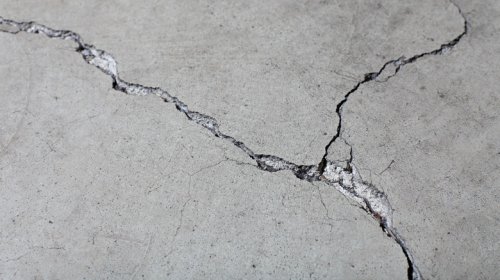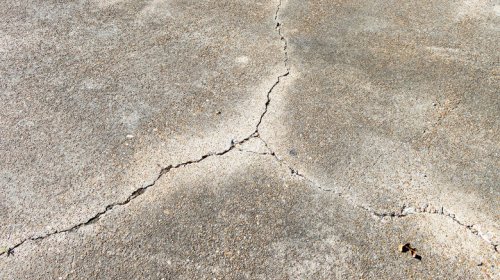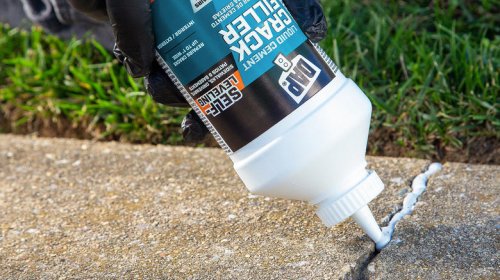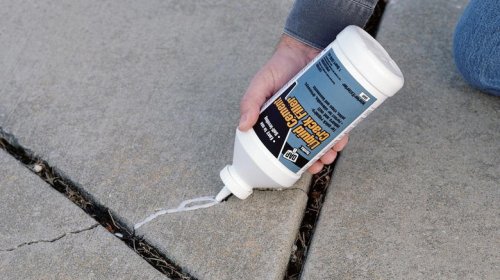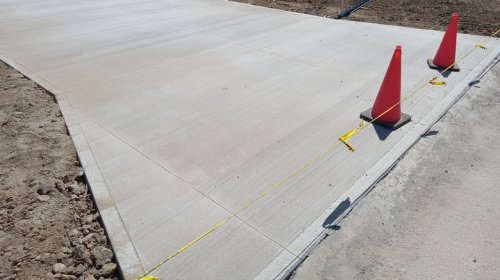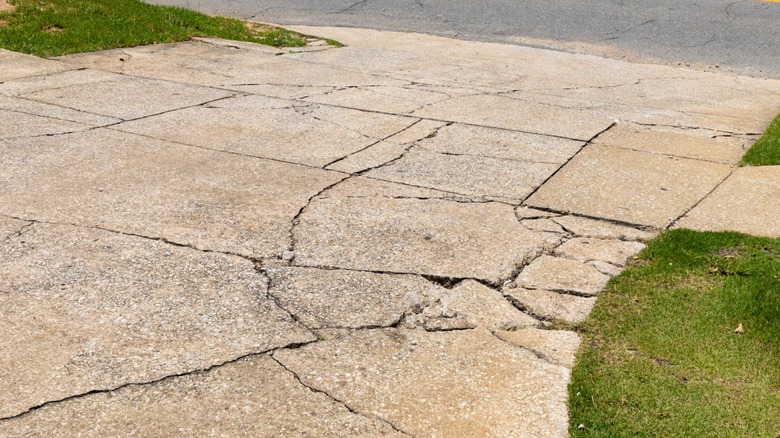
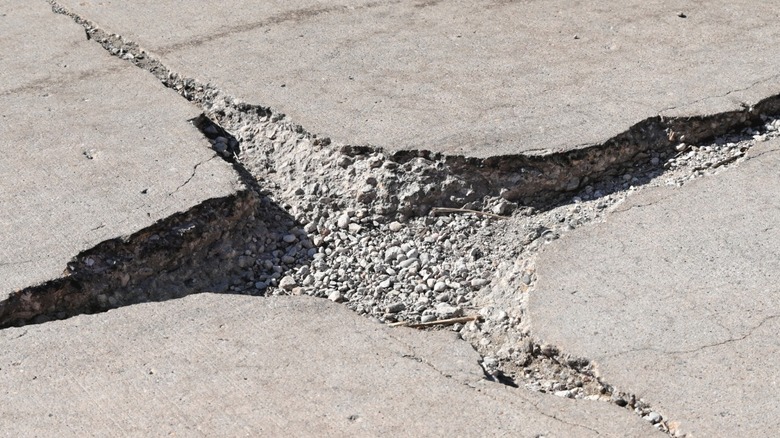
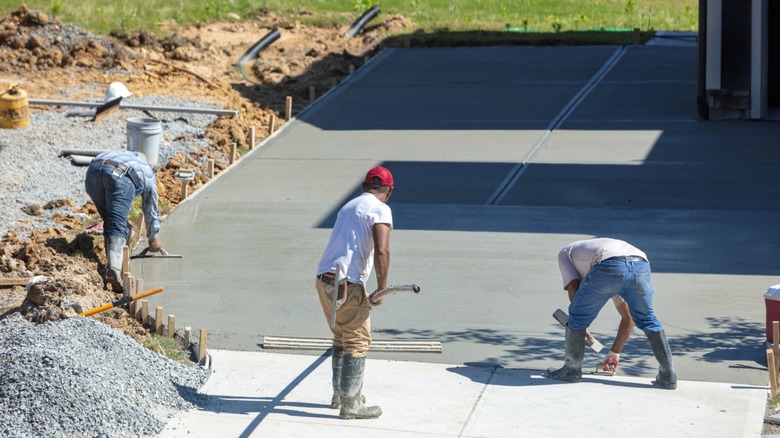



















Ottoblotto/Getty Images Nothing lasts forever — not even concrete. Eventually, your driveway is going to develop cracks. Its corners might break off, or a pothole could appear on it. Not only does all of this look unsightly, but it can also cause some serious trip hazards, so it's an issue that you can't ignore. But does that mean you have to replace your driveway altogether, or can you get by with just repairing it? Repair can sometimes be the more practical option, especially if the concrete isn't near the end of its natural lifespan. Sometimes, the damage is just superficial, which means a repair will do just fine. Resurfacing can cover over a multitude of blemishes, and is less expensive than replacement. If the damage covers less than 25% of your driveway and the rest of the concrete is structurally sound, then repair is probably the way to go. On the other hand, there are times when concrete is just too far gone to save. This is especially true if the damage is more widespread or the concrete itself is near the end of its life. Alligator cracking — when the cracks are so abundant and interconnected that they look like the back of alligator — is a sure sign that the driveway should be replaced. If the structural integrity is compromised, no amount of resurfacing or crack-filling is going to do the job. And, if you choose, you could replace your concrete driveway with something more eco-friendly, like recycled asphalt. When you can get away with just repairing the concrete Steverts/Getty Images Generally, when someone is looking to repair their concrete driveway instead of replace it, they're looking to save a few bucks. That's a perfectly valid reason to consider repair as an option. Usually, at least in the short term, repairs are more budget-friendly than a full-blown replacement. Maybe you don't have the funds to do a complete replacement right now, but you still need to take care of the trip hazards in the cracked driveway. A repair can give you enough time to save up enough funds to replace the concrete. It also makes sense to repair a concrete driveway instead of replacing it when the concrete itself is less than 30 years old. That's generally how long concrete is able to last in the long run, so it could still have a few good years of life left. Sometimes the damage is just cosmetic, and the slabs underneath are still in good condition. In that case, the driveway could just be resurfaced. Even if those cracks are deep enough to cause structural damage, as long as the underlying slabs are intact, repair is still a viable option. When you really should replace the concrete Stu99/Getty Images Repairing isn't always the most cost effective solution. That's especially true if your concrete has been lying there for a span of three decades. Once it's that old, you may be repairing it more often, which means replacing it entirely would be the most economical option. But it doesn't have to be that old to be near the end of its life. Weather and the sun can prematurely age concrete, which is why we've previously shared tips on deicing your driveway. Sometimes, the damage is so widespread that trying to repair it would be more expensive then replacing it. You should also keep in mind that repairing cracks doesn't make them go away; you can still see them, since they are just filled in. If you want to remove visual blemishes completely, you'll usually need to do a full replacement. Again, though, the most important factor is the condition of the slab underneath. If it is crumbling or degrading, it's time for a new driveway. It's also a good idea to consider how deep the cracks go. Even if they aren't currently affecting the concrete's structure, water can get in, freeze during the winter, and separate the concrete further. Standing water is another sign it's time to replace that concrete, because it means that the driveway is likely sinking. So, spiffy new concrete may be just the thing you need in those circumstances. Just make sure it doesn't get stolen — like this Florida woman's driveway.