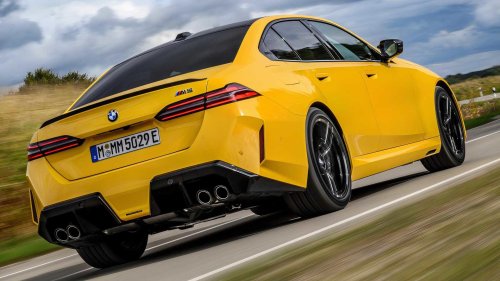

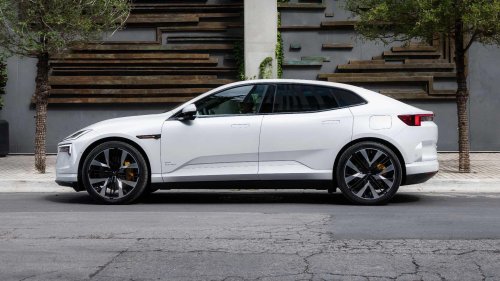
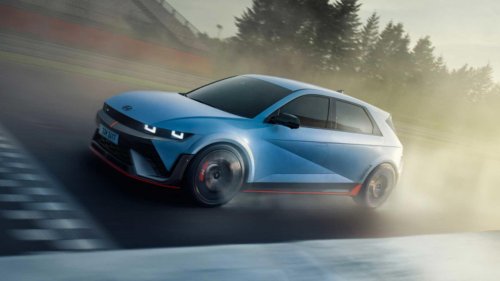



















Horsepower may be the automotive industry’s most important metric. Typically, horsepower is the first spec listed on a manufacturer’s website, the first number people look at, and the figure that defines a vehicle in people’s minds.However, most people don’t know what horsepower is. The math can be inscrutable to most non-engineers, but everyone can comprehend there’s a vast gulf between the capabilities of the 720-hp Ford F-150 Raptor R and the 191-hp Maverick Hybrid.Horsepower, however, is far from an optimal unit of measurement. Its utility and value come solely from everyday familiarity with the term. Horsepower lacks a firm, clear mathematical basis. It’s not standardized. As the automotive world enters a new, more electrified era, we should move away from this metric. There’s a far better method for the industry to use moving forward. How And Why Horsepower Came Into Use Ford The origin of the “horsepower” measurement predates the automotive industry and goes back to the start of the Industrial Revolution. James Watt was a famous Scottish inventor in the 18th and early 19th century. He didn’t invent the steam engine, but he created a more efficient and useful design. This version helped power the Industrial Revolution in Britain.Watt did not just improve his steam engine. He had a company that sold them, too. However, he faced a classic marketing dilemma. Watt wanted to sell his steam engines to several different industries. He needed a simple metric to explain how much work his engines could do in terms that buyers could understand.In many industries, steam engines would replace work performed by teams of draft horses. These animals needed to be housed, fed, cared for, and (as anyone who has been in close proximity to horses is well aware) cleaned up after. Watt needed a way to explain to customers how many horses his engine could replace. Thus, he came up with a new unit of measurement: horsepower.PorscheWatt had no conception of what automotive transport was. He was not trying to form a rational, universal system of measurement that would endure for centuries. He needed and produced a rough estimate of how much work – the calculation is force times distance over time – that a horse could produce.Watt observed horses pulling a mill. He worked out some very back-of-the-envelope math with heavy rounding and came up with a number. A horse could move 33,000 pounds of weight one foot per minute, or 550 pounds one foot in one second. These figures became one horsepower.However, the calculation for how much power a horse could produce wasn’t accurate. But it served well enough for Watt’s steam engine marketing purposes. The figure caught on with the general public. At a time when the scientific community underpins units like the meter and the kilogram with fundamental mathematical constants, the car industry’s chief metric for power is based on a marketing ploy. Why Horsepower Is A Problematic Measurement BMW One major issue with horsepower as a measurement is that the unit is not standard across borders. European manufacturers use metric horsepower, which goes by different acronyms depending on the country. German manufacturers use PS, standing for pferdestärke, meaning horsepower. The French use CV, standing for Cheval-Vapeur, or steam horse. Every automotive journalist who reads foreign press releases is familiar with the confusion this can cause.Metric horsepower differs ever so slightly from the Imperial horsepower used in America. One metric horsepower is 0.986 American horsepower. While it's not an enormous difference, things start adding up when dealing with modern vehicles that have hundreds of horsepower.For example, Aston Martin has the hyper-powered SUV called the DBX707. The “707” refers to the 707 PS output from the SUV’s twin-turbocharged 4.0-liter V8. The engine’s total output was 697 horsepower, just short of an even 700 hp. Why did Aston Martin use metric horsepower? We suspect that DBX707 sounded more impressive than DBX697 would have.Aston Martin Horsepower can also vary greatly depending on where and how you measure it. Standards for testing have changed over time. In the 1960s, manufacturers touted huge horsepower numbers for their muscle cars. The situation changed in 1972, when the Society of Automotive Engineers (SAE) switched from measuring an engine’s gross horsepower to a powerplant's net horsepower, which had all the power-sapping accessories from a normal car attached. Some muscle cars lost more than 100 horsepower in the switch to the new model year.The SAE changed the standards to a more stringent horsepower test in 2005. The impact was not as dramatic as the switch from reporting gross to net horsepower. Plus, the implementation was voluntary, so some manufacturers waited to embrace the new standards. Others only implemented them with newly tested vehicles. Watt and Kilowatt Would Be More Useful Measurements For The Automotive Industry Moving Forward Polestar The automotive world is going electric. However, the transition won’t happen as quickly as EV proponents thought earlier in the 2020s. The conversion may take decades rather than years. The shift may involve more hybrids and EVs with gasoline range-extenders as transition vehicles. Still, manufacturers sold more than three million hybrid or electric vehicles in 2024 and achieved a 25% market share as early as 2027.Electric motors are the future.We already have a James Watt-derived standardized unit for measuring electric power: the watt. The unit is commonly understood for things powered by electricity, such as a 60-watt light bulb. One horsepower is 745.7 watts. One metric horsepower is 735.5 watts.Measuring in watts would be a terrible way to express engine power output. The DBX519753 doesn’t really have a great ring to it. Fortunately, one can express watts in metric units of 1,000, for the kilowatt. The DBX707 would be 520 kW in every country.Hyundai Automakers don’t even need to convert to kilowatts because they're already measuring it when developing a vehicle. Engineers can use the unit to express the output of both internal combustion engines and electric motors. The motors themselves have a kW number rating, and the battery pack sizes are presented in kilowatt-hours. Converting the figures back to the more archaic horsepower only happens when PR people or automotive journalists must present the information for public consumption.Horsepower is what we’ve used to describe cars for decades. However, that factor alone should not be a reason to continue using it. Cars are increasingly evolving into electric machines. The terminology we use should evolve with the times. The math behind the kilowatt is cleaner. With the changing context, adoption would make it simpler to explain what is happening with the vehicles people are buying. The downside is that switching to kilowatts would yield a smaller, less impressive-sounding number. DBX707 sounds better than the DBX520 ever would. If the inverse were true, manufacturers would likely be trying to make kilowatts happen already. Popular 2026 Cars Expressed In Kilowatts Instead Of Horsepower