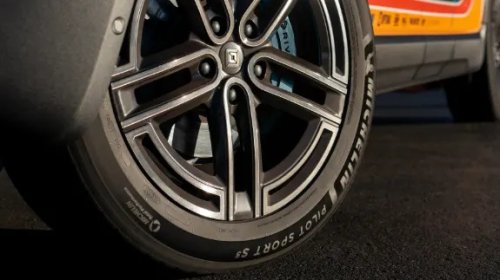



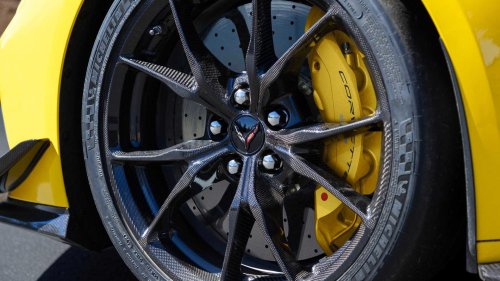



















You've got Vin Diesel on speed-dial. Your car's vanity plate reads "Danger", but only because there isn't enough space to add the words "to manifold". Your left sneaker's sole is worn down to the canvas from the 10-million gear changes you perform every quarter-mile (double-clutching, not granny shifting, naturally). And your car's footwells have an extra layer of welding just in case the bolts start undoing themselves (because that just happens to every modified Mitsubishi Eclipse in a street race every time that shot of nitrous hits, right?).Okay, so sniping at the physics- and common sense-obliterating Fast & Furious franchise is easier than taking candy from a baby. But modifying your car in a way that adds actual performance – while retaining a modicum of everyday usability, and above all, reliability – is a little harder than just replacing your car's back seat with a pair of Saturn V-sized canisters of nitrous oxide.The car tuning scene – a cause advanced in no small part by early installments of the F&F franchise – popularized what was once a dark art. However, when that hit the mainstream, along came the snake oil and the misinformation. Tuning your car can be truly satisfying – or truly self-deceiving – when you get it wrong.Leaving the speed-hunting aside, it's worth knowing beforehand that a car's components are designed and calculated to interact with each other to create a balance between comfort, usability, economy and performance. Even if adding more power is your primary objective – and you're willing to compromise on one or more of these aforementioned elements in pursuit of your goal – an ill-advised modification path may not bear the fruits you wish and could end up leaving your Honda Civic Type R more like a tug boat. And it could ruin your ride. How? Oversized Turbochargers Aftermarket TurbochargerIf a turbo's function is to compress more air to allow more fuel to be burnt, surely four-digit horsepower is just adding a bus-sized blower away? Not quite.Big turbos need lots of exhaust gas from high revs to start spooling up before they can start producing power. Reaching that threshold takes time and the spiky, on-off behavior of power delivery will seriously affect an engine's drivability as the power band is narrowed and moves up the rev range.What's more, that monstrously big turbo will require complementary upgrades to the engine to handle the extra power, such as the crankshaft, con-rods and pistons. You'll also need to upgrade the ECU, intercooler and fueling. Without these, the turbo won't perform to its potential or the standard parts will simply fail because they're overstressed. Oversized Exhausts 1998 nissan stagea 260rs autech version exhaust chromeMore noise equals more power. End of. End of your drag racing career, too, had you been racing with a drainpipe exhaust.An exhaust's primary function is to expel the engine's spent gases, noise is merely a by-product. The interplay between back pressure, scavenging and how an engine performs is non-linear, and adding a too-large diameter exhaust (such as going from two to four inches) actually slows down the pulse velocity of the traveling gas, leading to reduced throttle response and bottom-end performance.While fewer restrictions like pipe bends and fewer baffles downstream can be beneficial for performance versus a comfort-oriented stock setup, for street car applications that spend most of their time at low to medium engine speeds, it pays to be conservative with aftermarket tube sizing. Cut Springs Lowrider Hey, we get it. Money's tight, but you still want a sweet stance? Nothing that a couple of beers and an angle grinder couldn't fix.There's more engineering to the humble coil spring than you think. Because they're calculated and wound to deliver progressive levels of resistance, removing a few loops to lower the ride height puts them out of balance. Your car's handling will either be too soft or too hard, wheel alignment inconsistent and the weight distribution compromised.Your car will also most likely bottom out over bumps, rub its tires against the fender inners and the springs may come loose during compression if they aren't seated properly. It's also guaranteed to fail any safety inspection. Air Filter? What's That? FilterWhen it comes to understanding how engines work and how to get the best out of them, sometimes knowing just a little is a lot worse than knowing nothing at all because a little knowledge is enough to get you into a lot of trouble.If one thinks of an engine as a giant pump that sucks in air to facilitate the combustion of fuel, it stands to reason that removing all obstacles in the incoming air's path will maximize its intake volume. Unfortunately, that air contains dust and dirt that will damage an engine's pistons, valves, cylinder walls, turbocharger and clog up the air-flow meter; all of which will end in failure. Meaning that without an air filter, you're slowly killing your car's engine mile by mile.And more air entering the engine doesn't guarantee better performance. A modern ECU will also compensate for a suboptimal air/fuel ratio and limit performance, if not completely entering limp mode. Plug-And-Play Chips Rob Dahm dyno numbersAs the ECU controls an engine's functioning – in particular the air/fuel mixture, turbocharger and wastegate actuation – it is an essential piece of the upgrade puzzle.While forced induction engines stand to gain generously from ECU tuning, the optimal solution for all cars is to map an ECU while the car is on a dynamometer, thereby ensuring a tailor-made result that's optimized around a specific vehicle, fuel quality, air temperature, altitude and engine state.That's pretty much the opposite of what you get when downloading generic plug-and-play maps over the internet. Such-equipped engines can run too lean or too rich, overboost or knock.As an aside, given that the way naturally aspirated engines draw air from the atmosphere cannot be fundamentally changed, those fitted with turbos, stand to benefit considerably less not just from ECU tuning, but from all forms of modification in general. How To Make Your Car Faster By Being Smart (And Semi-Sensible) When it comes to tuning a car, a little common sense goes a long way. Knowing, for instance, that there are fundamental limitations and compromises to be taken into consideration will help manage your expectations.Apart from living with a higher fuel bill, issues with insurance and the prospect of a reduced resale value, having realistic expectations of your project will also help retain your sanity.Still, if you simply cannot scratch that itch, here are some ways to modify your car that won't break it - (and mostly) won't break the bank. Engine Swaps LS3-swapped Land Rover Defender 110Engine swaps are the most taxing as far as complexity and cost go. On the plus side, fitting a more powerful engine that's stock into a smaller vehicle body saves you the trouble of modifying it, and it should run reliably for thousands of miles.There are lots of options, too, ranging from smart to screwball. Using donor engines from the same brand may reap rewards of easier installation compatibility, and sourcing parts should be less troublesome, too, if you've upgraded to a more modern or popular engine.Of course, when looking beyond the same brand family, the greatest joy about swaps is that they're only limited by your imagination, budget and engineering prowess. Handling Upgrades Altimaniac Nissan Altima Drift CarUnless you're drag racing, one of the best ways to make a car faster is by improving its handling. Whereas more power is only beneficial when driving straight, upgrading the suspension to a stiffer setup – coilovers if you're feeling fancy – will affect daily comfort, but conversely provides payback in terms of responsiveness every time a car brakes, turns or accelerates.Next up are the brakes. If you'll be going faster, you'll need to stop better on the road and track. If you're chasing lap times, they'll shave a few 10ths off, too.2026 Corvette ZR1 Wheel and Brake PackageSo what about tires? Stickier, higher quality rubber is always better, but bigger isn't necessarily. Wheel-and-tire assemblies aren't light, and the bigger you go, the heavier they get. That translates to heavier rotational mass and inertia and more unsprung weight, meaning your car reacts slower and corners worse.A less pricey approach is upgrading all the bushes on your car from rubber to polyurethane. Engines – particularly transversely mounted ones – flex inside under acceleration; and stock suspension bushes tend to be too soft for high-performance driving. Every millimeter of flex is lost responsiveness, but be careful as switching to overly stiff bushings can be too harsh for daily use. Other Lightweighting Measures 1992 Toyota Supra restoration stripped frameEverybody loves horsepower. But the best horsepower of all is free horsepower. And that we get from reducing a vehicle's weight. Supercars are fast and turn on a dime, not just because of powerful engines and gooey rubber, but because they're often stripped-out. So there's less heft to have to slow down, steer or be dragged out of corners.Sadly, unless you're building a Mad Max movie car, there are limits to making a road car lighter. For a daily, you can't really go beyond ditching the back seat and replacing the fronts with a set of racing seats. Even then you're looking like a F&F wannabe. Above all, removing weight is costly: if you're modifying a clunker and are looking to replace steel body panels with carbon fiber, adding hollow-spoke wheels or carbon brakes, you've already spent more than what the car is worth.Porsche now sells the GT3 and GT3 RS with a lithium battery that saves 9.9 lbs, and that's barely the equivalent of a 12-pack of soda cans.Which just goes to show how hard it is to save weight – especially in a supercar. But hey, that may just get you into the 10-second quarter-mile club, where Vin Diesel awaits.