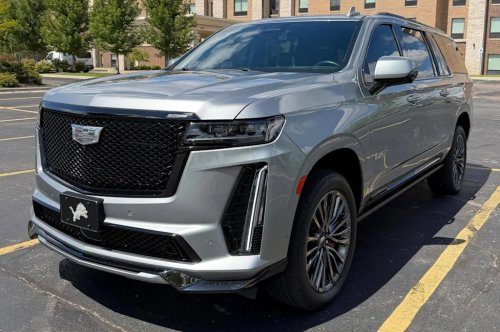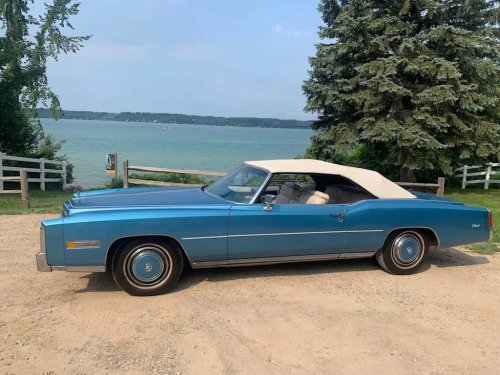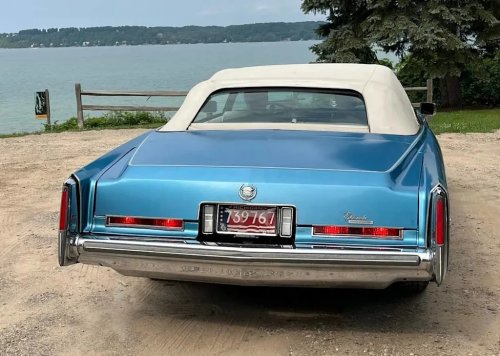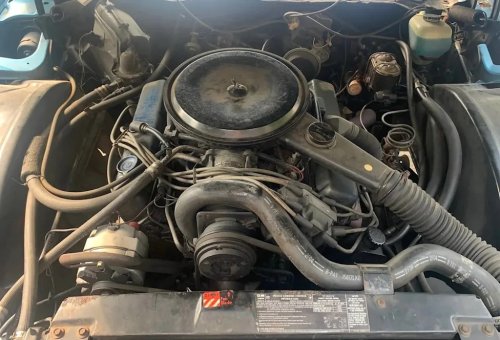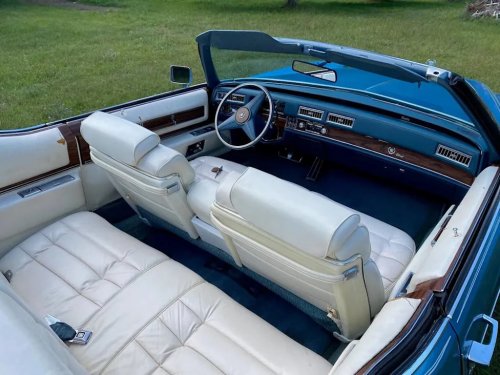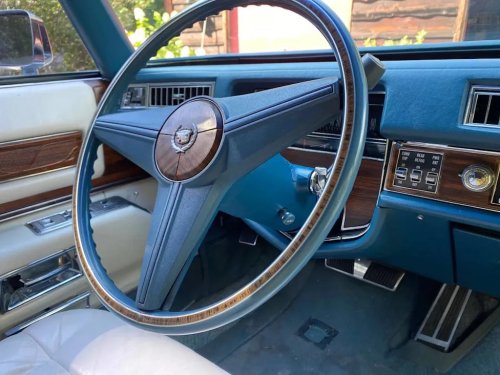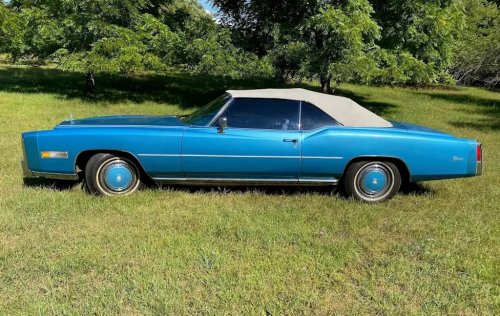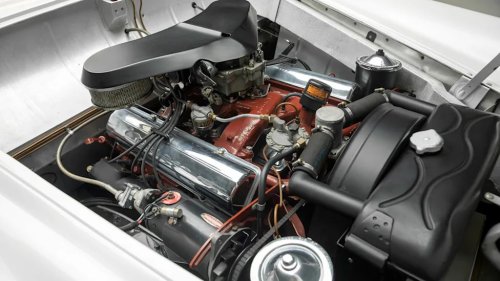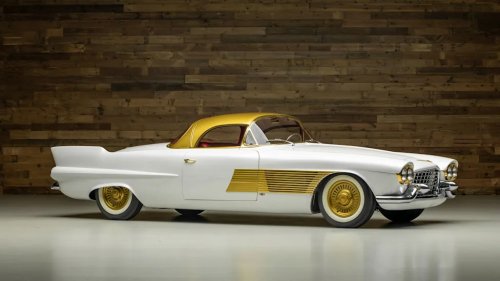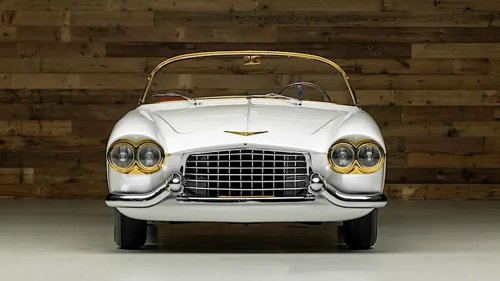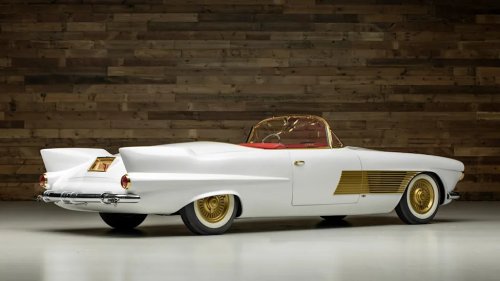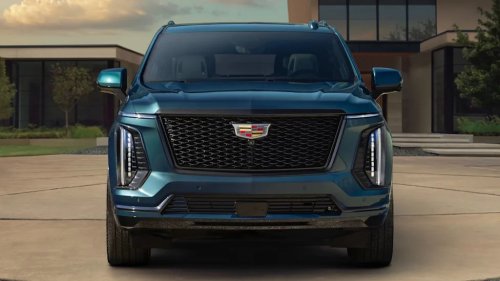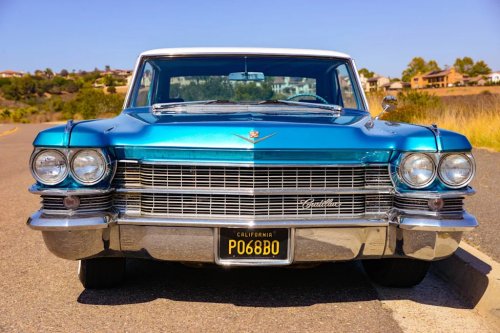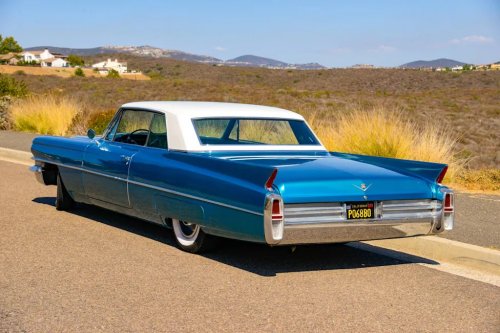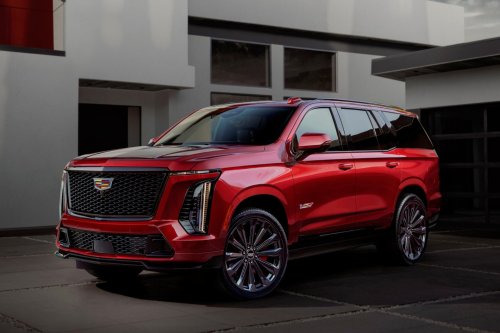
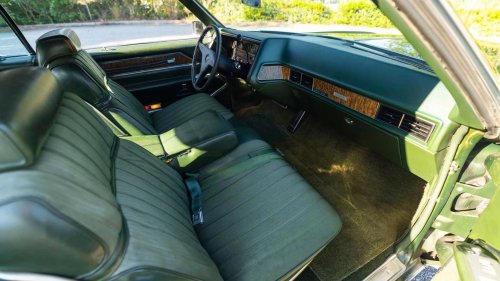
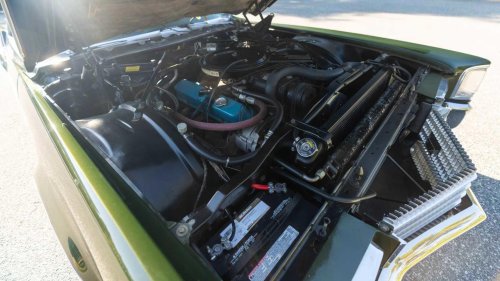
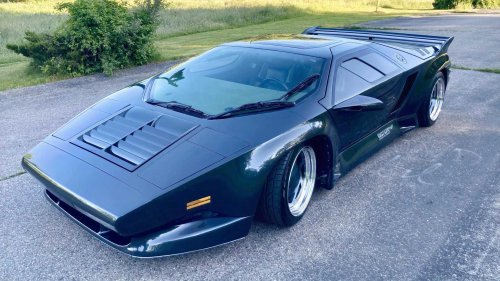
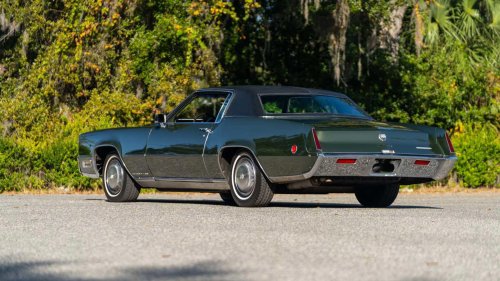
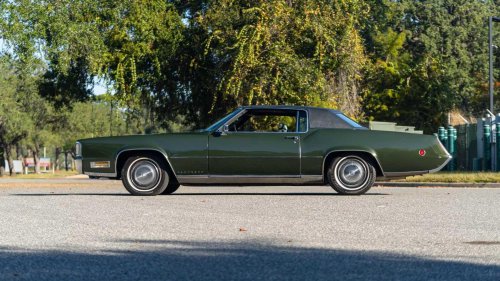



















There's no replacement for displacement, as the old saying goes, but it also requires plenty of purchasing power as well as cheap gasoline. America had both in abundance in the 1960s, which not only produced the golden era of the muscle car but also ushered in a new era of automotive luxury, seeking to redefine what the prior decade had delivered in both performance and comfort.The 1950s already represented an ambitious starting point for several major domestic automotive trends of the post-war period, with jet-age design quickly giving way to rocket-age design, as automakers jockeyed for position with drastically new designs just about every year. This quick-paced styling evolution had quickly made cars produced just a few years prior noticeably dated on the road, while advances in engine design were shifting the needle in the direction of greater performance, giving rise to a handful of nameplates that would dominate the muscle car scene for decades thereafter.But muscle cars weren't the only ones benefiting from massive engines in the 1960s. A separate and equally quick evolution was taking place in the segment of full-size luxury cars, with domestic automakers quickly shifting away from the chrome-heavy and the excessively ornate designs of the 1950s toward more formal straight lines of the 1960s, while also stretching the cars themselves in every direction, with gains in footprint size and engine displacement becoming the defining the trends of the new decade. The Torque Monster Itself Mecum Auctions It is in this quickly evolving environment that the Cadillac Eldorado entered its eighth generation in 1967, with the first having debuted in 1953 as a Harley Earl-designed convertible. The range-topping two-door hardtop and convertible duo evolved from a swoopy and chrome-trimmed open-top rear-wheel drive personal luxury cruiser into a vast two-door front-wheel drive coupe in the span of a decade and a half. Just about the only constant throughout this period of change was V8 power underhood.For 1967, Cadillac not only turned the Eldorado into a front-wheel-drive coupe-only luxury yacht, with a more conservative design overseen by Bill Mitchell, but it also dialed up the displacement from 7.0 liters to 7.7 (470 ci) for 1968. As excessive as that powerplant may have seemed in 1968, offering deep-pocketed buyers 375 hp and an already eye-watering 525 lb-ft of torque in what was nominally a personal luxury coupe, it paled in comparison to what arrived the following year, along with a few styling changes inside and out. The spirit of the seventies certainly came alive in the 1970 model, with Cadillac increasing the stroke of the 7.7-liter 472 engine from 103.1mm to 109.3 to squeeze out every last bit of torque.Mecum AuctionsCadillac introduced a 500 cubic-inch, or 8.2 liter V8, good for 400 hp and 550 lb-ft of torque for the 1970 model year. This 8.2-liter unit was billed as the biggest displacement V8 engine ever in a production car, a record it holds to this day, while also remaining exclusive to the Eldorado. So other offerings in the Cadillac range, including the massive Sedan de Ville and the Fleetwood Sixty Special, had to make do with lesser V8s. Cadillac even boasted about it in its ads."Eldorado's exclusive, new 8.2-liter V-8 engine (500 cubic inches of displacement) is by far the largest engine to power a production passenger car, and makes the spirit of the seventies come alive with rare excitement." The Luxury And Tech Mecum Auctions But the massive V8 and its performance numbers were only one part of the Eldorado's overall promise to buyers. There were plenty of luxury and tech features on board to attract deep-pocketed customers, including an early ABS system dubbed Trackmaster installed on the rear axle. Yet another new luxury feature was a glass sunroof by ASC, which debuted in 1970 as an option.Everything in between the long hood and the long trunk was trimmed in wood and leather, with the cabin itself taking up a relatively small part of the entire footprint of the massive coupe. But with an overall length of 221 inches, or 18.4 feet, interior space managed to be generous by the standards of the day, and even today, with a width of 79.8 inches (without the mirrors) buying the passengers plenty of elbow room inside.For context in this metric, the 2026 Cadillac Escalade is 81.1 inches wide, once again not counting the mirrors, with the standard wheelbase 2026 Escalade stretching 211.9 inches from bow to stern, while the extended-wheelbase flagship SUV model eclipses the Eldorado with a 226.9-inch overall length. So, in effect, we are talking about a two-door coupe from over half a century ago with the footprint of a modern Escalade. No Muscle Car Came Close To The Eldorado's Torque Mecum Auctions By comparison, the largest-displacement engine Cadillac's domestic competitors were fielding at the time only added up to 460 cubic inches, with Ford and its Lincoln division offering a 7.5-liter V8 in the Lincoln Continental Mark III, present on the menu from 1969 through 1971, and the sixth-gen Ford Thunderbird that arrived a couple of years after the Eldorado, in 1972. In the Continental Mark III, the 460 cubic-inch V8 was good for 365 hp and 500 lb-ft of torque, some distance away from the Cadillac's 550 lb-ft mark.When it comes to GM's own cars, the 1970 and 1971 Buick GS455 was closer than anything Ford had to offer in terms of torque, producing 360 hp and 510 lb-ft of torque. The same torque figures were produced by the 1969 Olds Toronado. Further down the line, Chevrolet's 454 cubic-inch V8 served up 450 hp and 500 lb-ft of torque in 1970 and 1971, as did Oldsmobile's Rocket 455 engine with 390 hp and 500 lb-ft of torque courtesy of a 455 cubic-inch V8.Ford's Super Cobra Jet, featured in the Mustang from 1970 till 1973, only produced 375 hp and 490 lb-ft of torque, failing to reach the level of GM's 500 lb-ft ratings during those few years. And Chrysler's 426 Hemi V8, offered from 1964 till 1971, served up 425 hp and 490 lb-ft of torque in top tune.Needless to say, just about all of the cars that came closest to the Eldorado's 550 lb-ft high water mark were muscle machines made in the late 1960s and early 1970s. So among personal luxury coupes, the Eldorado was almost alone in this stratospheric range.In fact, its 550 lb-ft rating wouldn't be topped for some time among domestic passenger cars. Even the Dodge Viper of the 1990s didn't crack the 500 lb-ft mark at launch, serving up 400 hp and 450 lb-ft of torque. Neither did the Ferrari F40, which served up "merely" 478 hp and 425 lb-ft of torque. And neither did the 1995 Bugatti EB 110 GT, with its 45 lb-ft of torque, nor the McLaren F1 with its 479 lb-ft of torque. The Eldorado Finally Gets Out-Torqued via Bring A Trailer Two supercars of the 1980s did top the Eldorado, though just how much of "production" cars they really were is perhaps debatable. The 1989 Callaway Twin-Turbo Corvette with its 5.7-liter V8 produced 382 hp and 562 lb-ft of torque, just barely eclipsing the Eldorado. That same year, the Vector W8 TwinTurbo also topped the Eldorado in torque, producing 600 hp and 600 lb-ft of torque courtesy of its 6.0-liter V8. But needless to say, neither were truly mass-market cars in the same way the Eldorado was back in 1970.There are a few other "muscle cars" from the 1990s that did top the 1970 Eldorado in the torque metric, including the 1998 Bentley Continental T with its 6.8-liter V8 producing 420 hp and 645 lb-ft of torque. Similar numbers were generated by the 1999 Bentley Continental SC with its version of the 6.8-liter powerplant producing 402 hp and an eye-watering 590 lb-ft of torque.A bit milder in this category was the 1995 Bentley Continental R, serving up 553 lb-ft of torque. Likewise, other Bentley sedans of the 1990s also eclipsed the Eldorado in this metric, but just barely. The 1995 Bentley Turbo R with a version of the same 6.8-liter V8 generated 384 hp and 553 lb-ft of torque, and remains quite affordable today if you can stomach the upkeep. The Aston Martin V8 Vantage Le Mans of 1999, with its 600 hp and 600 lb-ft of torque, also topped the Eldorado, while earning itself the title of the most powerful muscle car of the entire decade. The Era of Downsizing Mecum Auctions But for the Eldorado, the "spirit of the seventies" lasted for a very brief moment, as for 1971, Cadillac was already dialing down the output of the massive new engine, with power dropping to 400 hp and 550 lb-ft to 365 hp and 535 lb-ft of torque. So in its top state of tune, it was effectively a one-year model.The downgrade coincided with an industry-wide slump that began around that time, especially noticeable in muscle cars. So for many high-performance domestic cars, the year 1970 was pretty much the peak of horsepower and torque, with every subsequent year seeing a dramatic reduction in both due to insurance costs, new safety regulations, a shift in consumer tastes, new environmental regulations, and later the 1973 Oil Embargo.Even after 1973, the 500‑ci V8 soldiered on in the Eldorado for a few more years, but continued power reductions and tightening emissions regulations slowly eroded its performance numbers. By the late 1970s, the massive engine was discontinued entirely, marking the end of an era when Cadillac could pair front-wheel-drive luxury with torque figures that once dwarfed almost every domestic passenger car. How The 1970 Eldorado Is Valued Today Mecum Auctions Finding yourself behind the wheel of the 1970 Eldorado isn't as forbidding as it was back in the day, with current values, according to Hagerty, sitting at $17,400 for good-condition examples. In 2024, a Sauterne example with 62,000 miles on the clock sold for $22,000 on Bringatrailer. Yet another example, this time with 98,000 miles on the clock, traded hands the same year for $33,000. More recently, Barrett-Jackson saw a 1970 Eldorado bring $13,750 in Scottsdale in October 2025.A couple of years ago, we noted that the 1970 Eldorado was very affordable as a classic, and the same holds true in 2026. But as always, aside from the purchase price, it's wise to save a bit for gasoline, especially when an 8.2-liter V8 is in the picture. Some 56 years after its brief time on the stage, the 1970 Eldorado is a still-affordable glimpse into a different world of luxury and performance, one that would soon vanish as the decade unfolded.Sources: Classic.com, Bring a Trailer, Hagerty.