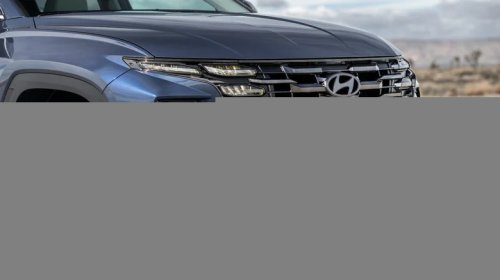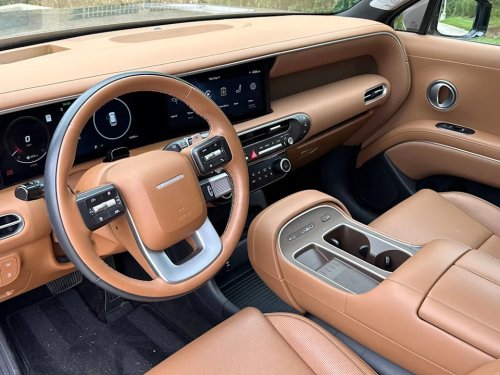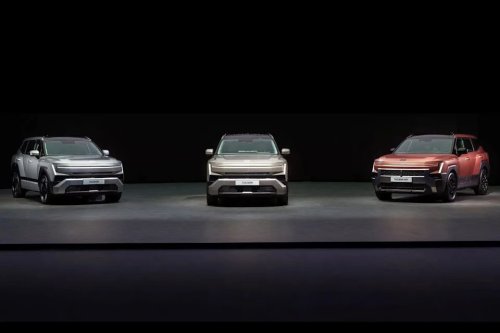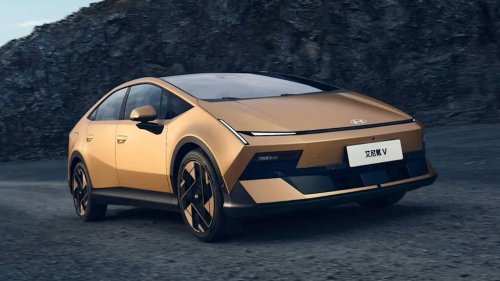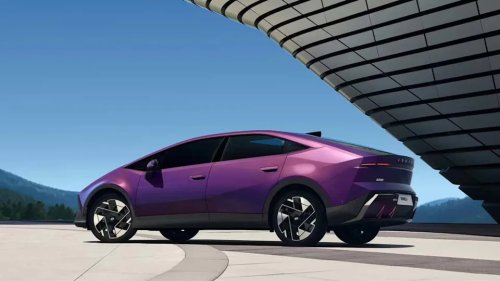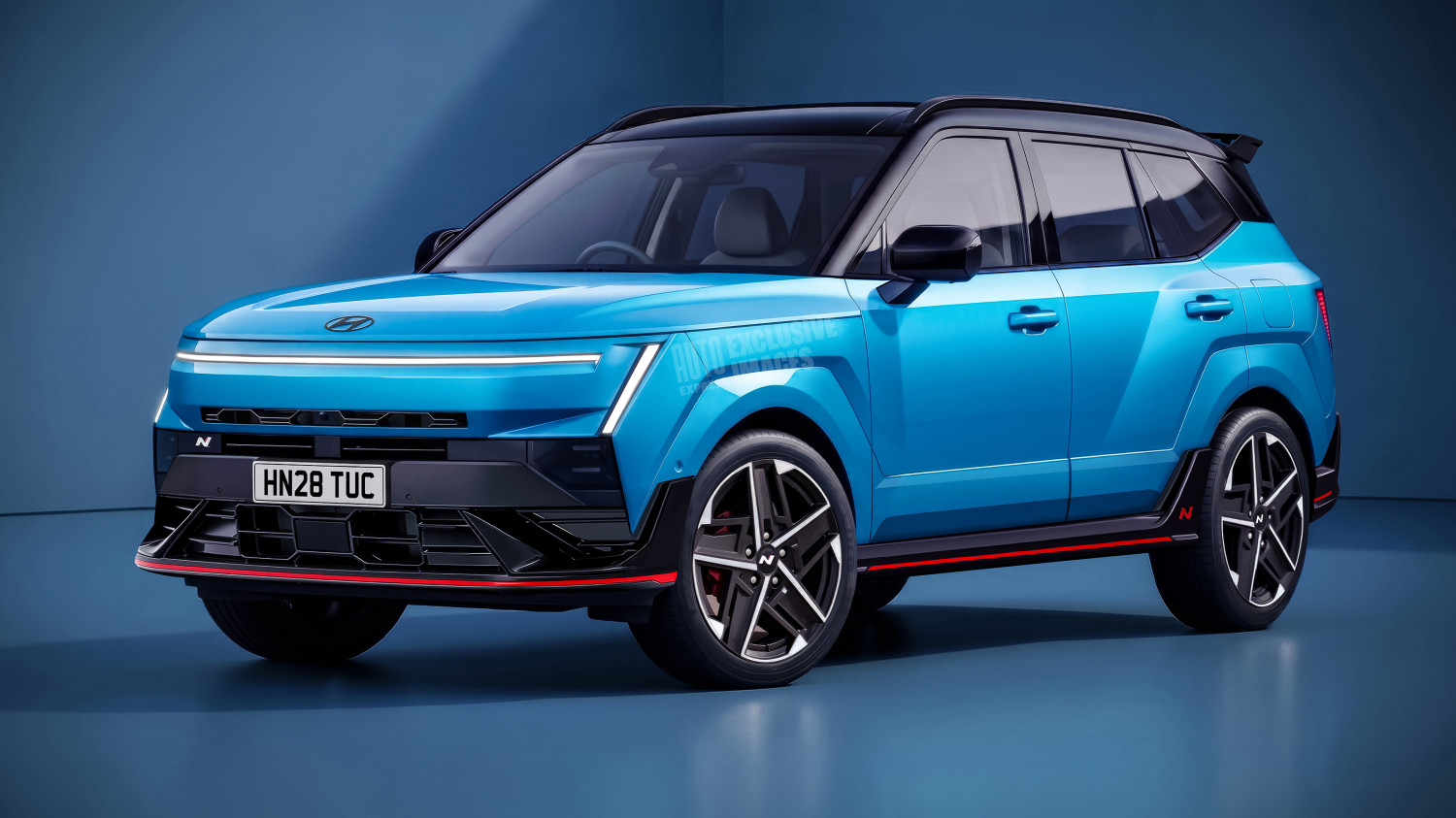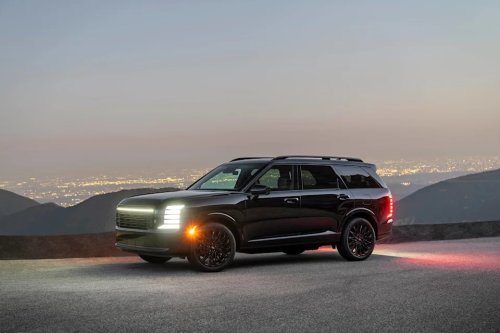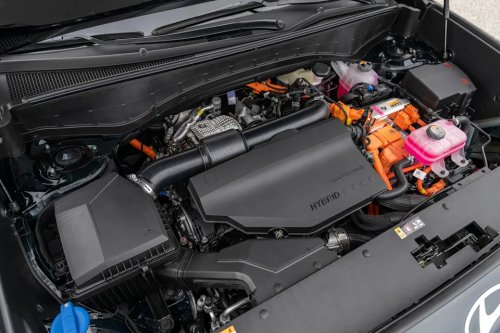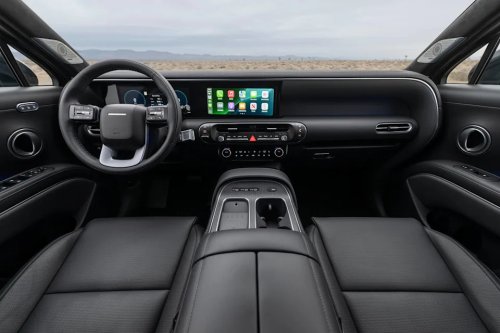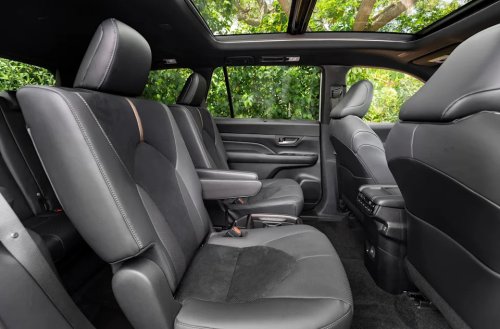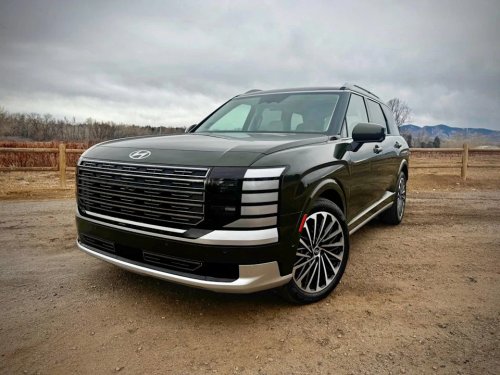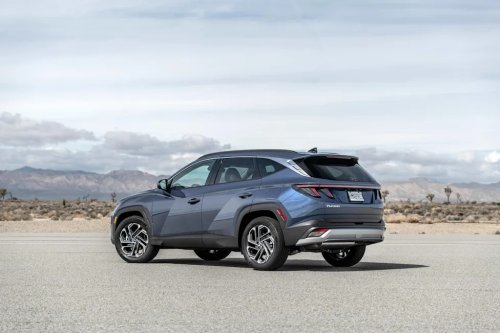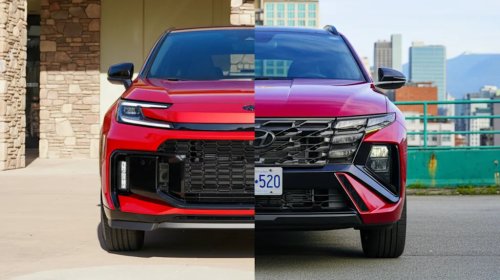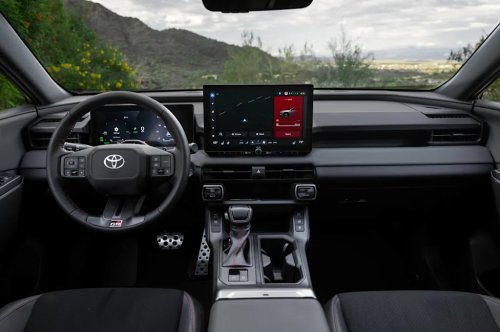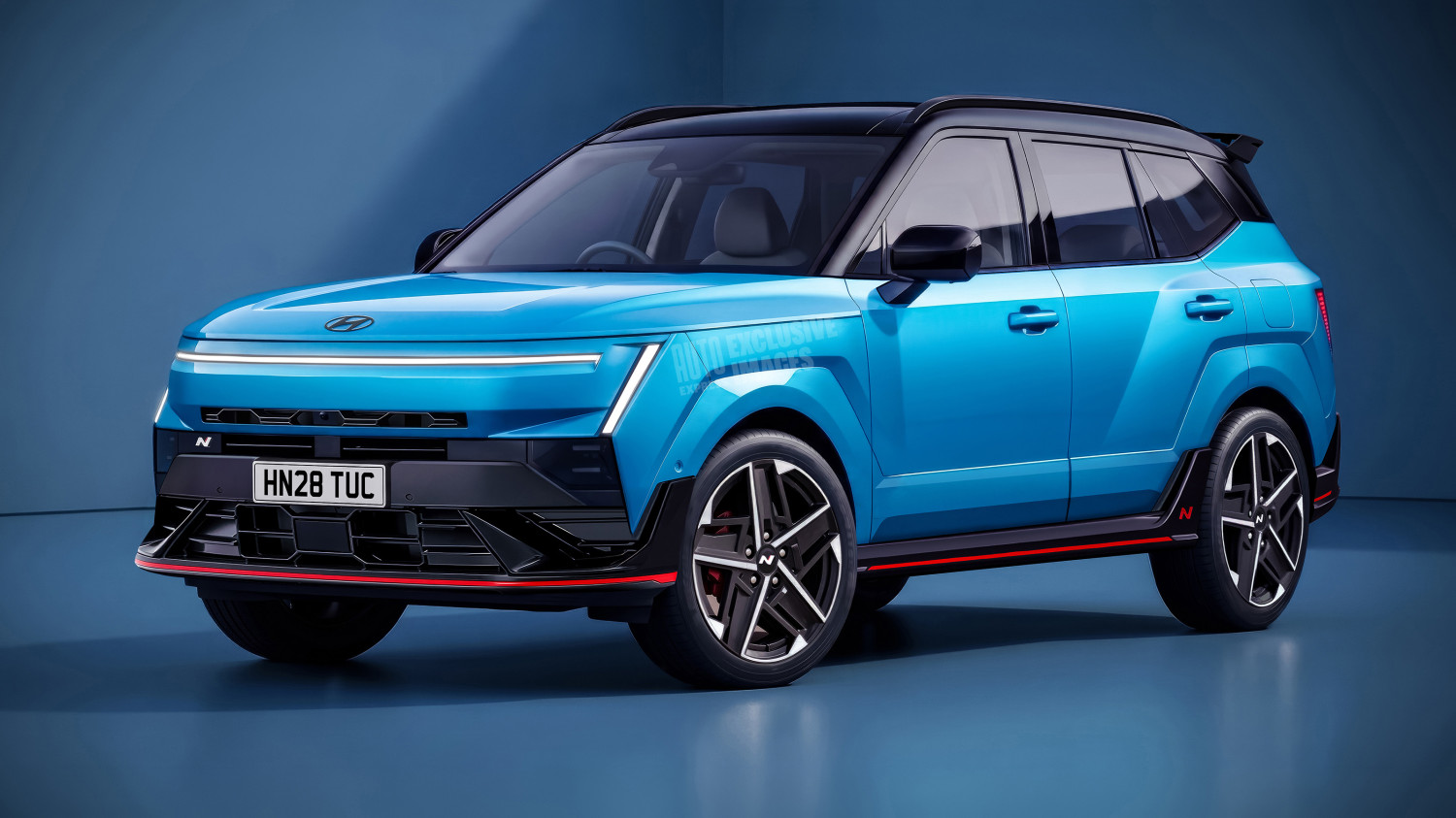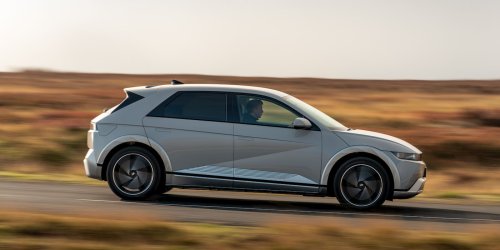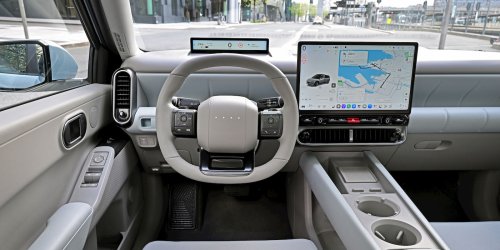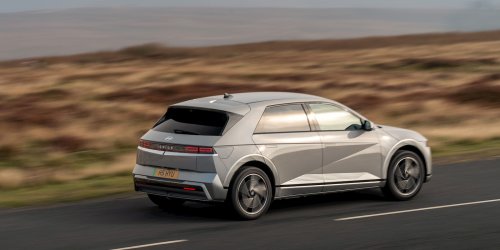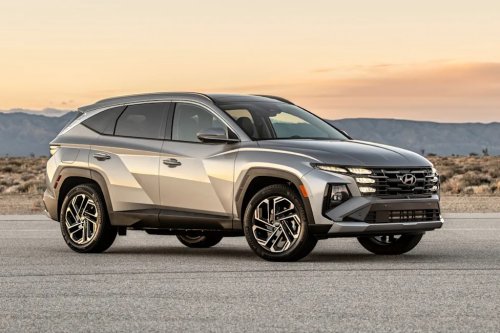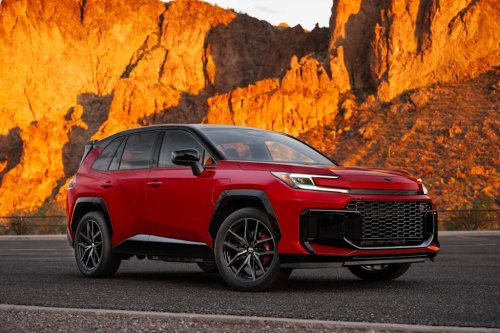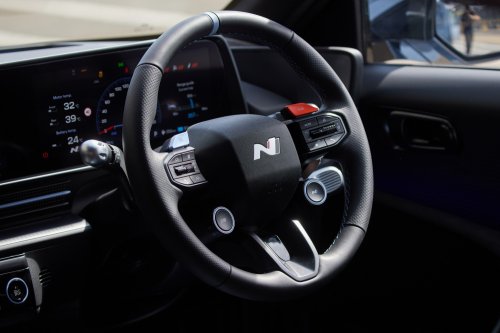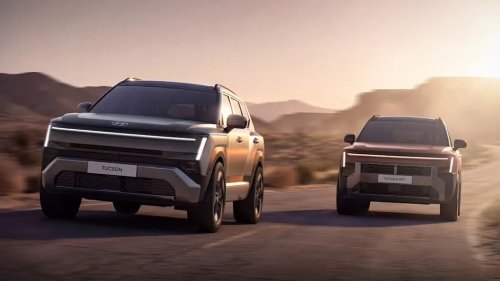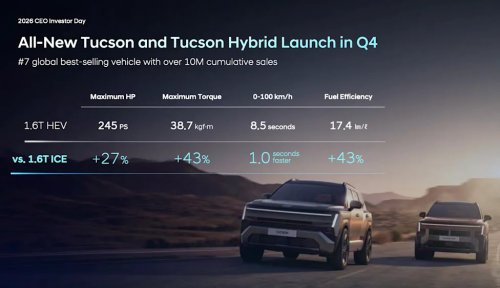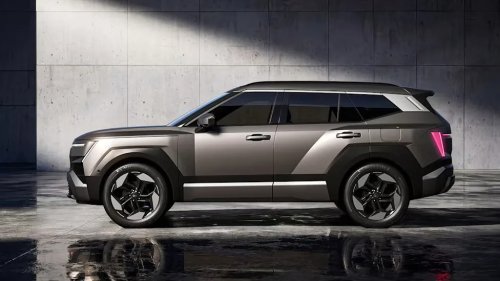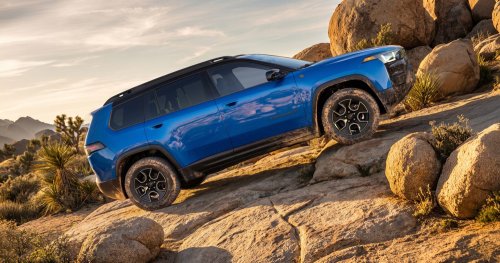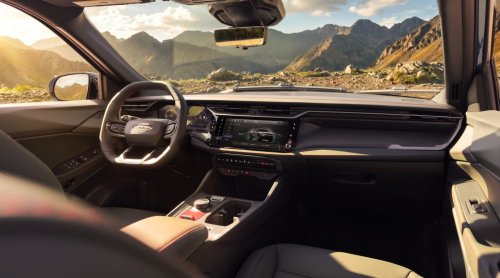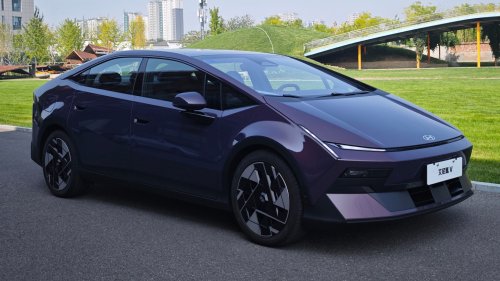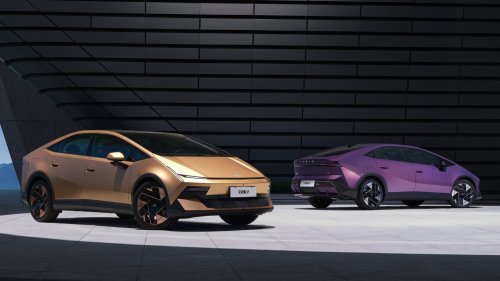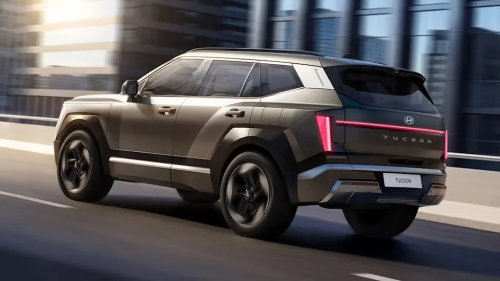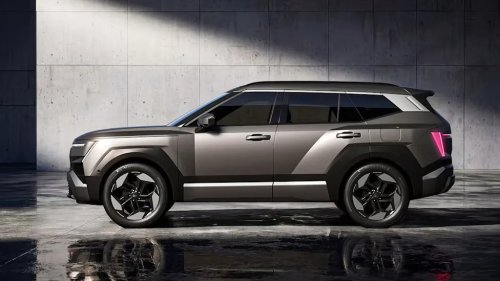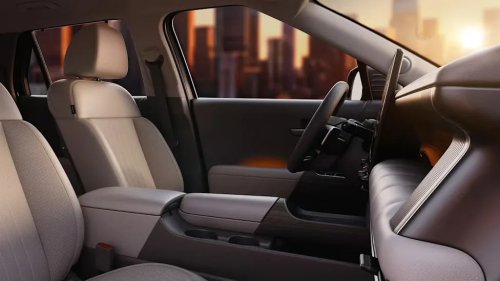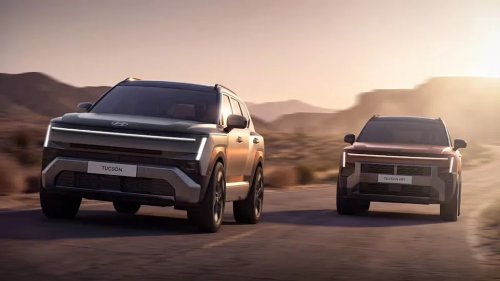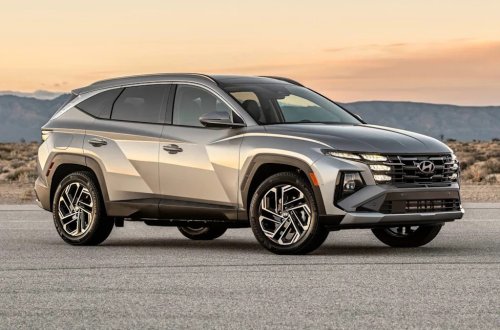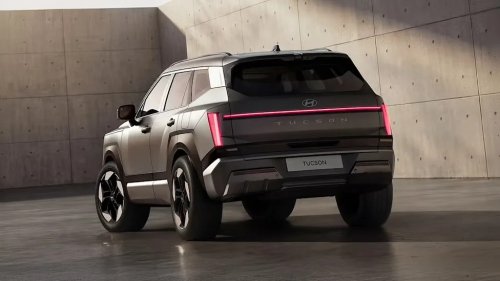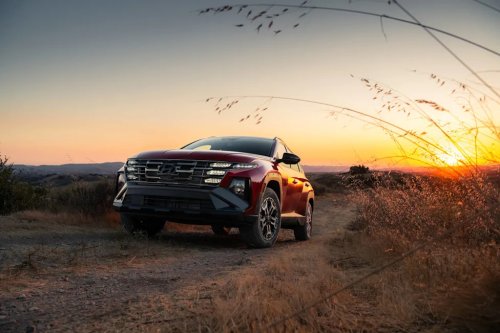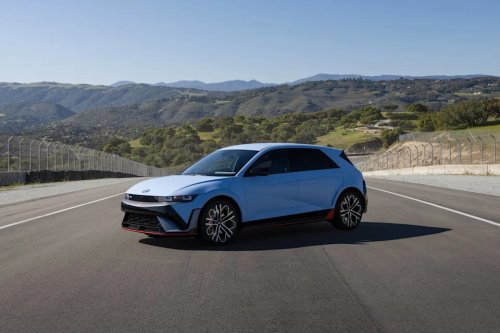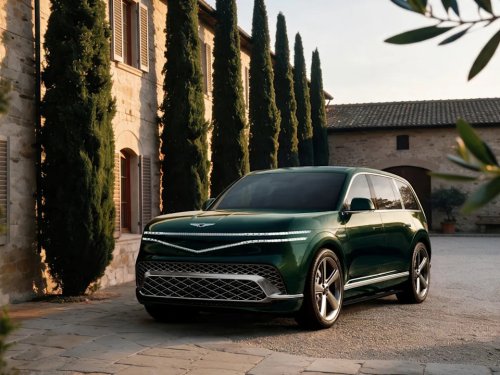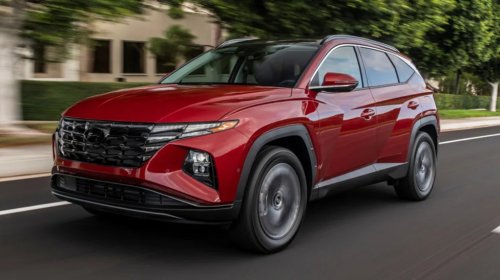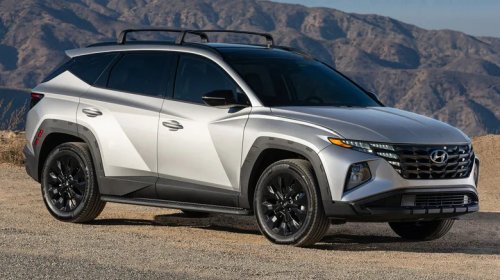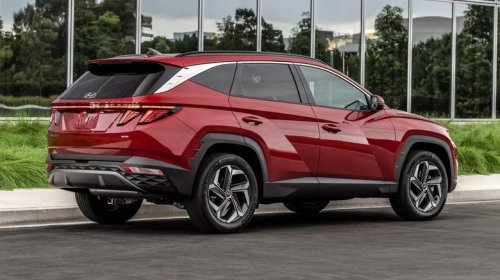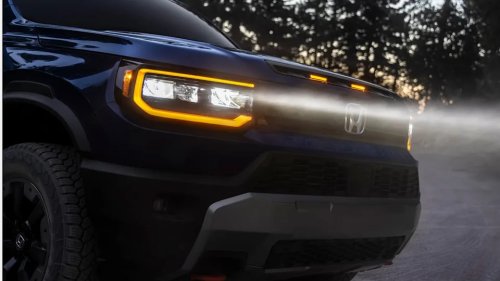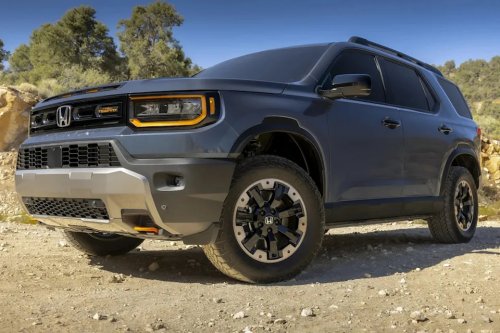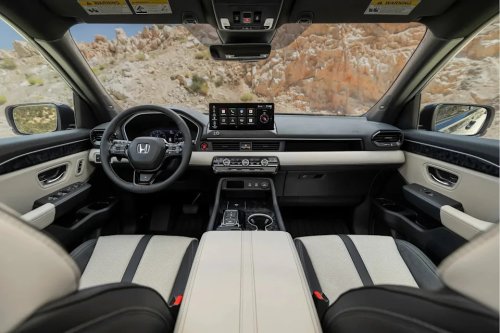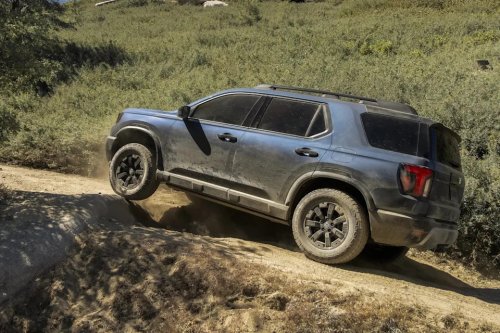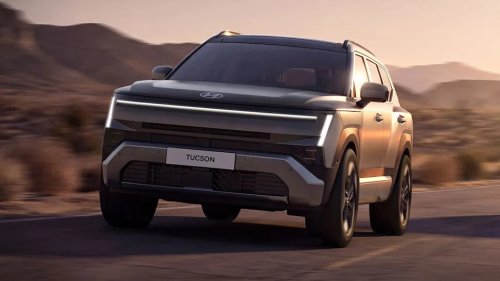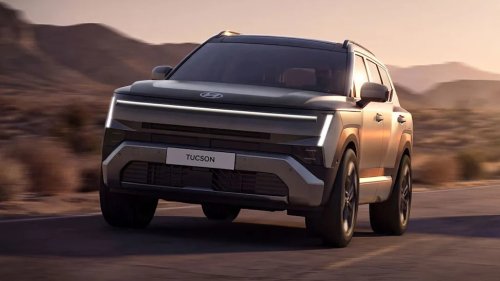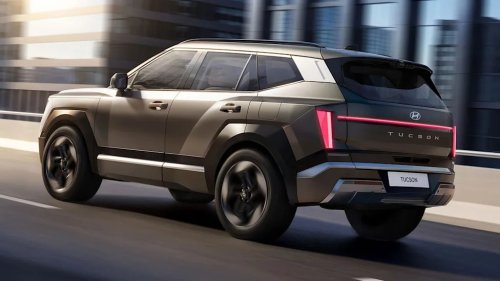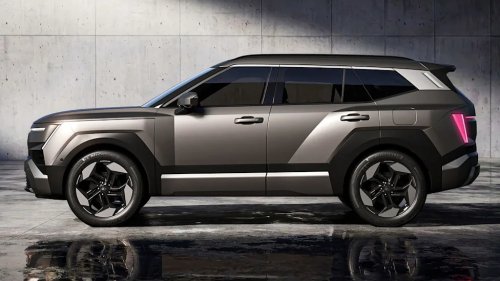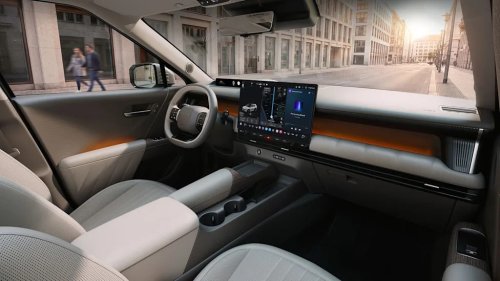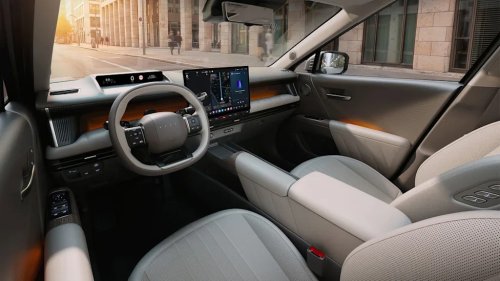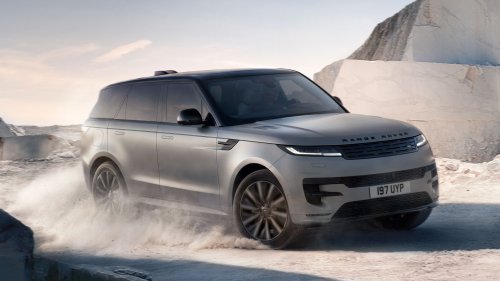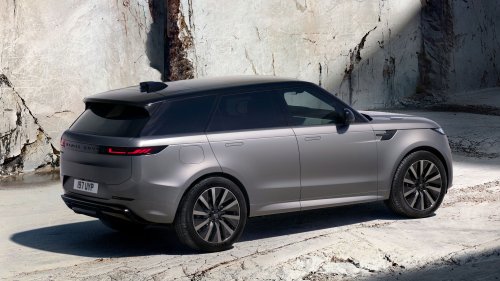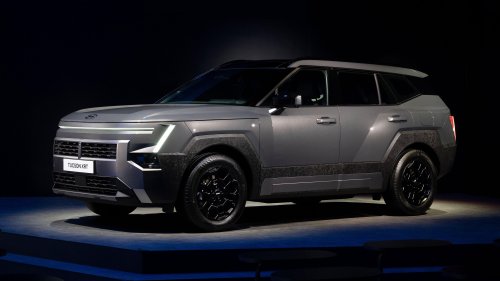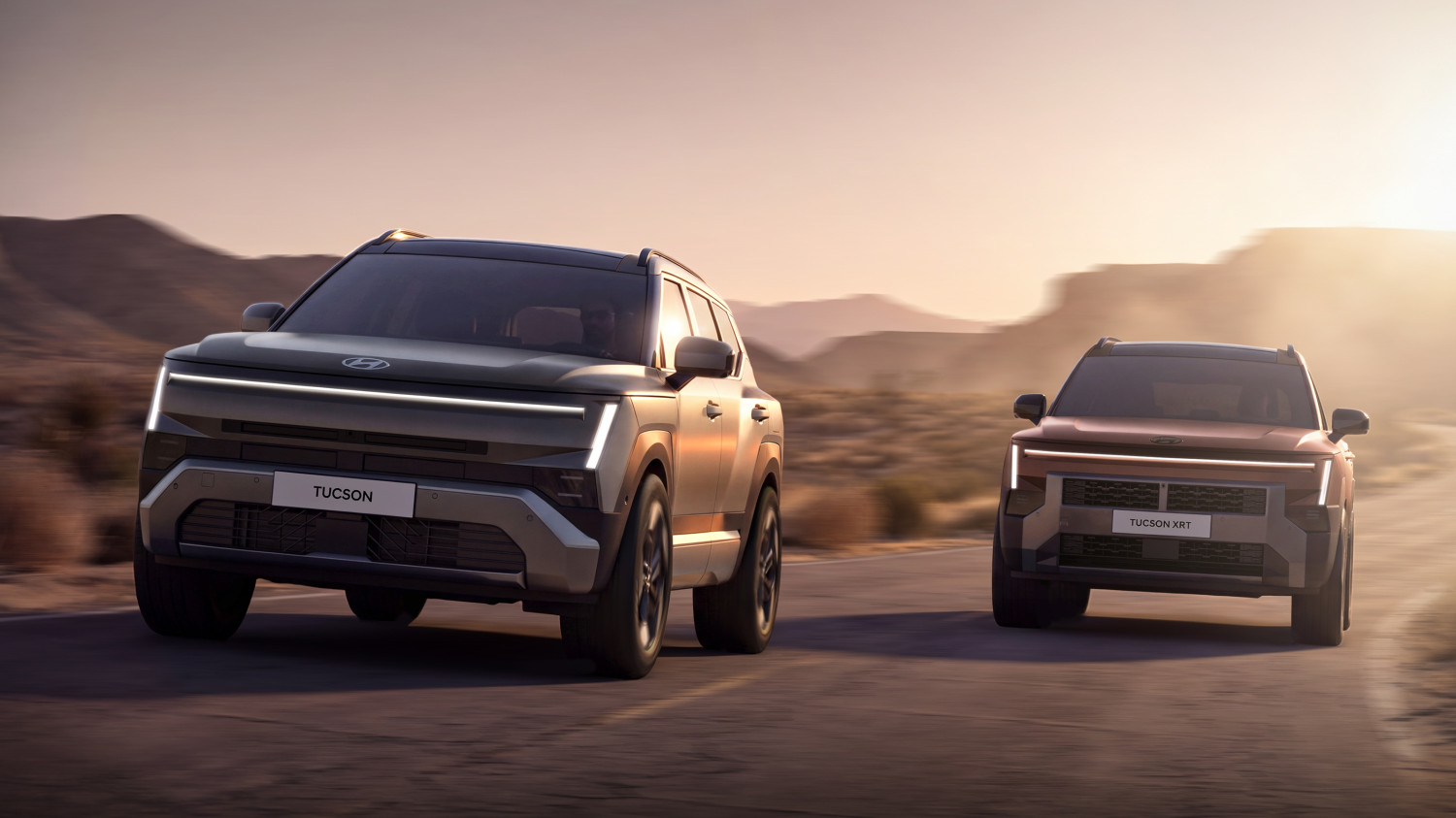
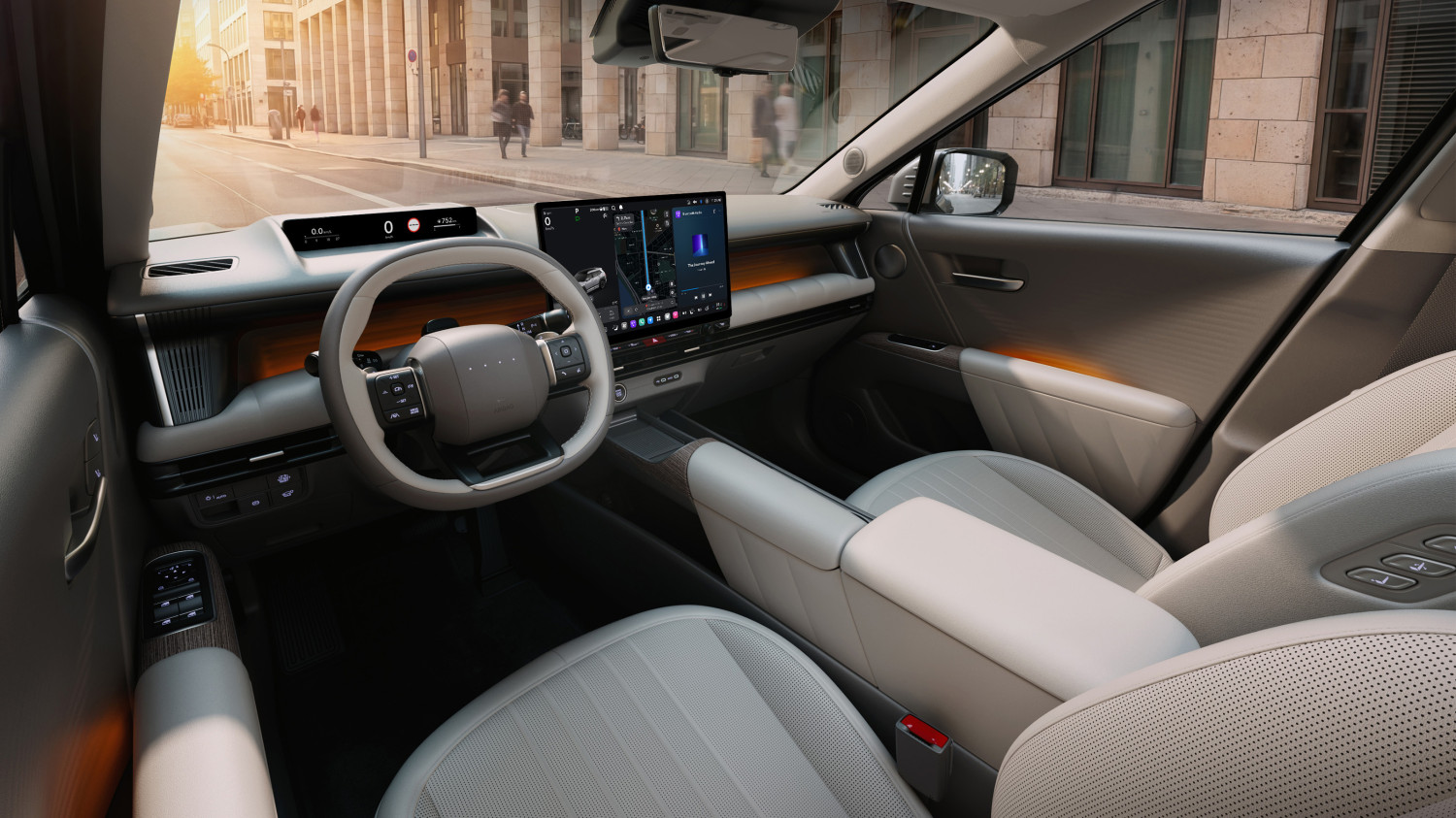
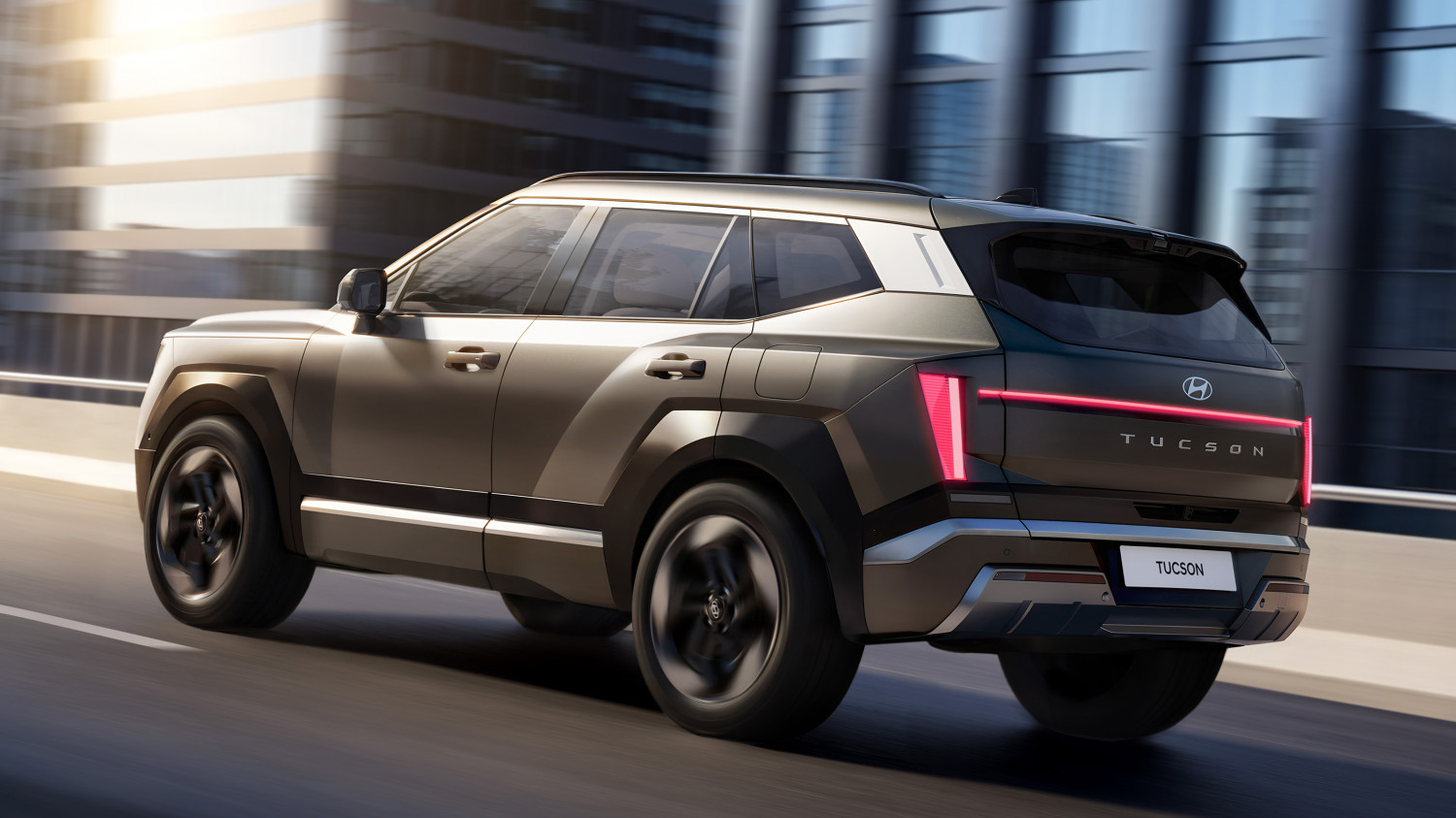
















23This is the new Hyundai Tucson. A new evolution of the always bold, popular family SUV has finally arrived, and based on its chiseled and muscular design, it wants to smash the competition. The outgoing Tucson was certainly a striking model, but its replacement is a proper show-stopper that appears to have taken some styling tips from the bigger Hyundai Santa Fe, plus armoured trucks and maybe even Robocop. It definitely stands out from its rivals that include the Kia Sportage, Toyota RAV4, Volkswagen Tiguan and Nissan Qashqai. The new Tucson was styled according to Hyundai’s latest design language, Art of Steel, that’s meant to create sharp, precise and sculpted surfaces inspired by the way steel bends and reflects light. Gone is the rounded front end and curves of the outgoing model, instead this new generation adopts a more upright, boxy, almost 4x4-inspired stance that gives it plenty of presence and, hopefully, space inside. Both ends feature a H-shaped motif created by full-width light bars and upright outer daytime-running lights, but the front cleverly uses indirect lighting to create a more subtle glow effect across the nose, that Hyundai says is meant to emphasise the complex surfacing and make the car look even more futuristic. The main headlamps are actually tucked down on the lower bumper, sitting either side of a faux silver-coloured skid plate that helps to enhance its rugged appearance. Along with the contrasting cladding along the sides, the swollen wheelarches that are especially exaggerated. Art of Steel also shaped the new Hyundai Ioniq 3 hatchback, but the two cars have very different vibes. As Hyundai’s chief exterior designer, Simon Loasby, previously explained to Auto Express: “We don’t like to do nesting dolls.” 23It’s not just on the outside where the new Tucson is almost unrecognisable. Inside, it features a completely new cabin layout shared with the Ioniq 3 aero-hatch that focuses on usability and spaciousness. The centrepiece of the new digital interface is a large touchscreen in the middle of the dash with a row of physical controls directly below. These are ideally located to be easy to reach while driving, and while this design features less buttons than the outgoing model – which had them scattered all over the place – it’s certainly cleaner and less cluttered. Joining the large new touchscreen is a slim driver’s display positioned above the steering wheel, just like in the Volvo EX60, or any modern Peugeot. This layout has been designed to reduce the amount of time the driver needs to look down from the road, putting critical information within the driver’s eyeline. To ensure there’s still good visibility of the driver’s display, the new Tucson gets a smaller squared-off steering wheel, also with physical buttons. The floating structure of the horizontal dashboard is meant to make the cabin more open and spacious, and it looks more upmarket too. There’s also dual wireless charging pads in the centre console, and Hyundai has included mounts for its new ‘Luggage AddGear’ line-up of handy accessories, similar to Dacia’s YouClip. Loasby said the new Tucson’s interior was designed to be “much more comfortable and calm space than a tech fest. That’s been our balance with the product. “Over the next two years you’ll see our next generation of interiors coming out. The safest way to drive is to keep our customers’ eyes on the road, so you build your philosophy around that. You quite quickly realise that the centre screen is actually just a distraction.” “We believe nine is the best number of both legal and physical, regular interactions,” Loasby added. “They’re all physical buttons and they will stay physical buttons because they are things that I want to adjust without looking away [from the road].” 23Hyundai has boldly declared the new Tucson delivers best-in-class interior space, with more headroom for passengers in the back – thanks, no doubt, to the boxy design – and the rear doors open wider than before too, which will come in handy for families that need to fit a child seat. The company has said the new Tucson measures 4,700mm long, 1,905mm wide and 1,685mm tall, and has a wheelbase of 2,785mm. However, the Tucson will continue to be available in two sizes, depending on its market, and Hyundai is likely to just offer the shorter one in the UK and Europe, meaning our model will likely be around 100mm shorter than the global model in these images. We’re expecting Tucson to have a selection of powertrain options for customers. Just like the current model, which is available with the full spectrum of hybrid set-ups here in the UK, expect a mild-hybrid, full-hybrid and plug-in hybrid to be available. We’re almost certain the new Tucson will introduce a new generation of full-hybrid engines to Europe, having already rolled it out in America. Developed in-house by Hyundai for its next-generation model, the new hybrid system combines a 1.6-litre turbocharged four-cylinder engine with two e-motors – a large one mounted in the gearbox, and the other acting as a starter generator. According to Hyundai, it improves fuel economy by more than four per cent compared to the system in the outgoing Tucson, while delivering more torque and better refinement. Peak power is yet to be confirmed, but torque will be 380Nm – 13Nm more than the brand’s previous hybrid set-up in this class. We’re also expecting there to be a hot Tucson N model with a hopped-up, high-spec hybrid powertrain, potentially packing around 300bhp, plus some chassis upgrades. However, there’s not going to be a pure-electric version of the new Tucson. This will remain the remit of the Ioniq 5, which is due for a substantial update in the coming months. If you want a practical and head-turning electric family car, the Hyundai Ioniq 5 is currently available through the Auto Express Buy A Car service from just over £30,000, or £312 per month with our lease deals. Our dealer network has 1,000s of great value new cars in stock and available now right across the UK. Find your new car…