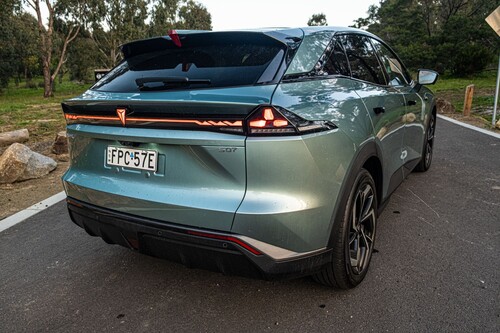
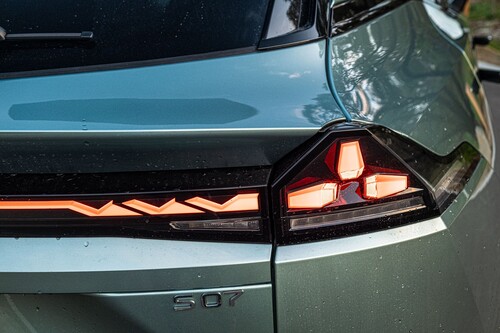
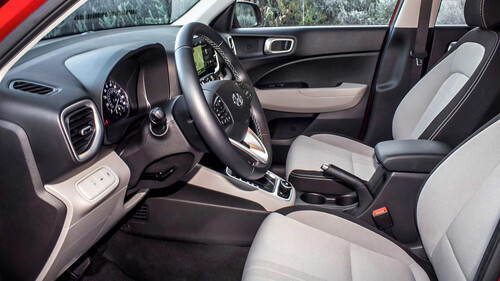
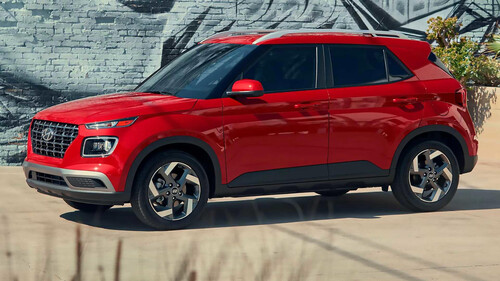
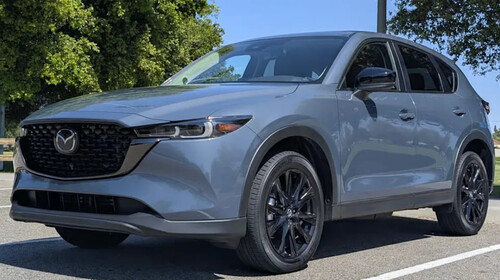
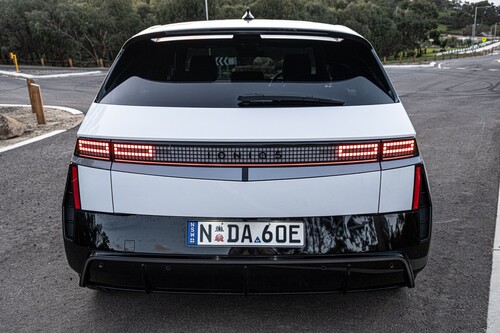
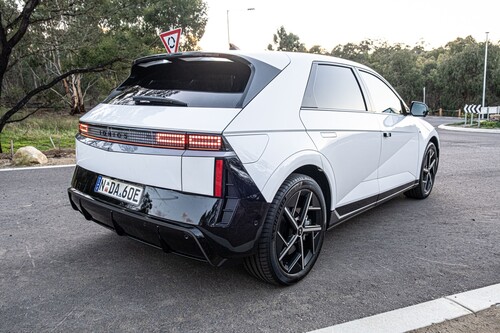
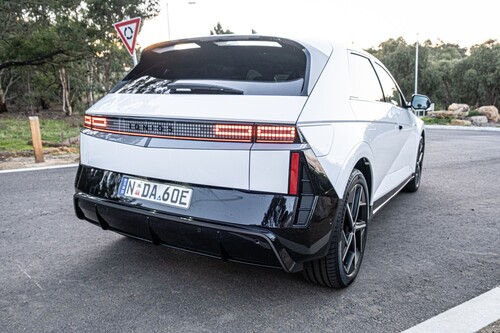
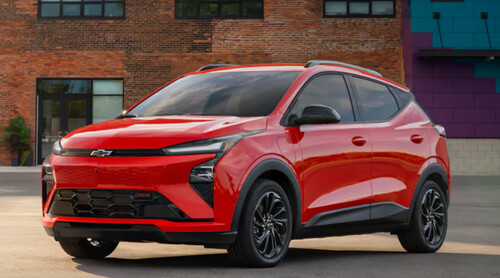
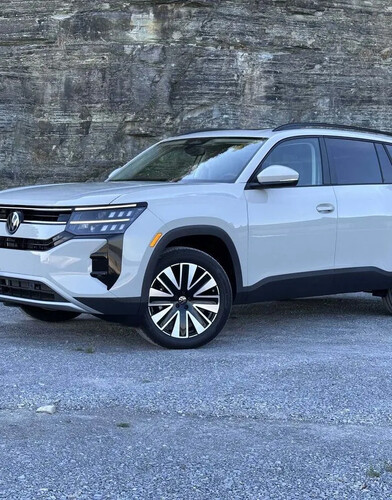
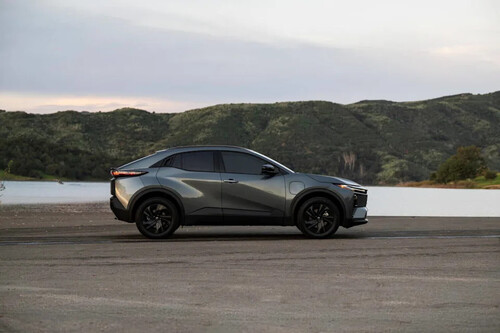
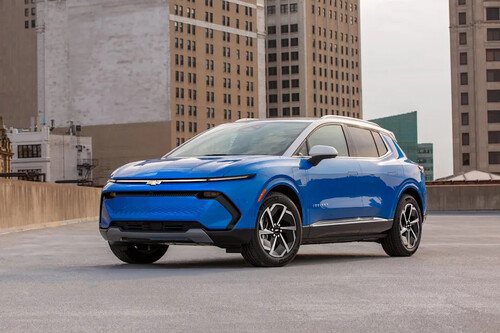
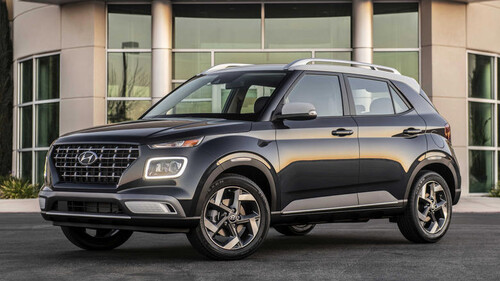
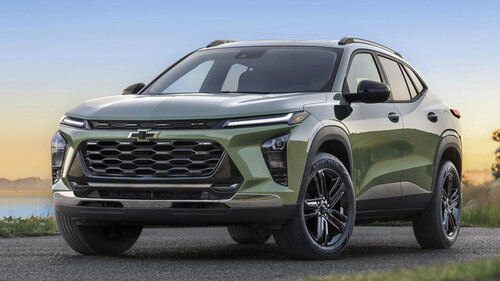
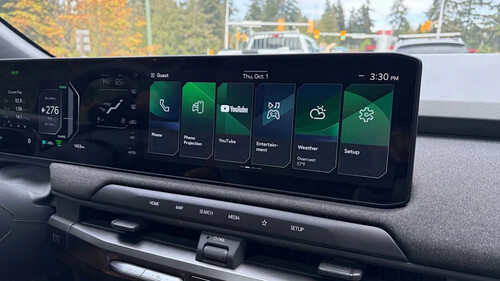
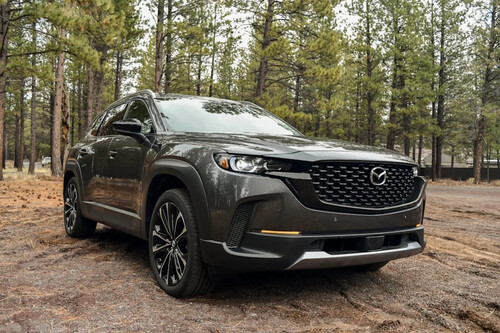
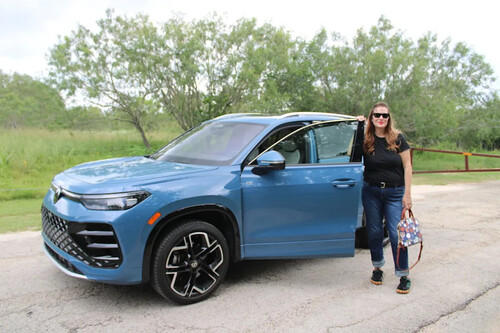
The best affordable car isn't necessarily the one that gives you the most metal for your money. Sometimes, it's actually the one that makes spending less feel least like a sacrifice. The Chevrolet Trax presents a much stronger argument in theory. It's longer, roomier, more powerful, and barely any less efficient, and it gives American buyers more of nearly everything they traditionally value. But after driving both, I realized these two inexpensive SUVs are built around fundamentally different definitions of value. The Trax gives you more car, but the Venue feels as though Hyundai put more care into its substance. I spent a week with the Trax 2RS earlier this year, but my Venue SEL two-tone drive only lasted approximately 30 minutes in Drive Revolution in Vancouver, Washington. So while this wasn't a more in-depth, back-to-back test, my time with both vehicles was enough to reveal the sacrifices each asks of its buyers.2026 Chevrolet Trax RSCole Attisha2026 Hyundai Venue vs. Chevrolet Trax SpecificationsSpecificationHyundai Venue SEL Two-ToneChevrolet Trax 2RSEngine1.6-liter naturally aspirated I41.2-liter turbocharged I3Horsepower121 hp137 hpTorque113 lb-ft162 lb-ftTransmissionIVT6-speed automaticDrivetrainFront-wheel driveFront-wheel driveEPA fuel economy29/33/31 mpg28/32/30 mpgCargo space, seats raised18.7 cu ft25.6 cu ftMaximum cargo space31.9 cu ft54.1 cu ftTested trim MSRP$22,600$25,400Price including destination$24,440 as tested$27,195 before optionsThinking about selling your car? Get an instant cash offer online now. Click here to get started.2026 Hyundai Venue SEL W/ 2-Tone RoofCole AttishaThe Venue Might Be Slow, But It's Exceptionally Well CalibratedWith only 121 horsepower and 113 lb-ft of torque, the Venue requires some patience when merging onto an interstate. You have to plan the maneuver, build speed early in anticipation, and keep your foot planted when necessary. It can complete the task perfectly well, but effortless acceleration isn't quite how I'd describe it. That didn't mean it was unpleasant, though; you just have to be patient and alert. The Venue's low weight and linear, naturally aspirated power delivery help it feel more energetic than its specifications suggest. Its IVT—or Intelligent Variable Transmission, Hyundai's clever name for what is essentially a CVT—also operated pretty seamlessly during my drive. I would still rather have the six-speed manual or conventional six-speed automatic offered in certain foreign markets, but Hyundai has calibrated the North American powertrain remarkably well for the kind of driving we do.The way the Venue handles was another pleasant surprise. It felt tight, properly weighted, and actually more communicative than the systems in either the Kia Seltos or K4 I drove at the same event. The Venue was nimble, easy to place, stable at highway speed, and far less strained or noisy than I expected. Although it was the least powerful—and probably least sporty—vehicle at Drive Revolution, it was nowhere near my least favorite to drive. Its simplicity and lightness gave it a mechanical honesty missing from several larger, more complicated crossovers.2026 Chevrolet Trax RSCole AttishaThe Trax, on the other hand, is appreciably stronger in terms of performance. Its 137-hp turbocharged three-cylinder produces 162 lb-ft of torque, giving it a substantial advantage when merging, overtaking, or climbing through hilly terrain. Once the turbo wakes up, it feels legitimately punchy, but its delivery is less polished. The Trax I tested exhibited a noticeable lull before boost arrived, followed by an abrupt swell of power once it did. Its six-speed automatic could also become indecisive at lower speeds, so compared with Hyundai's uncomplicated response, the Chevrolet occasionally felt as if its engine and transmission were on slightly different wavelengths. For urban driving, I prefer the Venue, but for interstate travel or hilly and mountainous regions, I would gladly accept the Trax's rougher manners in exchange for its additional muscle.Shopping for a new car? Click here to get a great deal on your next vehicle. Powered by Carvana: no-haggle pricing, 100% online.2026 Hyundai Venue SEL W/ 2-Tone RoofCole AttishaCheap Doesn't Have To Mean DegradingAlthough the Venue's exterior is beginning to show its age, the SEL's two-tone specification helps a great deal, and it's that added sense of creative charm that underscores the Hyundai's entire philosophy. For example, my Denim-colored tester wore a white roof and contained a visually striking blue-grey interior with textured white trim. Its design, both inside and out, appears inexpensive to some degree, sure, but it never assumes that inexpensive things must also be lifeless, nor does it assume that they should ever lack the same sense of refinement you'd expect from other models in the same lineup.2026 Hyundai Venue SEL W/ 2-Tone RoofCole Attisha2026 Hyundai Venue SEL W/ 2-Tone RoofCole AttishaIts eight-inch infotainment system and 4.2-inch driver display look admittedly dated beside the Trax's available 11-inch touchscreen and eight-inch digital cluster. Yet the Venue's technology worked just as well; its physical controls were easy to understand, and the cabin felt finely assembled. The SEL also includes heated front seats, wireless Apple CarPlay and Android Auto, and a wireless phone charger, all of which make the cabin feel far more current than it actually is.2026 Chevrolet Trax RSCole Attisha2026 Chevrolet Trax RSCole AttishaThe Trax appears more contemporary inside and out. Its long, wagon-like proportions give it a mature appearance, while the 2RS's 19-inch wheels, dark trim, and red interior accents disguise its entry-level origins remarkably well. It offers more visual theatre than the Venue and occasionally feels more premium. The Hyundai counters with better perceived material quality, a more natural driving position, better outward visibility, and seats I found more accommodating. Its interior feels refreshingly simple rather than conspicuously basic, and that was ultimately the Venue's greatest accomplishment: driving it never felt like you were sacrificing a standard of refinement for a lower price tag. The Trax, though, counters by ensuring you don't feel like you're sacrificing ease of use—in terms of both power and spaciousness—which can't be said as earnestly of the Venue.2026 Chevrolet Trax RSCole Attisha2026 Chevrolet Trax RSCole AttishaThe Trax Wins The Measuring Tape Battle By A Long WayThere's simply no argument for creative design or marginally better materials in a budget subcompact SUV that can effectively outweigh the Trax's enormous packaging advantage. Chevrolet provides 25.6 cubic feet of cargo room behind the rear seats and 54.1 with them folded. The Venue manages just 18.7 and 31.9 cubic feet, respectively. The Trax's rear seat is substantially roomier, too, making it the de facto recommendation for adults carrying other adults, sports equipment, strollers, or anything else that accumulates in suburban life.2026 Hyundai Venue SEL W/ 2-Tone RoofCole Attisha2026 Hyundai Venue SEL W/ 2-Tone RoofCole AttishaThe Venue feels more vertically oriented and remains comfortable for taller occupants, but its narrower cabin and shorter body impose unavoidable limits. Its compact dimensions are wonderful in crowded cities and parking garages, but they become harder to defend when the Trax delivers so much additional room for comparatively little money. Neither offers all-wheel drive, so that limitation effectively cancels itself out. Buyers who need AWD will have to look toward something like the Chevrolet Trailblazer or Hyundai Kona instead.2026 Hyundai Venue SEL W/ 2-Tone RoofCole AttishaTwo Separate Ideas Of ValueMy Venue's sticker totaled $24,440, including its $1,600 freight charge and $240 in accessories. A Trax LT starts at $23,200, plus a $1,795 destination charge, for $24,995 before options. For roughly $555 more than this particular Venue, the Trax LT provides considerably more space and torque while returning nearly identical EPA fuel economy. That is an enormous blow to Hyundai's objective value proposition.At Drive Revolution, though, the Kia K4 GT-Line Turbo Hatchback ultimately won the Best Value award, while the Venue and substantially more expensive Seltos tied for second. The Venue received my vote. It earned that vote because Hyundai hasn't responded to a price constraint by letting assembly quality, ergonomics, or driving calibration slip. The Venue isn't trying to cram the largest possible automobile into the smallest possible monthly payment. It simply gives you less automobile, assembled with nearly as much care as Hyundai's costlier products. Its lengthy 10-year/100,000-mile powertrain warranty further strengthens that argument.2026 Chevrolet Trax RSCole AttishaVerdict: The Venue For Me, The Trax For TheeFor the broadest cross-section of North American subcompact-SUV buyers, the Trax is easier to recommend. Its additional space, stronger highway performance, more contemporary technology, and nearly identical official fuel economy make it the more versatile choice for comparatively little extra money. But that recommendation comes with several qualifications. The Trax's ride can feel clunky; its turbocharged engine and six-speed automatic transmission lack the Venue's low-speed polish, and neither vehicle offers all-wheel drive. Urban buyers who value compact dimensions, predictable responses, and a satisfying sense of mechanical simplicity may find the Hyundai more appealing.That's ultimately where I land: the Trax makes more sense, but the Venue makes a greater impression. The Chevrolet serves the segment better, but the Hyundai suits me better. If your affordable crossover must do a little of everything, choose the Trax. If you want a small, honest, unusually polished city car, choose the Venue.