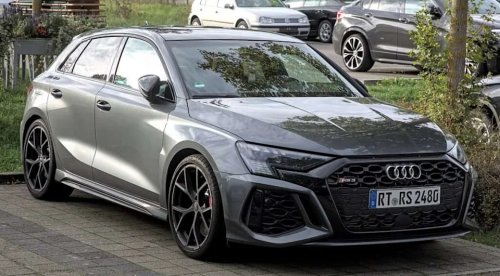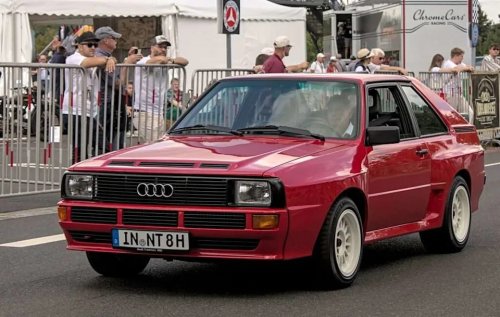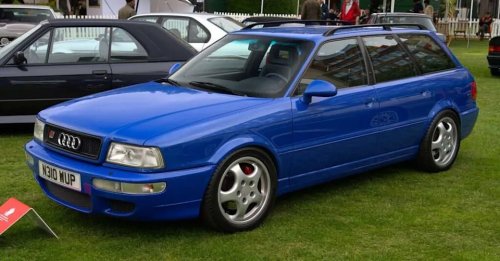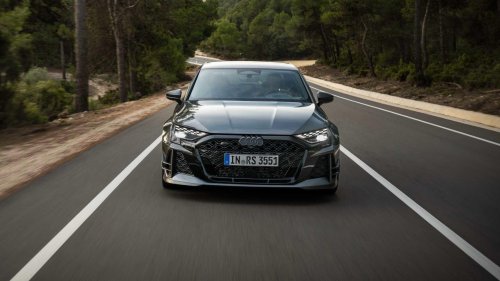
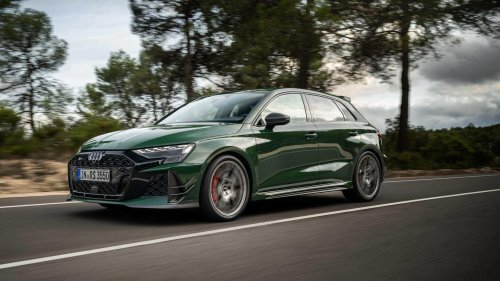
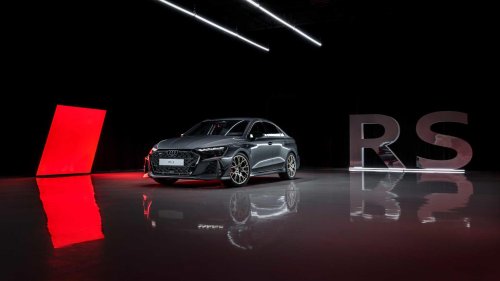
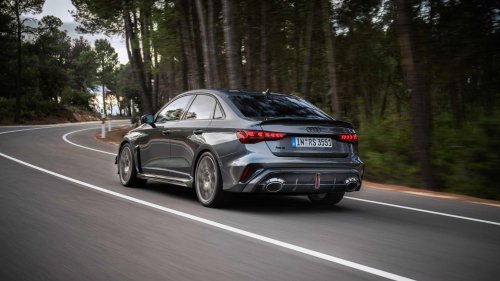
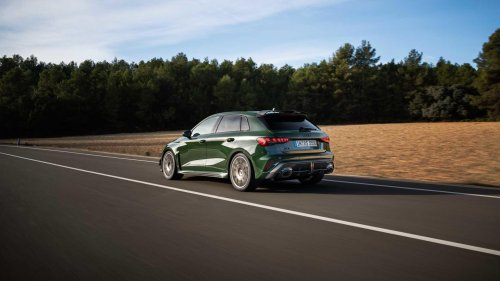
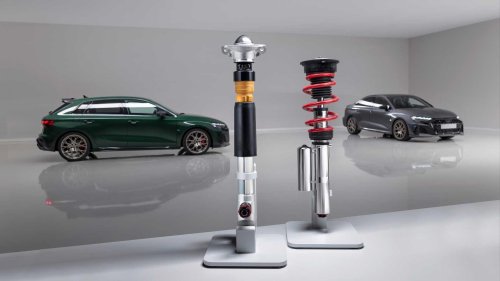
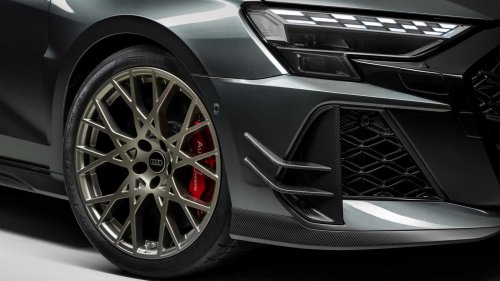
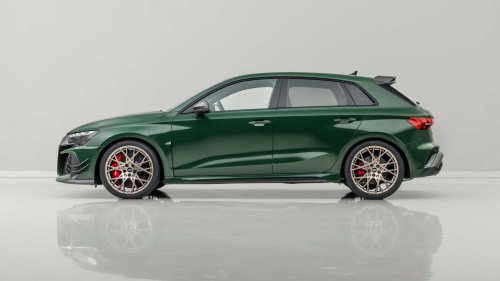
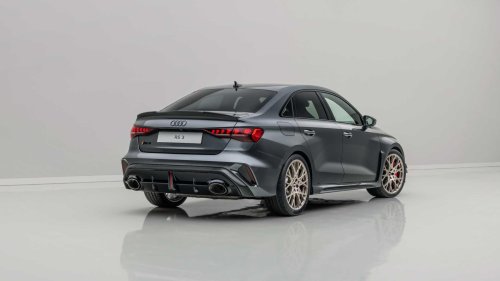
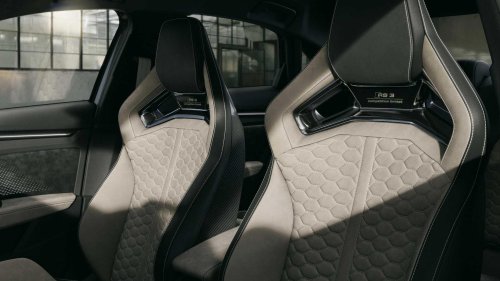



















Audi has never been afraid to take a different engineering path, and few examples illustrate that better than its five-cylinder engine. While most manufacturers eventually settled on four cylinders or moved up to six, Audi chose something in between. That decision created an engine with a sound and personality that stood apart from everything else on the road, and over time, it became one of the brand’s defining traits.Now Audi is celebrating 50 years of that unusual powerplant with a special model: the RS 3 Competition Limited. Available in both Sportback and Sedan body styles, the anniversary model adds a series of upgrades designed to sharpen the car’s dynamics while paying tribute to Audi’s five-cylinder heritage.Only 750 examples will be built worldwide, making this one of the rarest RS 3 variants Audi has produced. More importantly, in my humble opinion, is that the car highlights something increasingly uncommon in today’s performance landscape. At a time when most brands are downsizing engines, adding hybrid systems, or preparing to go fully electric, Audi is still building a turbocharged five-cylinder performance car, despite all odds. Audi Built A Limited RS 3 To Celebrate Five Cylinders AudiThe RS 3 Competition Limited arrives as both a special edition model and a tribute to one of Audi’s most distinctive engineering decisions. The car marks 50 years of the brand’s five-cylinder engine, a layout that first appeared in the Audi 100 back in 1976.Audi engineers originally developed the engine as a compromise between performance and packaging. A four-cylinder didn’t deliver the power the company wanted for its larger sedans, while a six-cylinder would have been longer and heavier. The five-cylinder layout provided a balance between the two, offering improved power without dramatically increasing engine size. The engine Goldilicks would have selected. AudiThat unusual configuration eventually became one of Audi’s defining technologies. Over time, the five-cylinder appeared in everything from executive sedans to motorsport icons, and it ultimately helped shape the company’s performance identity. Today, the RS 3 carries that legacy forward. By creating a limited-edition model centered on the engine’s anniversary, Audi is acknowledging how closely the five-cylinder has become tied to the brand’s history. The Last Five-Cylinder Performance Car In The World AudiAt the center of the RS 3 Competition Limited sits the engine that makes this car so unusual. Audi’s 2.5-liter turbocharged inline-five remains one of the few engines of its kind still offered in a modern performance car. Most manufacturers have moved toward turbocharged four-cylinder engines or smaller six-cylinder engines, but Audi has continued to develop the five-cylinder layout. The current version produces 400 horsepower and 369 lb-ft of torque, which allows the compact RS 3 to accelerate from 0 to 62 mph in just 3.8 seconds.With the right performance packages installed, the car can reach a top speed of roughly 180 mph. What truly separates the RS 3 from its rivals, however, is its character. The five-cylinder’s distinctive sound comes from its unusual firing order, which alternates between cylinders positioned next to each other and those spaced farther apart along the crankshaft. The result is the unmistakable tone that Audi enthusiasts immediately recognize. Audi even references this heritage in a small but clever design detail. When the RS 3 Competition Limited is locked or unlocked, the Matrix LED headlights illuminate in a sequence that reflects the engine’s firing order. A Rally Engine That Helped Define Audi AudiThe story of Audi’s five-cylinder engine began in 1976 with the introduction of the second-generation Audi 100. Engineers were looking for a way to deliver more performance than the four-cylinder engines of the time could provide while keeping the engine compact enough to fit Audi’s front-wheel-drive platforms. The inline-five offered the perfect compromise: more power and refinement than a four-cylinder, while avoiding the length and weight penalties of a six-cylinder.AudiThat engineering decision eventually played a major role in Audi’s rise as a performance brand. By the early 1980s, turbocharged five-cylinder engines powered the legendary Audi Quattro and later the Sport Quattro. Those cars reshaped the world of rally racing and helped establish Audi’s reputation for innovation and performance. The distinctive engine sound quickly became part of the brand’s identity, and over time, the five-cylinder appeared in a variety of road cars and performance models. Even as the automotive industry shifted toward different engine layouts, Audi continued refining the concept. Audi Is Giving Us A Limited RS 3 With Track-Focused Upgrades AudiAudi didn’t create the RS 3 Competition Limited simply by adding a few cosmetic changes. This version receives several mechanical upgrades designed to make the compact sedan even more capable when driven hard. The most significant change is the introduction of a fully adjustable coilover suspension system. It’s the first time Audi has offered this type of setup on the RS 3 from the factory, and it allows drivers to tune the car’s behavior depending on their driving style or road conditions. The system features three-way adjustable dampers, allowing high-speed compression, low-speed compression, and rebound to be tuned separately.AudiLow-speed compression adjustment focuses on how the suspension behaves during cornering. Increasing the damping force improves lateral grip and sharpens the car’s response when turning into a bend. High-speed compression adjustment controls how the suspension reacts to sudden forces such as bumps or aggressive steering inputs. Rebound adjustment then determines how quickly the suspension settles after compression. Together, those adjustments give the RS 3 a wide range of driving characteristics, from a relatively compliant road setup to a much firmer configuration better suited for track driving.Audi also stiffened the rear of the car with a stronger stabilizer bar designed to improve stability during aggressive cornering and acceleration. The system works alongside Audi’s torque-splitting all-wheel-drive setup, which can actively distribute power across the rear axle to improve traction and help rotate the car through tight corners. Stopping power comes from standard ceramic brakes with red calipers, while optional Pirelli P Zero Trofeo R tires provide additional grip. A Special Edition Built For Collectors AudiAs previously mentioned, the RS 3 Competition Limited will be offered in both the RS 3 Sedan and the RS 3 Sportback, giving buyers the choice between a traditional compact performance sedan and Audi’s more practical hot-hatch layout. Carbon fiber plays a major role in the exterior design, appearing on the mirror caps, side skirts, rear spoiler, and aerodynamic elements around the front bumper. New carbon canards and a revised front lip give the front end a more aggressive appearance, while a large diffuser helps emphasize the car’s performance intent.AudiOne of the most striking details is the set of 19-inch wheels finished in Neodymium gold. The color contrasts sharply with the bodywork and immediately distinguishes the limited-edition RS 3 from the standard RS 3. Audi also offers a special Malachite Green paint option inspired by the famous Sport Quattro rally car of the 1980s. The color reinforces the car’s connection to Audi’s motorsport heritage.Inside the cabin, the limited model features RS bucket seats trimmed in leather and Dinamica microfiber with Neodymium gold accents.AudiGinger white contrast stitching highlights the interior surfaces and emphasizes the diamond pattern on the seats. Each car also features a numbered plaque on the center console, reminding owners exactly where their vehicle sits within the 750-unit production run.Taken together, those pieces make the RS 3 Competition Limited feel more like a celebration of all things Audi. It’s a compact performance car with serious capability, but it’s also a reminder that one of the most distinctive engines in modern automotive history is still alive. So buy it before it disappears completely.