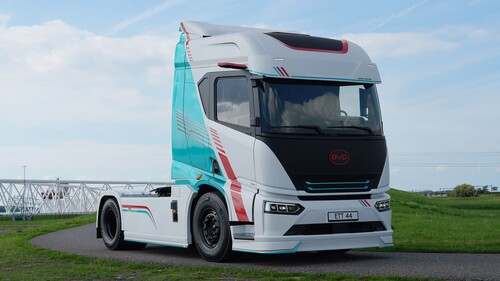
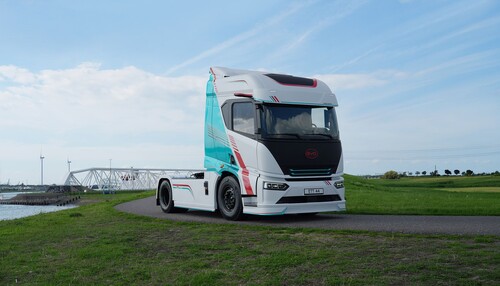
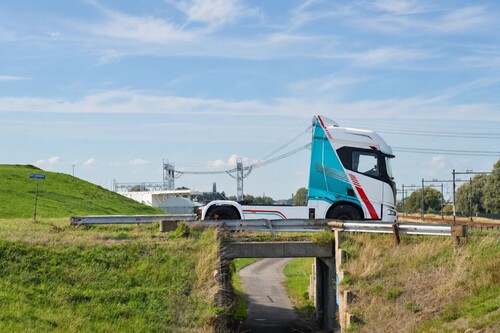
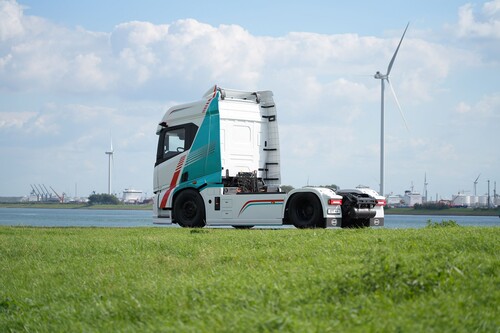
Europe is running out of workers while still debating how long to preserve machines that burn imported fuel. That is an odd starting point for a competitiveness strategy. Europe’s central economic problem is not electricity prices alone. Mario Draghi’s competitiveness diagnosis is broader: weak productivity, fragmented markets, difficulty turning research and savings into large new companies, and worsening demographics all matter. Cheap megawatt-hours will not create a European Nvidia or complete the single market. But electricity becomes much more important when the question changes from “What is Europe’s biggest problem?” to “What can Europe do that helps several of its biggest problems at once?” China supplied one of those stress tests this year. During the Strait of Hormuz crisis, Chinese oil consumption fell about 9% in the second quarter and transport oil use fell about 16%. Yet surface transportation did not collapse with it: passenger activity, freight volumes and rail use broadly continued growing. The important caveat is that electrification did not cause the entire fall in oil consumption. Inventories, prices, weak construction, public transport and lower aviation activity also mattered. But the Carbon Brief analysis of China’s Q2 emissions shows why the existing electric capital stock mattered: EVs and electric trucks gave businesses and households an adjustment mechanism that a petroleum-dominated transport system would not have had. Europe experienced almost the inverse experiment after the 2022 gas shock. An IMF study of directed technical change during the European energy crisis estimates that the shock leaves euro-area potential GDP about 0.8% below the no-shock counterfactual by 2027, even though firms responded by raising modeled energy productivity by roughly 3%. Companies rationally redirected capital, management attention and innovation toward using less expensive energy. That softened the damage, but those resources were no longer being used to increase non-energy productivity. Energy prices fell back from crisis levels; part of the productivity cost remained. Those two stress tests point in opposite directions, but they illuminate the same structural issue. The full TFIE Strategy Briefing analysis follows what they reveal about productive capital, delivered electricity and Europe’s industrial strategy. That is the economic case for electrification that Europe often undersells. Fossil-fuel economies continually repurchase a large share of their energy. Oil and gas are extracted, processed, moved and burned once, after which another shipment has to be purchased. Electrification moves a larger share of spending into durable productive capital: generation, transmission, batteries, motors, heat pumps and power electronics. Those assets require capital, materials, maintenance and eventual replacement, but tomorrow’s wind and sunlight do not require another payment to a fuel exporter. Electric motors and heat pumps also convert delivered energy into useful work much more efficiently than combustion systems, while electric equipment is naturally compatible with automation, sensors and software—particularly valuable when labour is getting scarcer. Europe already had warning signs before Russia invaded Ukraine. During the 2021 European gas-price surge I argued that unusually cheap and stable natural gas had been treated as though it were a permanent feature of the economy. After the invasion, I argued that strategic energy interdependence was more useful than energy independence. French nuclear, Scandinavian hydro, Iberian renewables, North Sea wind, storage and flexible demand become much more valuable when electricity can move across borders instead of every country trying to reproduce the same energy portfolio domestically. That requires distinguishing cheap generation from cheap delivered electricity. The IEA’s Electricity 2026 price analysis shows that large energy-intensive EU industries were still paying roughly twice U.S. electricity prices in 2025 and around 50% more than Chinese competitors. That matters enormously for aluminium, chemicals, fertilizer, steel, glass, pulp and paper. It matters much less to banks or software companies, which is another reason not to turn electricity into a universal explanation for Europe’s productivity gap. The infrastructure problem is getting low-cost electrons reliably to the places that can use them: transmission, cross-border interconnection, storage, flexible demand and market design are what convert cheap renewable generation into an economic advantage. Europe still needs single-market reform, deeper capital markets, better commercialization and companies capable of scaling globally. Cheap electricity does not substitute for those things. But an ageing continent that imports much of the fuel running its economy should stop treating electrification mainly as a climate cost. Abundant, competitively priced delivered electricity can improve energy productivity, support automation, reduce exposure to volatile fuel imports and create large domestic markets for batteries, motors, power electronics, charging and other technologies Europe needs to scale. It is not the whole productivity strategy. It is one of the foundations. The deeper analysis in TFIE Strategy Briefing goes further into the productivity evidence, Europe’s industrial-policy contradiction and what has to change between cheap generation and cheap electricity reaching factories, transport and new growth industries.