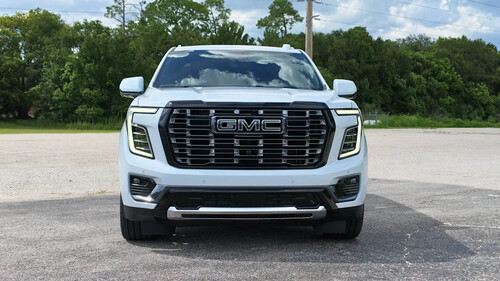
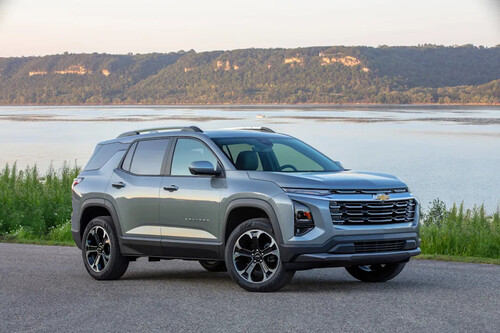
2027 Chevy Bolt: First DriveLFP is the industry's go-to cheap EV battery tech, but GM says another chemistry could offer similar cost benefits with fewer drawbacks.GM may not make LFP the future backbone of its EV battery strategy.LMR could offer LFP-like costs with better energy density, GM says.The catch: LMR still has to prove itself in the real world before it becomes viable for mass-produced EVs.General Motors may be taking a different path from much of the rest of the car industry. Automakers are increasingly relying on lithium-iron-phosphate (LFP) batteries to make their electric vehicles cheaper, but GM could skip this chemistry in favor of something it deems even better, according to comments from a GM executive speaking to Reuters on Wednesday.GM had been open to offering LFP batteries in its future EVs, and even launched the new Chevy Bolt with an LFP battery. But Reuters quotes the company's battery head honcho Kurt Kelty as saying that the technology may not have a future at GM. Kelty said "There is a possibility where LFP does not earn its way into our portfolio," pointing to lithium manganese-rich (LMR) batteries as an alternative.AdvertisementAdvertisement"That's where we're going to be using the big volume," Kelty said, calling LMR batteries GM's "workhorse" instead of LFP, seemingly bucking an industrywide trend. GM has been working on LMR batteries for over 10 years, and it has gradually improved this chemistry.screenshot-2026-06-11-at-192649Photo by: S&P Global MonthlyIt touts LMR as offering the same cost-lowering benefits as LFP, but without the latter's energy density penalty relative to nickel manganese cobalt (NMC) chemistry (typically used in premium and long-range EVs).The reason LFP has exploded in popularity among automakers is that it's cheaper, more durable regardless of how you charge it, and less dependent on expensive critical minerals than NMC—it uses far less nickel and almost no cobalt. LFP's drawback is that it's not as energy-dense as NMC, which means less range for the same weight as an equivalent NMC pack. Still, the tradeoff has been good enough to make it the dominant battery chemistry in China and the most popular one worldwide.AdvertisementAdvertisementBut now it sounds like GM is considering ditching LFP specifically to avoid its drawbacks, arguing that LMR could deliver the same cost savings without the downsides. This could signal a course change for GM, which had previously announced that it was developing LFP batteries and planned to use them in production vehicles starting in 2027.This doesn't mean GM will completely abandon LFP overnight. The new Chevrolet Bolt EV will continue using LFP packs until it goes out of production in 2027. Plus, we recently covered GM's new sodium-ion push for grid energy storage, another sign that the company does not think one battery is a good fit for every application. Sodium-ion may make sense for stationary storage, but LFP may still make sense for some low-cost applications.For future high-volume EVs, GM seems to view LMR as the more compelling solution. However, LMR has yet to prove itself, and there are still technical challenges to overcome before it becomes viable for mass-market applications. Reuters also quotes an S&P Global report from July 2025 on LMR batteries, which lists their many advantages and notes that GM and LG plan to manufacture LMR prismatic cells in the U.S. by 2028 to power future GM EVs. The report also says LMR cells will have 33% higher energy density while staying cost-competitive with LFP and offering better cold-weather performance. More On ThisGM's EV Cost-Cutting Plan Goes Beyond Batteries, CEO SaysLMR Batteries Could Unlock Midsize EV Trucks, GM President SaysGM's Next-Gen EV Truck Battery Promises More Range, Lower CostFord's New Battery Container Is Here To Take On The Tesla MegapackAdvertisementAdvertisementDigging a little deeper into LMR batteries, I found more literature explaining what they do well and what the remaining challenges still are. Argonne National Laboratory, one of the main scientific institutions researching this chemistry, says LMR offers high energy, stable performance, and reduced reliance on expensive critical materials. It noted in a January paper that tests were moving out of the laboratory and into real-world testing, eventually leading to commercially viable EV batteries.Ford is also developing LMR for the same basic reason as GM: it could be a better alternative to LFP. The company has confirmed it is working to scale the chemistry for future vehicles this decade, but, like GM, it still has to prove the chemistry's viability outside lab testing. And while LFPs certainly are cheap, it's worth noting that some of that comes from the incredible scale of LFP production in China. If American companies commit to LMR, it could become a cheap, tested chemistry quickly enough to drive another wave of EV adoption.