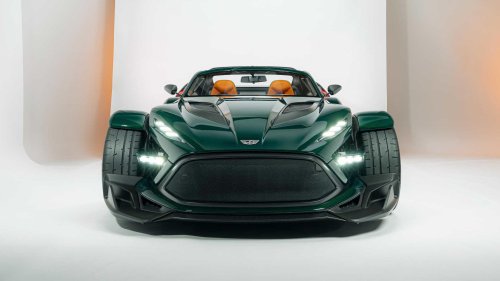
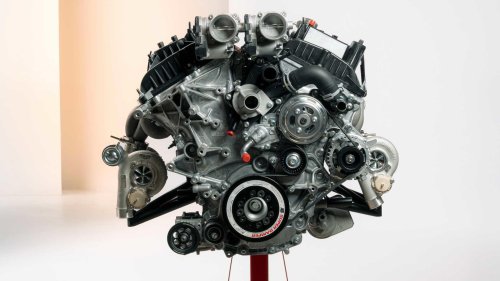
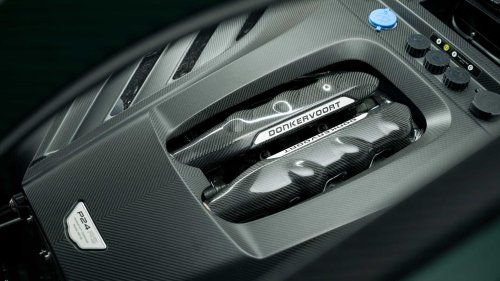
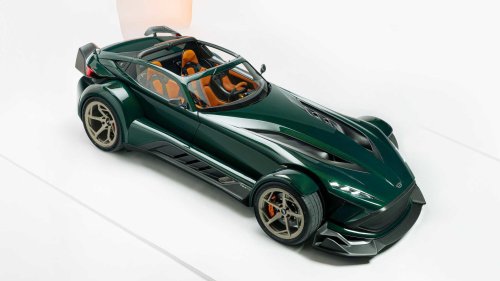
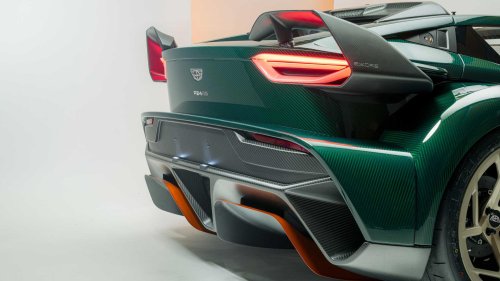
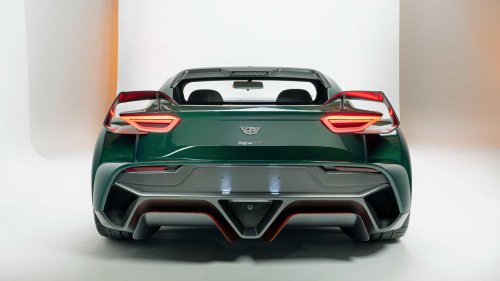
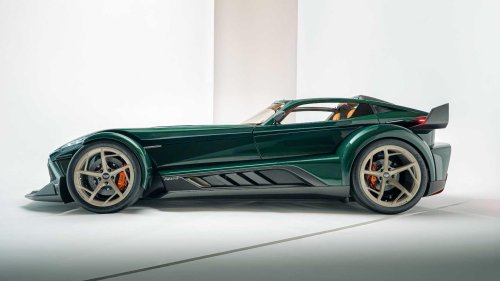
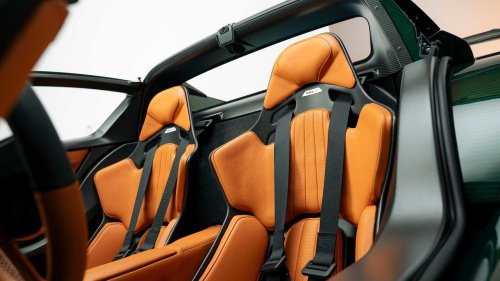
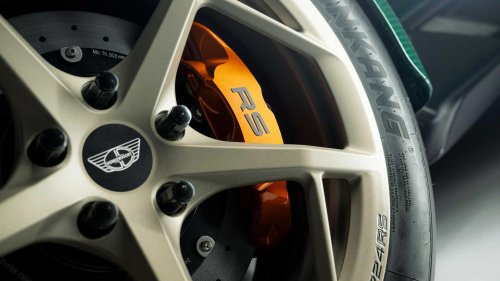
Some Supercars feel like they’re apologizing for letting you drive them. They have too many computers, too many safety nets, and too much separation between your hands and what the car is actually doing. Fast, yes. Memorable, not always. Donkervoort has never cared about that approach. The new P24 RS is built with a different priority. Strip the weight, filters, and distractions, leaving the driver with nothing but throttle and steering, and a car that reacts instantly to both. At 1,720 lbs and up to 600 horsepower on tap, this is not a supercar designed to impress spreadsheets. It is designed to make you feel something every single time you turn the wheel. Limited to 150 cars and already heavily spoken for, the P24 RS arrives in 2026 with a simple promise. Driving comes first. Everything else comes after. The Donkervoort P24 RS Gets 600 Horsepower In A Sub-One-Tonne Package DonkervoortThis is the part where most supercars start talking about launch control and Nürburgring times. The P24 RS starts somewhere else. With mass. Or more accurately, the lack of it. Because when a car weighs about the same as a weekend grocery run in an SUV, every input matters more, every reaction comes faster, and every mistake feels like your own. That is exactly how Donkervoort wants it.The heart of the P24 RS is an all-new 3.5-liter twin-turbo V6 developed in-house. Donkervoort calls it the Power To Choose engine, and the name is literal. Drivers can select 400, 500, or 600 horsepower modes depending on mood, road, or track conditions. Torque peaks at 590 lb-ft, delivered through a rear-drive layout and a newly developed limited-slip differential.DonkervoortWith a curb weight far below most modern sports cars, the result is a staggering power-to-weight figure of around 700 horsepower per US ton. Zero to 124 MPH arrives in just 7.4 seconds, and top speed pushes beyond 186 MPH. Yet straight-line numbers were never the primary target. The priority was throttle response and low inertia, which is why the V6 uses billet ball-bearing turbochargers designed to eliminate lag. The turbos are so small and light that they weigh only 8 pounds each, yet spool fast enough to deliver instant reaction to pedal input.DonkervoortDry-sump lubrication lowers the engine’s center of gravity, while 3D-printed exhaust and intake components shave kilograms everywhere possible. Even the five-speed manual gearbox was chosen for weight savings and involvement. Rev-matching can be switched off for drivers who prefer heel-and-toe control, should you be into that. A Chassis Built For Mechanical Grip And Honest Feedback DonkervoortDonkervoort’s obsession with weight reduction extends to the structure itself. The P24 RS uses a hybrid alloy and Ex-Core carbon-fiber chassis, reinforced at key load points around the engine bay and front crash structure. A new Fort-Ex front subframe integrates suspension, cooling, and aero elements into a single 19-pound carbon module. It is lighter than a Mazda Miata, stiff, and designed like a race-car front clip.DonkervoortDouble wishbones up front and a multi-link rear layout manage suspension duties, assisted by Tractive active dampers with adjustable stiffness and optional ride-height control. Mechanical grip is the headline. The P24 RS delivers 2.3G cornering forces, achieved without torque-vectoring trickery or stability systems masking driver input.DonkervoortBraking comes from AP Racing calipers, with optional carbon-ceramic discs that save over 4.4 lbs per corner. Custom Nankang CR-S tires complete the setup. Add the optional removable aero kit, and the car generates about 200 lbs of balanced downforce at 155 mph, delivered through front and rear corner wings and a floor-focused diffuser system. Exposed Wheels, Swing-Out Headlights, And A Cabin Built Around The Driver DonkervoortVisually, the P24 RS stays loyal to Donkervoort tradition. Exposed front wheels help drivers judge placement in corners. The long-nose, short-tail stance gives the car instant identity. New swing-out Aero Blade headlights hide from the airflow when not in use, reducing drag while giving the front end a signature look.DonkervoortInside, everything is designed for function. A digital cluster handles information while physical buttons and dials manage key systems like traction control and suspension settings. The removable steering wheel carries essential controls so hands stay planted. Lightweight Recaro seats fit drivers up to 2.05 meters tall, secured by six-point harnesses approved for road use. Even practicality gets attention. Behind the seats sits 298 liters of luggage space, comparable to a compact hatchback. The Twin Targa roof panels can be removed manually, turning the P24 RS into an open-air machine without sacrificing rigidity.DonkervoortThe P24 RS does not care if your commute has potholes, traffic, or Bluetooth calls waiting. It wants roads with corners, drivers with opinions, and hands that actually want to work. In a world where most new supercars feel like they are quietly driving themselves, this one hands the responsibility back to you and means it. It weighs less than a Miata, hits with 600 horsepower, and refuses to hide what’s happening between tire and pavement. For the small group of people lucky enough to get one, driving is about to feel like something special again.



















 +19 others