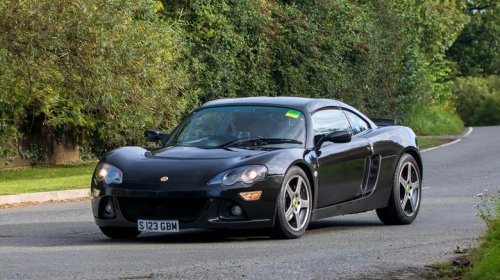
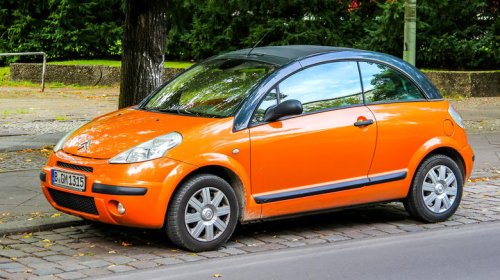
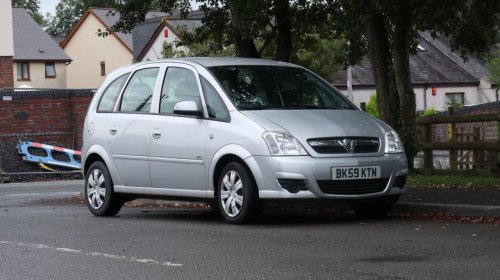
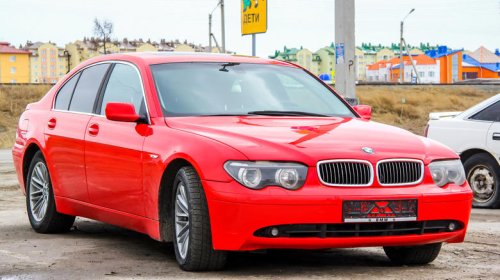



















Lotus EuropaEveryone knows that Lotus is good at making cars that weigh about as much as a grain of rice, and can reorganize your internal organs when you attack corners at the racetrack or backroad. Even back in the 60s, Colin Chapman was putting in a lot of effort to expand Lotus' lineup to include something for everyone. In the 2000s, Lotus decided to do it again and bring back a well-known name from its iconic back catalog: Europa.In 2006, Lotus revived the Europa name for an interesting but flawed concept: A grand touring cruiser variant of the Elise. It used the same platform but featured a GM turbo four-cylinder rather than a high-revving Toyota lump, as well as a little bit more room and some slightly nicer materials. Coupled with unique bodywork, the Europa was, on paper, fairly distinct from the Elise.Sadly, the Europa did not catch on with basically anyone, and Lotus would quite like for everyone to forget that it existed — the car isn't even listed on the heritage page of its website. The biggest issue with the Europa was the execution of its idea: instead of being a more luxurious Elise, it wasn't luxurious enough, retaining too much of the Elise's good cornering manners for it to be considered comfortable or even daily usable for the most part.Citroen C3 PlurielIf there's one thing French automakers are good at, it's making quirky and lovable cars. For people who value comfort and standing out from the crowd, the French always have an answer. That's certainly the case with the Citroen C3 Pluriel, a two-door convertible version of the double chevron's ultra best-selling subcompact car. While it was definitely quirky, it wasn't all that lovable.The Pluriel was based on the same platform as the regular C3, which was a great little car in its own right. A lineup of small four-cylinder engines were offered on the Pluriel, and one of them was even paired with a lethargic, lumbering semi-automatic transmission, though you could have a stick as well. The main draw of the C3 Pluriel was its roof setup. Citroen boldly claimed that the Pluriel was five different cars in one, from sunroof to full-on convertible. While that's a great idea on paper, the execution was not ideal. The two roof pillars that arc over the side windows are both one-piece, far too big to store anywhere inside the Pluriel's small cargo area. The amount of disassembly required also left most people wondering why bother with driving around in any of the other modes in the first place. The C3 Pluriel flopped, but the Mini-rivaling DS3's canvas roof arrangement was far better executed. Opel/Vauxhall MerivaThroughout the 90s, and even with General Motors at the helm, Opel was kicking out some pretty fantastic cars: The RWD Omega, which almost had a V8 engine, the Senator luxury sedan, and the sporty Calibra, to name a few. Quality went down a bit during the 2000s, as Opel was focused on mass-market cars and being a lot cheaper than the competition. This was evident in many of the models it produced, the Meriva included.The first generation Meriva arrived when Europeans were absolutely losing it over compact minivans, or mini MPVs as they were known in the U.K. Most of the benefits of a minivan, minus the third row, crammed into a hatchback form factor. Think Fiat Multipla, and you're in the right ballpark. While the Meriva offered a good amount of space, it didn't have much else going for it.The handling wasn't the best, the interior was hopelessly outdated, and some of the lower-spec powertrains weren't up to the task of moving the Meriva along, especially when fully loaded with people and stuff. These cars could also suffer from catastrophic steering rack failure, which is not something most people want to think about while behind the wheel. Mercifully, the second-generation Meriva and its innovative rear-hinged doors improved things a lot. BMW 7 Series (E65)BMW's older models have experienced quite a boom among car enthusiasts recently. Some people are prepared to say goodbye to a limb or two just to have an E46 M3, preferably a CSL. Frankly, this is true of any older BMW, especially the enthusiast ones. This includes the 7 Series, the flagship sedan in BMW's lineup that's been with us since 1977. Any older 7 Series could be a great used purchase — until you get to the E65.Even the most hardcore BMW fans shudder with fear and dismay when they hear about the E65 and E66 7 Series. These cars pioneered the Bangle Butt styling trait that people either love or hate from this era of Bavarian cars. When the E65 and E66 7 Series first came out (E66 denoted the LWB version), they were truly impressive cars, giving the Mercedes S-Class something to look out for. Packed with innovative features, including a push-button starter and the world's first production six-speed automatic transmission, the E65 was an impressive car on paper, and it was certainly a great car in practice when everything worked — you can probably see where this is going. All of those electronics and complicated features tended to fail catastrophically, making the E65 and E66 7 Series one of the most difficult old luxury cars to maintain, and most definitely one of the most expensive.