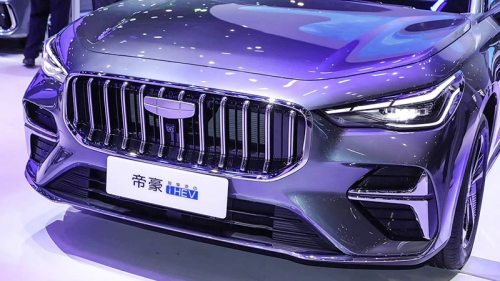
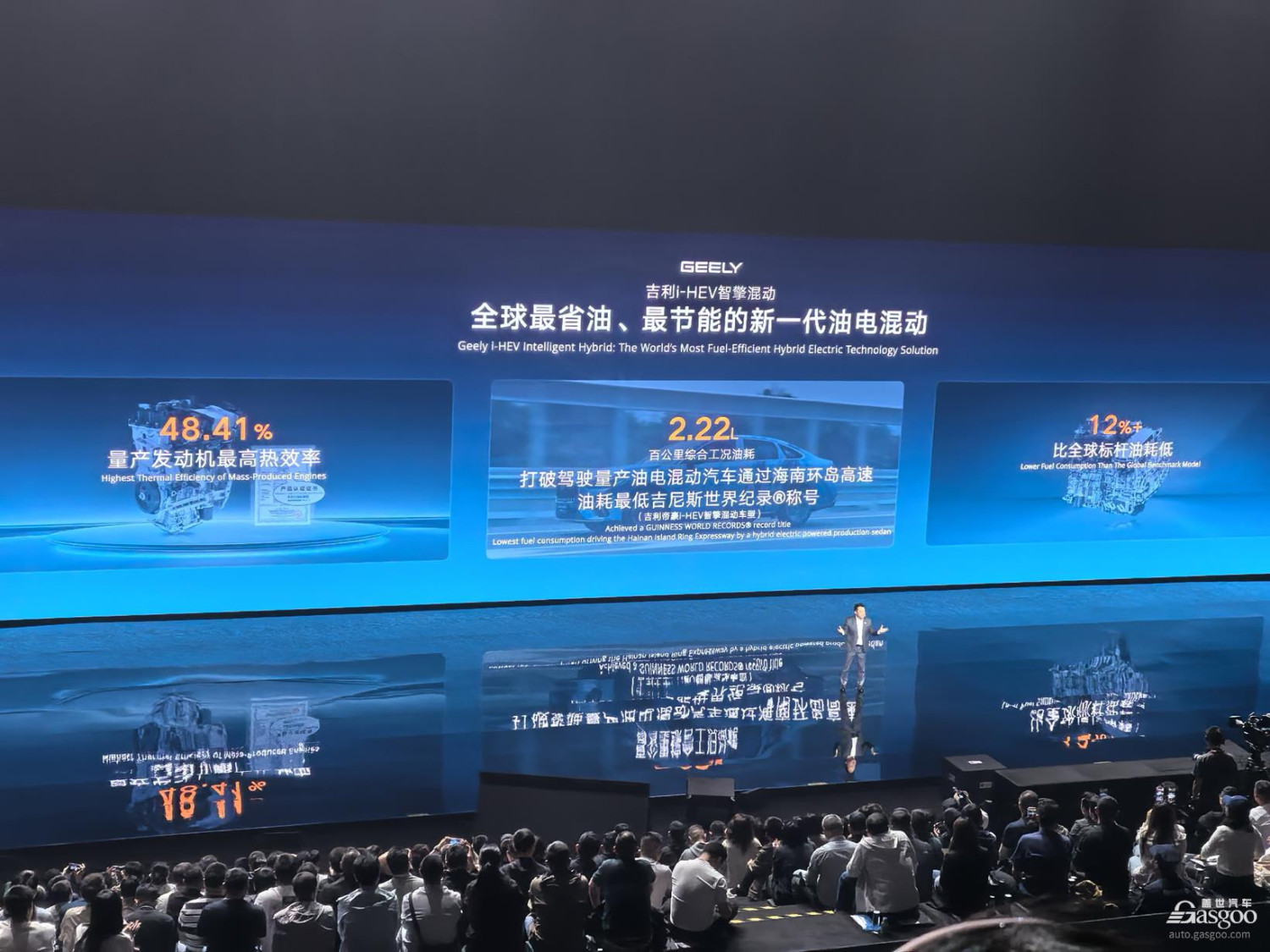
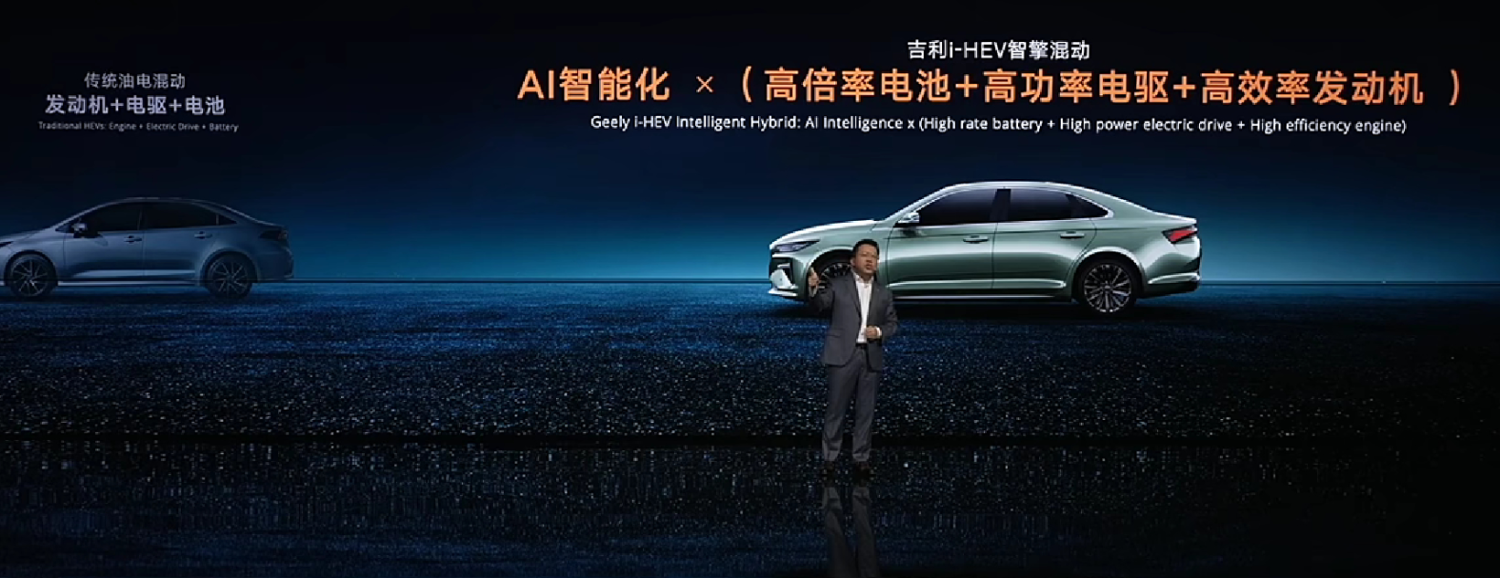
Gasgoo Munich- On the evening of April 13, Geely unveiled its new i-HEV hybrid technology in Hangzhou. The mass-production engine powering this system hits a peak thermal efficiency of 48.41%, while AI integration makes the vehicle smarter. In the words of Geely Auto Group CEO Gan Jiayue, the result is a "generational lead."Historically, mention HEV, and the industry immediately thought of the "Two Fields" — Toyota and Honda. With their mature hybrid architectures, deep technical reserves, and global reach, they defined the mainstream standard for traditional hybrids.The first half of the HEV era belonged largely to the "Two Fields," a battle fought on mechanical maturity. The core priorities were fuel efficiency, reliability, and smoothness.But today, drivers demand far more. Beyond low fuel consumption, they want power, intelligent control, scenario adaptability, and cost efficiency. The HEV battle has shifted from mechanical technology to system capability — precisely where Chinese companies have the best shot at a breakthrough.The launch of Geely's i-HEV signals a shift in how Chinese automakers view powertrains. It is no longer just about building a more fuel-efficient HEV; rather, it is about upgrading the technology against a backdrop of intelligence and electrification. By integrating the engine, motor, electronic control, software algorithms, and energy management into a comprehensive power solution, the aim is to deliver both efficiency and performance.Image source: Screenshot of the launch livestreamGeely is not walking this path alone. GAC, Great Wall Motor, and a host of other Chinese automakers are also making their move. Behind this push lies a comprehensive upgrade in the capabilities of China's entire automotive industry.In the past, Chinese automakers largely played catch-up on powertrains. Today, China’s market stands as the world’s most diverse, fiercely competitive, and fastest-evolving arena. With multiple technology routes running in parallel, a fully integrated supply chain, and intense market pressure, Chinese companies have cultivated superior system integration capabilities and rapid iteration speeds.As Chinese automakers expand globally, a direct showdown with Japanese brands is inevitable. Japanese players not only went global earlier but also boast deeper hybrid expertise and more mature international operations. For Chinese companies to truly succeed abroad, they cannot rely on price alone; they must return to the fundamentals: solid technology and superior products.Technical prowess is the bedrock of Chinese automakers' global ambitions.Where we once chased the answers, we are now providing them. Chinese strength is turning the impossible into the possible.



















 +34 others