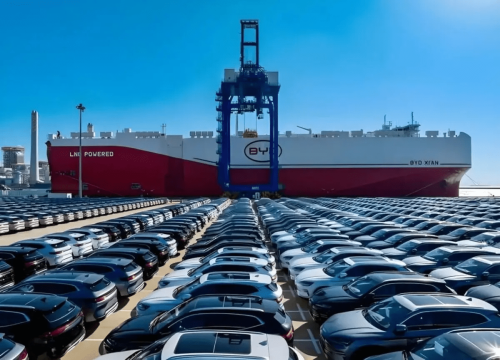
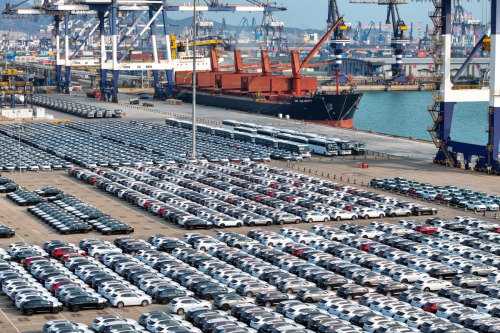
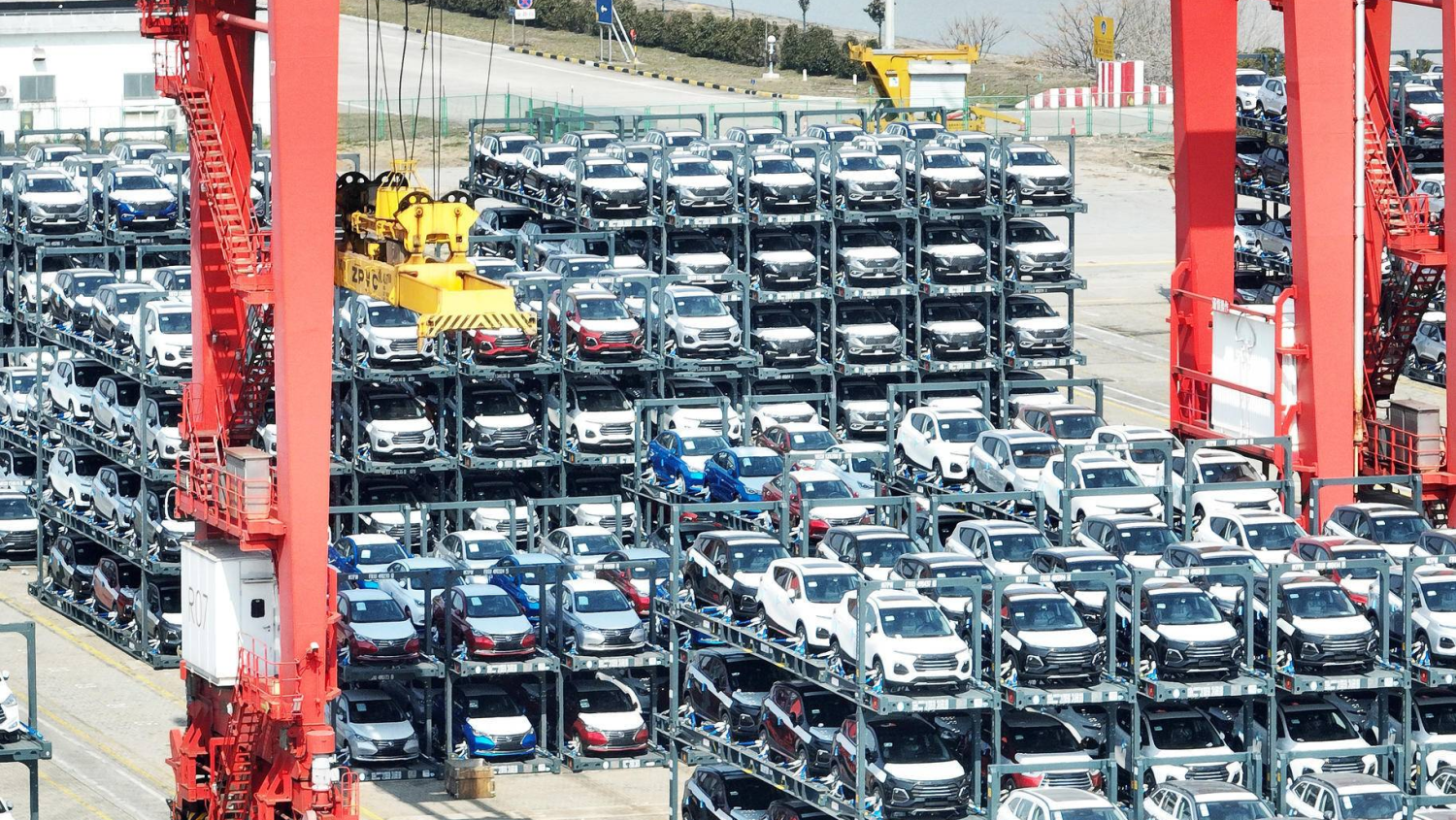
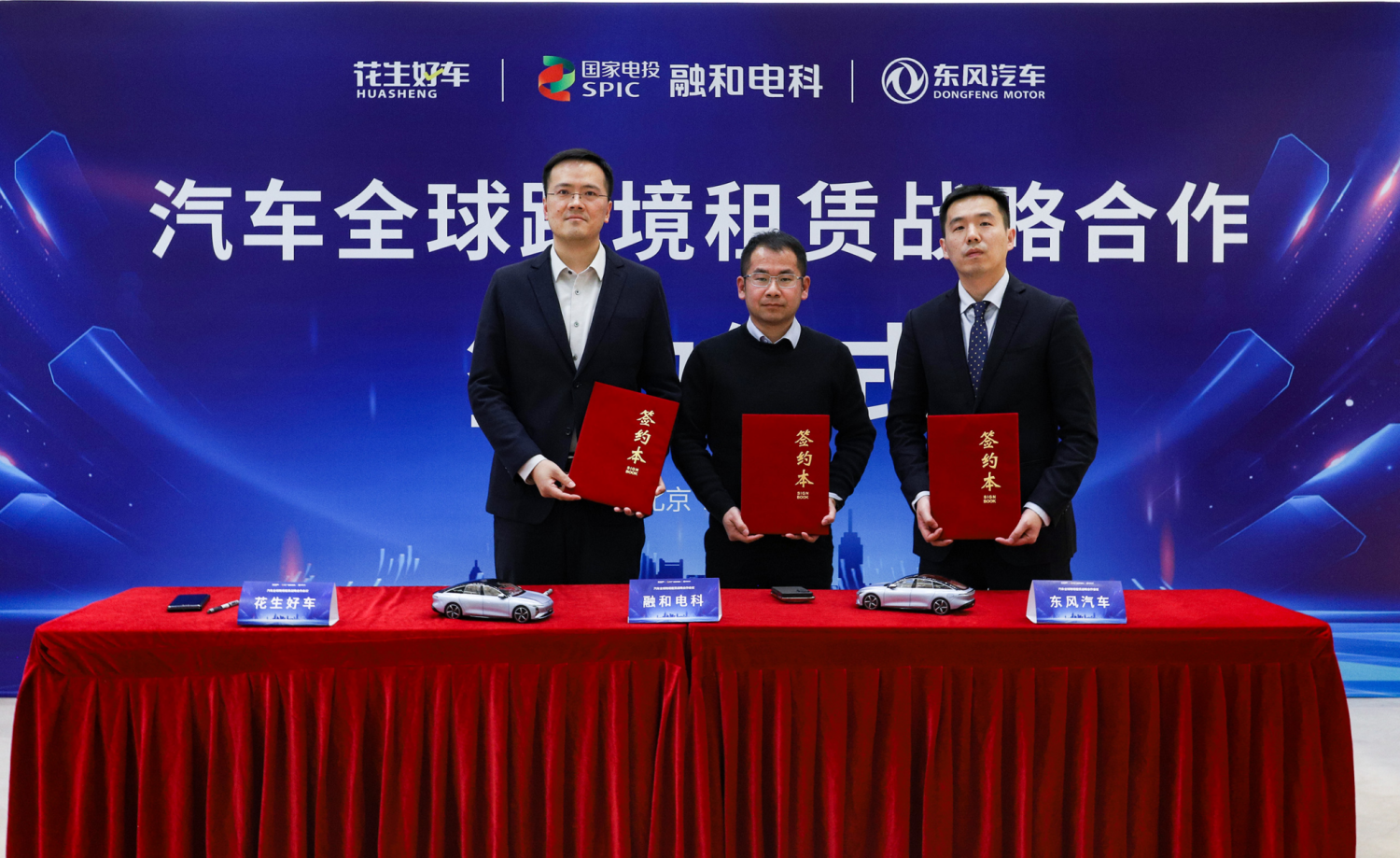
Chinese cars waiting to be exported at a port. Credit: NBD Understand China EV’s Market Real-time notifications when critical EV data is released All important data in one place 2,000,000+ data points Become a member As Chinese automakers face increasing trade barriers in international markets – ranging from high import tariffs to strict local content requirements – the industry is shifting away from the traditional “one-off sale” model. A new strategy, cross-border leasing, is gaining traction as a pragmatic and sustainable path for global expansion, as reported by National Business Daily. A shift in export logic According to the latest data from the China Passenger Car Association (CPCA), China exported 769,000 vehicles in April, a 80.7% increase year-on-year. For the first four months of 2026, cumulative exports reached 3.127 million units, with new energy vehicles (NEVs) accounting for nearly half. However, the traditional “cash-on-delivery” trade model is becoming less effective. Cross-border leasing changes this by retaining vehicle ownership within China while allowing overseas users to pay via instalments. This transforms the export focus from a one-time product sale to a long-term service trade. “Light asset, heavy operation” Unlike traditional exports, which involve transferring ownership immediately, cross-border leasing – often structured as financial leasing – allows companies to retain control of the asset. Financial benefits: Exporters can benefit from domestic value-added tax (VAT) rebates, improving cash flow. Market penetration: By converting high upfront costs into manageable periodic payments, automakers can unlock demand in markets where automotive financing is underdeveloped. Long-term revenue: Companies can bind customers to long-term service contracts, including maintenance and insurance, creating a continuous revenue stream rather than a single transaction. The model is described as “light asset, heavy operation.” It is “light” because companies do not need to invest heavily in overseas factories or land. It is “heavy” because it requires robust local operational capabilities, such as asset management, credit risk assessment, and vehicle recovery. In December 2025, Huasheng teamed up withSPIC and Dongfeng Motor to launch its first cross-border leasing deal in South Africa, featuring the Dongfeng Nammi Box model. Credit: Huasheng Industry adoption To mitigate risks, most companies currently focus on B2B clients – such as ride-hailing fleet operators – whose credit profiles are more transparent and manageable than those of individual consumers. Huasheng, a leasing company, has launched operations in Uzbekistan and South Africa and recently announced Pakistan as its next major hub. The company is collaborating with various financial leasing institutions and ecosystem partners to provide comprehensive asset management. An internal source revealed to NBD that over 30 Chinese automakers and brands, including Dongfeng, Chery, GAC, and BAIC, have expressed interest in this collaborative model.



















 +35 others