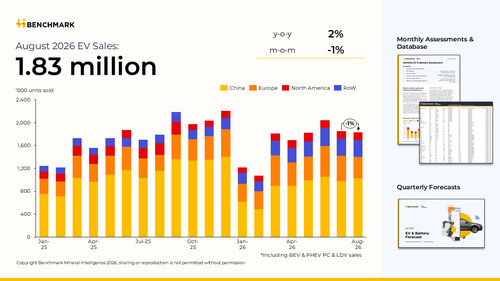
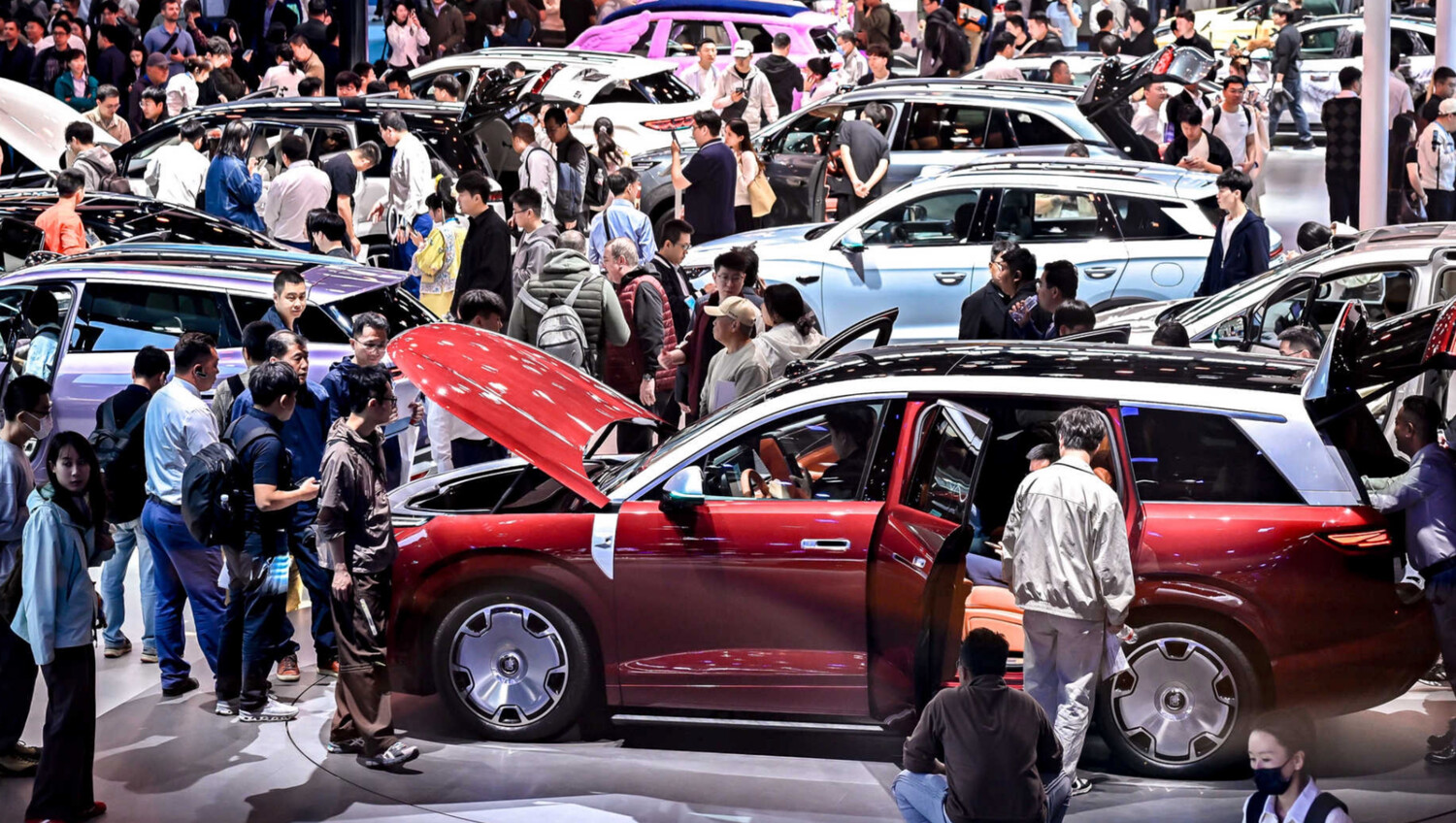
Hannah Moreau · 5 months ago@hannahmoreau225Global EV Registrations Rise 6% in April, China Accounts for Over Half Liked by+9 othersPost commentRelated PostsTesla Shanghai Gigafactory Deliveries Hit 213,000 in Q1, Tops Half of Global Total 63 · Gabriel Martin · 6 months agoNissan Taps China JV To Power Philippine EV Push 69 · Mason Fortin · 1 months agoChina's EV charging war escalates as Geely touts 2.2-MW tech for 4-minute full charges 13 · Chloé Rogers · 1 months agoXiaomi Launches Global EV Website 53 · Nathan Smith · 2 months agoFord China begins exporting its Transit City EV to Europe 63 · Nicole White · 1 months agoResearchers Drove a Chinese EV Into an Underground Mine. It Kept Calling China Anyway. 89 · Aiden Morgan · 1 months agoAudi Is Fighting to Keep Its Own China-Only EVs Out of Germany 75 · Chloé Morgan · 1 months agoThe Unstoppable Rise of Leapmotor — August’s China EV Sales Report (45% BEV Share) 53 · Jacob Bouchard · 1 months agoNIO Recalls 686 firefly EVs in China Over Potential Steering Assist Issue 75 · Nathan Wilson · 1 months agoLi Auto launches i9 EV in China: world’s most aerodynamic mass-production SUV at 0.215 Cd 89 · Madeleine Green · 1 months agoChina, Sweden study ties early EV battery retirement to a small cluster of aging cells 26 · Samuel Girard · 1 months agoJeep’s 202,000-SUV Recall, China’s 70% EV Target, and What Else Moved 16 · Abigail Smith · 1 months agoChina exported more cars in 8 months than in all of 2025 - and most are EVs 33 · Owen Martin · 1 months agoChina's Best-Selling EV Can Drift Really Well 68 · Mia Pelletier · 1 months agoChina's Rapid EV Development Linked to Battery 'Batch Failures' 31 · Ava Lewis · 1 months agoChina is launching nearly 3 new EVs a day, CATL warns of batch battery failures 40 · Olivia Johnson · 1 months agoToyota to build new Lexus EV in China before Japan, breaking its long-standing pattern 17 · Adam Roy · 1 months agoChina flash-charging test fuels claims that EV critics keep 'moving the goalposts' 78 · Claire Pelletier · 1 months agoEVs outsell petrol in Australia for the first time, led by China 32 · Camille Bouchard · 1 months agoBYD Sealion 08 launches in China: second-gen Blade Battery on both PHEV and EV models 51 · Madeleine Gagnon · 1 months ago



 +9 others