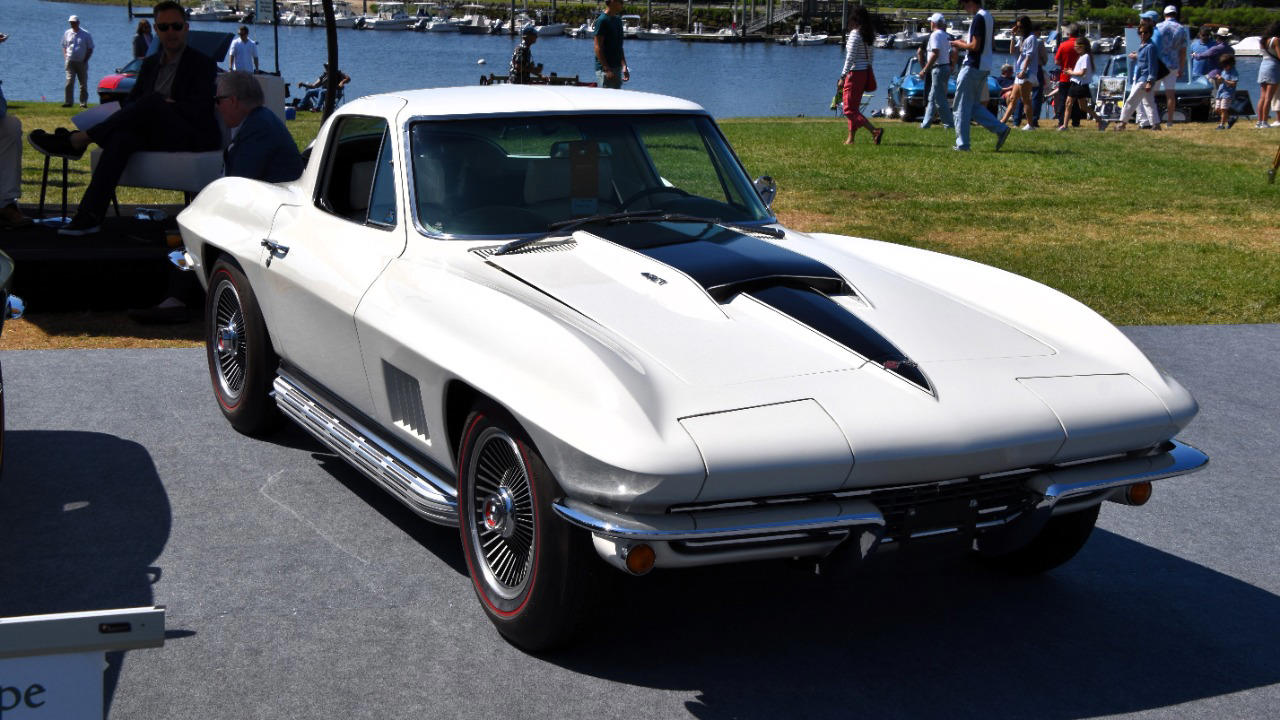
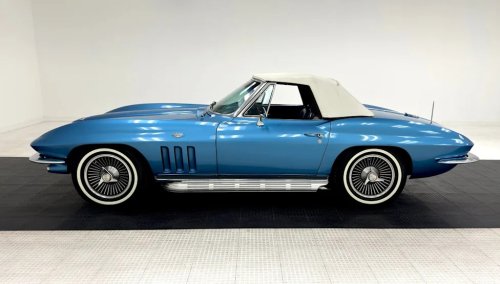
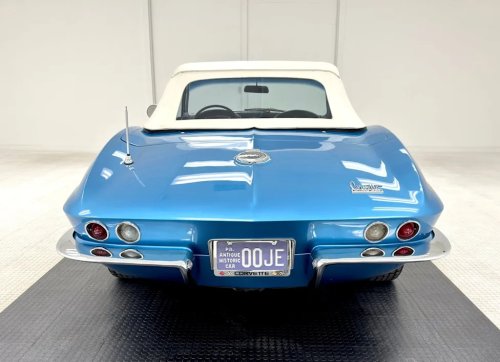
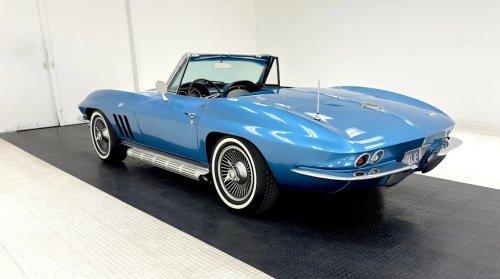
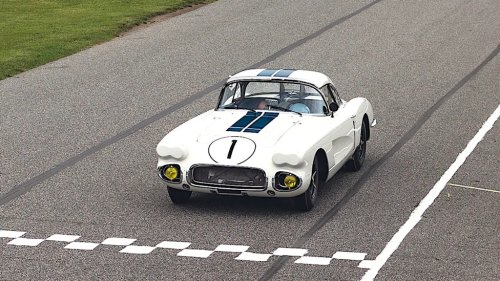
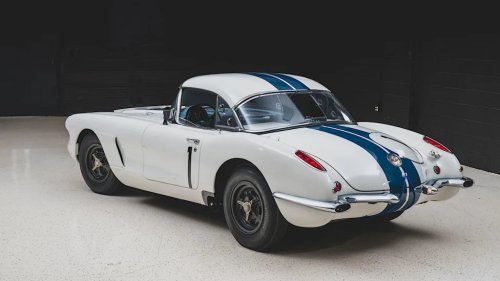
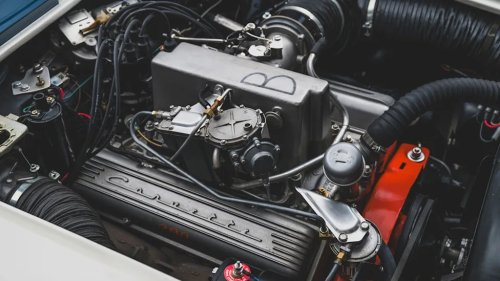
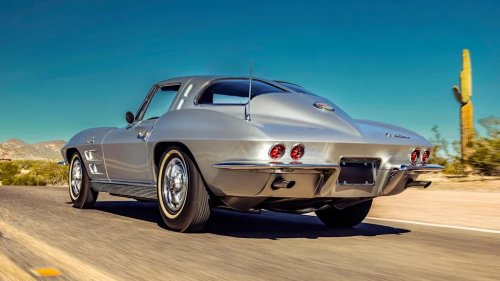
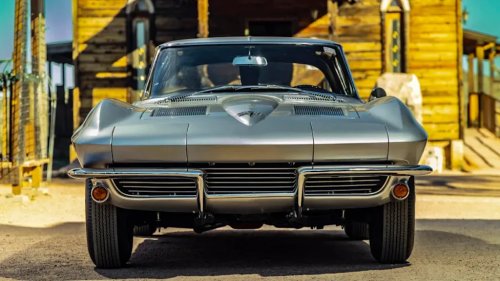
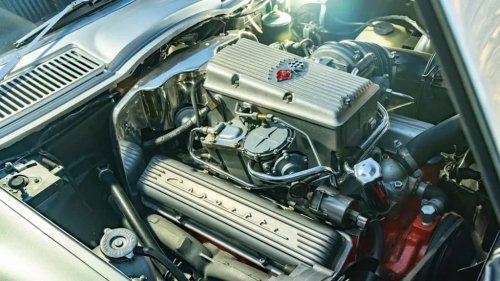
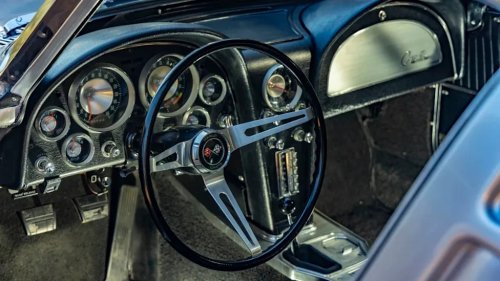
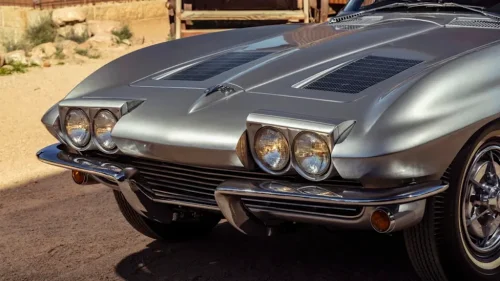
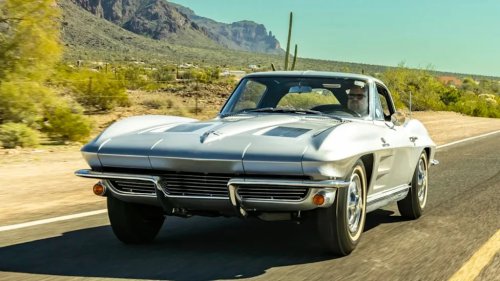
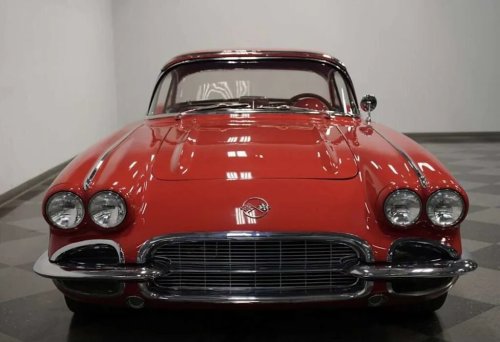
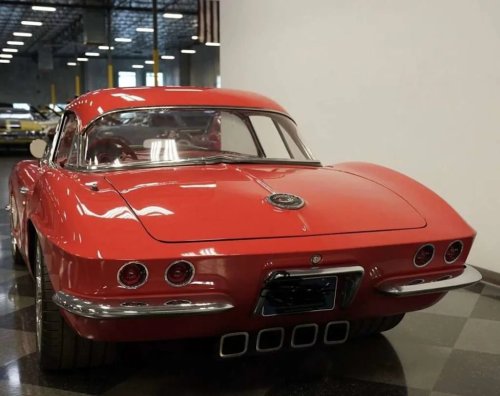
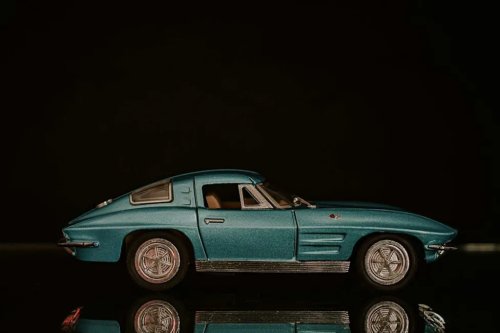
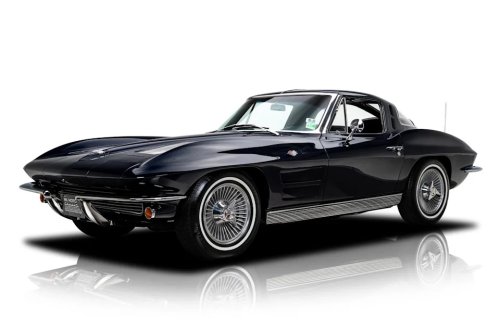
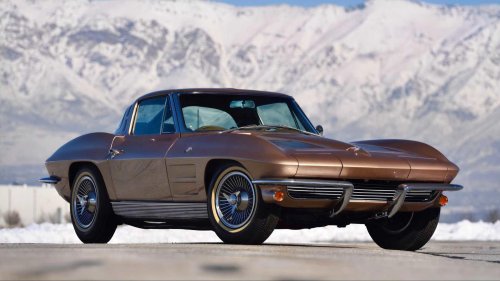
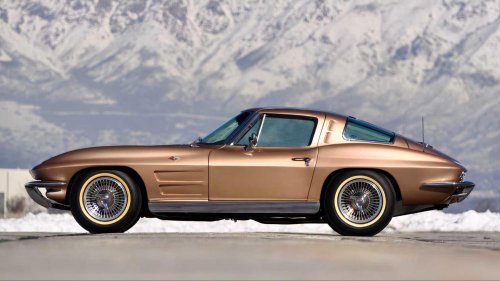
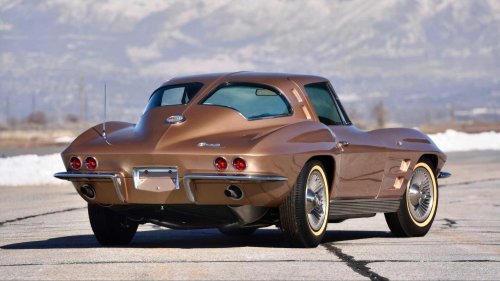
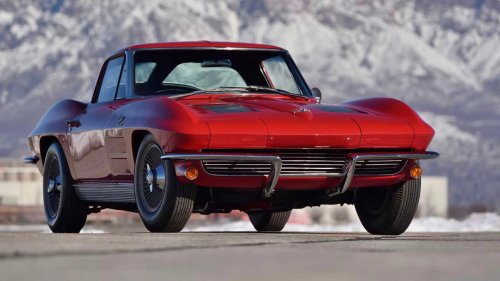
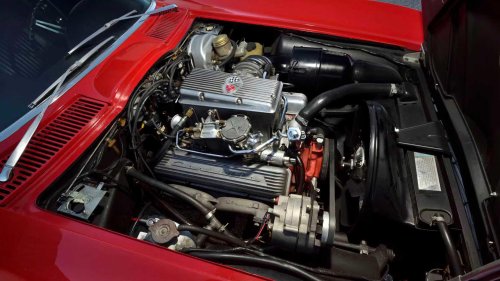
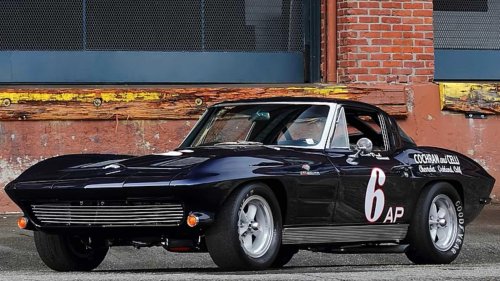
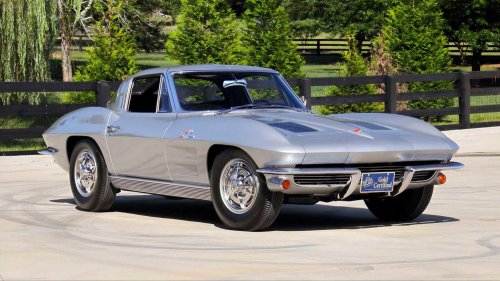
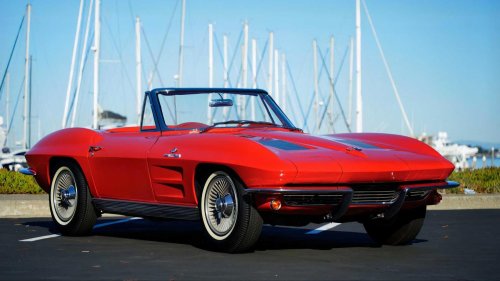
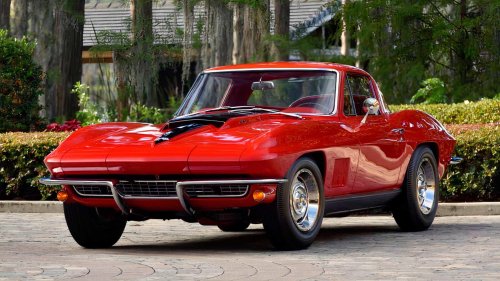
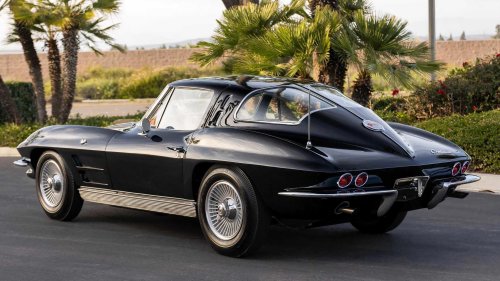
Introduced in 1953, the Chevrolet Corvette wasn't just the first American sports car, but also the only car Detroit had ever made with no other purpose than to be enjoyed. It certainly wasn't a work vehicle and, with only two seats, definitely not a family car, so the only thing left was to take the top off and go for a spin. Though the 'Vette has changed over the past 70 years, it remains the premier American funmobile, guaranteed to deliver the thrills. While every generation has its fans, even possibly C4 nuts, but the C2 Corvette, launched in 1963, is by far the most memorable version of the iconic Chevy.1963 really was the most transformative year for the Corvette in terms of styling, performance, and attitude. As cool as the legendary sports car had been from the beginning, it had a harmless, playful vibe that was sort of cute. When C2 rolled in, suddenly the Corvette was a more serious set of wheels that was still a ton of fun, but had a sense of urgency about it. Also, it graduated from cute to breathtakingly gorgeous with arguably the greatest body design ever. The '63 Corvette was a major hit when it first hit the scene and hasn't lost a step as one of the most collectible classics on the market today. The 1963 Chevrolet C2 Is When The Corvette Became A Sting Ray While there was nothing like the C1 Corvette at the time, at least not in the United States, its styling was very familiar and stuck in the 1950s. As it became apparent that the 'Vette needed a serious update, Chevy had a big decision to make on whether to take it more mainstream, like Ford did with the Thunderbird, or go in a radical new direction. Thankfully, they chose the latter and came out with something that literally left people breathless. For the first time, the Corvette was a coupe, combining elements of both the fastback and Coke bottle designs that would dominate the 1960s. Nobody, however, was able to pull those styles off quite as well as the '63 'Vette. The immediacy of the new design was punctuated by the fact that the Corvette now only came with 327ci V-8 engine, made for street domination. Dubbed the "Sting Ray," the 1963 Corvette set the basic style the iconic sports car would carry for most of its existence, as well as established it as America's number one performance ride. Body by Larry Shinoda The people behind the creation of the Corvette have become household names like Harley Earl, who conceived it, and Zora Arkus-Duntov, known as "the Father of the Corvette," but also designer Bill Mitchell. For the C2, designer Larry Shinoda added his name to the list of Corvette legends with a body style for the ages. Some design elements came from a 1959 Sting Ray concept race car as well as a Mako shark that Bill Mitchell once caught, but Shinoda was ultimately the genius who put everything together in this automotive masterpiece. Shinoda would take this aquatic inspiration to the extreme with his Mako Shark prototype cars that would eventually become the C3 Corvette. The ‘63 Corvette Split-Window Coupe The C2 Corvette is generally regarded as one of the most beautiful automobile designs of all time, but that love is specifically for the 1963 Split-Window Coupe. The design feature, which is exactly what its name would suggest, was only around for the '63 model year, because, while it looked spectacular, cut down on the driver's rear visability. Sometimes, looking cool is more important than safety, and this is certainly one of those cases. In 1964, the rear window was replaced by a solid arched piece of glass that was by no means ugly, but lacked the charm of the Split-Window. Other features unique to the '63 'Vette were the non-functioning hood intakes and rear pillar decorative air exhausts. 1963 C2 Corvette Power And Performance Via: Mecum Auctions The C2 was a little smaller and lighter than the C1, which gave it a better power-to-weight ratio, that was, of course, helped by the additional ponies available to it. There were several versions of the 1963 Corvette Stingray's 327ci V-8, with the 360-horsepower Rochester fuel-injected L84 being the most potent. When equipped with the L84, the Corvette could reach 0-60 in 5.5 seconds, destroy a quarter-mile in 13.9 seconds, and hit a top speed of 150 MPH, which were blistering acceleration times for the early 1960s. L84 cars were extremely rare, and we'll touch on that in just a second, so most '63 C2s had less juice under the hood, but were still masters of the streets. Car and Driver tested a 1963 Corvette with a 300-horspower version of the 327 and managed a 14.4 second quarter-mile ET, which ain't bad and put it on a level playing surface with Ferraris, Jaguars, and Porsches of the day. The Versatile 327 V-8 Via: Mecum Auctions The 327 was the only displacement available in 1963, with 396 and 427 big-blocks being added later in the C2 generation, but it was a solid V-8 that offered something for everyone. The base 327 was rated at 250 horsepower, which was fine for most drivers, but the L75 brought things up by 50 ponies for those who wanted a little more oomph. For serious speed junkies, the L76 increased the compression ratio and got 340 horsepower out of the 327, with a single four-barrel Carter AFB carburetor. Lastly, the aforementioned L84 with the Rochester fuel injection was the top dog, generating 360 horsepower and 352 pound-feet of torque. With the 327, the Corvette was everything from a fun, zippy weekend warrior to a professional racer and everything in between. '63 Corvette Z06 Via: Mecum Auctions 1963 was also a pretty special year because it's when the Corvette first got a special performance package. The RPO Z06, which included the 360-horsepower fuel-injected L84 327ci V-8, as well as heavy-duty suspension and brakes, was intended for buyers with racing on their minds. At the time, GM's infamous racing ban stopped Chevy from developing or supporting professional teams, so they built the Z06 as a track-ready ride that customers could choose to do with what they want. The package was specifically aimed at endurance racing and originally came with a 36.5 gallon gas tank, which was substantially bigger than the standard 20 gallon, and were known as "Big Tanks." Only 199 Z06 cars were sold in 1963, making it one of the first rare collectible Corvettes. 1963 Corvette Prices and Values Because the Corvette is such an awesome and sought-after nameplate, there aren't many versions from any generation that qualify as dirt cheap, and are all almost guaranteed to increase in value. As the most special of the bunch, the C2 sets the high-mark for collectibility as well as value, with even project cars breaking the bank. Hagerty lists the Concours condition value of the base 250-horsepower 1963 Split-Window Coupe at $187,000 with the convertible coming in substantially less at $95,400. For the 340-horsepower coupe, the price is $233,000 and the 360-pony version is over $300,000. Classic.com reports that the average auction sale for any 1963 Corvette is $160,903, with the top sale going to that Sebring Silver Z06 pictured above which dropped the gavel at $511,500 earlier this year. ‘63 Vette Production Numbers Because the Corvette is so legendary it seems hard to believe, but it was actually kind of a flop when it first came out. With a mere 300 sales in 1953, it's kind of surprising that the 'Vette made it to a second model year, but it did and rebounded nicely, becoming a solid seller. It was, however, never a big-time mover until C2 in 1963, when the Corvette sold a respectable 21,513 units. That was pretty evenly split with 10,594 Split-Window Coupes and 10,919 convertibles. While not the rarest year for the Corvette, the appeal of the '63 coupe has sent its value soaring. For the record, the biggest year in Corvette sales was the 1979 C3 with 53,807 units and in an unexpected second place, the 2023 C8 with 53,785 units. C2 Corvette Auction Killers Another way to tell just how special the Corvette C2 is by how much money collectors are willing to spend on this generation, and it is a lot. The '63 Split-Window Coupe is solidly a half-million-dollar ride, but that pales in comparison to the auction champ of C2, the 1967 L88. The special high-performance L88 package featured a race-tuned 427ci V-8 that was advertised at 430 horsepower but was probably closer to 560. Only 20 buyers chose the L88 option in 1967, and it has since become an action killer, selling for millions. A '67 L88 convertible sold for $3.2 million, which seems like it should be the record, but a coupe actually topped it, crossing the auction block for a staggering $3.85 million. With that sale, the Corvette C2 became one of the most collectible American cars and earned the prestige usually reserved for rare European sports cars. Why The 1963 Corvette Is One Of The Best Bringatrailer.com The gorgeous styling and enhanced performance of the 1963 Corvette destined it for iconic status, but that's not the full picture as to why it is one of the all-time greats. '63 was historically important because it literally shaped what the Corvette would be for generations to come. It was the first to have the fastback styling of a long hood and short decklid that would be employed in the 'Vette all the way until 2020, when C8 went mid-engine supercar crazy. 1963 was also the year that the Corvette established itself as the baddest thing on the streets which, by the way, is a title it has yet to relinquish. This was also the first year of the Corvette special high-performance package, which has been a signature of the brand ever since. Basically, 1963 is the year the Chevrolet Corvette became a Corvette, and that is why it is one of the best and possibly the best of all time.Sources: Chevrolet, Classic.com, Hagerty

















 +76 others