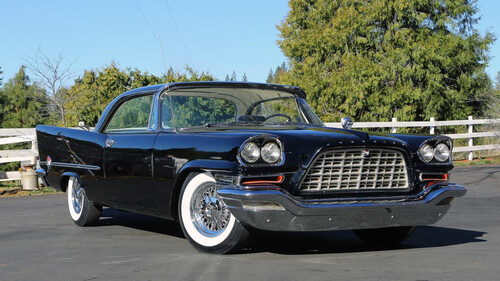
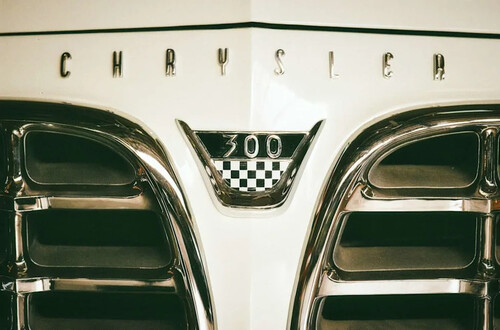
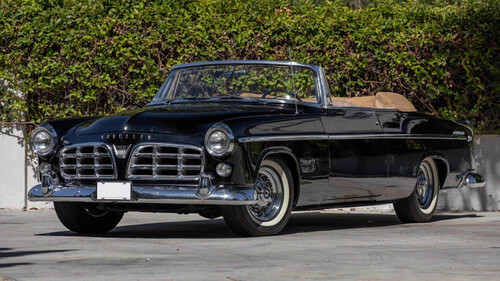
By the middle of the 1950s, a handful of cars were already proving that comfort and speed did not have to live in separate garages. Long before the muscle boom of the late 1960s, engineers and designers were quietly blending plush cabins, expressive styling, and serious power into machines that could cross a continent quickly and look expensive doing it. I see the decade as the moment when luxury and muscle stopped being opposites and started to merge into a single, aspirational idea on four wheels. Those early hybrids did not always wear the “muscle car” label, and some came from brands better known for refinement than raw acceleration. Yet their big engines, confident highway performance, and high-end details laid the groundwork for what enthusiasts now recognize as performance luxury, from grand tourers to premium sport coupes. Oldsmobile Rocket 88 and the birth of comfortable speed If there is a single car that captures the shift toward powerful yet civilized motoring, it is the Oldsmobile Rocket 88. I see it as the bridge between postwar family sedans and the later muscle era, because it combined a relatively modest body with a strong V8 that gave drivers brisk acceleration without sacrificing everyday usability. Contemporary analysis of muscle car Origins notes that the 1949 Oldsmobile Rocket 88 is often cited as the first full sized performance car of its type, and that reputation carried into the early 1950s as the model evolved. What made the Oldsmobile Rocket 88 feel luxurious in its time was not just the engine, but the way it wrapped that power in a comfortable, well trimmed package. Period oriented guides to the muscle cars of the 1950s describe how the Oldsmobile Rocket line ran from 1949 to 1957, giving buyers a long running mix of smooth V8 performance and the kind of ride and interior appointments that middle class families expected. I read that combination as an early template for the idea that a car could be both a status symbol and a straight line performer, a formula that later luxury coupes would refine rather than reinvent. Packard Hawk and Studebaker Golden Hawk: personal luxury with bite By the late 1950s, some independent American brands were pushing the luxury performance idea even further, especially in the emerging “personal car” segment. The Packard Hawk stands out as a bold example, a low slung coupe that paired dramatic styling with serious power. Enthusiast rankings of 1950s performance models list the Packard Hawk at the top of their muscle era picks, highlighting how it took the more conservative Studebaker underpinnings and turned them into something more aggressive and upscale. Closely related, the Studebaker Golden Hawk blended similar mechanical ambition with a slightly more restrained image, and it has since become one of the more valuable American collector cars from the decade. Current valuation discussions group the Studebaker Golden Hawk alongside other high end 1950s models, underscoring how its mix of performance and upscale intent has aged well. I see both Hawks as early personal luxury coupes that did not apologize for their speed, using long hoods, detailed interiors, and strong engines to sell the idea that a driver could have sports car pace without giving up comfort or style. Image Credit: Sicnag, via Wikimedia Commons, CC BY 2.0 Chrysler 300 “letter cars” and the rise of the luxury brute Among the Detroit giants, Chrysler arguably came closest to defining the luxury muscle formula outright with its 300 series “letter cars.” These big coupes were marketed as premium models, yet they carried some of the most powerful engines available in American production cars at the time. Collector market analysis often highlights the Chrysler 300B as a standout, grouping it with other high value 1950s machines because of its blend of big block power and upscale positioning. What I find striking about the early 300 models is how unapologetically they targeted both performance and prestige. They were not stripped out racers, but large, well equipped cars that could cruise at high speeds for long distances, a trait that later enthusiasts would associate with grand touring. Their presence in lists of the most valuable 1950s American collector cars, alongside names like Studebaker Golden Hawk, suggests that the market now recognizes these early “letter cars” as foundational to the idea that a luxury badge could sit comfortably on a genuinely fast machine. Plymouth Fury and Chevrolet Bel Air: mainstream muscle in a nice suit Not every early blend of comfort and power came from niche or premium nameplates. The Plymouth Fury, especially in its late decade form, showed how a more accessible brand could deliver strong performance without abandoning family car roots. Enthusiast retrospectives on 1950s performance highlight the Plymouth Fury as one of the best muscle oriented cars of the era, noting how it evolved from more basic offerings into a model that could credibly claim both speed and style. Chevrolet followed a slightly different path, using the Bel Air line to move buyers upmarket while still offering strong V8 performance. Modern overviews of iconic 1950s cars point to the Chevrolet 1950 to 1954 Bel Air, the 1955 to 1957 Bel Air “Tri” “Five,” and the 1958 Bel Air Impala as key models that combined stylish bodies with increasingly capable engines. I read these cars as the democratization of the luxury muscle idea, giving middle class buyers a taste of the same chrome heavy glamour and highway pace that more exclusive brands were selling at higher prices. European flair: Mercedes 300SL and the global grand touring ideal While American manufacturers were discovering that big engines and plush cabins could coexist, European makers were developing their own interpretation of fast luxury. The Mercedes 300SL is perhaps the clearest example, a car that married advanced engineering with a level of finish that appealed to wealthy enthusiasts worldwide. Modern lists of unforgettable 1950s classics single out the 1956 Mercedes “Benz” 300SL as a standout, emphasizing its beauty and technical sophistication among 15 Unforgettable Classics from the 50s. What sets the Mercedes 300SL apart in the context of early luxury muscle is how thoroughly it embraced the grand touring concept. It was fast enough to compete with pure sports cars, yet it offered a level of refinement, build quality, and long distance comfort that aligned with the expectations of high end buyers. I see it as a European counterpart to the American trend, proving that the desire for cars that could travel quickly, look expensive, and feel special inside was not limited to one market. Together with the American examples, it shows that by the end of the 1950s, the blueprint for blending luxury and muscle was already well established, even if the terminology would only catch up in later decades. More from Fast Lane Only: Unboxing the WWII Jeep in a Crate 15 rare Chevys collectors are quietly buying