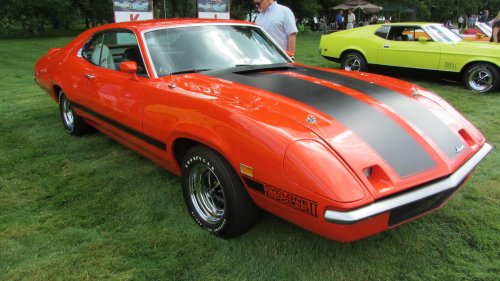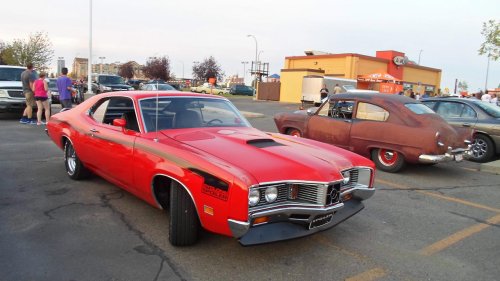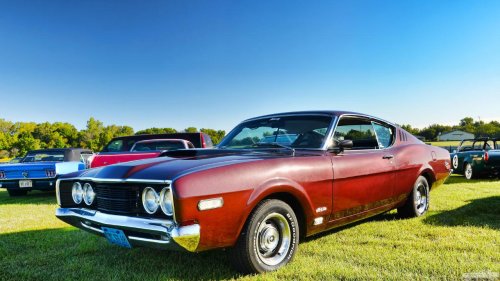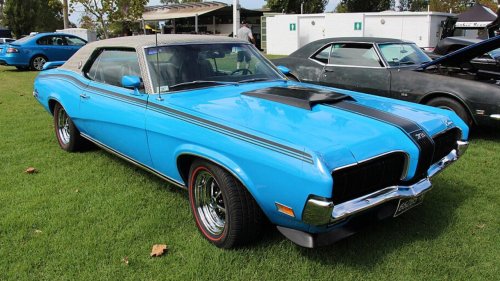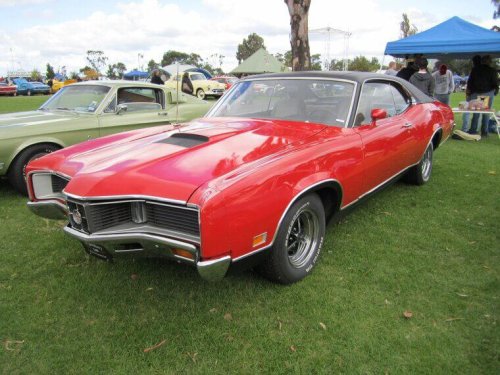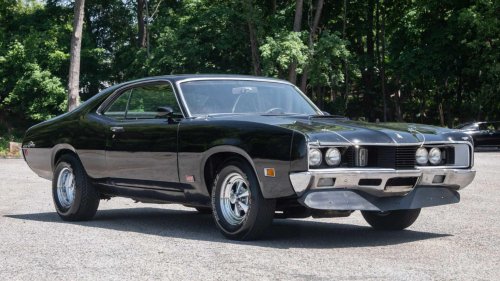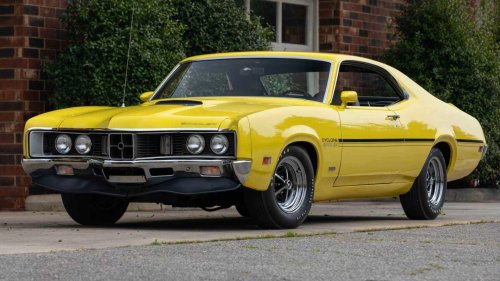
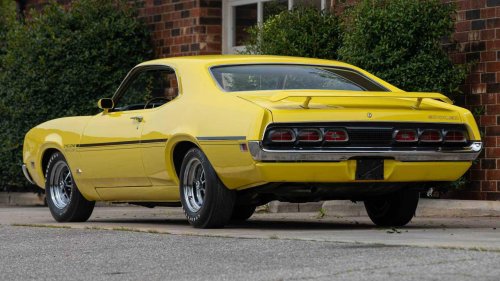
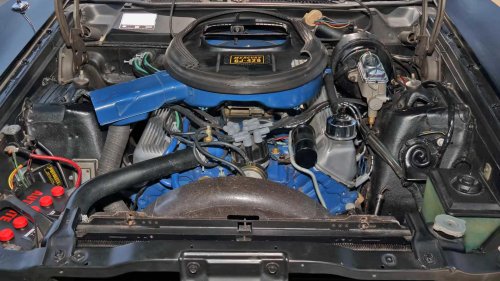
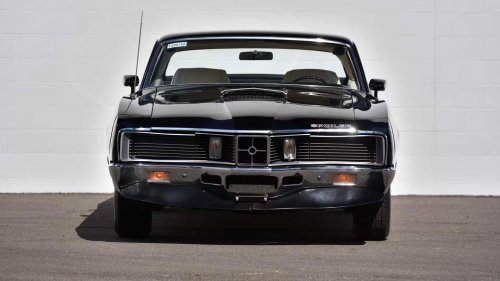
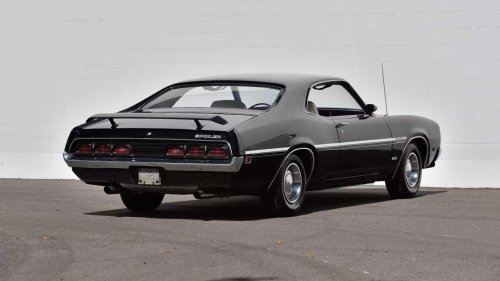
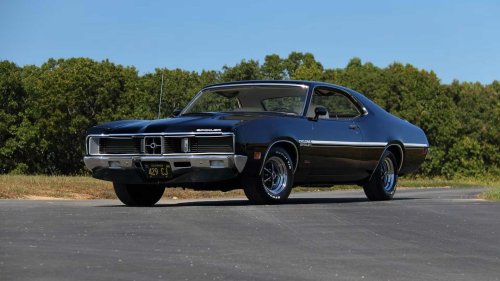
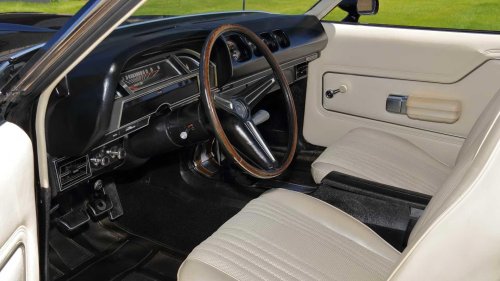
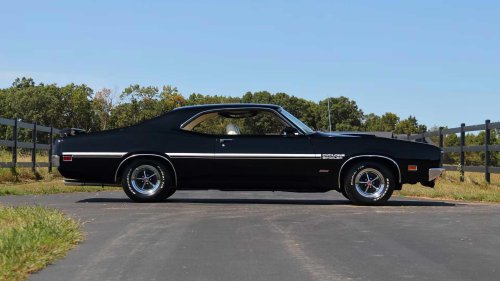



















Muscle car values have recently peaked in value, due to high demand during the pandemic, as those with the money to afford them splurged on the toys they've always coveted. The early pandemic years were just one of the recent highs that we've seen over the past three decades, with the collector car market experiencing a number of highs and lows during that time.That being said, interest in classic muscle cars has certainly not applied to all generations equally. Over the past couple of decades, we've seen deep-pocketed millennials spark greater interest in the sports cars of the 1980s and 1990s they grew up admiring. Other trends have gained momentum as well, especially interest in JDM cars, including kei cars, trucks, and vans, in addition to European youngtimers that had previously been kept out by the 25-year rule.Times are changing, and we have a feeling that, as with other generations of cars, muscle cars of the 1960s may not pose all that much interest for Gen Z in the longer term, aside from a narrow number of blue-chip collectibles that transcend generational tastes, no matter how cool they are. That happens to already be the case with this incredible big block muscle car, which old-school purists still appreciate but most of Gen Z know practically nothing about. UPDATE: 2026/02/27 20:55 EST BY RAUNAK AJINKYA We've updated this article to provide additional information about the Super Cobra Jet engine, more detailed comparisons with its immediate rivals, and how its value today compares to its biggest competitor at the time. The 1970 Mercury Cyclone Spoiler 429 Is A Notoriously Overlooked Monster Mecum We suspect there's no shortage of muscle cars that Gen Z aren't googling, and while they're certainly searching for more obvious performance icons like the Ford Mustang, we have a hard time picturing them being interested in something like the 1970 Mercury Cyclone Spoiler. In fact, this particular model is already considered to be overlooked by many collectors, and isn't seen all that often at major concours events, absent the presence of some special class.In the 1969 to 1970 Ford aero wars, Mercury’s Cyclone line sits right next to the brand’s NASCAR storyline, even if the 1970 street car is not a pure homologation special in the way the slippery 1969 racers were. Add in the Super Cobra Jet being effectively a hidden upgrade, because you access it by ordering the Drag Pack axle ratio rather than checking a simple engine box, and it starts to make sense why old-school Ford people still talk about it like an inside secret.Mecum The performance offered by the Mercury Cyclone Spoiler, however, places it into the top tier of muscle cars of the era. Powered by Ford's 429 Cobra Jet big block V8, the Cyclone Spoiler produced 370 hp and 450 lb-ft of torque thanks to a higher 11.3:1 compression compared to standard 429 “street” engines, with fuel fed through a 700-CFM Rochester Quadrajet carburetor. Buyers had the option of a Hurst four-speed manual transmission, though a Select-Shift automatic was also on the menu. Equipped with the 429 Cobra Jet Engine, the Cyclone Spoiler was good for 0-to-60 sprints in 5.8 seconds, and quarter miles in 13.98 seconds. Faster Than The Competition Mecum AuctionsIn case this recipe was too mild for some buyers, Mercury also offered the optional Drag Pack that featured the Super Cobra Jet version of the powerplant with an extra oil cooler, a new intake manifold, solid-cam lifters, four-bolt mains, aluminum pistons, a 3.91:1 axle ratio, and a revised Holley carburetor. Ford's conservative estimate merely added 5 hp to the 370-hp output of the standard Cobra Jet configuration, but numbers closer to 400 were seen on the dyno in real-world testing. And the Super Cobra Jet engine was something of a secret menu item as well, offered via the 3.91:1 axle option that you also had to know about.With the Super Cobra Jet setup, properly equipped cars were capable of mid-13-second quarter-mile passes at over 100 mph, making the Cyclone Spoiler a genuine threat at the local drag strip. Period tests showed showed a Ram Air III Pontiac GTO Judge with a 4-speed manual transmission running a 14.6-second quarter mile time. The same magazine also tested the 1970 Boss 429, which clocked a 14.09-second run. That means that, on a good day, a Cyclone Spoiler could park itself alongside any of those two muscle car legends on the drag strip, and pull out a decisive win.MecumDespite these impressive stats, the Mercury Cyclone Spoiler Super Cobra Jet was itself a secret menu item of sorts, with just 341 leaving the factory for the 1970 model year. Just 73 examples were ordered with the Drag Pack and the Super Cobra Jet engine. And a total of 1,631 Cyclone Spoilers with the milder Cobra Jet engine were produced for 1970. These now seem like modern British or Italian supercar build volumes, so for an era now seen as being the absolute peak of the muscle car era, the top version of the Cyclone Spoiler was underappreciated even back when it was new."Competition handling package. Traction belted tires. Front anti-lift spoiler. Rear deck air-foil spoiler. 8000 rpm tachometer. Full instrumentation. Hot new competition colors. No wonder it's named Spoiler!" ads of the time promised.Mecum Speaking of those hot new competition colors, the Spoiler was offered in green, yellow blue, gold, orange, and pastel blue, in addition to custom colors that could be requested by buyers. So even though black was not on the menu, examples finished in black did leave the factory. Appearance was one of the ways the Cyclone worked to distinguish itself from its Gran Torino sibling, and for the Cyclone Spoiler this meant bucket seats as standard items, a spoiler out back, and stripes in a choice of two colors. Why The Cyclone Is Still Obscure For Younger Generations Mecum Auctions Fast-forward some 55 years, and the numbers of the 1970 Cyclone Spoiler haven't exactly increased over that period of time, with surviving examples appearing at auction with some regularity, but certainly not tsunami of any sort. And overall collector interest in any version of the Cyclone remains relatively mild, resulting in quite affordable values.Why do we think Gen Z isn't googling this particular muscle car? The reasons are perhaps simple in hindsight. Mercury the brand hasn't been around for over a decade and a half as a brand, so if Gen Z remembers this marque at all, it's either because they had one in their family in the 1990s or 2000s, or because they knew someone who had the last-gen Mercury Cougar.Mecum Auctions Another reason Gen Z probably isn't googling the Cyclone is because Mercury was not really known all that well for its muscle car offerings back in the day, occupying an awkward spot between Ford and Lincoln, and continuing to straddle the line between luxury and performance well into its last few years on the market. The Cyclone nameplate itself was last on sale in the year 1971 (without the Spoiler trim) while Mercury's last muscle car was a spiced-up version of the Ford Crown Victoria, wearing the Marauder badge. Neither fact perhaps bodes well for the Cyclone's awareness among Gen Z, and if anything, the last-gen Marauder might have more recognition than Cyclone as it's the one they're still likely to spot in traffic from time to time.But given its top-tier performance for the time, and current affordability, we'd argue Gen Z could and should give the Cyclone some attention in the coming years (once they actually have some money to spend on collector cars), as it remains an underappreciated bargain when it comes to the golden era of muscle cars. The Cyclone Spoiler 429 Is Also A Big Block Bargain Mecum Auctions Getting a Mercury Cyclone Spoiler into the garage of a member of Gen Z, or any other generation for that matter, isn't a question of too much money these days. A Good condition Cyclone equipped with a Cobra Jet engine currently trades hands for about $37,100, according to Hagerty, but top examples don't really touch the $60,000 mark most of the time.The few examples we've seen in recent months seem to confirm this valuation, with a Cobra Jet version finished in Competition Blue and showing 94,000 miles selling on Bringatrailer for $30,750 in March 2025. Another Cyclone Spoiler, finished in a special-ordered black color and showing 45,839 miles, traded hands at Mecum Auction's Kissimmee sale in 2025 for $49,400. So the price ceiling for these is not all that high when it comes to top-tier muscle cars. For perspective, Boss 429 sales routinely live in a different universe, with 1969 examples averaging about $355,000 in recent sales and records reaching $627,000.The Cyclone Spoiler is certainly one of several underappreciated muscle cars available to collectors and enthusiasts at the moment, and it's also a bargain that continues to offering plenty of performance on a relatively modest budget given the lack of attention it's gotten over the past few decades.Sources: Hagerty, Bringatrailer, Hemmings.