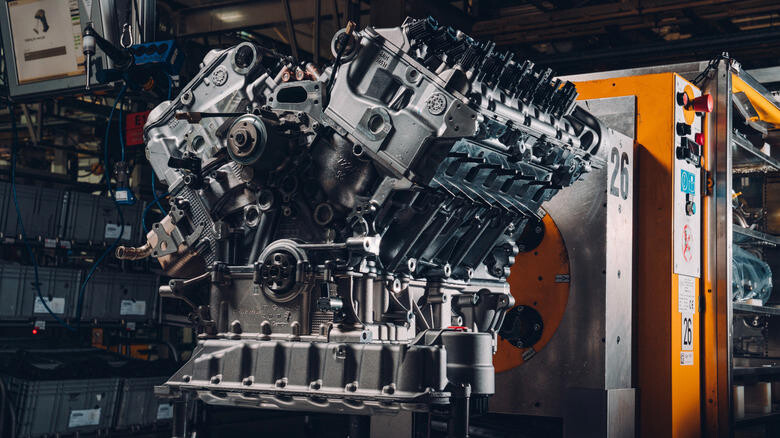
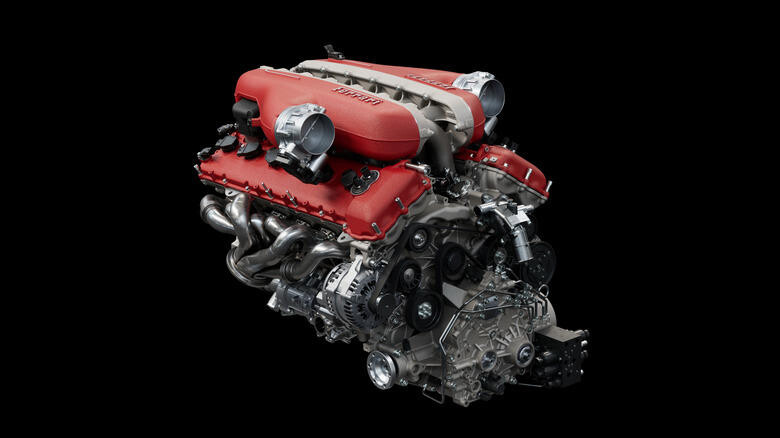
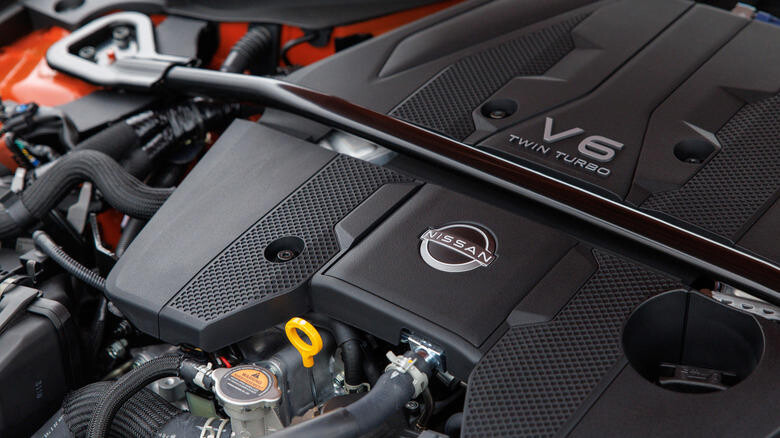
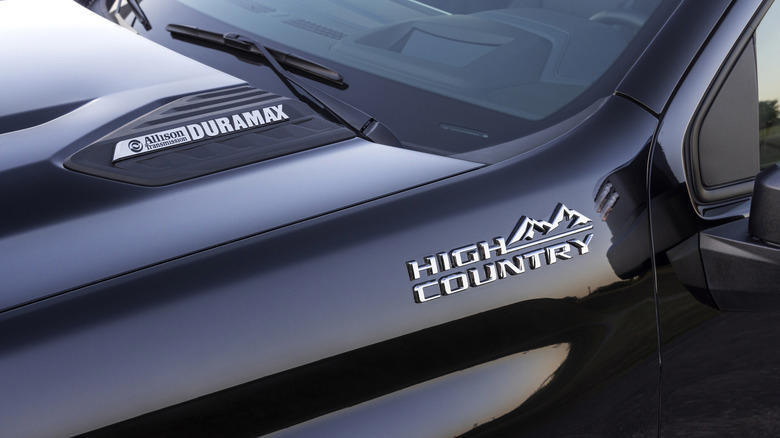
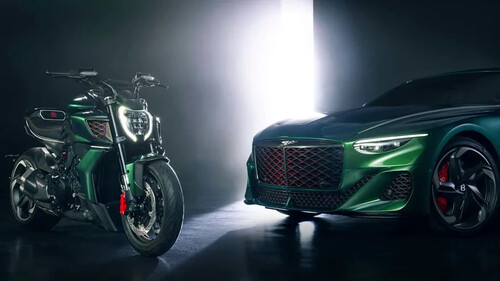
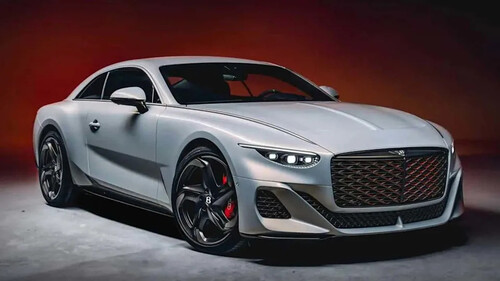
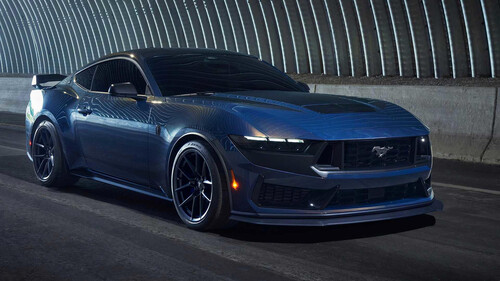
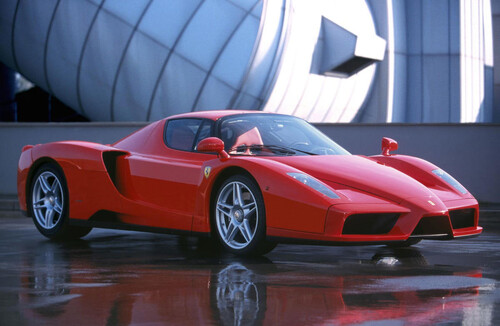
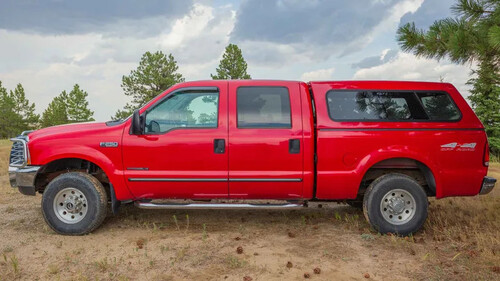
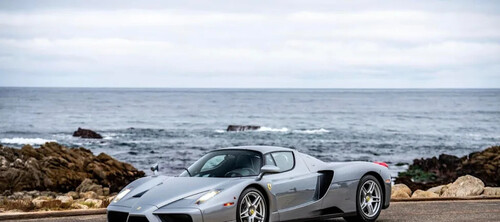
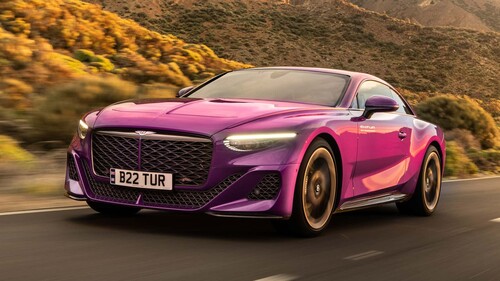
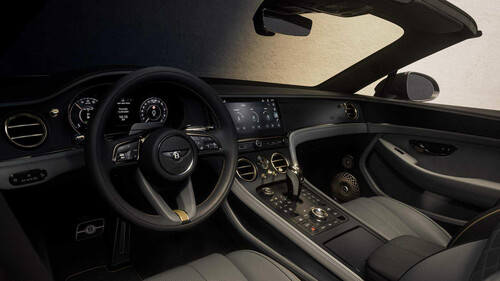
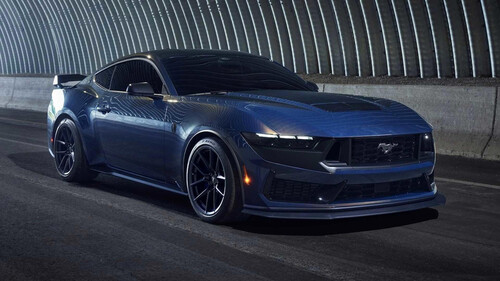
Volkswagen Group W-12: 2001The only engine here sold in a W configuration, the 12-cylinder engine that first saw production use in the 2001 Audi A8 is a modern engineering marvel. Conceived by Ferdinand Piëch, the former VW CEO and engineer with credits that include quattro AWD and the first five-cylinder gas engine, the W-12 is effectively a pair of Volkswagen VR6 engines with a common crankshaft. Due to the narrow-angle of the donor VR6s, the W-12 was relatively compact and plenty powerful.Along with the A8, VW put the W-12 in its Phaeton sedan. This interesting luxury-adjacent experiment shared a platform with the Bentley Continental GT and, in W-12 spec, put out 420 horsepower and lb-ft of torque. There was even a time when the Touareg SUV could be had with a W-12, but it is arguably Bentley that receives the most attention for use of Volkswagen's W-12. First arriving in this luxury liner for 2003, the 2025 Bentley Batur keeps the 12-cylinder torch alive.Stretching the definition of a production car as only 16 hand-built examples will be made, the Batur boasts the most potent version of the W-12 ever. With six liters of displacement and a pair of turbos, there is an eye-popping 740 horsepower and 740 lb-ft of torque on tap from Bentley's shrine to automotive outrageousness. Considering the estimated $2.1 million price tag, perhaps that's a given, but we're really here to bask in the glory of the long-running W-12 engine.Ford Modular V8: 1991Considering Ford's Modular V8 family of engines has seen SOHC and DOHC configurations with two, three, and four-valve heads, natural aspiration and forced induction, and even V10 designs, it's safe to say this V8 is aptly named. Plus, it powers the Mustang GT, a car that practically defines the Blue Oval.It began life in 1991 as a 4.6-liter two-valve V8 in the Lincoln Town Car. By the end of that decade, Ford had dropped versions of this setup into the Mercury Cougar, F150, Mustang, Explorer, and Expedition. A disparate group by any measure, but with as much as 300 horsepower in 5.4-liter spec, the Modular V8 had the makings of a success story.That story expanded into the 2005 Mustang GT with its 3-valve setup, but prior to that, there was the 1999 Mustang Cobra R with a 4-valve version of the 4.6-liter Modular V8 tuned to 385 horsepower and 385 lb-ft of torque. It was this four-valve design that would see continued use in the likes of the 2005 Ford GT mid-engine supercar and supercharged 2020 Shelby GT500 with its whopping 760 horsepower. Today, Ford's Modular V8 carries on in the Mustang GT and range-topping Dark Horse, where it's rated for a naturally aspirated 500 horsepower.Ferrari F140 V12: 2002Ferrari and V12 engines are inextricably linked thanks to legendary Ferrari engineers like Gioachino Colombo and his eponymous 12-cylinder motor. But today, we're looking at the F140 series of Ferrari V12s, an engine that first showed up in 2002 with the Enzo supercar. The most powerful naturally aspirated engine in the world at the time, this 6.0-liter beast made 660 horsepower at 7,8000 rpm and could push the Enzo to a top speed of 218 mph.Since then, the F140 V12 family has seen use in the 599 GTB grand tourer and FF shooting brake. However, it's hard to beat the current Ferrari 812 Competizione for pure F140 V12 potency. In that race-ready variant of the 812 Superfast, the 6.5-liter V12 features diamond-like coated camshafts, variable geometry inlet tracts, and a 9,500-rpm redline. Output measures 818 horsepower, and performance highlights include 2.6 seconds for the 0-60 run and a 212-mph top speed.This is impressive, but of all the F140 V12-powered Ferrari legends, the blasphemous Purosangue may be the most notable mainly because it's an SUV (though Ferrari doesn't use that descriptor for its first vehicle with four doors and four seats). Whatever you think of it, the front mid-mounted engine in the Purosangue keeps the Ferrari V12 flame-burning hot with 715 horsepower, 80% of its 528 torques available at 2,100 rpm, and the ability to sling to 60 in just 3.3 seconds.Nissan VQ Series V6: 1994Nobody would describe Nissan's VQ series of V6 engines with the same breathless prose as a Ferrari V12, but this six-cylinder mill has been quietly spinning for more than 30 years, making it one of the oldest engines still in production today. It all began with a mandate by Nissan execs to create an engine "as agile as a feather" with a "pleasant acceleration sound." Perhaps that's a bit breathless, but this is forgiven considering the VQ's staying power.Replacing the VG engine that dated to the 1980s, Nissan's VQ V6 engine arrived in 1994 with the Cefiro and Maxima. It wasn't until 1996, however, that American car buyers got to sample the goods with the Infiniti i30 sedan. Perhaps the VQ's most well-known application began with the 350Z sports car in 2003, where it displaced 3.5 liters and made 287 horsepower. Strapped with a pair of turbos, the 3.0-liter VQ V6 in the current Nissan Z boasts 400 horsepower in stock spec or 420 with the NISMO variant.It also continues to be used as a 3.8-liter V6 in the Frontier pickup truck and a 3.5-liter six-pot in the Pathfinder SUV. Of all the various vehicles Nissan fitted the VQ series engine to, the Maxima sports sedan came with one for the longest time, from 1994 through 2023. Nissan's VQ engines may not enjoy the icon status of the VR38DETT, but there's no denying this old workhorse is hard to beat when it comes to production lifetime.GM Duramax V8: 2001Over the past 20-odd years, General Motors has applied its Duramax turbodiesel engine moniker to four, six, and eight-cylinder mills, but it is the V8 variant that has been at this game the longest. Arriving in 2001 as a 6.6-liter engine, the original Duramax was born from a collaboration between GM and Isuzu. This LB7 V8 was fitted to the automaker's heavy-duty pickup trucks, where it offered 300 horsepower and 520 lb-ft of torque.As with all the engines on this list, a long production lifetime for the Duramax translated to constant improvement at the hands of GM engineers. By 2004, the 6.6-liter turbodiesel V8 was putting down more than 600 torques, and with the LML version that debuted in 2011 featuring a new high-pressure fuel pump and a variable vane turbo, output came to 397 horsepower and 765 lb-ft of twist. Today, however, the long-running 6.6-liter Duramax V8 makes the original engine seem tame in comparison.Debuting in 2017, this L5P variant swapped the Garrett turbocharger for a Borg-Warner unit, received an overhauled block, and an upgraded rotating assembly. It began life making 445 horsepower and 910 lb-ft of torque, but as of 2024, those numbers are up to 470 and 975, respectively. Guessing what's next for this venerable GM diesel V8 is hard, but here's to hoping one of the oldest engines in production continues its run of impressive performance.