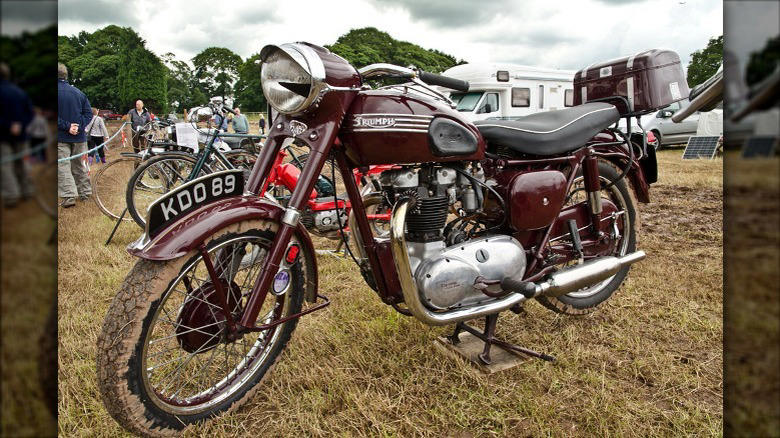
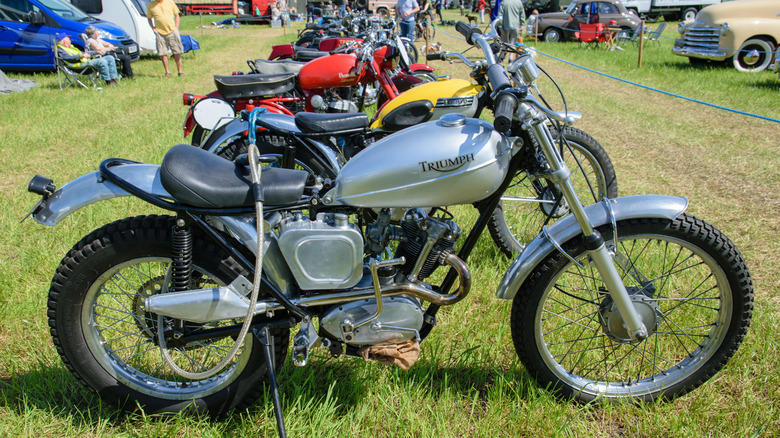
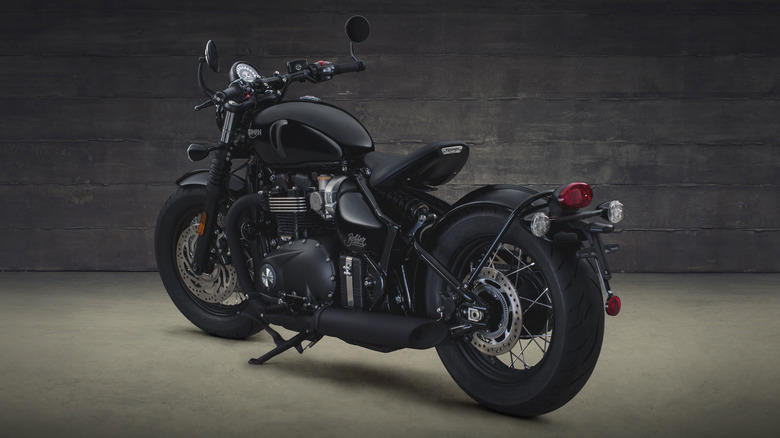
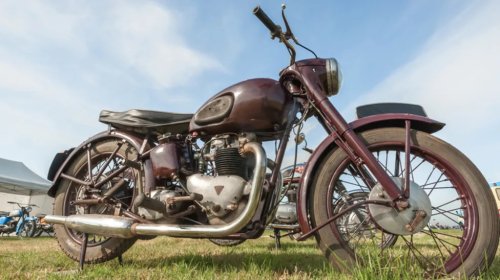
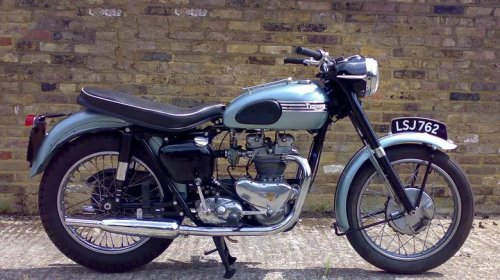
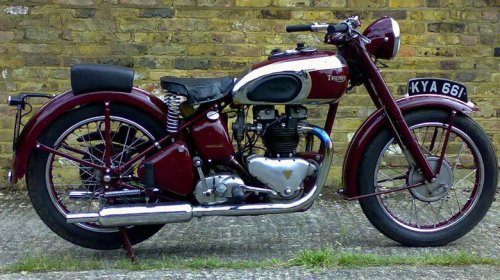
1938 Triumph Speed TwinIn the annals of British motorcycles, few are as influential as Triumph's Speed Twin 5T. Debuting in 1938, the Speed Twin ushered in the era of parallel twin engines with its 497cc, 28.5-hp twin-cylinder engine, although contemporary buyers wouldn't have known that. Designer Edward Turner intentionally made the engine look like a twin-port single-cylinder engine to avoid the wrath of conservative Triumph customers.When it debuted, the Speed Twin looked similar to its single-cylinder counterparts, with the same minimalist, spring-heavy design thanks to its seat and girder suspension. It also had the same visually pleasing proportions, looking great from almost any angle. However, what makes the Speed Twin special is the color: Triumph's Amaranth Red isn't just a beautiful color, it also set the bike apart from its stablemates, allowing it to look both retro and surprisingly modern even now.Unlike many of Triumph's pre-WWII motorcycles, the Speed Twin survived the break in production enforced by the war. It returned to the Triumph catalog in 1946, boasting new telescopic front forks and a rudimentary rear suspension system called the sprung hub. Triumph continued to build the Speed Twin well into the 1960s, although its last few years were marred by a protective steel tub covering the rear wheel. Triumph discontinued the original Speed Twin in 1966, but resurrected the name in 2019.1954 Triumph Tiger CubTriumph's post-WWII production may have focused on parallel twin bikes, but when rival manufacturer BSA succeeded with the single-cylinder Bantam, Triumph knew it couldn't ignore that part of the market. As a response, Triumph introduced the 150cc T15 Terrier in 1952 before following it up with the Tiger Cub in 1954.The Tiger Cub was a 200cc single-cylinder, four-stroke motorbike with 10 hp and a top speed of 67 mph. The Tiger Cub's four-speed transmission was built into the engine, and it sat inside an ultra-light frame with front and rear drum breaks and an integral fuel tank. It wasn't a particularly advanced bike, but contemporary reviewers praised its suspension and engine, which, coupled with its low price, made the Tiger Cub a hit at home and abroad.Triumph produced the Tiger Cub for nearly 15 years, with the last models rolling out of the factory in 1968. Across that production span, Triumph made several versions of the Tiger Cub, all sharing the base Tiger Cub's minimalist cool — although the Cub wasn't immune to the strange rear tub craze, with one introduced to the bike in 1958. All the non-enclosed Tiger Cubs look great, but our vote for the best-looking Tiger Cub model is the TR20 Trials Tiger Cub. The Trials takes the Tiger Cub formula but elevates it with knobby tires, a clean silver finish, and high exhaust — all very practical, but also very cool.2017 Triumph Bonneville BobberTriumph's decision to resurrect the Bonneville was a huge success, helping the brand become the best-selling European marque in North America for the first few months of 2016. So it wasn't surprising that Triumph decided to expand the nameplate into then-unseen territory in 2017 with the Bonneville Bobber.The Bonneville Bobber shared the Bonneville T120's 1,200cc engine, but with a Bobber-specific tune that increased horsepower output and torque in the low rev range. The Bobber made 76 hp and 78 lb-ft of torque in its first year, with no real changes in the years since — not that it needed more power, mind you. Reviewers enjoyed the engine, with its low-end power emphasizing the bike's cruiser mindset — even if the riding position was a bit too sporty for its own good.Enough about the engine, though: Let's talk about the looks. The Bonneville Bobber has to be one of Triumph's best-looking modern motorcycles, combining Triumph's racer heritage with genuine bobber goodness. The hanging one-rider seat, bobbed fenders, and high-profile tires all scream cruiser — as does the one-headlamp front end — but the Bonneville Bobber retains that inimitable Triumph style, albeit in an even more minimalist fashion. All of these design features looked especially great on 2018's Bonneville Bobber Black, which was a mean, blacked-out take with an even thicker front wheel and bigger Showa shocks up front.