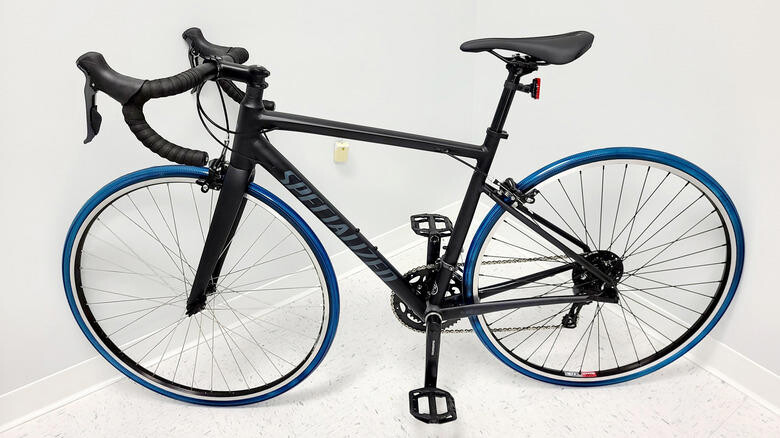
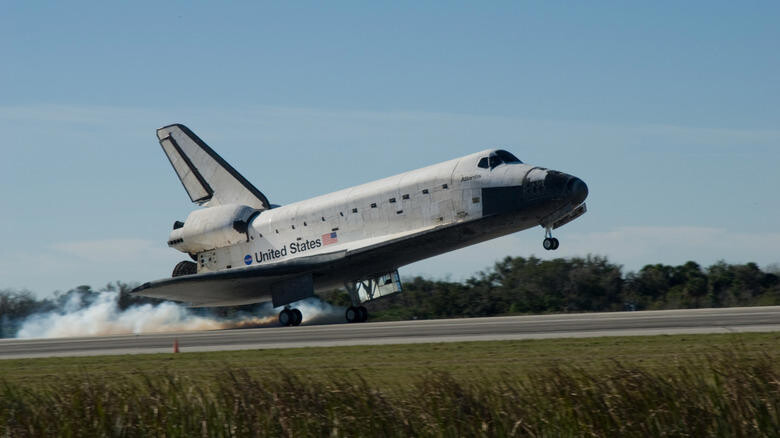
Cycling's cosmic revolutionWhat do you get when you mix NASA tech with your weekend ride? Airless bike tires tough enough for Mars, yet flashy enough for Earth. The Smart Tire Company's Kickstarter promised just that: NiTinol+ tires made from a shape-memory alloy that bends like rubber but bounces back like titanium — perfect for potholes, gravel, and whatever adventures you can cook up.Backers had a few options. If you wanted to keep it simple, a $250 pledge got you two Smart tires (no rims, easy DIY install required). But if you wanted the full cosmic flex, you could grab a pre-assembled package: $1,300 for an aluminum setup or $2,300 for carbon fiber rims, colorful ORBT re-treadable treads, and the quiet satisfaction of owning something designed with Mars in mind. And if you really wanted to go interstellar? A $10,000 pledge got you a golden ticket: A private virtual tour of the Smart Innovation Lab in Ohio, complete with behind-the-scenes access to the company's NASA projects and enough aerospace buzzwords to make your head spin.Unfortunately, those tires are still somewhere in orbit. While early supporters wait for delivery day, Smart Tire's been perfecting its design and hunting down exotic metals pure enough to star in a sci-fi movie. Reinventing the wheel, it turns out, isn't exactly an overnight job. The final tires are shaping up to be lighter, stronger, and longer-lasting than anyone expected, but your patience might wear out before your old treads do.Engineered for re-entrySpace shuttle tires might look like something you'd slap on a heavy-duty truck, but their price tag tells a very different story. Each space shuttle tire costs $5,560. And if you think that meant years of service, think again. Most of these tires are one-and-done, built to survive a single brutal landing from orbit. No second chances. Just one glorious moment of truth. They're worth every cent, too. Each tire has to handle the impact of a 150,000-pound spacecraft slamming into the runway at up to 260 mph. And that's after re-entering Earth's atmosphere and transitioning from -40-degree Fahrenheit space temperatures to 130-degree Fahrenheit runway heat in a matter of minutes. Not exactly an easy life for a piece of rubber.The NASA Shuttle's six-tire setup includes four main gear tires that take the brunt of the abuse, and two nose tires that occasionally squeaked by for a second landing if the universe feels generous. Even with that tiny discount, each mission still burned through $27,800 worth of rubber. And NASA couldn't just Amazon Prime these when they ran low. Each replacement tire took several months to arrive, turning logistics into a high-stakes game of chess where every pawn cost as much as a used Honda.A mining behemoth's rubber shoesWhen you're hauling nearly 400 tons of rock, dirt, and dreams, nothing about the price tag is going to be small, including the tires. The Caterpillar 797B mining truck rolls on Michelin 59/80R63 monsters, each standing a whopping 13 feet tall and weighing in at over 11,000 pounds combined. How much for these rolling giants? Could you believe it's up to $59,000 per tire? And the 797B doesn't just need four like your average pickup truck. It needs six — two up front, four in the back — totaling about $354,000 just in rubber to get fully outfitted for a day's work. But the price isn't just about size. These tires are built to take punishment that would destroy regular tires in seconds. They chew through jagged rocks, plow through knee-deep mud, and handle speeds up to 42 mph while carrying more weight than a fully loaded 747. The secret? Special heat-resistant rubber, ultra-tough construction, and engineering that could probably survive a nuclear blast.What softens the sting for mining companies? Michelin promises these tires can carry 10% more weight yet still last longer than older models. And when your truck costs up to $5 million and gulps fuel faster than a private jet on a bender, squeezing every extra ton of payload out of every trip means more profit, period.Built for landing at 150 knotsLanding an F/A-18 Super Hornet on a moving carrier is less "smooth touchdown" and more "brace for impact." The wheels and tires take the worst of it, pulling hero duty until they inevitably break. It's no surprise, then, that the Navy doesn't bother with simple tire changes. When a Super Hornet lands hard enough to warp its wheels (a pretty regular thing), maintenance teams replace the entire wheel and tire assembly. Price tag? A cool $100,000 per unit.With 166 replacements needed annually, a Navy's fighter jet footwear budget hits $16.6 million. That's enough to buy several Lamborghinis, all spent on keeping the Hornets from doing horrifying belly flops into the Pacific. The plot twist? Those discarded wheels aren't actually trash, just slightly misshapen from absorbing impacts that would flatten your car like a pancake. Fortunately, there's a solution on the horizon.Thanks to new cold spray 3D printing tech, the Navy doesn't have to junk expensive Super Hornet rims anymore. Instead, it can fix them up for just $300 a pop. The best part? The repaired wheels are just as strong as brand-new ones, saving 99.7% of the cost without sacrificing an ounce of performance. According to early reports, up to 80% of rims could be salvaged with this method, turning what used to be a $16.6 million problem into a bill barely topping $50,000 a year.