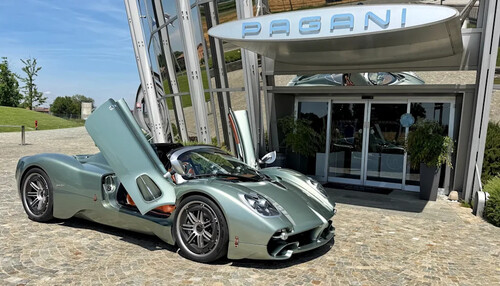
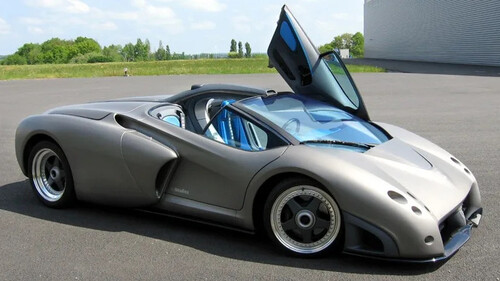
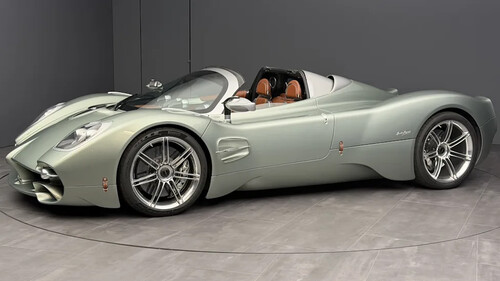
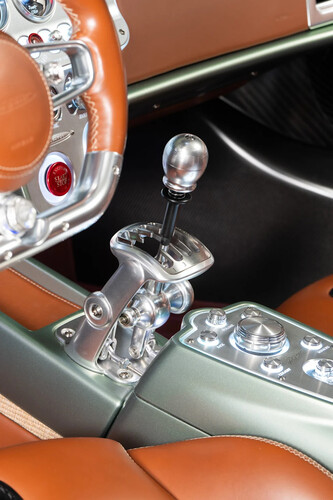
Charlotte Moreau · 5 months ago@charlottemoreau65This $14 million Pagani Zonda is one of the most expensive manual hypercars ever Liked by+49 othersPost commentRelated Posts5 Modern Supercars That Would Get Beaten By A Quad-Motor Rivian R1T Pickup Truck To 60 35 · Amelia Hill · 3 months agoRacing legends – and controversial Ferrari – up for auction in Monterey 69 · Justin Leblanc · 2 months agoLionel Messi's Garage Has a Rumored $35 Million Ferrari and a Kid-Hauling Escalade 57 · Ryan Johnson · 3 months agoPagani’s £120,000 Secret: The Hypercar’s Nuts and Bolts Cost More Than a Porsche 911 91 · Daniel Nelson · 2 months agoLionel Messi’s Car Collection: The Supercars, SUVs, And Rumors Behind The Football Legend’s Garage 12 · Zoë Clark · 4 months agoPagani’s Titanium Bolts Cost More Than a Brand-New Porsche 911 48 · Samuel Lee · 2 months ago15 athletes with car collections that are almost as impressive as their careers 82 · Adam Côté · 4 months agoA Pagani’s Bolts Alone Cost More Than A New Porsche 911 24 · Justin Leblanc · 2 months agoThe 6 most overlooked exotic cars of the ’00s 19 · Nicole Poirier · 4 months agoRiding With Pagani’s Test Driver in a Utopia Roadster Ruined Me for Life 62 · Claire Macdonald · 2 months agoLionel Messi Car Collection: A Look Inside the Soccer Icon’s Garage 32 · Zoë Hall · 4 months agoHennessey Teases Project Overlord As The "American Carrera GT" 56 · Carter Smith · 2 months agoThe forgotten German hypercar created to outrun the McLaren F1 57 · William King · 4 months agoThe Countach 25th Anniversary Wasn't Supposed to Be a Collector's Car. This 379-Kilometer Euro Example Argues Otherwise. 81 · Gabriel Moreau · 3 months agoThe Mercedes sedan history almost forgot entirely 91 · Chloé Morgan · 4 months agoThis Is The World’s First Huayra Roadster With A Third Pedal 70 · Amélie Tremblay · 3 months agoF1 star was just spotted driving his $11.7M supercar through Monaco 14 · Grace Rogers · 4 months agoYou May Guess Ferrari, Maybe Lamborghini, But This Was The Last Gated Manual Sports Car 84 · Abigail Lavoie · 3 months agoFernando Alonso Spotted Cruising in New $11.7M Pagani Zonda Ahead of Monaco Grand Prix 68 · Oliver Smith · 4 months agoThese Are the Most Powerful Cars You Can Still Buy With a Manual Transmission 55 · Ava Scott · 3 months ago




 +49 others