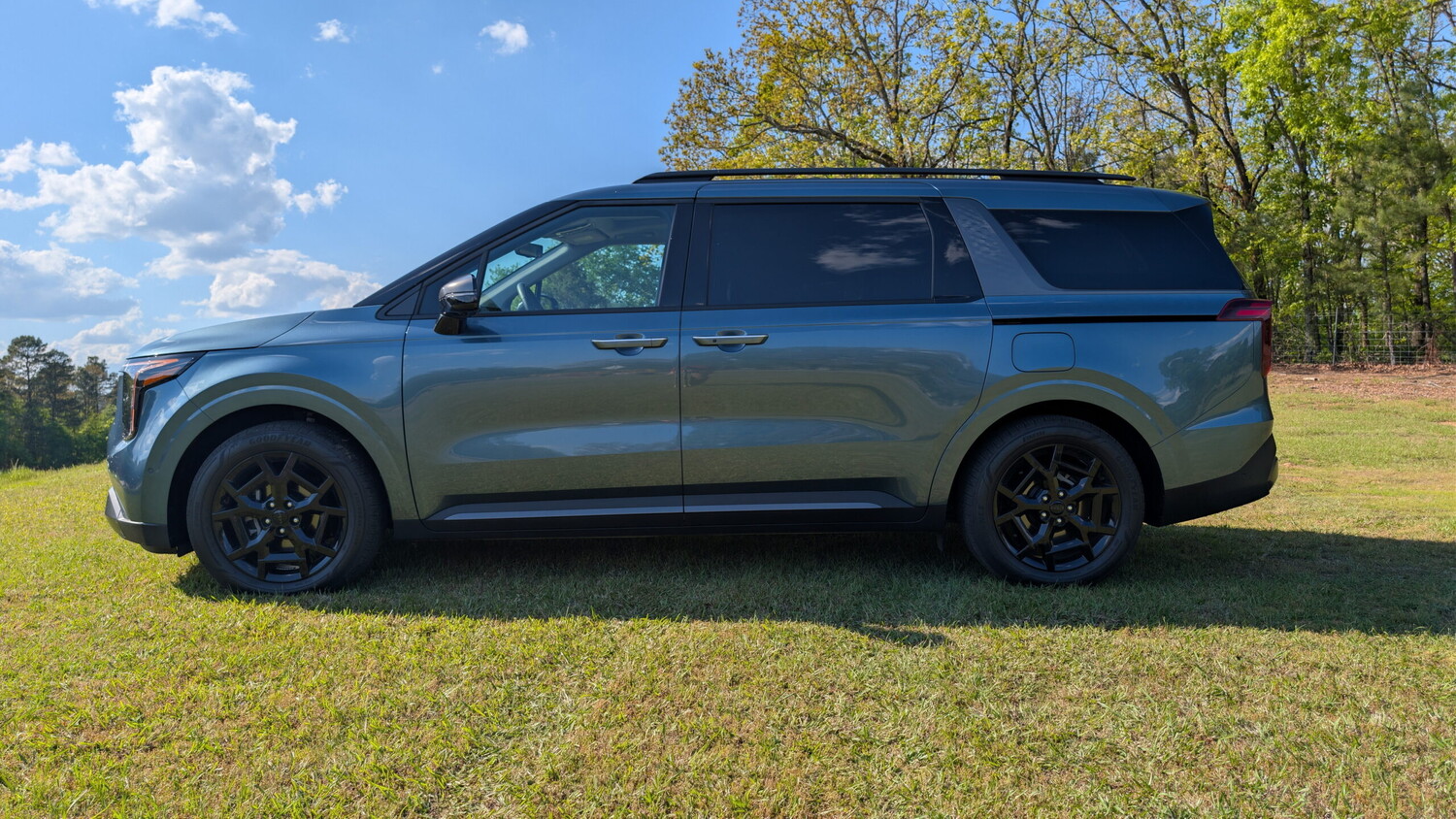
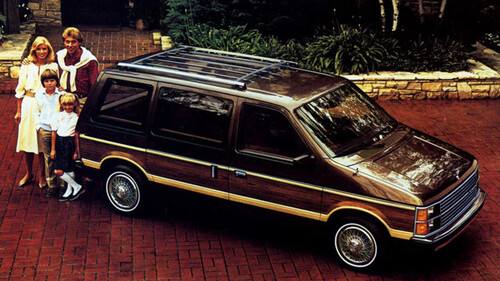
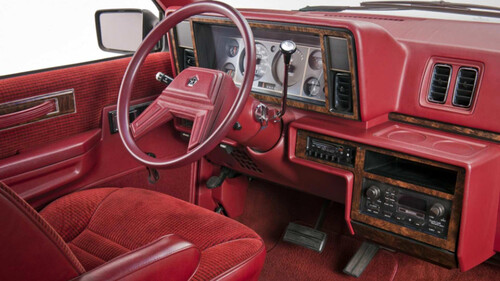
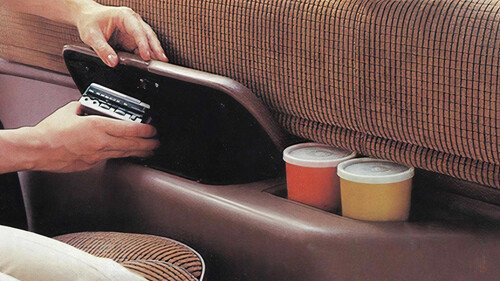
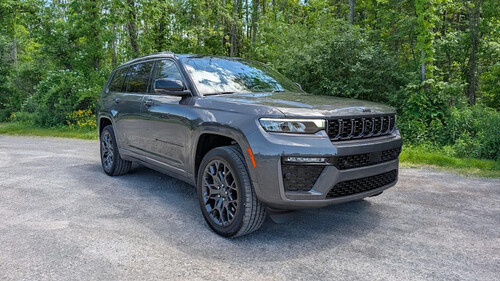
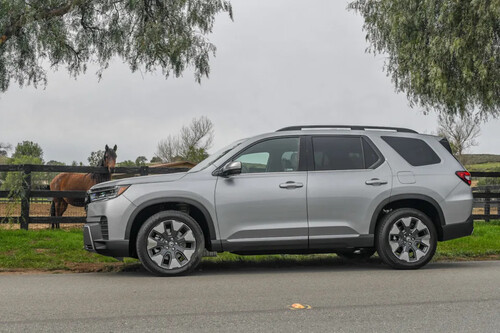
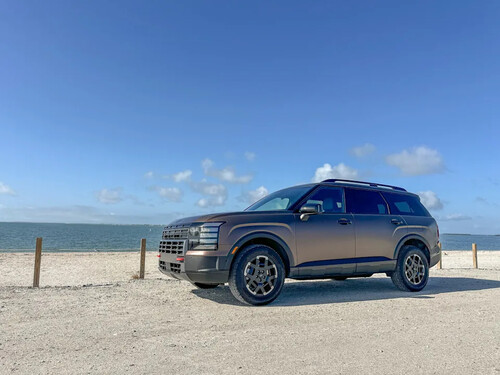
PROS ›› Stylish design, excellent tech, solid fuel economy, high-quality cabin, strong warranty coverage CONS ›› Frustrating climate controls, impractical lounge seats, less cargo space than top rivals There’s a strange badge of honor in America where people will happily spend $60,000 on a three-row SUV just to avoid admitting they need a minivan. That’s disappointing. Because for all the image management wrapped up in something like a Ford Explorer, Toyota Grand Highlander, or Chevrolet Traverse, most families aren’t actually using those vehicles for rugged adventure. They’re doing school drop-offs, road trips, Costco hauls, airport pickups, soccer practice, and the occasional desperate attempt to keep children from touching each other for six straight hours on the interstate. I wouldn’t personally know anything about that last one, but judging by every road trip story I’ve ever heard from parents, it seems to be a full-time occupation. That’s exactly where something like the 2026 Kia Carnival Hybrid lives. Kia still insists on calling it an MPV instead of a minivan. Read: Kia Sets A Sales Record, But EV Numbers More Than Halved Nevertheless, let’s not pretend that this is some wildly unique segment. It’s a minivan. It has sliding doors (that are wildly practical). It prioritizes people over image (though it’s not bad at the latter). And frankly, it’s probably a smarter package than most of the SUVs in your neighborhood. QUICK FACTS › Model:2026 Kia Carnival Hybrid› Price:$37,390-$53,490 + $1,545 destination (not including options)› Dimensions:203.0 in (5,156.2 mm) L x 78.5 in (1,993.9 mm) W x 69.9 in (1,775.5 mm) HWheelbase: 121.7 in (3,090.2 mm)Ground Clearance: 6.8 in (172.7 mm)› Curb Weight:4,852 lbs (2,201 kg)› Powertrain:1.6-liter four-cylinder hybrid› Output:242 hp (180 kW) / 271 lb-ft (367 Nm)› Transmission:Six-Speed Automatic Transmission› Fuel Economy:Combined/City/Highway: 32/34/31 mpg*› On Sale:Now*EPA Estimate SWIPE The bigger question is whether that practicality comes at the expense of everything else. Can something designed this heavily around family duty still feel premium, look good, and avoid becoming a soulless appliance? After 1,573 miles from Little Rock to Knoxville and back, the answer gets a lot more interesting. Hiding The Minivan In Plain Sight Photos Stephen Rivers for Carscoops When we reviewed the Carnival in 2024, it looked good, but a refresh was already on the way. Last year, we enjoyed that new face, and thankfully, nothing changed for 2026. This still looks far more like a three-row SUV than a traditional minivan, and that matters whether enthusiasts want to admit it or not. Buyers care. The squared-off proportions, sharp front-end treatment, black wheels, and strong shoulder line help it avoid the anonymous blob styling that defines too many family haulers. Compared to the Toyota Sienna, Honda Odyssey, and Chrysler Pacifica, the Carnival is easily the most modern and cohesive design to my eyes. It doesn’t scream “I gave up and bought a van.” That matters, but what truly matters most is what’s on the inside. Why The Inside Wins The cabin of the Carnival is Exhibit A as to why minivans make so much sense. In a big three-row SUV, the driving position might seem like a great place to be but it often feels akin to commanding a small barge. In the Carnival, it simply feels like driving a people mover. Visibility is excellent, for example. The control surfaces are well laid out, easy to navigate (with one caveat we’ll come back to), and there’s tons of space. The Carnival is mostly made up of harder plastics that don’t feel super premium but are on par with what buyers will find in rival minivans. Most importantly, almost none of it feels especially cheap, while almost all of it feels ready to stand up to whatever oblivious children might dish out at it. Those (almost) are doing a lot of heavy lifting for the piano black plastic that still plagues little bits of the cabin. The sooner Kia ditches it, the better. The second-row lounge chairs, which are optional, are still one of the coolest features in the segment. They feel legitimately premium, with heating, ventilation, extendable leg rests, and enough adjustability to make long-distance travel feel first class. If you’re usually traveling with four people or fewer, they’re fantastic. But there’s a catch, and it’s sort of a big one. To fully use them, the third row basically becomes pointless. They also make ingress and egress of the third row far less convenient. If you regularly haul six or seven people, skip them. If your family road trips look more like four adults and luggage, they’re brilliant. The third row isn’t what I’d call spacious for an adult over 6 feet tall, but everyone else will love it, provided that the second-row folks haven’t scooted all the way back. Third-row occupants get their own individual power outlets, cupholders, and storage cubbies. Behind the third row is a deep space for cargo and up to 40.2 cubic feet to stow stuff. Photos Stephen Rivers for Carscoops Fold the third row flat into the floor, and cargo space jumps to 86.9 cubic feet. Those with the second row bench can flatten it to gain up to 145.1 cubic feet of cargo space. That’s a big reason why minivans keep making more practical sense than three-row SUVs. A Ford Explorer might look tougher in the school pickup line, but it’s not carrying seven people and a Costco run this easily. Where The Tech Goes Sideways Kia packs the Carnival full of technology throughout the vehicle to improve the experience. It’s almost all a big win, but let’s start with the one notable downside. The climate and media controls are still baked into a single capacitive panel where users must flip between each function. There is enough room for separate controls, and other Kia products already have physical switches for these same functions. Instead, you’re constantly switching between media and climate functions like it’s some kind of design exercise nobody asked for. Sometimes I’m trying to adjust volume and accidentally change cabin temperature instead. It’s just dumb. More: Mercedes Heard ‘Too Many Screens’ And Built A New C-Class That’s One Giant Screen Thankfully, it’s really the only drawback to this minivan in terms of technology. For example, the rest of the switchgear is great. The buttons on the steering wheel provide good feedback. Both the front and second-row occupants get physical switches for seat heating and ventilation. Second-row passengers also get physical seat controls, USB charging ports, a household-style 115V/100W outlet that can even handle some gaming laptops, and a 12V 180W outlet. There are two more of those same 12V outlets in the rear cargo area. Add the bright, wide rear entertainment screens with Netflix, YouTube, and the included remote, and it’s hard not to be impressed. Refinement Over Excitement On The Road It’s good. No, it’s not particularly engaging, and using the word ‘fun’ to describe driving a minivan would be an outright lie. But among minivans, it’s one of the best-driving options available. The steering is light without feeling overly numb. The pedals offer excellent feedback. Visibility is outstanding. The hybrid system is smooth, and the six-speed automatic blends into the background the way one wants in a vehicle like this. What impressed me most over this trip wasn’t outright acceleration or handling. It was refinement. The biggest strength here, beyond admirable fuel economy, is the driver assistance tech. No, it’s not Super Cruise, BlueCruise, or full self-driving anything. But Kia’s lane tracing, adaptive cruise control, throttle management, and braking calibration are excellent. It’s smooth. It’s intuitive. It communicates clearly when you need to intervene. And it’s incredibly easy to trust on long highway drives. That matters because it makes every trip on the highway less stressful. We averaged 28.5 mpg over 1,573 miles while running at the speed limit (or slightly above it…) the whole time. That’s not quite the EPA estimate of 32 mpg combined, but for something this spacious and comfortable, it’s still impressive. Toyota still wins the efficiency war with the Sienna and its available AWD, with up to 36 mpg combined. But the Carnival feels more polished in a lot of daily interactions. Competition And The Case Against SUVs The minivan segment is refreshingly simple. The Toyota Sienna wins on efficiency and offers AWD. The Honda Odyssey remains one of the best-driving vans and feels wonderfully natural on the road. The Chrysler Pacifica offers plug-in hybrid flexibility and excellent comfort, but is extremely long in the tooth. The Carnival? It does almost everything very well while looking better than all of them. And frankly, compared to just about any three-row SUV, this makes even more sense. At $57,865, it delivers more interior comfort, more usable space, better fuel economy, and arguably a better daily ownership experience. Unless you truly need more towing capacity or the ability to go off-road, the SUV argument gets shaky fast. The Sticky Safety Conversation Minivans are in a weird place when it comes to safety. One might logically assume that they’re the safest mode of transport on the road since clearly, they’re made for families, often with small children. Sadly, all of them seem to have at least one safety issue or another. For 2026 IIHS testing, the Sienna and Odyssey perform better overall. The Sienna earns stronger marks and qualifies higher in current testing, while the Carnival posts Good scores in the small overlap front test, Marginal in moderate overlap front, and Acceptable in side impact, with Acceptable headlight performance. That doesn’t make it unsafe; it just means Toyota currently has the stronger scorecard. Final Thoughts The 2026 Kia Carnival Hybrid SX Prestige is the kind of vehicle people buy after finally admitting they were shopping for the wrong thing. It’s comfortable, practical, efficient, surprisingly premium, and genuinely enjoyable to live with. It makes most three-row SUVs feel like expensive compromises designed around image rather than usefulness. Yes, the climate controls are annoying. Yes, the lounge seats are only great for specific buyers. Yes, Toyota still wins the fuel economy crown. But overall? This was an excellent way to travel. For $57,865, it feels like one of the smartest family vehicles on sale today. And if buyers could get over the stigma attached to minivans, a lot more of them would realize that, too. The Carnival doesn’t just make a case for itself. It makes a case against practically the entire three-row SUV segment. Photos Stephen Rivers for Carscoops