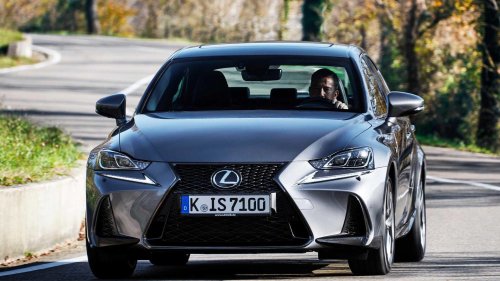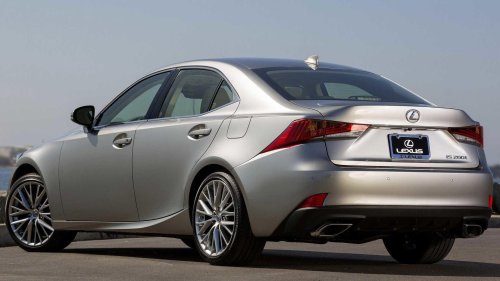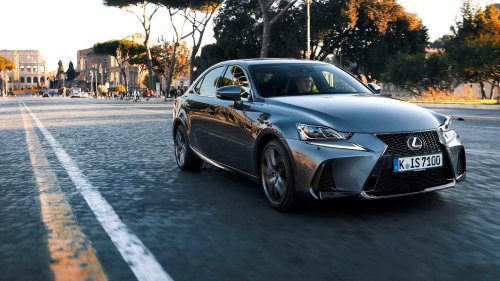




























When the Honda Insight and Toyota Prius set the hybrid vehicle in motion, many companies jumped on the wagon, with various degrees of success. Despite their lofty ambitions, not every hybrid was a Prius, and in fact some were little better than a Saturn Vue Green Line … “A what”, you ask? Exactly. Early hybrids were as much test mules as they were shining new stars; as much marketing experiments as they were brand enhancers. But they all offered a path forward from dwindling reserves of natural resources.The technology was new, customers were intrigued, rewards were promising, and for a while, everybody and their uncles began making hybrid versions of many vehicles. Some developed different personalities and some learned from their early failures and evolved into fine hybrids. Others, like some of the models listed below, shone brightly for a quarter-hour before driving off into the sunset. Many were bold attempts. Some were innovative, and their sacrifices paved the way for superior vehicles. Some became niche vehicles that drew cult followings. Others were just too ... off. There are others, and probably will be many more to follow in the coming years, but here’s our look at self-charging hybrids you may have forgotten about.To give you the most up-to-date and accurate information possible, the data used to compile this article was sourced from various manufacturers and other authoritative sources, including KBB and the EPA. The models below are presented in no particular order. 2014–2016 Subaru XV Crosstrek Hybrid The First Subaru To Utilize Hybrid Tech Subaru The Subaru XV Crosstrek was introduced in 2014 as an off-road variant of the Impreza, which had already established itself as a compact hatchback and sport compact, and had attempted a rugged off-road variant. Subaru also had a burgeoning partnership with Toyota, which by this time had achieved hybrid success. Yet, Subaru decided to go it alone.Compared to the standard Crosstrek, the hybrid offered negligible efficiency and marginal performance gains for the 2.0-liter boxer engine, and actually reduced driving range by swapping in a battery and smaller gas tank. The Subaru XV Crosstrek Hybrid was a disappointment, compared to rivals, but none matched its AWD and off-road prowess. 2016 Nissan Murano Hybrid Potentially Good Hybrid Didn’t Have Marketing Push Nissan The 2016 Nissan Murano Hybrid was a one-and-done experiment that quietly slipped into the midsize crossover segment with little fanfare but loads of ambition. It seemed Nissan was headed in the right hybrid direction, after five years of Altima sedan and two Pathfinder SUV model years, but Nissan then basically abandoned the technology.The 2016 Nissan Murano Hybrid’s claim to fame was cranking out V-6-like power from an inline-four, but its new powertrain didn’t match that of the V-6 Murano, which cost considerably less. Efficiency was significantly improved from non-hybrid Muranos, but the supercharged powertrain’s enhancements did little to boost the model’s image. 2009–2011 Mazda Tribute Hybrid Re-Badged Ford Escape Hybrid Didn't Last Long Mazda The Mazda Tribute Hybrid only stuck around for a couple of years, despite being derived from the Ford Escape Hybrid, which is the longest-running hybrid SUV in the industry, launching in 2005. Mazda sold the hybrid version of the Tribute compact SUV in limited markets like California, strictly as a compliance vehicle to meet CAFE requirements.The Mazda Tribute Hybrid used the same Toyota-developed hybrid powertrain as the Ford Escape Hybrid, and its efficiency numbers are identical. Its efficiency is also far superior to that of the 2.5-liter automatic Tribute at the time. After its demise, it took Mazda about a decade before getting back into the hybrid game. 2013–2014 Acura ILX Hybrid Acura’s First Hybrid Offers Luxurious Efficiency Acura The Acura ILX came about as a result of the Canada-only Honda Civic derivatives— the Acura EL, followed by the Acura CSX—when the Civic (then Canada’s top seller) was built in Canada. To attract a younger clientele, the new Civic-based ILX was launched for 2013, and brought along a hybrid based on the increasingly popular Civic Hybrid.The Acura ILX stuck around for nearly a decade, but the ILX Hybrid never really caught fire, probably due to its small, anemic engine, and it faded away after a couple of years. The Acura ILX Hybrid remains one of only two Acura hybrid sedans, and despite its excellent Honda pedigree, it didn’t align with Acura’s sports-luxury image. 2013–2016 Audi Q5 Hybrid Audi’s First Production Hybrid Audi The 2013–2016 Audi Q5 Hybrid Quattro was Audi’s first production hybrid SUV, arriving just as luxury automakers were beginning to make inroads into the high-volume crossover segment. The hybrid variant of the Q5 only lasted a couple of model years, but it paved the way for bigger and smaller Audi Qs to become more efficient without losing their off-road cred.The first Audi Q5 Hybrid used Volkswagen’s revered 2.0T four-cylinder engine to put out reasonable horsepower and overachieving torque—more than the Q5’s standard 3.2-liter V-6 offered at the time. The main criticism of the system was limited all-electric range and efficiency, which was better than the non-hybrids, but only barely. 2011–2015 Volkswagen Touareg Hybrid First Volkswagen Hybrid Set Up Porsche Cayenne Hybrid Volkswagen The Volkswagen Touareg Hybrid was VW’s take on combining off-road performance with on-road efficiency in the company’s signature SUV. Its claim to fame was raw power—offering V-8-level performance from the V-6 setup. It signaled VW’s interest in electrification, but the big takeaway was that it promoted electrification in the Porsche Cayenne.The Volkswagen Touareg Hybrid took a supercharged V-6 and boosted it with an electric motor to prioritize muscle over mileage. The Touareg Hybrid flirted with 0–60 times in the six-second range, which was remarkable (and still is) for that size SUV. The trade-off was mediocre efficiency that was barely better than the non-hybrid Touareg. 2010–2011 BMW ActiveHybrid X6 First BMW Hybrid, World’s Most Powerful Hybrid SUV BMWBy many accounts, the BMW ActiveHybrid X6 wasn’t a great hybrid, but it was BMW’s vision of bringing fuel-economy to big, brutish machines. Its claim to fame was in helping to create much better hybrids in the ActiveHybrid 3, ActiveHybrid 5 and ActiveHybrid 7, all of them benefiting from the brute power that motivates BMW's dynamic performance.The BMW ActiveHybrid X6 used a system co-developed with GM and Daimler, specifically intended for large bulky vehicles. In the BMW X6, the awesome power and torque of the electrically boosted twin-turbo V-8 translated into sub-5.5-second 0–60 mph times (quicker than many sports cars of the time) and the delicate efficiency of a sledgehammer. 2010–2012 Lexus HS 250h Lexus’ First Dedicated Hybrid Lexus The Lexus HS 250h was Lexus’s first dedicated hybrid-only model, positioned between the IS and ES in size and price. Intended to appeal to eco-conscious luxury buyers, it tested the luxury segment as a Lexus-ized Prius, but it was Toyota-bland and luxury buyers preferred eco options for the vehicles they had come to love.Using the Toyota Camry Hybrid’s powertrain at the time, the Lexus HS 250h was the most fuel-efficient luxury sedan on the market when it launched. But launching wasn’t its strong suit and its smooth, uninspired acceleration set it against a growing luxury dynamic that expected a balance between efficiency and performance. 2010–2013 Mercedes-Benz S 400 BlueHYBRID First Lithium-Ion Battery In A Mass-Production Car Bring A Trailer The 2010–2013 Mercedes-Benz S400 BlueHYBRID was not just the first production hybrid from Mercedes-Benz, it was also the first mass-produced car to use a lithium-ion battery. It was the entry point to the Mercedes-Benz S-Class and marketed as an environmentally responsible take on full-size ultra-luxury, at a time when hybrids were mostly economy cars.The Mercedes-Benz S400 BlueHYBRID’s powertrain improved efficiency compared to the S-Class’ V-8, but it wasn’t good and fell way short of what diesels were accomplishing at the time. The electric assist was only available at low speeds, making it more efficient than competitors like the Lexus LS, but lacking the power expected from Mercedes-Benz. 2009 Dodge Durango Hybrid HEMI Hybrid, Only Nine Built Stellantis The 2009 Dodge Durango Hybrid was born from a partnership between Chrysler and GM to co-develop a full-size SUV two-mode hybrid system (which also made it into the Chevy Tahoe and GMC Yukon). A kind of afterthought to the Chrysler Aspen Hybrid, it launched as Chrysler was shuttered during the Great Recession.On paper, the Dodge Durango Hybrid had its stuff together, but its timing couldn’t have been worse. It delivered power to retain its 6,000-pound tow rating (impressive then, and now), and returned long range and decent economy for a full-size, body-on-frame truck. The heavier and less-impressive GM SUVs stuck around longer.