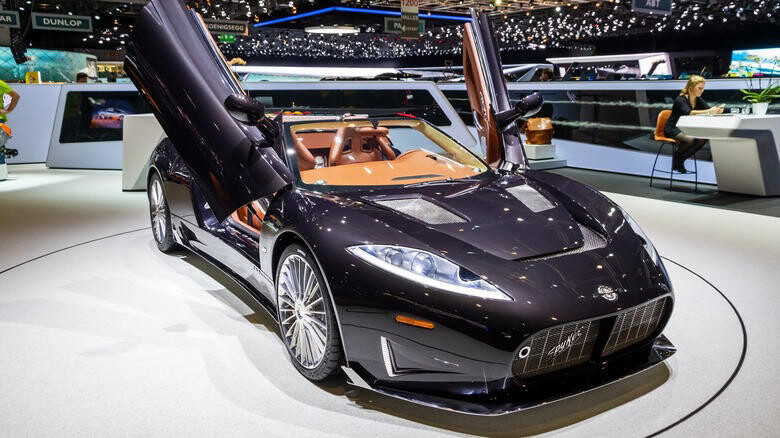
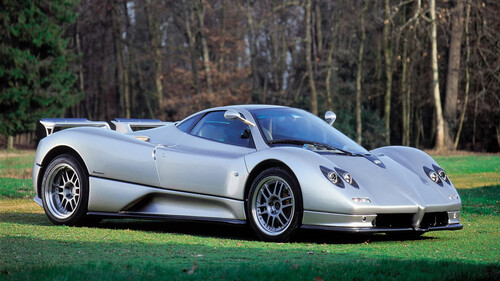
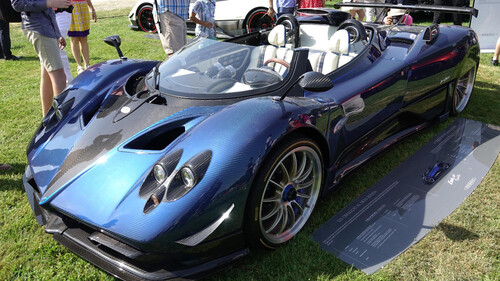
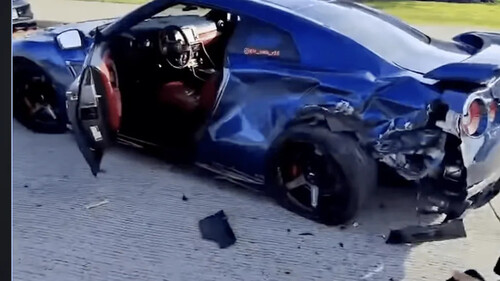
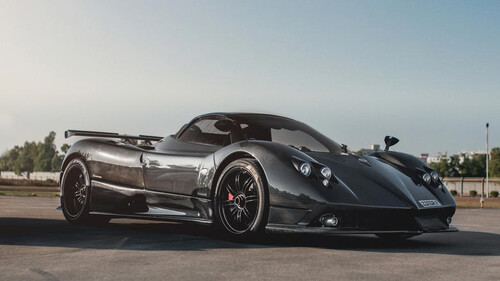
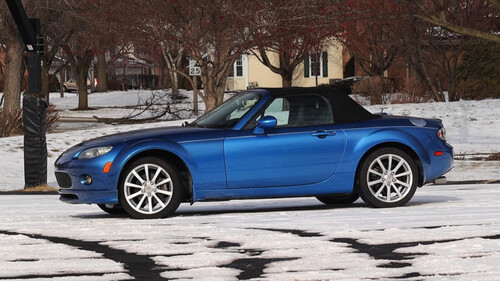
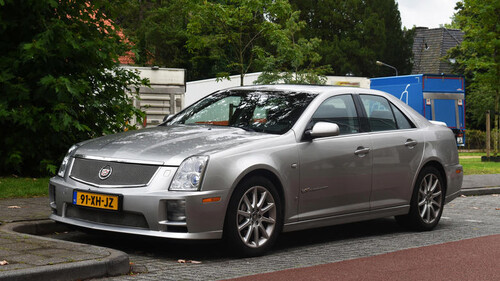
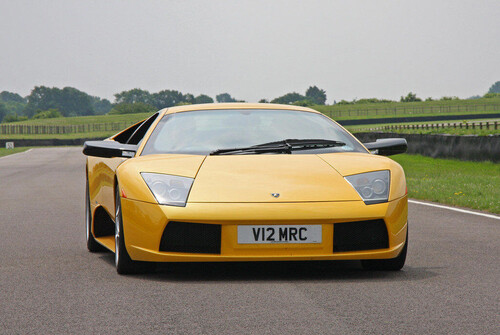
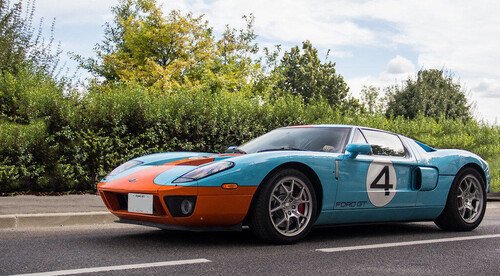
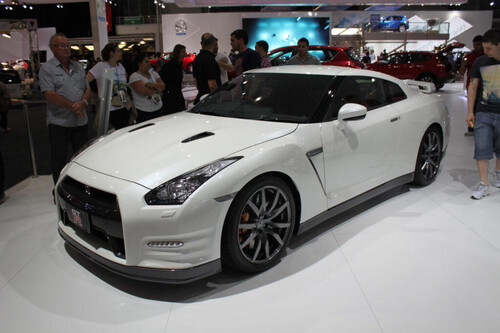
IntroExotic cars went through a bit of a boom period as the new millennium dawned just under a quarter century ago. The bullish stock market of the 1990s and the meteoric growth of speculative financial and real estate markets put billions of dollars of new money in the hands of people who were not hesitant to spend it on fast, flashy cars. Automakers saw this demand emerging and used the latest engine technology and high-strength, low-weight materials like carbon fiber and titanium to construct high-performance machines like the Bugatti Veyron, the Lamborghini Murcielago, and the Porsche Boxster -- all of which were in production during the early 2000s. Those supercars were celebrated in their time and are valued by collectors today, but there were plenty of others that came along during that same time period that didn't get quite as much attention when they were first released. Some of those cars can even be found on the secondhand market at relatively reasonable prices, in case you have some stock options that are about to vest and some space in your garage. Here are six of those overlooked exotics from the days when "The Fast and The Furious" was just a film with a single sequel and not a seemingly endless saga with 13 installments (and counting).Pagani ZondaOne of the fastest and most dramatic-styled supercars of the early 2000s came from a fairly obscure carmaker with humble beginnings. As a child in Argentina, Horacio Pagani was captivated by cars and became fascinated by reading books about how Leonardo da Vinci merged art and science. Pagani went on to work for Lamborghini as an engineer and later turned his attention to developing his own car, which he initially called "Fangio F1" in honor of the legendary Argentinian Formula 1 champion Juan Manuel Fangio. After Fangio's death in 1995, Pagani rechristened the car the C12 and presented it at the 1999 Geneva Motor Show. The C12 had a 6.0 liter Mercedes engine that propelled the carbon-fiber body from zero-to-60 in 4.2 seconds and gave the C12 a top speed of 185 mph. The Zonda evolved into dozens of variants over the following two decades, including a bespoke model built specially for seven-time F1 champion Lewis Hamilton. The final version of the Zonda, the Revolucion, appeared in 2013 with an 800-horsepower engine and an F1-inspired Drag Reduction System (DRS) on its rear wing. The Revolucion was truly track-ready, with a top speed of 233 mph and a zero-to-60 time of just 2.7 seconds. Spyker C8 SpyderSpyker was founded in 1880 and built the world's first six-cylinder, four-wheel drive car in 1903. The original company went bankrupt in 1925, but in 2000, Spyker returned with the C8 Spyder, presenting the roadster at the Birmingham Motor Show. Only 121 Spyders were made, making this one of the era's rarest models. The Spyder was powered by an Audi twin-turbo 4.2 liter V8 that produced 525 horsepower. That motor was mated to a six-speed manual transmission with a long aluminum linkage bar that ran from the shift lever to the gearbox and was visible from the car's passenger compartment. This drivetrain could propel the Spyder from zero-to-60 in about 4.5 seconds, giving it a top speed of 187 mph. The C8 remained in production until this year, even through Spyker's additional bankruptcies in 2014 and 2021 (the 2014 bankruptcy was overturned by a Dutch court the following year). The current variants of the C8 are the Preliator and the Aileron, both of which have aircraft-inspired controls, instrumentation, and styling to go along with their aviation industry monikers.R35 Nissan GT-ROne of the more unassuming supercars in automotive history is the Nissan GT-R, a car that evolved from the Skyline GT-R, which Nissan introduced in 1969. Nissan dropped the Skyline badge in 2008, and that version of the GT-R, the R35, had a 473 horsepower twin-turbo V6 that was hand-built by one of four specially trained mechanics. That motor could slingshot the R35 GT-R from zero-to-60 mph in 3.6 seconds and to a top speed of 194 mph. The R35 GT-R doesn't have the eye-catching lines of a Ferrari or a Pagani or the striking hand-crafted interior of a Spyker, but its zero-to-60 time is more than two seconds faster than that of a Lamborghini Countach and almost matches that of the Murcielago. The GT-R did get plenty of cinematic attention, however, appearing in dozens of movies, including several installments of the "Fast & Furious" franchise. The model remains in production today; the 2024 version has a 3.8-liter twin-turbo V6 that produces 600 horsepower in the top-level GT-R NISMO variant.