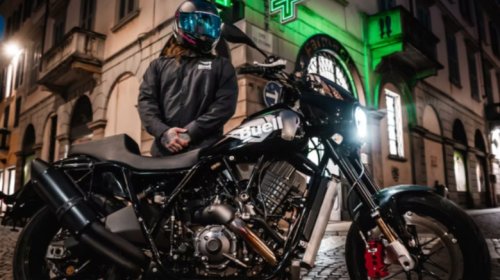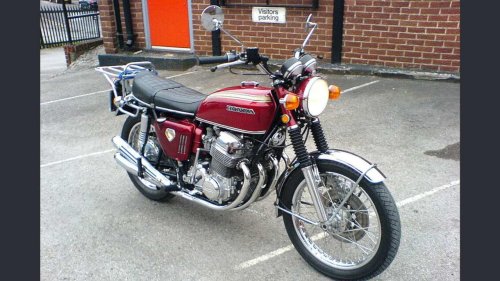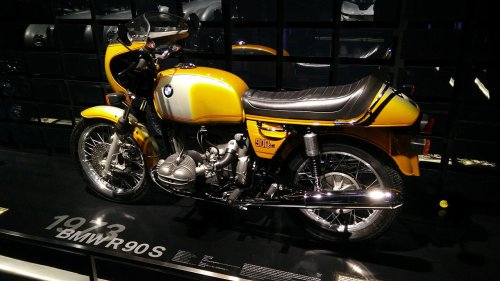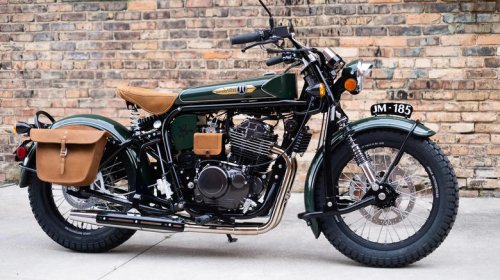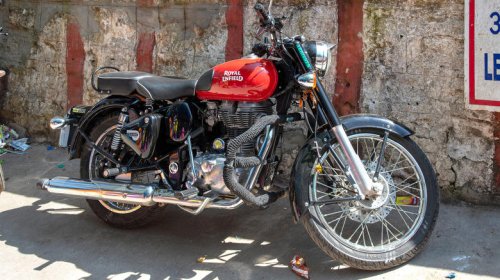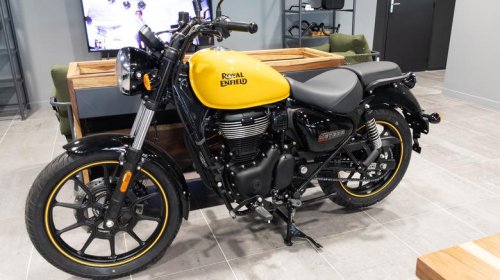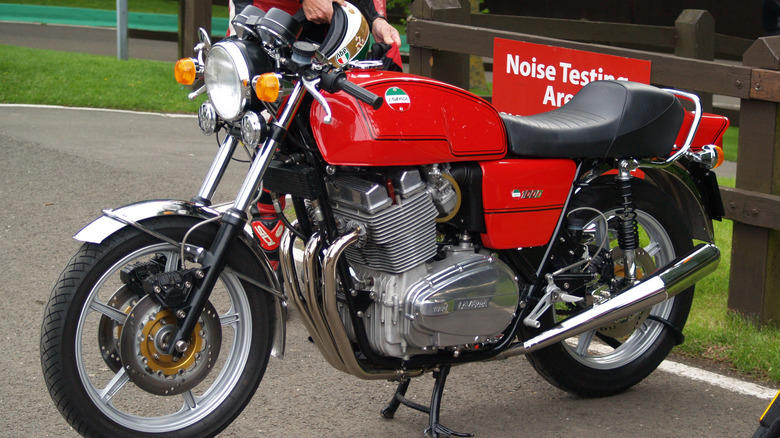
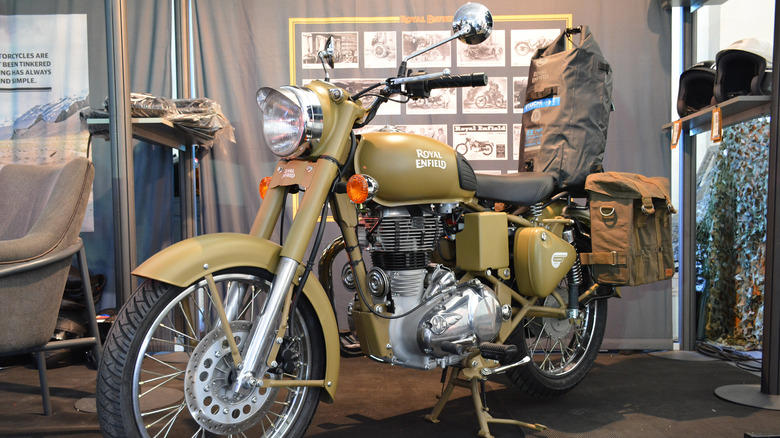
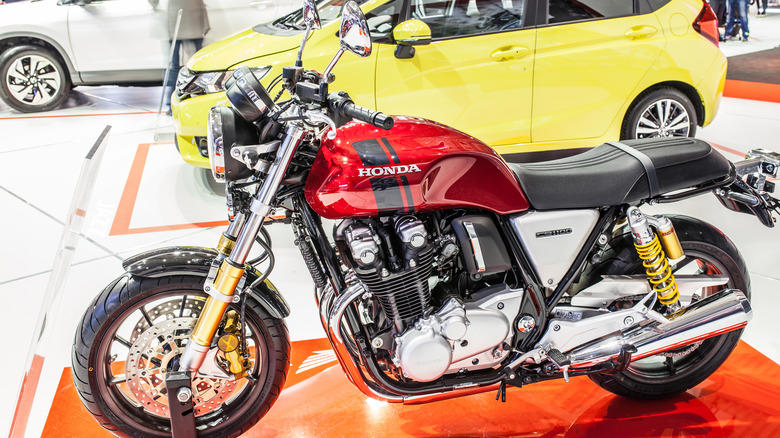


















Laverda JotaLaverda may not be the first name that springs to mind when you think of classic motorcycle marques. However, for a time it was one of the most exciting Italian companies, rivaling compatriots like Aprilia, Benelli, Ducati, and Moto Guzzi.One of Laverda's most successful models was the 981cc, three-cylinder Jota. In 1976, at a time when rival Triumph was having success with its triples, the Jota ruled the roost as the fastest production motorcycle in its day, with a top speed of 140 miles per hour. Speed was not its only quality; it had performance to match, with a rigid frame and taught suspension that facilitated impressive maneuverability. It also looked the part, with sophisticated Italian styling.The Laverda Jota's classic good looks and spirited riding performance would fare well in the age of retro revivals. Coupled with its lingering reputation among classic bike enthusiasts and past sales performance, we feel it thoroughly deserves a reissue with modern features and upgraded parts.Royal Enfield Classic 500I picked up my own Classic 500 Desert Storm in northern India in 2018. Previously, I had never ridden a "proper" motorcycle, only scooters, and I was about to embark on a trip across the Indian Himalayas from Manali to Leh, on the Tibetan border, then on to the disputed territory of Kashmir. These were some of the most dangerous roads and highest altitudes in the world, and it was with more than a little trepidation that I first straddled this relatively large machine. I needn't have worried.The single-cylinder thumper tackled its task with ease, fording deep snow melts, pulling me to heights of 16,800 feet, and bouncing over very rugged terrain without so much as a complain — all while lugging over 60 pounds of luggage and around 8 gallons of fuel. I was seriously impressed and, later, confused when, in 2020, Royal Enfield started winding down production of the Classic 500.With its little sibling Classic 350 reissued in 2022 to great acclaim, surely it's about time the Classic 500 got the same treatment. Indeed, Royal Enfield has even had success with the larger, parallel-twin Interceptor 650. A 500cc single-cylinder model would nicely bridge the gap between the Interceptor and the smaller capacity cruisers, especially for the legions of Classic range fans, and even more so if it came with tempting upgrades like a rear disc brake, ABS, and, crucially, a fuel gauge.Honda CB1100The Honda CB750 entered the world stage to great acclaim in the 1970s. Hailed as the world's first superbike, the inline four-cylinder beast quickly became a hit with racing teams and the biking public as an innovative, affordable, and reliable machine that performed well. In 2013, Honda released the CB1100 as a higher-capacity modern retro version of its classic sibling, with up-to-date features that provided an all-around better riding experience.Aesthetically, the CB1100 had much in common with its older relative, sticking with the twin upswept exhausts, twin-dial chrome dash, long dual seat, and large round headlamp. Only the sculpted fuel tank had hints of a more contemporary style. However, the 1,140cc, 80 brake horsepower engine — Honda's first air-cooled inline four for 20 years — was a notable improvement on the CB750 and just as reliable.In an age when many modern retros are making a successful comeback, the Big Wing brand unceremoniously discontinued the CBR1100. It simply didn't feel it was worth upgrading its air-cooled inline four to meet the latest Euro5 emissions standards. Had it doubled down and stuck to its beefed-up modern retro principles, the bike could have continued its successful run well into the future.