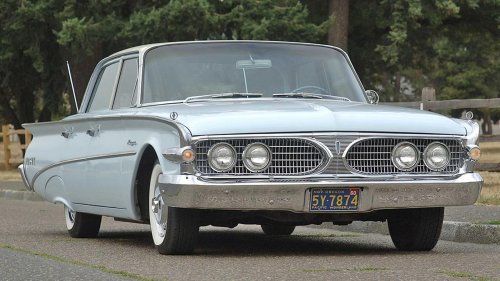
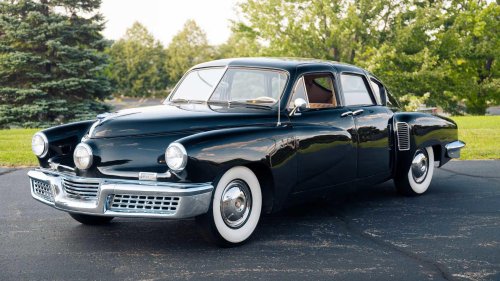
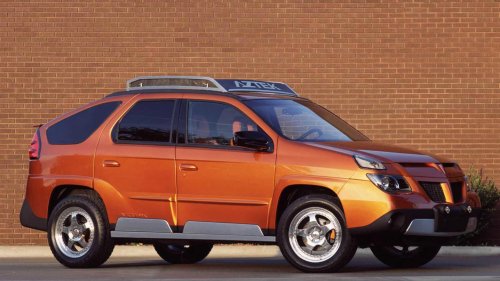
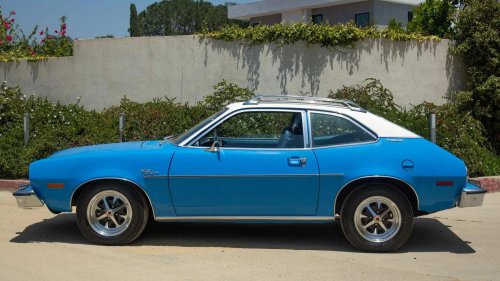
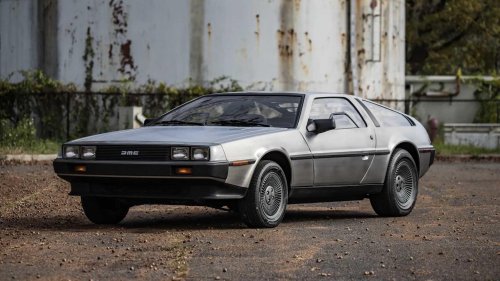
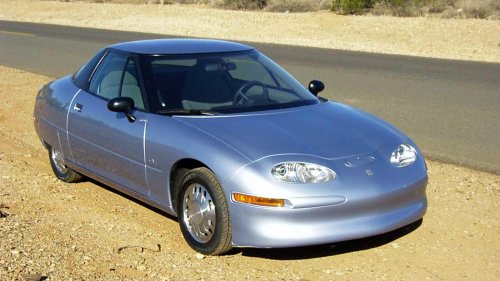

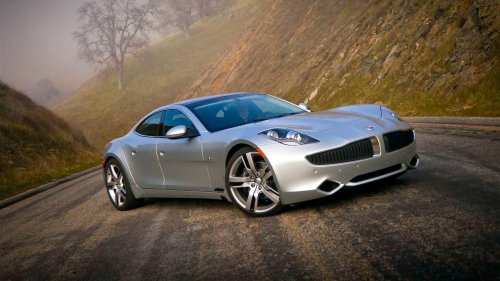
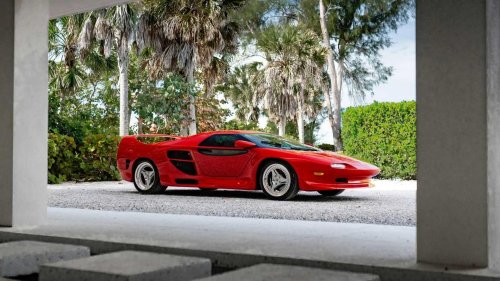
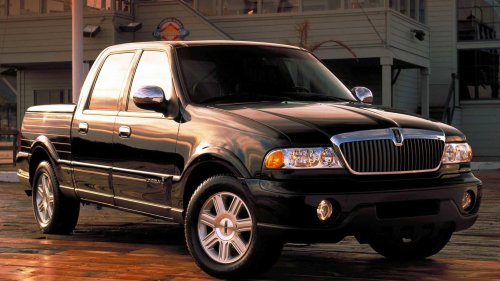



















Like any other industry, the automotive industry has a history that’s rich with great and not-so-great decisions. Volkswagen’s choice to launch the Golf, for example, produced fantastic results in the form of a model that has become world-famous and sold millions of units. Other times, however, automakers have definitely made the wrong call.In this list, we put together 10 occasions in which a car company made a decision that worked out poorly. Whether it’s introducing tech that was ahead of its time, launching a model that didn’t match what the public wanted, or simply trying to sell a car with poor build quality, here are 10 of the worst decisions in automotive history. Ford's Edsel Brand 1960_edsel_ranger_frontFord made the first poor automotive decision on our list in the late 1950s. The Blue Oval decided to create an all-new sub-brand called Edsel (named after Henry Ford’s son), however, things did not quite pan out as intended. The idea was that Edsel would occupy the mid-priced slot in the Ford lineup, while Lincoln became more upmarket. Meanwhile, the well-established Mercury brand occupied a similar position as Edsel.Having been launched in 1956, Edsel only lasted until the beginning of the 1960 model year. A combination of challenging economic circumstances and a poor marketing strategy meant that the new brand failed to capture the attention of American consumers. Edsel was also fundamentally not that different from Ford’s existing offering and, as such, failed to carve out a unique space for itself in an already crowded market. Tucker 48 1948_tucker_48_frontThe Tucker 48, sometimes referred to as the Tucker Torpedo, was an experimental model created by controversial entrepreneur and inventor Preston Tucker in the late 1940s. Having attempted to launch several businesses and even design vehicles for the US Navy, with mixed results, Tucker decided to build a production car of his own.The 48 had some interesting ideas, such as an engine sourced from a helicopter and a third swiveling headlight. Its overall build quality, however, was very poor, and the car made a disastrous impression on the press upon its launch. Combined with Tucker’s ongoing fight against fraud charges, the car’s bad reputation was enough to shut down the entire operation. Only 50 units were built in total. Pontiac Aztek 2001 Pontiac Aztek (9)The Pontiac Aztek was a short-lived crossover SUV introduced for the 2001 model year. It was created with young buyers in mind, but missed the mark by a long way; it quietly left the market after just five model years, and has largely been forgotten by the automotive world today.The Aztek was marketed as a “sport recreational vehicle” and was packed with features oriented toward off-roading, such as an available tent that attached to the rear. The center console was also detachable and doubled as a cooler. However, its less-than-aesthetically-pleasing design was not well received by consumers at the time (though things might have gone differently if the model had been released today), and its quirky features were not enough to overcome that. Ford Pinto 1974 Ford Pinto One of the most famous automotive scandals of the 20th century, the Ford Pinto was a subcompact car released in 1970. An otherwise unremarkable car, it earned itself a place in history for being catastrophically unsafe. Having been rushed through the design and manufacturing process and built on the cheap at the peak of the Malaise Era, the Pinto was best known for one thing: exploding when rear-ended.Any collision above about 25 mph would rupture the fuel tank, creating a major fire risk. Ford knew about this and yet chose to continue selling the Pinto, resulting in a lawsuit that changed the landscape of automotive safety forever. In a way, we can thank the Pinto for contributing to the safety of today’s vehicles. DMC DeLorean 1983 DeLorean DMC-12 front, three-quarterBest known for its cinematic appearance in the Back To The Futurefranchise, the DMC DeLorean (sometimes referred to as the DMC-12, its pre-production name) did not do quite as well in real life as it did on the big screen.The model was not as fast and powerful as its futuristic design would suggest, and suffered from major reliability issues, chiefly due to its engine. The weight distribution also contributed negatively to the car's performance. Combined with its high price, limited production run, and John DeLorean’s ongoing legal troubles at the time, these factors made the DeLorean a commercial failure. GM EV1 1996 GM EV1 front, three-quarterGeneral Motors’ EV1 was the first attempt by a large American automaker at building a mass-produced electric vehicle. It was created in response to new emissions standards introduced in 1990 and was launched in 1996. The EV1 had a futuristic design and was built on a lightweight aluminum frame. Although several concept versions with different powertrains (including a hybrid) were built, the production model was powered by a single electric motor.The EV1, however, turned out to be ahead of its time. There wasn’t a big enough market for electric vehicles yet; just 1,117 examples of the model were produced between 1996 and 1999. Most of the existing cars were later recalled and crushed, despite protests from consumers and EV enthusiasts. Chrysler-Daimler Merger 2001 Daimler-Chrysler ExecutivesThe merger between Chrysler and Daimler, described as a “marriage of equals”, turned out to be anything but. It was carried out in 1998, with the aim of making both brands more competitive on the global automotive market. Soon, however, it became apparent that Chrysler was being treated as a subsidiary of Mercedes-Benz, rather than being an equal component of a partnership.This unequal balance, along with a clash in company cultures and the departure of a few key Chrysler executives, eventually resulted in the end of the DaimlerChrysler period. In 2007, Daimler sold most of its Chrysler shares to a private equity firm, retaining a 20% stake in the company. Fisker Karma 2011-2012 Fisker Karma Sedan Front 3/4The Fisker Karma is an unfortunate car with a long and convoluted history. First launched in 2008, the Karma was one of Henrik Fisker’s many failed automotive business ventures. The hybrid sports sedan failed to capture the interest of the car world and ultimately resulted in Fisker Automotive’s bankruptcy.While Henrik Fisker was busy launching another ill-fated model, the Fisker Ocean, the Karma was being revived. This time, “Karma” served as the brand name, while the model itself was dubbed the Revero. At the end of last year, however, the Revero’s production run also came to an end. Karma is still in business and is planning to replace it with a new model, the Gyesera. Vector M12 1996 Vector M12 front, three-quarterThe short-lived Vector M12, introduced in 1996, is notable for being the only American car ever produced with both a V12 engine and a manual transmission. Fewer than 20 examples of this model exist, which was loosely based on the Lamborghini Diablo. Vector, the small firm responsible for its creation, was the bizarre brainchild of entrepreneur Jerry Wiegert, whose other unsuccessful business ventures include the creation of watercraft company Aquajet.The M12 got an extremely poor reception from the automotive press. It was described as the “worst car ever tested” by AutoWeek, Lincoln Blackwood 2002 - 2003 Lincoln Blackwood - front 3/4 angleWe conclude our list with the Lincoln Blackwood, the first attempt at selling a pickup truck by Ford’s upmarket sub-brand, Lincoln. The Blackwood was released for the 2002 model year and was based on the 10th generation of the Ford F-150. However, the newly launched model only remained on the market for one year, as it was a massive commercial failure.The concept of introducing luxury elements to a pickup truck was not a popular one with consumers. The Blackwood was seen as having the “worst of both worlds”, with inadequate off-roading capabilities and the wrong kind of character to attract luxury buyers. Perhaps, if the model were introduced in today’s world of high-end trucks, things would look a lot different.Sources: Ford, General Motors, Fisker, Chrysler