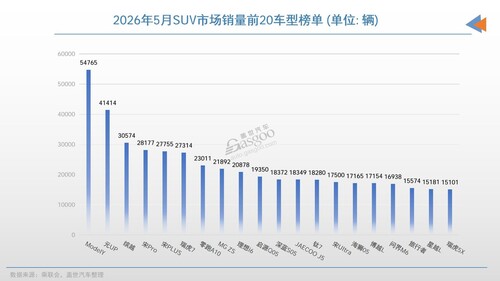
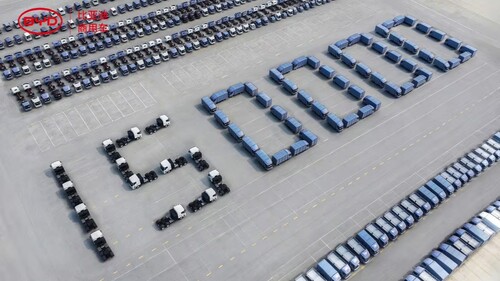
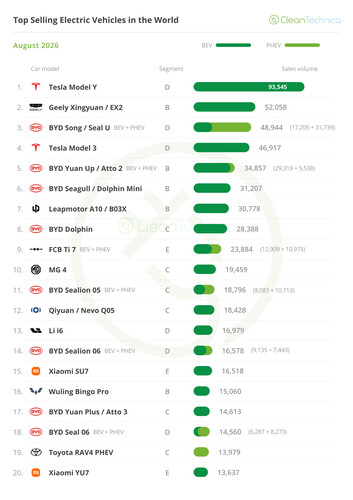
Lily Clark · 2 months ago@lilyclark251.5 Million Chinese Cars Could Be Built In Europe Each Year By 2035, Lawmakers Want Them To Use Local Parts Liked by+9 othersBYDJaecooLeapmotorPost commentRelated PostsBYD Commercial Vehicle Sales Up 113% in SeptemberAudrey Côté · 15 days agoTop Selling Electric Vehicles in the World — June 2026 56 · Connor Scott · 2 months agoUK EV sales surge 36% to record 99,199 as Tesla Model 3 leadsOwen Tremblay · 24 days agoBYD’s Sales Outside of China Rise 154% in SeptemberNathan Wilson · 15 days agoSpain EV Penetration Hits 23.2% in June as Chery, BYD Sales Double 94 · Olivia Girard · 3 months agoWhat to expect from Chinese car brands at the Paris Auto Show 2026Morgan Rogers · 25 days agoAustralian Plugin Vehicle Sales, September Update — Are Mainstream Media Finally Waking Up?Jackson Labelle · 15 days agoMay SUV Sales Top 20: Domestic Brands Dominate, New Energy Leads 19 · Jackson Gagnon · 4 months agoChinese NEV sales rankings in September 2026: BYD, Leapmotor, Changan NevoKaitlyn Martin · 26 days agoGeely Battleship 700 launches: A BYD FCB Ti 7 challenger with 10,000+ orders in 12 minutesWilliam King · 16 days agoBYD Surges to Top Spot in Brazil Auto Market in April First Half 16 · Henry Mitchell · 6 months agoChina Floods The 2027 World Car Of The Year Field With 27 Contenders 70 · Adam Lavoie · 26 days agoBYD launches 13 USD “Flash Charger” cat bed, promises faster naps, sells out immediatelyWilliam Côté · 16 days agoA tank of gas costs 35 euros more, is the world starting to "abandon oil for electricity"? 78 · Adam Carter · 6 months agoHalf Of The World Car Of The Year Contenders Are Chinese 80 · Samuel Wright · 28 days agoVolkswagen Put an EV Into a Giant Popcorn Machine in Wild and Bizarre Stress TestAdam Lee · 17 days agoChinese Automakers’ Europe Sales Top 100,000 in Dec 2025 as Market Share Nears 10% 55 · Benjamin Johnson · 6 months agoChina's New-Energy Vehicle Startups at Midgame: How Long Will the Window of Opportunity Last? 48 · Connor Scott · 1 months agoBYD builds 150,000th commercial NEV – an 800 hp Q3 electric semi truckAlexander King · 17 days agoAugust 2026 Off-Road/High-End/Shooting-Brake Sales Rankings: Tesla Model Y Leads, Fangchengbao Titan 7 Stands Out | Gasgoo Auto Research InstituteAva Turner · 15 days ago


 +9 others