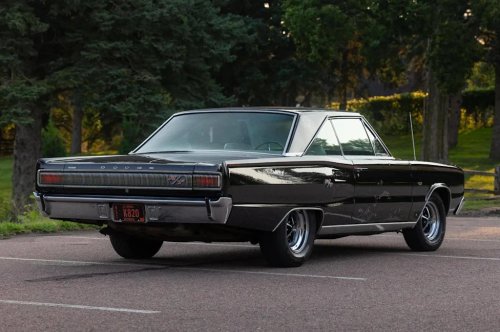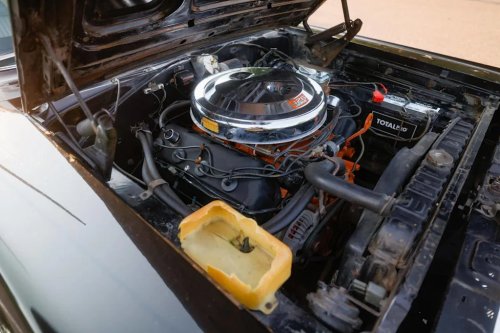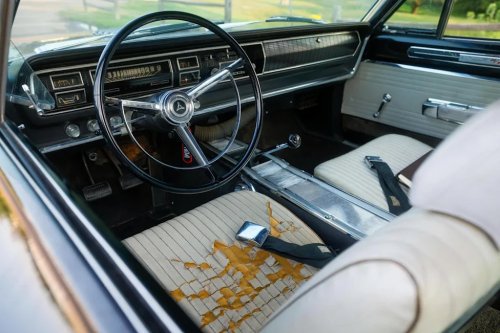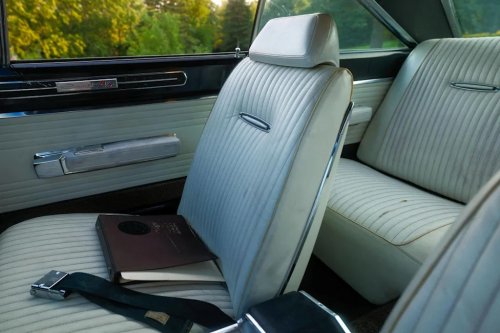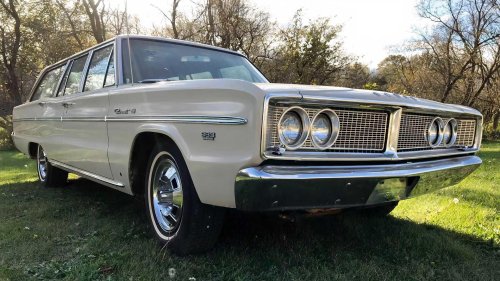
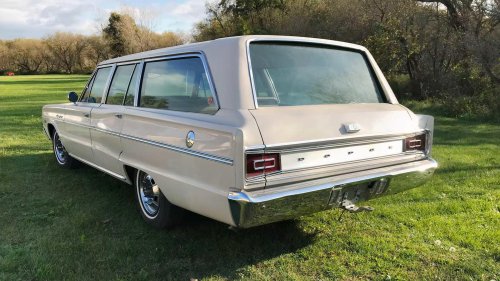
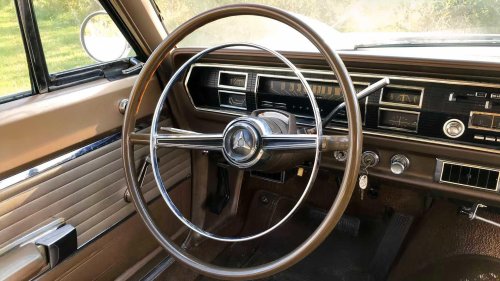
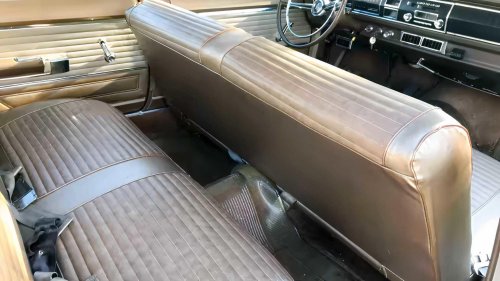
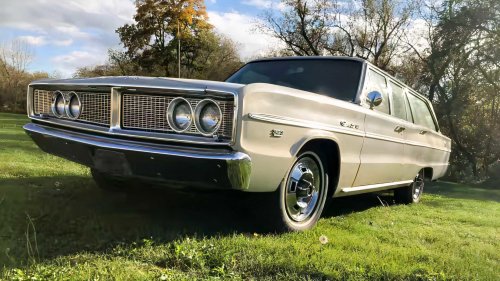
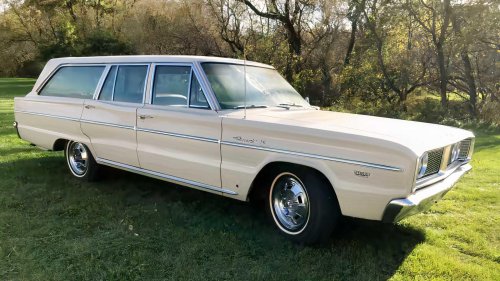
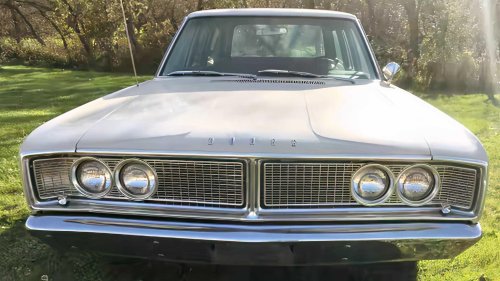
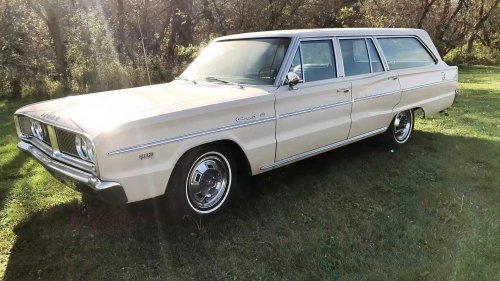
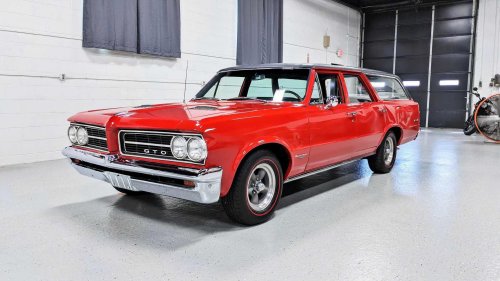
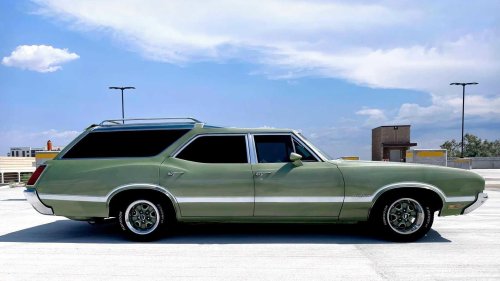






















Most gearheads don't picture a family wagon when they think about 1960s muscle cars. And that's with good reason, given that the muscle era was dominated by big two-door coupes, bright paint, loud graphics, and engines that shook the pavement at idle.Now, wagons, on the other hand, were the sensible choice. These were the cars you bought because you had kids, groceries, or a long commute. However, every now and then, Detroit slipped real muscle into a body style that had no business being fast. And in doing so, they created long-roof sleepers that hid serious power under miles of glass and sheet metal.One of the most surprising examples came from Dodge right in the middle of the horsepower wars. On paper, it was just another midsize wagon built for errands and family road trips. In reality, it could be optioned with an engine borrowed straight from Dodge's performance catalog, turning an everyday hauler into one of the most unexpected big-block sleepers of the era. Buckle up, because you're about to meet an undercover muscle wagon that hides some serious horsepower under its hood. The 1966 Dodge Coronet 440 Is A Rare 325-HP Family Wagon via MecumWhen Dodge launched the Coronet wagon in the mid-1950s, it was meant to be the sensible side of the brand. Families needed space, dealers needed a practical model, and Dodge needed a volume seller that could compete with Chevrolet's full lineup. By the mid-1960s, the Coronet wagon had settled into its role as the everyday hauler in the lineup. You bought one because you had kids, groceries, or a long highway commute, not because you wanted to embarrass muscle cars at stoplights. However, a couple of wagons in the lineup had other ideas.You see, Dodge offered the wagon in multiple trims, including the Coronet Deluxe and Coronet 440, each built on Chrysler's B-body platform and sharing components with the more performance-oriented two-door Coronets and Chargers. Still, these wagons were meant to be the dependable everyday car at a time when horsepower was quickly becoming the biggest selling point in Detroit.via MecumThat's what makes the 1966 model year so interesting. While most wagons in this segment came with six-cylinder or mild small-block V8s, Dodge quietly allowed buyers to step up to the 383 cubic-inch big-block V8, an engine more commonly associated with performance models. Period specifications list the 383 in two configurations. And in case you were wondering, the “440” in Coronet 440 has nothing to do with engine displacement; it's a trim level.Most of these Coronet 440 wagons received the 270-horsepower 2-barrel version of the 383 V8. However, the 325-horsepower 4-barrel variant was also available in the Coronet lineup, adding an extra 55 hp and 15 lb-ft. As such, it remains the most powerful engine officially documented in a 1966 Coronet wagon.While the 383 Coronet wasn't marketed as a muscle machine, it used the same big-block architecture found in Dodge's more famous B-body performance cars. That blend of practicality and power is exactly why collectors still appreciate the 1966 Coronet 383 wagon today. It represents a rare moment when Dodge let family buyers tap into genuine big-block performance, wrapped in one of the era's most understated packages. It's the kind of long roof that turns heads, specifically because no one expects it to be fast. How A 325-HP V8 Ended Up In A Mid-Size Mopar Wagon via MecumUnder the hood, the 1966 Dodge Coronet wagon was designed to be a dependable, no-nonsense long-roof built for families. Most buyers went straight for the practical options like the 225 Slant-Six for peak fuel economy or the 273 V8 for a little more confidence on the highway. Moving up the ladder, Dodge also offered the 318 "Poly" V8 and the 361 big-block, both of which delivered smooth, predictable power for daily driving.These were the engines most Coronet wagons left the factory with. And then there was the much rarer, and much more impressive, 383-cubic-inch option. The 383 cubic-inch V8 was a true big-block that shared its architecture with some of Dodge's most respected B-body performance models.via MecumWhat makes the 383-powered Coronet wagon impressive today isn't just the horsepower figure. It's the fact that Dodge allowed a midsize family wagon to borrow real big-block hardware at a time when most competitors limited their long-roof buyers to small-blocks. The 383 brought genuine Mopar character to this undercover muscle wagon, allowing it to be smooth at idle, strong off the line, and nearly indestructible when maintained properly – it was even a popular engine in police cars for years.via MecumThat combination of utility and unexpected performance is exactly why enthusiasts still hunt for these wagons today. They offer a rare chance to enjoy classic big-block power in one of the most understated, practical packages Dodge ever built. Now, the real trouble is finding one still in circulation. Very few of these wagons were ever ordered with the big-blocks, and even fewer have survived. The Market Reality For A 383-Powered Coronet Wagon via MecumBack in 1966, a standard Coronet, whether sedan, wagon, or hardtop, was priced to compete as a sensible family hauler. Base models started modestly with six-cylinder or mild V8 power. Of course, the price rose as the V8's power increased.The original MSRP of a 1966 Dodge Coronet Wagon 440 sat at $2,816. When adjusted for inflation, that puts its original starting price at a little over $28,000 in today's money.via MecumToday, the average retail price of this '60s wagon sits at $25,000, as noted by J.D. Power valuation data. The lower end of the spectrum dips down to about $14,200, while the most premium examples are valued closer to $49,200.Just take a look at this 1966 Dodge Coronet 440 Wagon that was auctioned off at Mecum Chicago in 2021. Finished in Beige and outfitted with a 383-cubic-inch V8, this muscle wagon brought $17,600 up on the auction block. When Detroit Accidentally Built Muscle Wagons via MecumThe 1960s didn't produce many factory performance wagons, but the ones that did slip through Detroit's cracks became instant legends. These long-roof sleepers hid real muscle under some of the most unassuming sheet metal of the decade. Dodge wasn't the only automaker giving families a way to haul kids and groceries with surprising force. Two of the coolest examples came straight from GM. The first was a '60s wagon that came from Pontiac, right as the brand was rewriting the rulebook for American performance. The second was a 1970 Oldsmobile wagon that came at the peak of the big-block horsepower wars. The Wagon That Previewed Pontiac's Muscle Era Bring A TrailerBefore Pontiac reshaped American performance with the 1964 GTO, it was already experimenting with strong V8 power across its midsize lineup. The Tempest LeMans Safari Wagon might not wear the GTO badge, but it shared enough DNA to make it a compelling long-roof for anyone who appreciates early muscle history.In 1964, Pontiac offered the Safari wagon with several engine choices, including the high-output 389-cubic-inch V8 shared across the Tempest and LeMans lines. Depending on configuration, the 389 could produce up to 330 horsepower, giving the midsize wagon legitimate performance credentials in an era when most long-roofs were powered by small V8s or straight-sixes.Today, the 1964 Tempest LeMans Safari Wagon stands as one of the coolest pre-GTO long-roof sleepers. It represents the moment just before Pontiac unleashed the muscle car era, and it gives enthusiasts a chance to experience early GTO-style performance with a lot more practicality. Finding one with a 389 under the hood is tough. However, if you are lucky enough to find one, you're looking at one of the most underrated performance wagons of the 1960s. It's a true long-roof legend hiding in plain sight. Oldsmobile's Most Unexpected Big-Block Wagon Bring A TrailerIf any wagon from the muscle era counts as a true sleeper, it's the 1970 Oldsmobile Vista Cruiser equipped with the 455-cubic-inch Rocket V8. Most people remember the Vista Cruiser for its skylight windows and raised roofline. Plus, it was the ultimate vacation-mobile of the 1970s. But Oldsmobile quietly made it available with the same big-block powerplant found in the 442 and Hurst/Olds, transforming the family hauler into a torque-heavy brute.The 1970 model year was especially important because it marked the peak of Oldsmobile's performance era. Under the hood, the optional 455 delivered 350 horsepower and an earth-moving 500 lb-ft of torque, making it one of the strongest production wagons of its time.What makes the Vista Cruiser 455 so cool today isn't just the big-block power. It's the way Oldsmobile blended genuine performance hardware with family practicality. This is the kind of wagon that could take the kids to school on Friday, and then surprise a GTO owner on Saturday night.However, like all of these undercover muscle wagons, clean Vista Cruiser 455s are rare now. But when they do surface, they remind enthusiasts that GM once gave families a legitimate muscle wagon straight from the factory.Sources: Dodge, J.D. Power, Mecum.