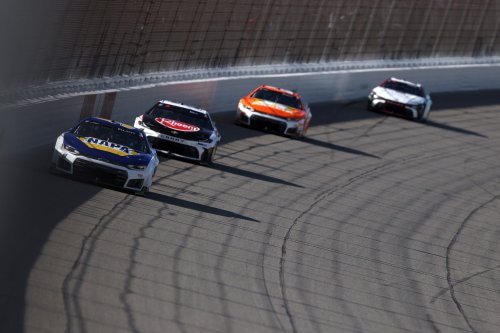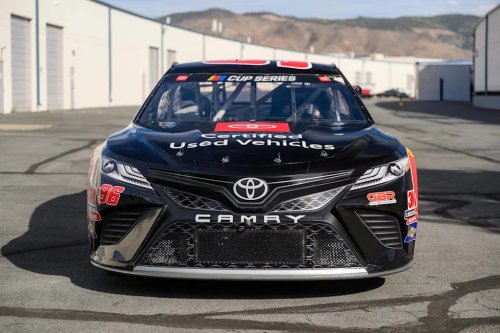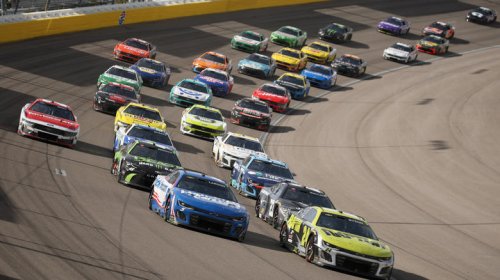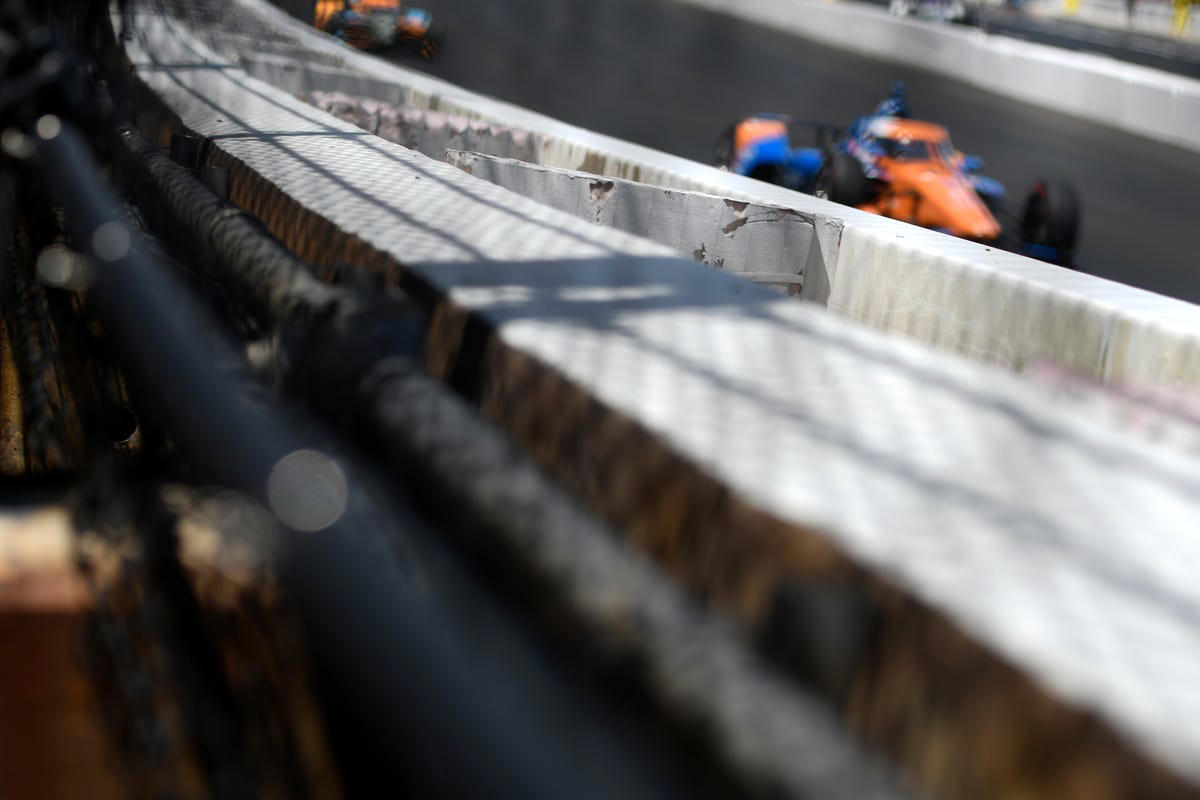



















The average IndyCar open-wheel machine weighs about 1,550 pounds—literally a lightweight, compared to the heftier NASCAR Cup Series car, which has a required minimum weight of 3,300 pounds. So the SAFER Barrier used at the respective racetracks are set up accordingly.In Laura Carter’s article for engineering-simulation software company Ansys, Dr. John Patalak, NASCAR’s vice-president of safety engineering for more than 20 years, said, “We occasionally have race weekends where we share the racetrack with other series. Other series vehicles may be much lighter than NASCAR vehicles, or they may go faster, so their impact conditions to the SAFER barrier are much different than [those for] NASCAR vehicles.”For this weekend’s “Desert Double” featuring both the NASCAR Cup Series and the NTT IndyCar Series, Phoenix Raceway will use the NASCAR configuration, or construction, for all four days.The ARCA Menards Series will race Thursday, with IndyCar qualifying and NASCAR O’Reilly Auto Parts Series practice (NOAPS) Friday. IndyCar’s Good Ranchers 250 and NOAPS’ GOVX200 Saturday will go Saturday afternoon and evening. And the NASCAR Cup Series’ Straight Talk Wireless 500 will wrap up the action Sunday.IndyCar’s version of the SAFER barrier.“Our team has worked hand in hand with IndyCar and just figured out what the best solution would be for the SAFER Barrier here for that weekend,” Matt Humphrey, senior director of track communications for NASCAR, told Autoweek. “Running at the NASCAR configuration would be ideal for everybody involved.” He said the IndyCar safety personnel had consulted with its partners on the project and concurred that the NASCAR assembly would be best for the mile oval at Phoenix.The SAFER Barrier (an acronym for Steel And Foam Energy Reduction Barrier) is the product of a 1998-2002 collaborative effort between the University of Nebraska and IndyCar engineers and was first installed in May 2002 at the Indianapolis Motor Speedway. It is composed of structural steel tubes welded together and strapped in place to the existing concrete retaining wall, with bundles of polystyrene foam placed between the barrier and wall.It is designed to absorb and disperse energy when a race car hits the wall. It reduces the impact to the driver and the damage to the car, all while maintaining its shape.The difference between IndyCar’s version and NASCAR’s is the arrangement and spacing of the foam blocks.