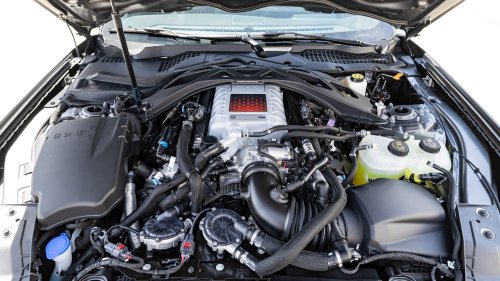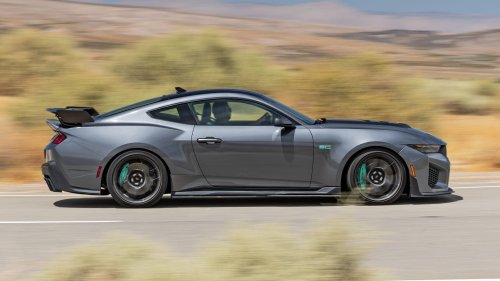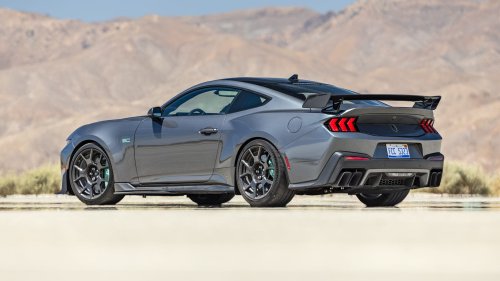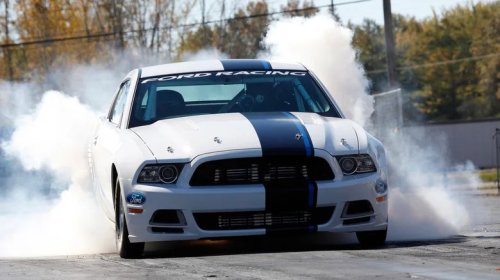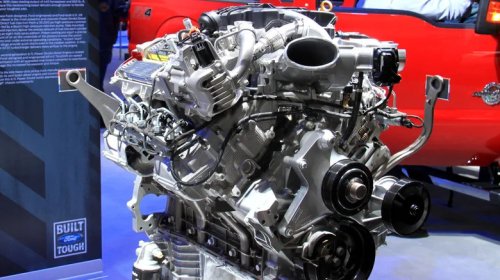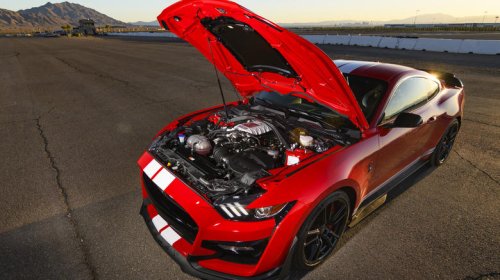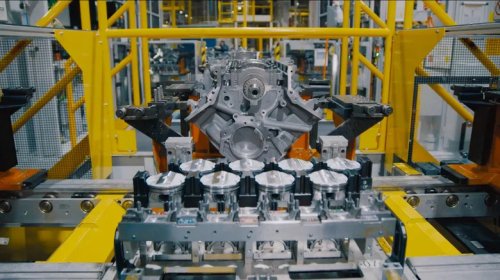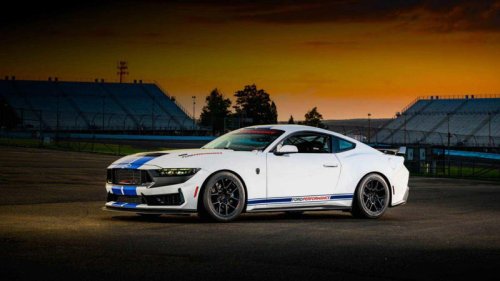
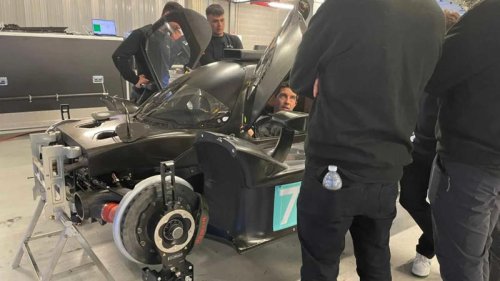
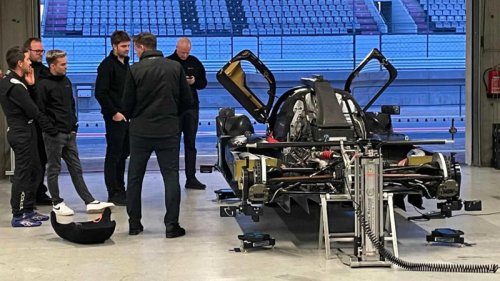
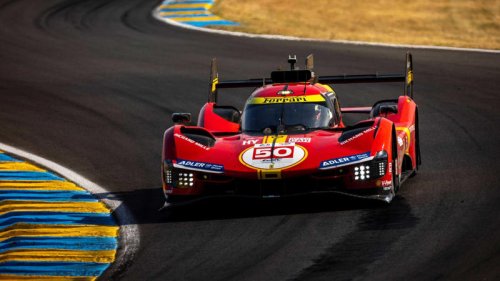



















Ford is returning to Le Mans after several years with a brand new hypercar — and it will be powered by a Mustang engine. The American company has opened up about more details on its forthcoming hypercar, which will be fitted with a version of the ubiquitous Coyote engine, shedding more light on the similarities and differences to the Mustang road car's mill. Ford Is Returning To Le Mans With A Mustang Engine FordFord recently announced that it would be returning to the topflight of endurance racing. The brief was to build a competitor for the Hypercar program from a blank sheet of paper to a Le Mans start line in just two years. What few people would have expected is that the engine for this ultimate race car would be sourced (kind of) from a $46,560 Mustang GT. The reason for choosing this unit, said Ford, was that bleary-eyed spectators at Le Mans shouldn't have to wait until a car arrived into view to know what it is. They should know it's a Ford just from the sound."When you hear a Ford coming down the Mulsanne Straight at three in the morning, you shouldn’t have to look at the badge to know who it is,' said the company. 'That is why we chose the Coyote."But while the naturally aspirated 5.4-liter V8 may be able to trace its roots back to the 'Stang, Ford has just revealed a lot more about the unit heading for its Hypercar. The Engine Differs Significantly From A Standard Coyote V8 Ford For the first time in Ford's history, the competition engine is being developed entirely in-house. The V8 will be joined to a spec hybrid system. Ford said the team at Dearborn will be working closely with Red Bull Ford Powertrains to bring high-voltage technology to old school Detroit power. The basis for the naturally aspirated, 5.4-liter V8 is the 5.0-liter unit found in the Mustang Dark Horse R, the Mustang GT4, and the Mustang GT3, but there will be significant changes. Ford Was Hoping To Use More Of The GT3 Engine Ford Christian Hertrich, Ford Racing’s chief powertrain engineer, told Road & Track: "We had hoped to be able to carry over more of our GT3 engine. But as we got into it, the speeds at which we need to push, the expectations, and really just the competition level drove us into a lot of unique architecture and components.”Hertrich also admitted in the interview that the engine is now fairly far removed from a traditional Coyote unit. “I think we're being generous at calling it a Coyote other than, we started the block with the production casting, but it's been modified fairly significantly in terms of machining.” Ford Is One Of The Few Hypercars Going Naturally Aspirated via FerrariWhile many of the competitors in the Hypercars category are using boosted six- and eight-pot engines, Ford will be sticking with a naturally aspirated V8. The Ferrari 499P has a 3.0-liter V6 Twin Turbo, the Alpine A424 a 3.4-liter V6 Turbo, and the BMW M Hybrid V8 a 4.0-liter twin-turbo V8. To achieve the same performance, the Ford unit needs to rev like crazy, with estimates suggesting it could be north of 9,000 rpm. The company aims to reduce reciprocating mass as much as possible, including lightweighting the pistons and moving to titanium connecting rods. The V8 also gets diamond-like carbon [DLC] coatings for the valves. Could Ford Replicate Its '60s Success At Le Mans? The regulations cap LMDh cars at about 670 horsepower, so expect the racing Coyote to be as close as possible to this. Ford has also borrowed from its F1 program in areas such as its trick lubrication system. This uses additive manufacturing, an advanced form of 3-D printing, which features a lot in Formula 1 engineering.Ford believes that all of this hard work can take it to the top of endurance racing once more, mirroring its success at Le Mans in the '60s. 'We have the engine. We have the drivers. We have the vision,' says Ford. 'We are building more than just a car; we are building a legacy. We are reclaiming our seat at the top table of endurance racing.'Sources: Roadandtrack.com