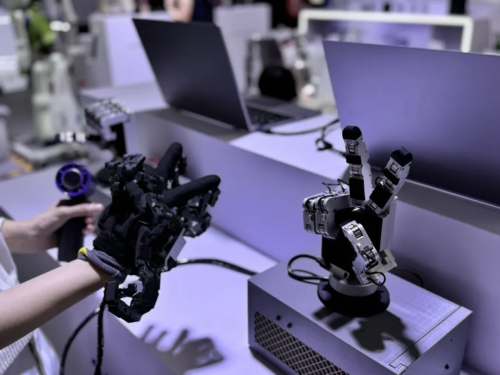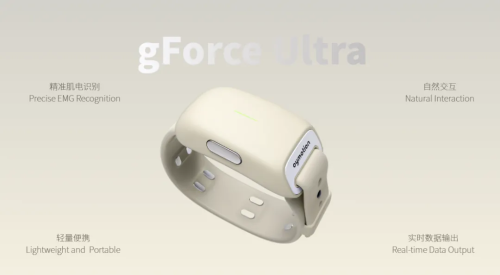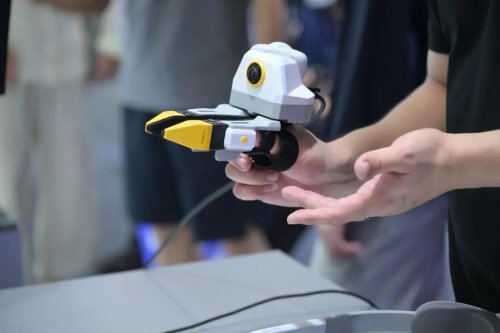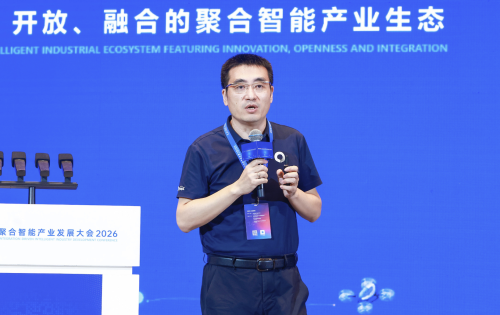
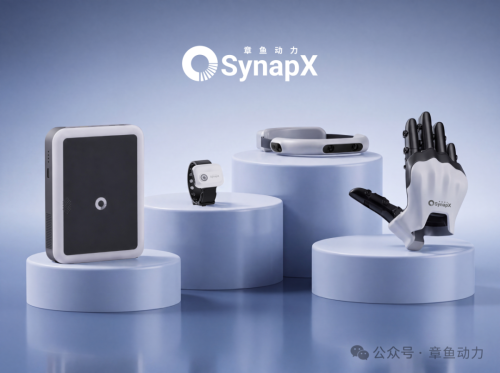
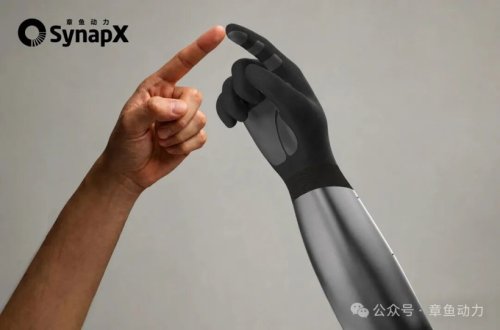






















Gasgoo Munich-“With the advent of AI coding, productivity in the digital world can now be mobilized easily and at lower cost. In the physical world, we believe a similar API interface exists.”Fan Qingyuan, co-founder of Synapx, made this observation recently at the 2026 INTEGRATION-DRIVEN INTELLIGENT INDUSTRY DEVELOPMENT CONFERENCE, co-hosted by the Juhui Intelligent Industry Innovation Center and Hubei Keltou.So, how exactly should this gateway to physical-world productivity be built? The answer lies in Synapx’s logic of “brain-hand integration.”Fan Qingyuan, Co-founder of SynapxThe Physical World Needs Its Own “API”Synapx is a young player in the embodied intelligence sector.Founded in early 2026 by Du Dalong, the startup counts among its founders the co-founder of Phoenix (Gianzhi Robotics), a founding member of Horizon Robotics’ sixth generation team, and a founding member of Baidu’s IDL.The other co-founders — Fan Qingyuan, Liang Zhujin, and Pan Yangjiayi — also bring experience from Horizon Robotics or Phoenix. Together, the core team possesses a composite skill set spanning AI algorithms, hardware, capital, and industrial deployment.It is this deep roots in the AI sector that give Synapx a distinct perspective on the industry’s evolutionary path.“AI is currently undergoing a productivity migration from the digital to the physical world.” That is Fan Qingyuan’s core assessment of where the industry stands today.In his view, the AI industry has moved beyond version 1.0 and is now navigating the upheaval of version 2.0.AI 1.0 refers to the stage where single-task models drive single-task scenarios. “Facial recognition, voice recognition, board games, conversational interaction — these are essentially the outcomes of single-task execution.”The defining characteristic of this phase was that every complete technical loop required massive R&D investment for a specific task, making it difficult to reuse capabilities across different scenarios.“It wasn’t until the emergence of large language models and AI coding that intelligent multi-task and cross-task invocation became possible, shattering the productivity bottleneck in the digital world.” Fan believes a similar API exists in the physical world: the dexterous end-effector, or the robotic hand.In his view, building a physical-world productivity infrastructure based on the combination of an embodied brain and a dexterous hand allows physical productivity to be mobilized as simply, efficiently, and cheaply as in the digital realm. After all, the abundant world we live in today was built by intelligent brains and dexterous hands.This is also the origin of Synapx’s name. As the saying goes, “The octopus is a creature that has evolved to the extreme, operating with only a brain and hands.”The evolution of technological stages implies a necessary shift in technical paradigms.Fan points out that embodied AGI differs fundamentally from traditional single-task AI. Whether in facial recognition or autonomous driving, traditional AI pursues extreme reliability within a single scenario, aiming for 99.99% — or even infinite — nines of stability. Its technical architecture requires continuous optimization around specific tasks.Embodied AGI, by contrast, pursues extreme versatility. The goal is to achieve 80% to 90% — or higher — completion rates across tens of thousands, or even hundreds of thousands, of distinct tasks.Therefore, unlike the former, which relies on Bird's Eye View (BEV) or end-to-end approaches to achieve decent results, the latter prioritizes scaling along the temporal dimension to enable causal reasoning, as well as multi-modal scaling to judge environmental states. The underlying technical architecture has undergone a fundamental iteration.So, how is this achieved in practice?According to Synapx’s logic, to rapidly close the loop on physical-world productivity, one must first bridge the conversion chain from “carbon-based data to silicon-based data,” ensuring that data, models, and execution operate under a unified design language.This is precisely why Synapx has simultaneously developed the brain, dexterous hand, and data collection sectors since its inception.In just seven months, Synapx has launched three core systems: the SYNWorld embodied native world foundation model, the OctoH-Hand high-degree-of-freedom bionic dexterous hand, and the OctoSense next-generation embodied data collection product. It has initially charted a “brain-hand integrated” full-stack closed-loop path.Image Source: SynapxFull Stack Is a Means, Not an End GameAfter two years of development, the embodied intelligence industry has seen an influx of players across the board — in brains, dexterous hands, and data collection alike.Why, then, does Synapx still commit to this “brain-hand-data” deep integrated closed loop?Fan Qingyuan’s answer is simple: the stage determines the path.“In a stage where technology hasn't fully converged, vertical closed-loop capabilities can accelerate speed and efficiency,” Fan notes. “They help bridge the chain of human operation data collection, model training, and robot execution faster, allowing robots to generate feedback in real-world tasks and continuously boost productivity.”Embodied intelligence is still in its infancy, with technical routes undefined and interface standards ununified. Even though companies have clustered around every link, a lack of unified top-level design means adaptation costs will pile up between data, models, and execution, severely dragging down iteration efficiency.Notably, vertical integration around core links is a common choice in the early stages of many emerging industries. In the early days of new energy vehicles, automakers like BYD chose to develop their own battery, motor, and electronic control systems — the “three electrics” — a logic that runs parallel to Synapx’s strategy.Taking a longer view, in the early days of the auto industry, Ford built its own supporting sectors for steel, rubber, and glass. The reason was that the supply chain was immature, and vertical integration maximized production efficiency.“But as the industry matures, standards become clearer, and interfaces become defined, division of labor will follow,” Fan says. “Many industries have gone through cycles of integration and separation.”It is precisely because they understand this dynamic that Synapx’s closed loop is not a “do-it-all” full-chain proprietary approach. Instead, it is “closed loop in technology, division of labor in industry.”Specifically, on the technical level, they are firmly grasping three core foundational capabilities: a general embodied brain that understands the physical world, a high-degree-of-freedom bionic dexterous hand, and a multi-modal data collection system.Fan calls these “invariants within change.” Regardless of how downstream scenarios evolve, these three represent the common underlying capabilities of embodied intelligence. Mastering them allows for efficient support of partners in various scenarios to deploy quickly, reducing the massive investment of starting from scratch.On the industrial level, they fully leverage the capabilities of the existing mature supply chain rather than rebuilding it from scratch. Whether for model development, data collection equipment, or dexterous hand development, they make extensive use of supporting resources from the consumer electronics, automotive, and specialized embodied intelligence sectors.In other words, Synapx’s “full stack” approach isn’t about taking on every link. It’s about building a closed loop in the core areas where technology iterates fastest, using extreme versatility to achieve extreme generalization, while embracing the division of labor in mature supporting sectors.This strategy of “combining control with delegation” ensures early iteration speed while avoiding the costs and risks associated with excessive in-house development.Image Source: SynapxGrasping Only Three “Invariants” to Become the Industry's Common DenominatorThe phrase “brain-hand integration” sounds simple, but actual implementation requires deep synergy across three systems.Consequently, Synapx’s three solutions are not simply pieced together; they are an organic whole built around closed-loop logic from the design stage.First is the “brain,” SYNWorld. This is an embodied native world foundation model based on a Mixture of Experts (MoT) architecture. It can deduce causality based on temporal scaling and judge environmental states based on multi-modal input, serving as the robot’s “general intelligence hub.”Architecturally, SYNWorld incorporates two core technical paths. One is ACWM (Action-Conditioned World Model), which focuses on predicting future states after specific actions are triggered, enabling scalable evaluation through simulation.“If evaluation relied entirely on real-world hardware, scaling would be impossible,” Fan explains. “But by using large model simulation to achieve scaling, such evaluation becomes feasible.”The other is WAM (World Action Model), which focuses on generating dynamic predictions based on modeling. It can predict a robot’s actions several seconds into the future in real-time and supports real-time interruption and rapid correction.Previously, at the 2026 World Robot Conference, this system demonstrated real-time dynamic adjustment in a block-stacking scenario. According to Fan, its capabilities are approaching the operational level of a 2- to 3-year-old child.Next is the end-effector, the OctoH-Hand, a high-degree-of-freedom cable-driven bionic dexterous hand.Adopting an extreme biomimetic design, this hand uses a hybrid drive combining n+1 full-tendon drive in the hand with direct-drive forearm motors. It integrates 28 independently controllable actuators, achieving 23 active degrees of freedom. It supports multi-finger coordination, thumb opposition, fine fingertip manipulation, and complex grasping. With over 1,900 built-in tactile units, it naturally supports multi-modal tactile perception and backdrivability.The most critical design element is “isomorphism.”Synapx has simultaneously developed an exoskeletal data collection glove that mirrors the OctoH-Hand’s structure. “It’s essentially hollowing out the dexterous hand’s drive unit and using a human hand for teleoperation or data collection, thereby aligning the data with the dexterous hand,” Fan explains.In the past, differences in joint configuration, degree-of-freedom definitions, and sensing methods between data collection devices and dexterous hands meant traditional solutions required motion retargeting, parameter mapping, and repeated debugging to convert human demonstrations into robot-executable actions. The longer the chain, the harder it is to avoid information loss, error accumulation, and high engineering costs.The greatest value of Synapx’s “data collection twin” solution is that it avoids the deviations caused by motion retargeting. Data from human hand operations can be used directly for the dexterous hand’s model training and motion control without extra conversion. This is the core hardware foundation that allows the closed loop to function.This brings us to Synapx’s third solution: the OctoSense data foundation, which serves to feed “nutrients” to the entire system.This system includes three core hardware components: an exoskeletal data glove, a fisheye headband, and an electromyography (EMG) bracelet. These can be combined into three different collection schemes: fisheye headband plus glove for high-precision data collection; a single fisheye headband for pure visual scalable collection; and fisheye headband plus EMG bracelet, which balances pose restoration, force perception, and collection degrees of freedom for full-modality scalability.The most differentiated aspect is the EMG technology route. Traditional EMG collection schemes often require individual calibration and tuning for each user, resulting in poor cross-individual generalization and making it difficult to support large-scale data collection.Synapx’s approach borrows the scaling logic of large models. It uses massive amounts of cross-individual data to train an EMG large model, learning transferable EMG representations. This achieves cross-ontology generalization, eliminating the need for secondary calibration for each person.Fan reveals that this EMG large model has initially demonstrated cross-individual generalization capabilities, and performance will be continuously optimized by expanding data coverage.Ultimately, the complete closed loop formed by these three works as follows: isomorphic data collection devices capture multi-modal data from human operations and feed it into the world model for training. Action commands generated by the model directly drive the dexterous hand, and real-world data from the execution process flows back into the data system, continuously iterating and optimizing the model and control strategies.This positive cycle of “data-model-execution-feedback” is the core secret behind Synapx’s ability to iterate rapidly in such a short time.According to the roadmap, Synapx will release the second version of its world foundation model around October of this year. By the end of the year, hardware such as data collection devices and dexterous hands will be ready for mass production.Image Source: SynapxShort-Term Bubbles Won’t Derail the Long-Term Physical AI RevolutionLooking at the history of the automotive industry, every past shift in productivity paradigms has undergone a process of “early vertical integration, mid-stage standard establishment, and late-stage specialized division of labor.”By this measure, embodied intelligence is currently at the threshold of transitioning from the first to the second stage.In the long run, Fan believes a foundational capability can only truly drive industrial transformation if it can be easily mobilized by a greater number of enterprises.“What we’ve been doing is building these common capabilities and pushing them into real-world scenarios quickly before technology has fully converged,” Fan says. “That’s why we created a closed loop and identified a common denominator — we aren’t trying to do everything.”Notably, this closed-loop capability has won broad recognition in the capital markets.Over the past few months, Synapx has completed three funding rounds, raising nearly 1 billion yuan in total. Investors include Horizon Robotics, Hillhouse Ventures, Xiaomi Strategic Investment, Shunwei Capital, Linear Capital, Huangpu River Capital, Jinqiu Fund, and Xinlian Capital, stockpiling ammunition for subsequent R&D and mass production deployment.In the embodied intelligence sector, the enthusiasm for Synapx is just a microcosm of the broader capital frenzy.For more than a year, embodied intelligence has been one of the most sought-after directions in the primary market. According to statistics from IT Juzi, domestic financing for embodied intelligence reached 93.5 billion yuan in the first half of 2026 alone — a five-fold year-on-year increase. A total of 322 financing events were disclosed, up 137% year-on-year.Behind this surge, not only have a large number of startups in humanoid robot bodies, dexterous hands, world models, and embodied data secured large funding rounds, but industrial capital — including automakers, consumer electronics manufacturers, and internet giants — and top financial institutions have also entered the fray. This has collectively accelerated the financing pace of the sector, sending valuations of top-tier companies soaring.As capital accelerates the industry’s maturation, the debate over “whether a bubble exists” has followed like a shadow.In response, Fan did not directly address the characterization of a “bubble” during the interview, instead offering an assessment from an industry perspective.He cited the example of large models. When they first emerged, many questioned the utility of “models that can only chat.” It wasn’t until AI Coding appeared, lowering the barrier to software development and allowing more people to participate in creation, that productivity in the digital realm was widely unlocked and the industry’s true value became apparent.In his view, the productivity transformation brought by AI entering the physical world will have a long-term impact no less significant than the Industrial Revolution, the Energy Revolution, or the Internet Revolution.An industrial shift of this magnitude will not alter its long-term trajectory due to short-term fluctuations in hype. Every industry has development cycles; the internet also experienced cycles of bubble bursts, yet it ultimately spawned technology companies that changed the world.“The current hype, or bubble for that matter, is far from capable of affecting the changes this great and profound transformation will bring to industrial productivity,” Fan concludes.ConclusionSynapx’s choice of a “brain-hand-data” full-stack closed loop is essentially a “head start” before industry standards take shape: trading vertical integration for iteration speed to be the first to crack the underlying modules of the physical-world API.This mirrors the logic of “three-electrics self-development” in the early days of the new energy vehicle industry: vertical integration is never the end goal, but the optimal efficiency solution while technology is in flux. Once technical routes converge, interface standards unify, and the supply chain matures, specialized division of labor will naturally become the norm.But before that happens, there must always be companies that first secure the three “cornerstones” and make the closed loop work.