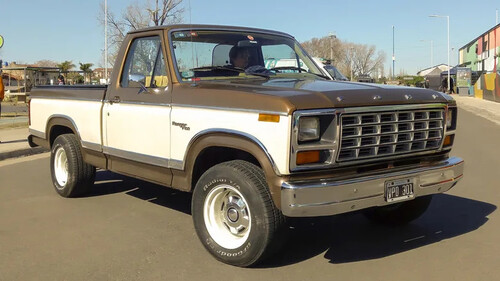
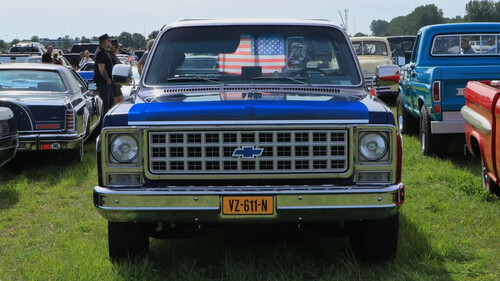
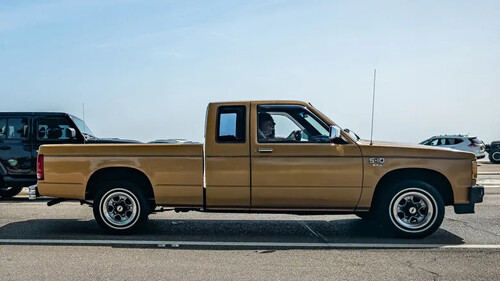
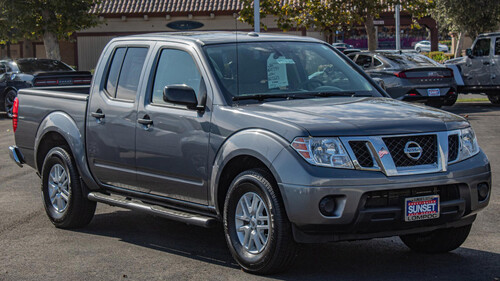
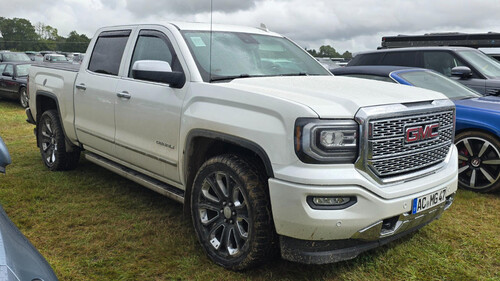
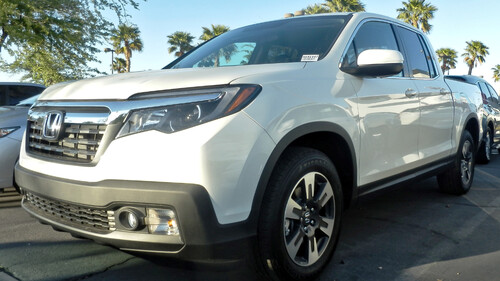
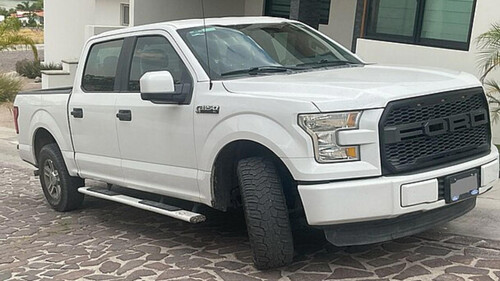
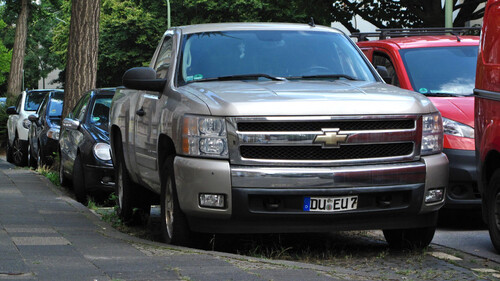
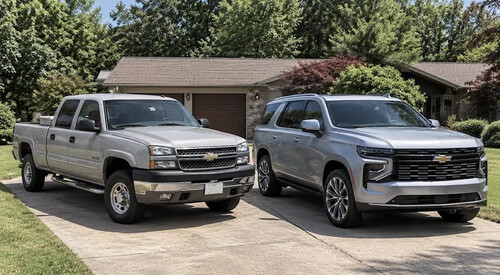
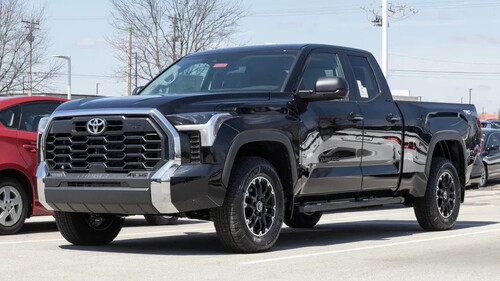
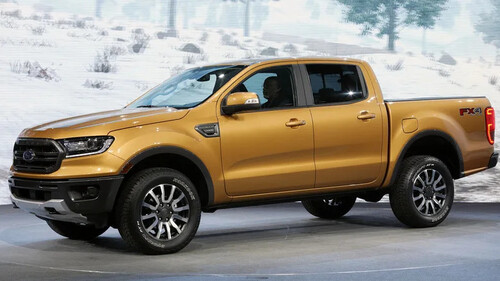
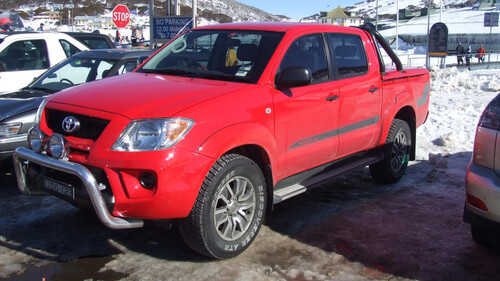
"They don't make'em like that anymore." "I won't buy anything built in Detroit after the bailout." "You can't count on these new pickups." We bet you've heard people repeating these phrases so many times, they're like a mantra. It's easy to write these concerns off as "back in my day" bellyaching, but a Ram 1500 costs around $691 a year in maintenance, according to RepairPal, while a Nissan Frontier costs only $470. That suggests it's not just nostalgia talking.To give new domestic trucks like the 2026 Ford F-150 a fair shake, we'll want to look at the recent recalls and mechanical failures that have people raising this issue in the first place. We'll want to see how these pickups actually compare to older generations, as well as imported trucks from brands like Honda and Nissan. Let's get into it. Mechanical Failure: Worrying Trend, Or Just A Bunch Of Isolated Incidents? Ford In the last decade or so, we've seen plenty of major mechanical issues affecting thousands of domestic pickups. To go over some of the big ones. EcoTec V8 Lifter Failure Chevrolet The 5.3-liter EcoTec L84 V8 found in some Chevy Silverado and GMC Sierra 1500 trucks, starting with the 2019 model year, has generated many complaints due to issues with its AFM/DFM lifters. These are the fuel-management lifters that selectively shut down cylinders, allowing the engine to operate as a four-cylinder when you don't need as much power. The problem is that carbon buildup or even slight drops in oil pressure can cause the lifter to stick in a collapsed state.A persuasive theory on the matter comes to us courtesy of Torque News, which points the blame at the High-Pressure Die-Casting for the engine blocks and internal components. HPDC aims to produce lightweight components to reduce curb weight and meet emissions standards, but the result is a more porous aluminum, making it more prone to issues like carbon buildup. Jerky Down-Shifting In The New Ford F-150 Ford The 14th-generation Ford F-150's 10-speed automatic transmission has been noted for jerky shifting. Taking a look at the 2024 model, for example, we found 167 complaints on the truck's NHTSA page, with 46 powertrain-related issues on file. One driver reports "very hard downshifting at low speeds." Another reports "occasional hard downshift for no reason," noting that the truck jerks slightly when this occurs.A small recall was issued for 269 trucks, dated 2024 to 2025, to address issues with the reverse and neutral gears. Still, the National Highway Traffic Safety Administration page lists no recall for these seemingly common downshifting issues, although an investigation was opened last year.According to RepairPal, common transmission jobs for the 14th-gen F-150 include trans shift cable replacements ($299 to $364) and fluid leak inspections ($61 to $90). Electrical Issues Are Almost Guaranteed At This Point Ram While rarely as concerning as major engine and transmission issues, the increased electrification of even the most stripped-down work truck means that electrical hiccups are practically a feature at this point, rather than a bug.The fifth-gen Ram 1500 has generated reports on CarComplaints for backup cameras blinking out, Uconnect systems restarting every two minutes, radio cluster failure, and every single warning light blinking on for no apparent reason. EcoBoost Carbon Buildup Ford According to Ford Authority, drivers typically see carbon buildup in the 3.5-liter EcoBoost start to accumulate at around 125,000 miles, primarily around the intake port and the valves. The newest of these engines are less likely to suffer this issue, but it's pretty common in 12th-gen (2009-2014) and early 14th-gen (2015-2022) Ford F-150s.If nothing else, this collection of major issues at least proves that the three biggest American truck platforms are either prone to major mechanical failure, or so overloaded with gadgets that your touchscreen will spend more time being updated and patched than it will being used. How Do Domestic Trucks Compare To Imported Pickups On Reliability? Chevrolet To run down some repair costs and reliability ratings, here's how the latest pickups from the biggest American and Japanese automakers compare, with Q&R rating referring to each truck's J.D. Power Quality & Reliability score, and annual maintenance costs coming to us courtesy of RepairPal.The Ford F-150 and the Silverado both scored in the mid-80s for Quality & Reliability. Still, the Ram 1500 drags these three full-size American pickups down to an average rating of 83/100, one point below the average Japanese score of 84/100.This gives the Japanese automakers a marginal lead. Still, when it comes to repair costs, the difference isn't so narrow: American trucks cost an average of $730 a year to maintain, while Japanese competitors average just $526. That's a difference of $204 a year in your pocket, or $2,040 after a decade on the road.Outside the full-size segment, a Toyota Tacoma would cost $478 a year to maintain, while a Ford Ranger would cost around $615, confirming this pattern. But Are Domestic Trucks Becoming Less Reliable? Chevrolet If we look at a ten-year difference in Quality & Reliability ratings for the leading American pickups, we find that the F-150 and the Silverado have actually improved by a few points. At the same time, the Ram 1500 is down by a single point. If we go back to 2010, the Ram is down by seven points, while the Silverado and the F-150 stay in the low-to-mid-80s range.These numbers alone suggest that trucks aren't necessarily becoming less reliable year over year, but the first year of a new generation is typically lower than average. A 2019 Silverado, for instance, comes in at 79/100, while a 2021 F-150 comes in at 71/100. These model years mark the start of a new generation and are rated far worse than other model years. It's Often A Good Idea To Buy Older Trucks Ford Checking in with the professionals who share their knowledge on the r/AskAMechanic subreddit, the consensus seems to be that yes, older trucks can be more reliable, but it's not as simple as new cars simply sucking. As one contributor puts it, "The problem with newer cars isn’t that they are less reliable, it’s that they are more difficult to fix."Many other techs back this claim up. One contributor adds: "There are also more things that can fail and cause a modern car to become stranded." Another states that: "Up until the 80s, most cars had carburetors, and everything could be serviced at home if you had basic mechanic knowledge and a decent toolkit. The most advanced electronics back then were most likely the car radio... Now everything is run by a microcontroller."So there are plenty of advantages to buying an older pickup when it comes to reliability. Older trucks are easier to maintain at home because they have more user-serviceable parts. Older trucks have more extensive documentation, meaning any problem you run into in a 1998 Ford F-150, you can bet thousands of other drivers have already been through it, and can tell you exactly what to do. Trucks from the end of the last generation will tend to be more reliable than the first-year model of a new generation, as the automaker will have had time to work the kinks out. Older trucks have fewer electrical components that can glitch. Older trucks have fewer emissions-control devices on board, meaning fewer moving parts. The big upside to buying a new truck is, of course, that most repairs will be covered under warranty. A 2026 Silverado might cost $714 a year to maintain, but most of that money won't be coming out of your pocket. Meanwhile, you're on the hook for every penny of the $589 annual repair estimate for a 2008 model. Reliability Concerns May Be Overblown (But Not By Much) Jared Rosenholtz/CarBuzz/Valnet Our take: American automakers still make plenty of trucks you can count on, but we're being conditioned to be more dependent on the dealer to keep us on the road, with fewer user-serviceable parts, and more gadgets that can only be fixed with software updates. If you prefer to do your own wrenching whenever possible, an older truck is a lot more appealing than a new one.