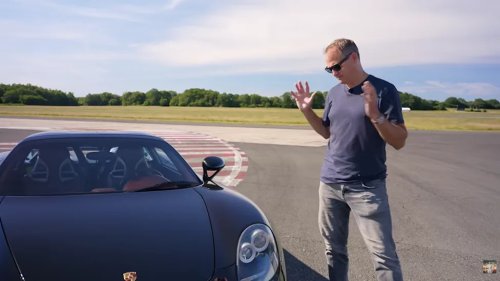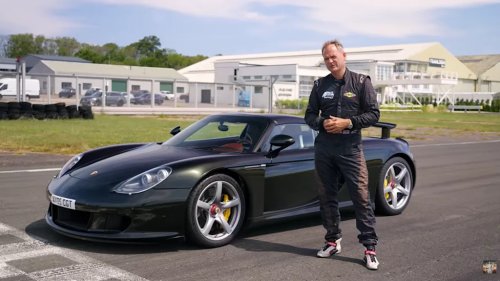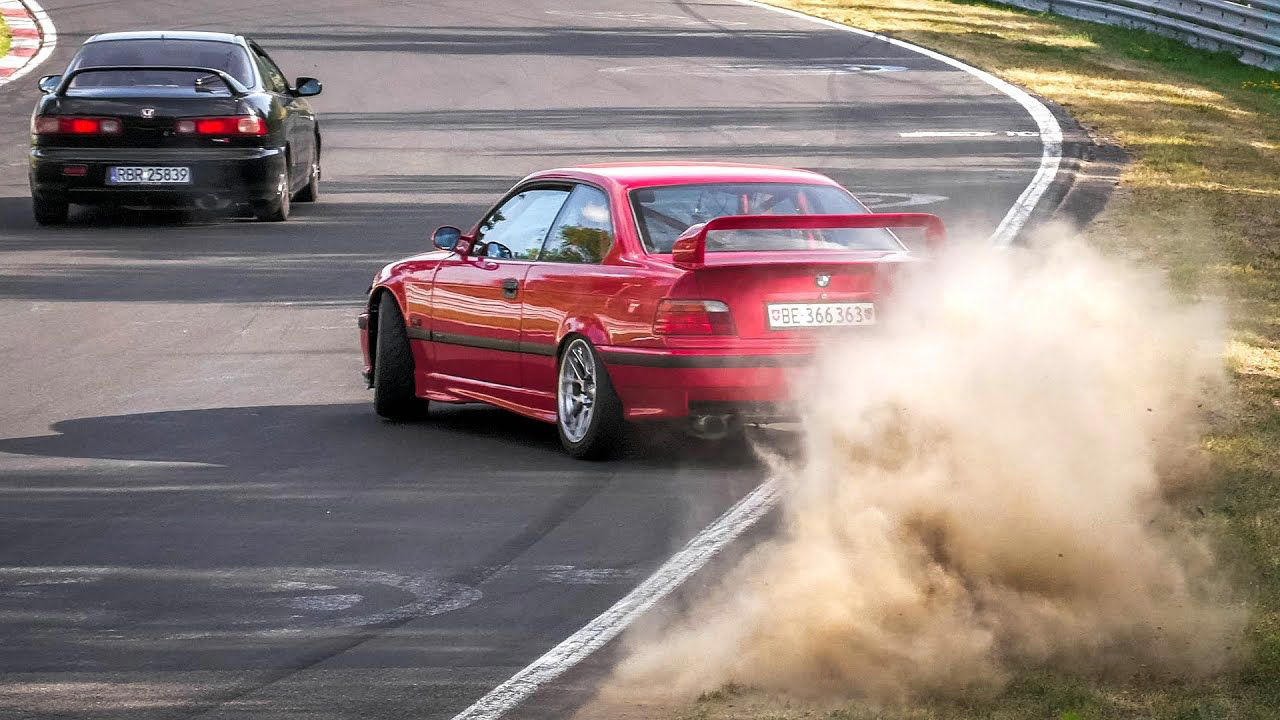



















A veteran of NASCAR oval and road courses has just put the Nürburgring Nordschleife in a category of its own. After finally turning laps on the German circuit that has humbled generations of drivers, he called it the most intimidating track he has ever driven and described the experience as outright terrifying. That reaction from a seasoned stock car racer captures why the Nordschleife still carries a mythical reputation in global motorsport. It also comes at a moment when American series and manufacturers are looking more seriously at Europe’s most demanding ribbon of asphalt for testing, marketing, and even potential race events. What happened Auto Addiction/YouTube Former NASCAR driver and television analyst Kenny Wallace recently traveled to Germany to drive the Nürburgring Nordschleife, the 20.8 kilometer loop that cuts through the Eifel forest. Wallace, who spent years wrestling heavy stock cars on ovals and road courses across the United States, came away calling the Nordschleife the most terrifying circuit he had ever experienced, according to his own description of the run that was later highlighted by Kenny Wallace discovers. Wallace did not arrive as a novice to high speed risk. His NASCAR career included starts in the Cup Series, Xfinity Series, and Truck Series, along with extensive testing and television work that kept him close to modern machinery. On American road courses like Watkins Glen International and Sonoma Raceway, he had already dealt with elevation changes, blind corners, and heavy braking zones, yet the Nordschleife still shocked him. In his account, Wallace emphasized how the circuit’s combination of length, constant elevation changes, and lack of runoff created an intensity he had never felt in a car. The Nordschleife’s 73 official corners, many of them blind, arrive in rapid sequence, with compressions and crests that load and unload the suspension as the car darts between trees and guardrails. For a driver used to the wide sightlines and safety infrastructure of modern American tracks, the proximity of barriers and the absence of forgiving escape roads made every mistake feel as if it would carry real consequences. Wallace’s laps were not part of a race weekend but of a driving experience that put him on track with other cars and mixed skill levels. That context added another layer of stress. The Nordschleife’s public sessions are famous for traffic that ranges from track-prepped sports cars to rental hatchbacks, all sharing the same narrow asphalt. Wallace found himself navigating that traffic while also learning the circuit, a task that even experienced European drivers treat with caution. His reaction echoed what many first-timers report after driving the Nordschleife at speed. Even with modern safety improvements, the track retains long sections where the car is committed for several seconds at a time with little margin for error. Corners like Flugplatz, Schwedenkreuz, and Pflanzgarten combine high speeds with blind entries and compressions that can unsettle a car if the driver misjudges the line or the throttle. Wallace, who has driven some of NASCAR’s fastest tracks, singled out that sense of being committed with no easy escape as the defining feature of the Nordschleife. The veteran also highlighted how mental fatigue sets in well before the lap is over. On a typical NASCAR road course, a lap might last around 70 to 90 seconds. A full Nordschleife lap, even at a brisk but not record-chasing pace, can stretch beyond eight minutes. That means an unbroken stretch of concentration in which the driver must remember corner sequences, braking points, and surface changes without the brief resets that a start-finish straight or caution period can provide. Why it matters Kenny Wallace/YouTube Wallace’s reaction matters because it comes from a driver who has spent decades in a discipline that often gets stereotyped as simpler than European road racing. NASCAR drivers regularly reach speeds above 300 kilometers per hour on superspeedways, race inches apart in large packs, and manage heavy cars with limited downforce. When someone with that background calls a circuit the most intimidating he has ever driven, it reinforces how singular the Nordschleife remains in global motorsport. The Nordschleife is not just long and twisty. It is a place where car and driver are tested in ways that are hard to replicate elsewhere. Manufacturers use it as a benchmark for performance and durability, sending development prototypes to complete thousands of kilometers over the circuit’s mix of high speed straights, technical corners, and bumpy surfaces. Lap times at the Nordschleife have become marketing tools, with cars like the Porsche 911 GT2 RS, Mercedes-AMG One, and various performance versions of the BMW M3 and Audi RS models chasing category records. Wallace’s description of the track as terrifying aligns with why engineers value it: if a car can survive repeated punishment there, it is likely to cope with almost anything on the road. From a driver’s perspective, the Nordschleife demands a blend of skills that crosses disciplines. Oval specialists must adapt to constant left and right transitions. Road racers must handle the lack of runoff and the way the circuit punishes even small mistakes. Endurance drivers must manage fatigue over multi-hour stints in events like the Nürburgring 24 Hours, where traffic density and changing weather can turn the track into a patchwork of dry, damp, and wet sections in a single lap. Wallace’s comments also highlight the cultural gap between American stock car racing and European circuit lore. For many NASCAR fans, the reference points for difficulty are tracks like Darlington Raceway, with its narrow groove and abrasive surface, or Bristol Motor Speedway, with its steep banking and relentless traffic. The Nordschleife operates on a different scale. Its length means that drivers must memorize not just a handful of tricky corners but an entire network of sequences where one mistake can compromise several sections in a row. When a NASCAR veteran acknowledges that difference so bluntly, it helps bridge understanding between fan bases that often watch different series and follow different heroes. There is also a safety conversation embedded in Wallace’s reaction. Modern Formula 1 circuits and many new facilities in the United States are designed with wide runoff areas, gravel traps, and TecPro barriers that absorb impacts. The Nordschleife, although upgraded over the years, still carries the DNA of a pre-war road course. Guardrails sit close to the asphalt, trees line the outer edges in several sections, and elevation changes can launch cars into the air if they hit crests at the wrong angle. Wallace’s sense of intimidation reflects a rational assessment of that environment, especially for someone used to modern safety standards. For NASCAR itself, Wallace’s experience feeds into a broader trend of cross-pollination with international circuits. The series has already experimented with street courses, such as the Chicago Street Course, and has expanded its presence at traditional road racing venues. Drivers like Kyle Busch, Chase Elliott, and Joey Logano have spoken about the learning curve that comes with switching between ovals and complex road layouts. Wallace’s candid reaction to the Nordschleife might encourage more American drivers to seek out laps there, both to challenge themselves and to gain a deeper appreciation for the circuits that shape European car culture. On the fan side, his comments add another layer to the Nordschleife’s mystique. Videos of onboard laps have long circulated online, but hearing a familiar NASCAR figure describe the track as the most intimidating he has ever driven gives that footage a fresh context. Viewers who know Wallace from his racing and broadcasting work can map his reaction onto their own perception of the circuit, perhaps gaining a new respect for the drivers who race there in touring cars, GT machinery, and endurance prototypes. There is also a commercial angle. American manufacturers that invest in Nordschleife development programs can leverage testimonials like Wallace’s to highlight the authenticity of their efforts. If a driver who made his name in NASCAR says the track is terrifying, then a company can argue that its decision to tune a performance sedan or SUV there is not just marketing but a genuine test of capability. The same applies to tire companies and aftermarket tuners that use the circuit as a proving ground. Finally, Wallace’s experience underscores how motorsport storytelling still relies on personal reactions. Data can show lap times, corner speeds, and G forces, but a driver’s emotional response helps translate those numbers into something relatable. When a veteran says he felt intimidated, that word carries weight. It suggests that the challenge of the Nordschleife is not only technical but psychological, and that even professionals must confront their own limits there. What to watch next Wallace’s Nordschleife run arrives at a time when the track’s role in global motorsport is evolving. While it remains a staple of endurance racing and manufacturer testing, there is ongoing debate about how far to push its use for high profile events involving the latest generation of race cars. Modern GT3 machinery and high performance road cars have reached speeds and cornering loads that outstrip what the circuit’s original designers could have imagined. Organizers and regulators must balance the circuit’s heritage with the need to manage risk in an era of faster vehicles. One area to watch is how American drivers and teams engage with the Nordschleife in the coming years. Wallace’s experience could encourage more NASCAR and IMSA drivers to seek out opportunities in events like the Nürburgring 24 Hours or VLN (now known as Nürburgring Endurance Series) races. Some have already made that leap, but a broader wave of participation would deepen the ties between American and European racing cultures. Fans might see familiar names on entry lists and follow their progress through livestreams and social media, further raising the profile of these endurance events in the United States. There is also potential for more structured exchange programs. European drivers have crossed the Atlantic to sample NASCAR stock cars on ovals and road courses, learning how to manage heavy, relatively low downforce machines in tight packs. In return, American drivers could spend time in European GT or touring car series that race at the Nordschleife and other classic circuits. Wallace’s public respect for the track could help normalize the idea that even veterans benefit from stepping outside their comfort zones. On the manufacturer side, development activity at the Nordschleife is unlikely to slow. Electric performance cars are beginning to chase lap records, and hybrid systems are becoming standard in high end models. The circuit’s long straights and elevation changes provide a natural test bed for thermal management, battery performance, and energy recovery systems. As more brands push electric and hybrid products, expect to see an increasing number of camouflaged prototypes circulating the Nordschleife during industry pool sessions. Wallace’s description of the track as terrifying could also influence how track day organizers and instructors present the Nordschleife to newcomers. Many already emphasize that the circuit is not a typical track day venue and that preparation, instruction, and respect for the environment are essential. A high profile driver echoing that message reinforces the need for structured learning, from simulator practice to guided laps with experienced coaches before attempting full pace runs. More from Fast Lane Only Unboxing the WWII Jeep in a Crate 15 rare Chevys collectors are quietly buying 10 underrated V8s still worth hunting down Police notice this before you even roll window down *Research for this article included AI assistance, with all final content reviewed by human editors. The post A NASCAR veteran just called the Nürburgring the most intimidating track he’s ever driven appeared first on FAST LANE ONLY.