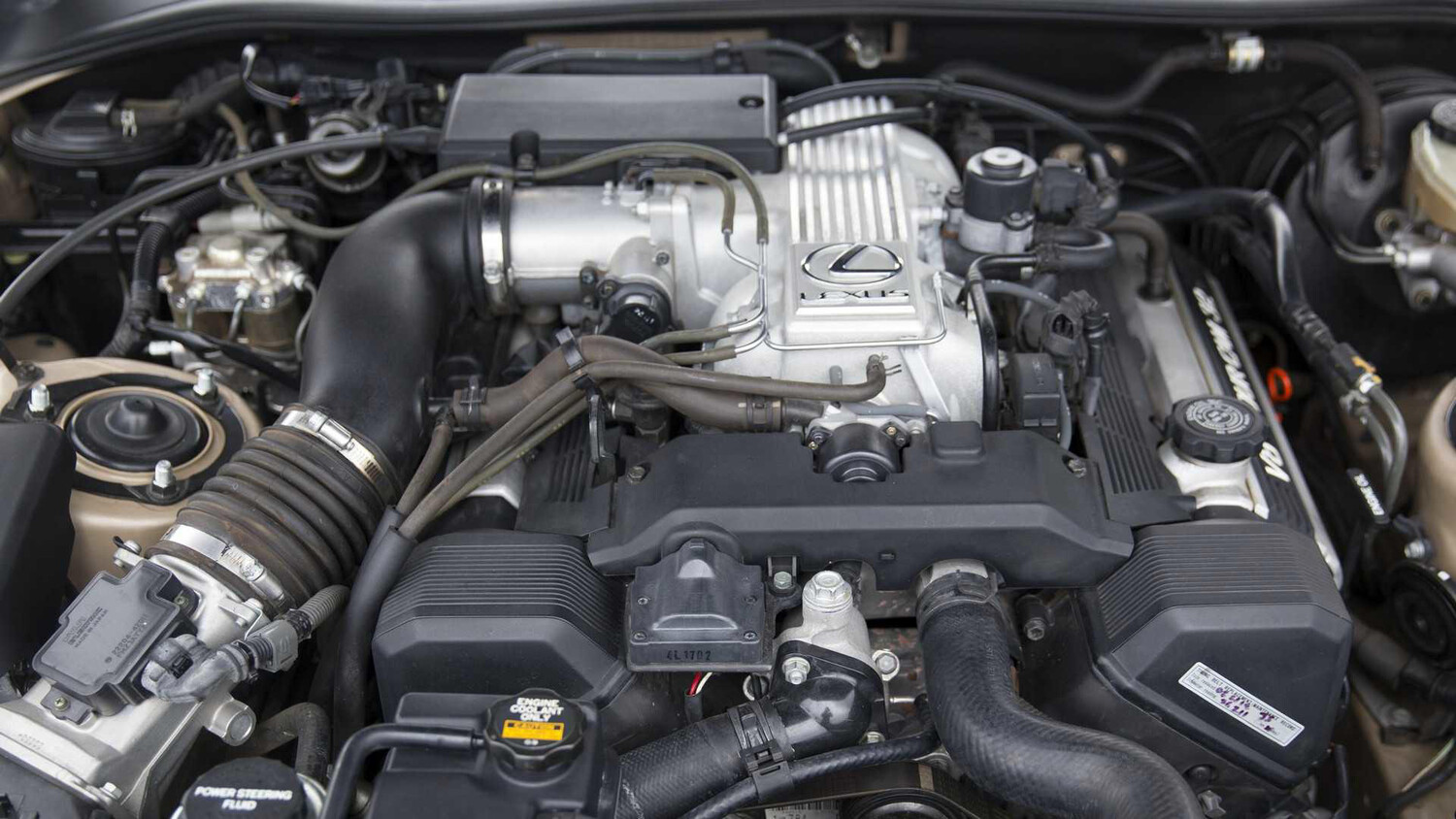
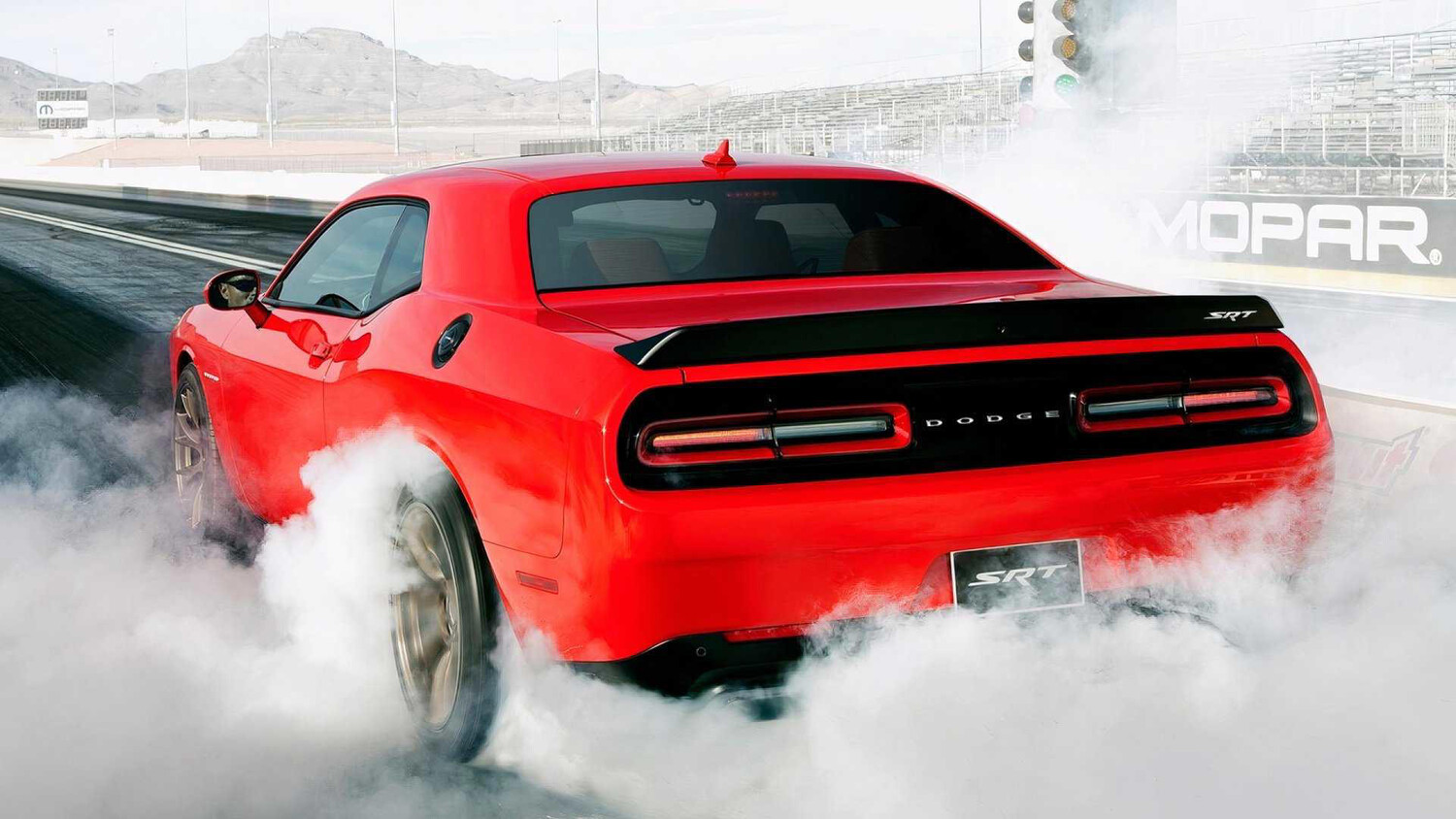
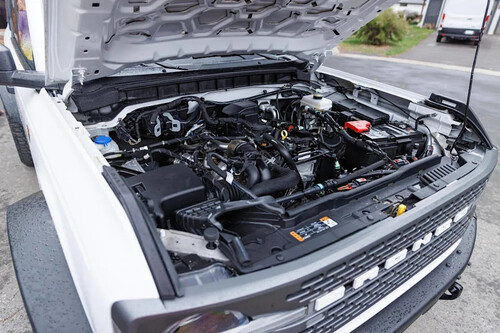
There are all kinds of different internal-combustion engine configurations, from mass-produced inline-fours to V-twins used in motorcycles, quirky three- and five-cylinder designs to V4s, inline-sixes and horizontally opposed engines to insanely complicated W8s, W12s and W16s that the Volkswagen Group used to manufacture.Each layout has its own advantages and disadvantages that make it ideal for certain applications. A V-twin works amazingly well in a Harley-Davidson but would never make sense under the hood of, say, a Honda Odyssey minivan. Likewise, cramming an exotic Bugatti W16 between the front fenders of a Nissan Kicks is just absurd.Between these extremes lies the V8. A brilliant and evocative design with countless benefits and relatively few downsides, this may be the best layout for an internal-combustion engine ever conceived, and here’s why.To provide the most accurate and up-to-date information, this article uses data sourced from various manufacturers and authoritative sources. Performance And Refinement, A Perfect Combination Mr.choppers, CC BY-SA 3.0 | Wikimedia Commons Thanks to their generally large displacement, V8 engines are known for producing loads of horsepower and torque. This is great fun in performance applications like muscle cars, but all that giddy-up is just as important – and necessary – in bigger vehicles like pickup trucks and commercial vehicles. That Sound! Nothing Compares To The Heavenly Growl Novak Adaptors The classic American V8 with a 90-degree angle between the cylinder banks and a cross-plane crankshaft is also one of the best-sounding designs of all time. The throaty rumble these engines make – largely thanks to firing two cylinders in a row on the same bank during each cycle – is absolutely glorious and unmatched by any other configuration. Sadly, though, this sound is dying out as automakers have been switching to smaller, more efficient, and often turbocharged engines for years now. Smoothness Is A Virtue Almost Lost To Time FordAside from the ear-tickling noises V8s produce, these engines are often very smooth. This is because counterbalanced crankshafts and large flywheels help attenuate unwanted vibration, but also because there’s a lot of “power stroke overlap,” and no, that has nothing to do with Ford’s range of diesel engines.A 90-degree V8 with a cross-plane crankshaft fires every 90 degrees of crankshaft rotation - it takes two full crankshaft rotations for all the cylinders to complete their cycles. So, 360 degrees multiplied by two rotations is 720 degrees, and 720 divided by eight cylinders is 90 degrees. Two or more cylinders having part of their power strokes occurring at the same time help an engine feel smoother. A Space-Efficient Engine Configuration Flyin' Miata Another huge benefit of the V8 configuration is space efficiency. Relatively speaking – because there are definitely some exceptions – these engines make very good use of under-hood real estate. Short and broad-shouldered, V8s can be made to fit into locations that were only designed to house a tiny inline four-cylinder. In fact, people swap thundering LS V8s into the tiny Mazda Miata - a combination that must be absolutely terrifying. Maximizing Displacement, Minimizing Dimensions Flyin' Miata With two banks of four cylinders sharing a common crankshaft, V8s maximize engine displacement while helping keep exterior dimensions to a minimum. Yes, V8s are far wider, but typically they’re scarcely any longer than an inline-four, making packaging relatively easy for engineers… or shade tree mechanics if they’re doing some wild powertrain swap.The inline-six has one or two important benefits over the V8 configuration, but inline-sixes can be very difficult to package in vehicles, especially front-wheel-drive models, because they’re just so long. Several years ago, Volvo managed to stuff an inline-six into the front-drive S60 sedan, as did Suzuki with its long-gone Verona four-door, but lots of special engineering was required to make this work.Thanks to packaging concerns, engineers designing inline-sixes are often encouraged to make these engines undersquare, that is, so they have strokes that are longer than the bores are wide. Every increase in bore diameter, even modest ones, gets multiplied by six, which can make the overall engine much, much longer. Altering Bank Angle Can Increase Versatility Ford Most V8s have a 90-degree angle between the cylinder banks. This works extremely well, particularly with a cross-plane crankshaft, but this layout does make these engines very wide. The 5.0-liter Coyote from Ford is astonishingly good – silky-smooth, sonorous, and incredibly potent thanks to its quad camshafts and 32 valves – but this engine’s exterior dimensions are enormous; the thing is practically wider than a city bus, which makes it hard to swap a Coyote into smaller vehicles. This is a major advantage of GM’s pushrod V8s, which are far less exotic, but generally cheaper, more common, and externally far smaller despite having greater displacement.Back on track, these engines aren’t required to be built at 90 degrees. Width can be appreciably reduced by bringing the cylinder banks closer together, something they did with the 3.4-liter V8 used in the third-generation Ford Taurus SHO. The angle between this powerplant’s cylinder banks was just 60 degrees. Intrinsically Stout And Reliable Construction With their relatively short blocks – the foundation of every combustion engine – and sturdy crankshafts, V8 engines have a well-earned reputation for durability and reliability, even when abused. And since these engines typically make lots of low-RPM torque thanks to their oftentimes large displacements, V8s don’t have to rev like crazy, like a high-performance, naturally aspirated Honda four-cylinder, for instance. This keeps piston speeds relatively low, reducing stress, friction, and wear over time. As Good As They Are, V8s Aren’t Quite Perfect Ford Performance Despite their copious benefits, V8s aren’t perfect. These engines do have a few downsides worth pondering if you’re shopping for a new vehicle.As mentioned above, V8s are generally very smooth, and what little undesirable noise and vibration they produce can easily be attenuated. These engines, however, are not the pinnacle of refinement; inline sixes have perfect primary and secondary balance, which often makes them as smooth as buttercream frosting. Fuel Economy Is Usually Not A Strong Point Dodge There are plenty of great reasons to get a V8-powered car or truck, but if you’re looking for economical transportation that’s easy on fuel, you’ll probably want something different. Large and powerful, these engines often drink gasoline at a frightful rate. Technologies like variable valve timing, direct fuel injection, cylinder deactivation, and even hybridization have made the humble V8 far more efficient than it was just a few years ago, though this isn’t often represented in EPA economy estimates. As engineers improve efficiency, these V8s almost always get installed in vehicles that get bigger and bigger, with way more features and technology, changes that dramatically increase weight, offsetting any efficiency gains that were made. There Are So Many Components Infiniti Another downside to the V8 is that they have a lot of moving parts, which means there’s more to go wrong, and makes these engines cost more to build. Compared to a “simple” four-cylinder, there are twice as many pistons, ring sets, connecting rods, and wrist pins. There are more bearing inserts, twice as many spark plugs – four times as many if you’re looking at a third-generation Hemi, which uses two plugs per cylinder – and the valvetrain is commensurately more intricate, too. Insurance Rates Can Be Higher And of course, another potential downside to V8 engines is that the vehicles they’re installed in can be more expensive to insure than cars and trucks with more mundane powertrains. When it comes to insurance costs, there may not be a huge difference between a Ford F-150 powered by a 2.7-liter EcoBoost V6 and the available 5.0-liter V8, but it’s almost guaranteed that an entry-level Ford Mustang fitted with the standard EcoBoost four-cylinder engine will cost less to cover than a GT model fitted with a thundering Coyote V8.